Top 10 AI Tools for Digital Marketers
Explore the 10 best AI tools for digital marketers, from content and ad creative to data analysis, and learn how to combine them for real results.

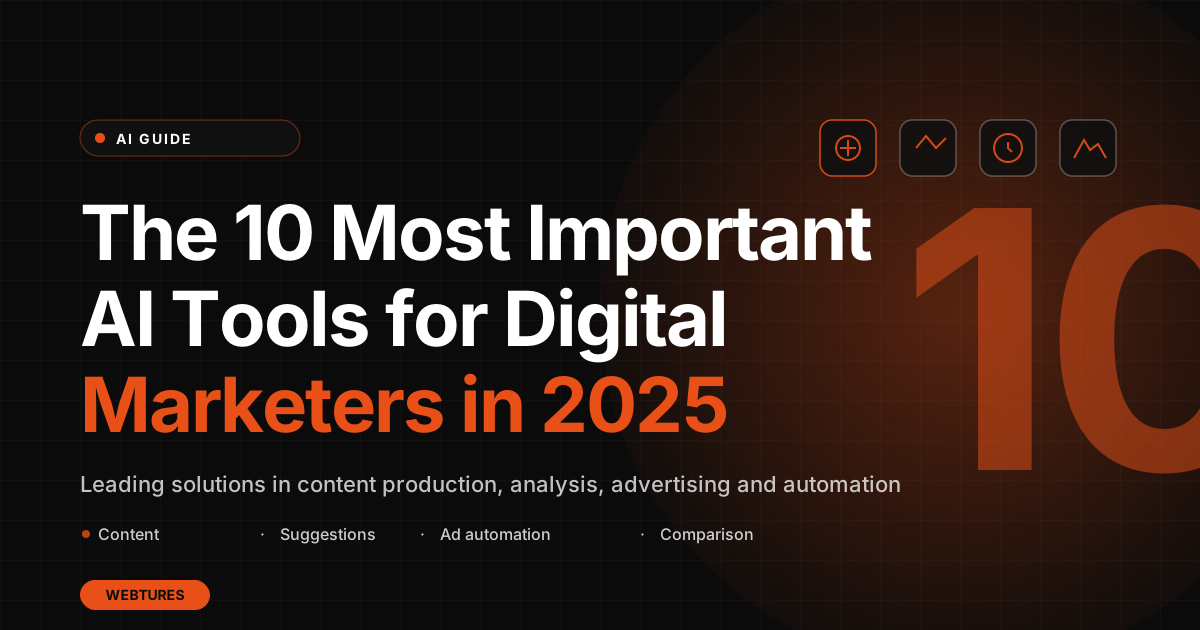

AI tools have become one of the fundamental building blocks of digital marketing. Data-driven decision making, content production, GEO analysis, AI Search visibility, and ad optimization are now routinely powered by AI-driven solutions. These tools do more than save time; they significantly raise accuracy, scalability, creative output, and the capacity to produce citable content. For professionals who want their digital marketing strategies to be more targeted, personalized, and results-driven, AI has become indispensable. In this article we examine 10 standout AI tools and the strategic advantages each one brings to digital marketing.
Why has AI become essential to digital marketing?
As competition in digital marketing intensifies by the day, AI has become one of the strongest tools for brands that want to stand apart. The biggest reason is AI's capacity to understand data, analyze it, and produce actionable recommendations from it. As flexible algorithms replace traditional marketing methods, user behavior can be analyzed in real time to build far more targeted campaigns.
AI delivers serious advantages to digital marketers across GEO, content marketing, social media management, performance advertising, and AI Search visibility. From a GEO perspective, time-consuming tasks such as prompt intent analysis, content coverage, entity clarity, competitor answer analysis, and citability can now be managed far faster with AI-assisted tools. Content production workflows also become both faster and more data-driven through automation.
Beyond that, the segmentation and recommendation algorithms AI offers for building personalized user experiences give brands a powerful lever for lifting conversion rates. In short, AI helps digital marketers develop sharper strategies, reduce errors, understand user intent more deeply, and improve return on investment.
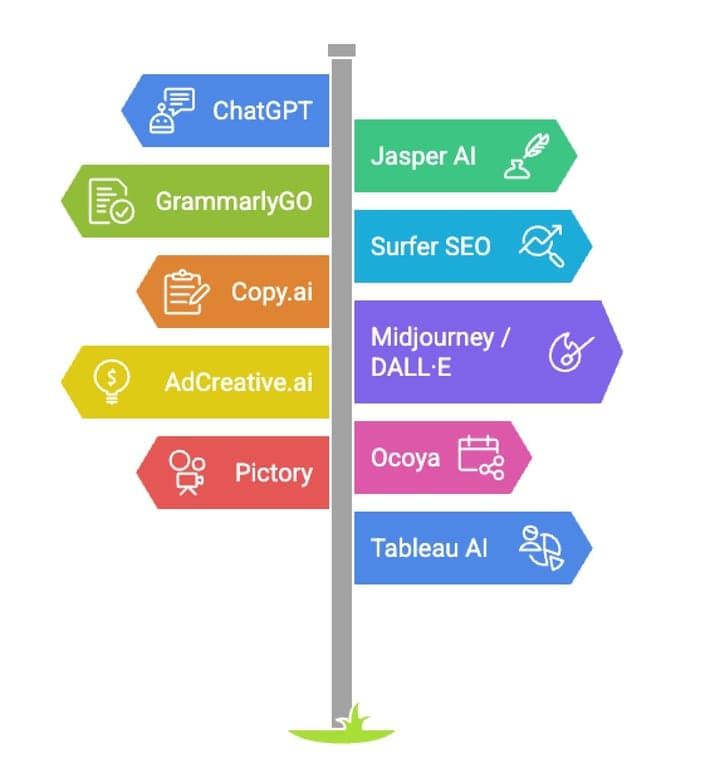
10 AI tools that stand out right now
1. ChatGPT (OpenAI)
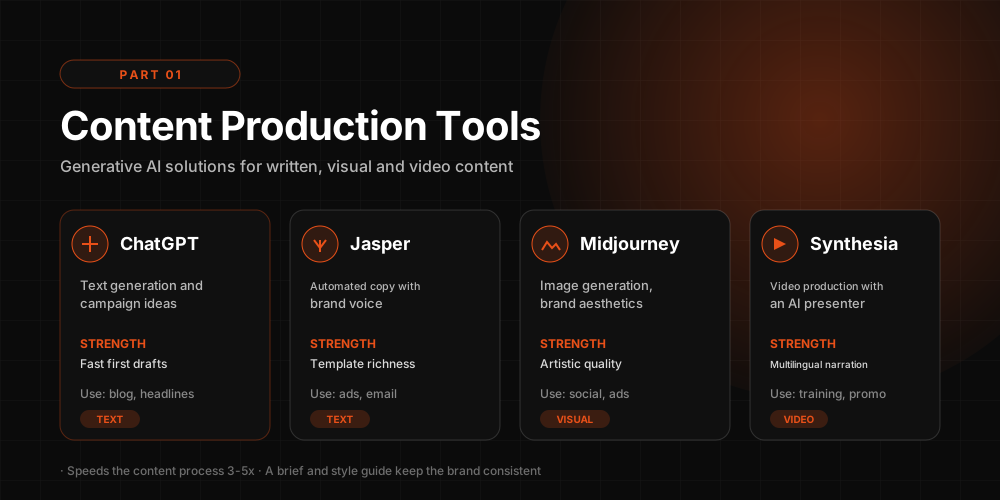
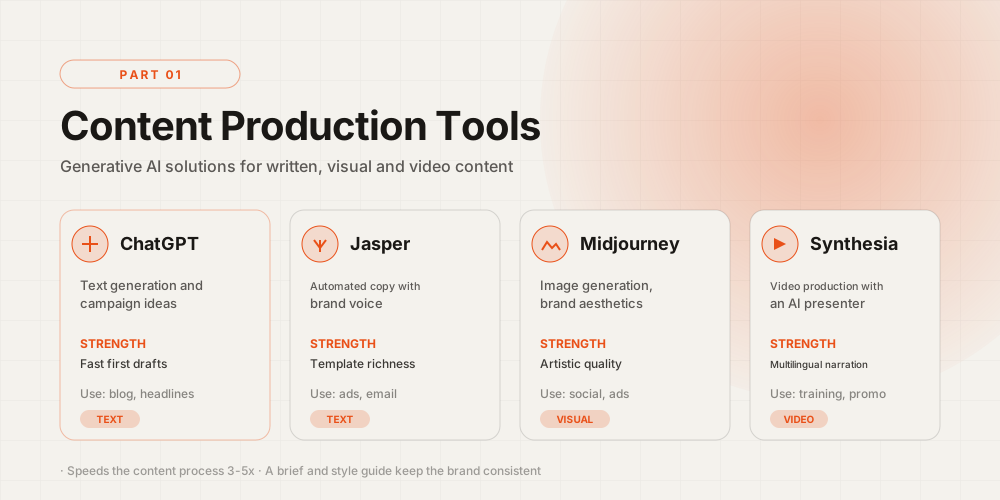
A pioneer of the advances in natural language processing, ChatGPT is an AI solution that raises speed, efficiency, and language quality in content production. Its versatility is the main reason it has moved to the center of content strategies. Across blog posts, explainer copy, email drafts, ad copy, prompt maps, and topic clusters, it delivers strong output in both quantity and quality.
Its ability to adapt copy to a target audience, develop prompt-driven content, and generate alternative outputs for different user intents helps make content more understandable for both users and AI-powered search systems. With its style and tone options, it is also a strong assistant for producing output aligned with a brand's voice.

2. Jasper AI
Jasper AI is an advanced AI platform that enables high-volume content production while preserving a brand's distinct language and style. It stands out for accelerating the entire journey from campaign ideation to execution. For teams that need to maintain brand consistency across long-form, strategic, multi-channel content, it offers a robust production foundation.
On content consistency and editorial discipline, Jasper gives a serious advantage to teams that want to keep the same brand narrative across different platforms. Its ability to generate creative variations also makes it possible to rapidly produce testable alternatives for conversion-focused campaigns and answer formats that support AI Search visibility.

3. GrammarlyGO
Content being technically correct is not enough; it also needs clarity, tonal fit, and language that matches intent. This is exactly where GrammarlyGO steps in, improving copy not only on a technical level but as communication. In campaign copy, external communications, and citable content especially, it helps make the message more persuasive and easier to understand.
The revisions it suggests in line with user intent make it possible to reshape copy for different audiences, which directly supports personalization and segmentation strategies. Its advanced tone controls make it easy to rewrite content in a formal, friendly, explanatory, or direct register.
4. Surfer
One of the key tools for data-driven content production, Surfer makes the content analysis that affects search visibility genuinely practical. It analyzes where your content sits in the competitive landscape, identifies the gaps, and offers clear recommendations for the areas that need optimization.
Its Content Editor and Audit tools guide you both when creating new content and when refreshing existing pages. Content becomes stronger not only in the information it carries but across user intent, topic coverage, structure, and the signals that support GEO visibility. Competitor comparison, term usage, and topic coverage analysis create a serious advantage in strategic content planning.

5. Copy.ai
Copy.ai is one of the tools that meets marketing teams' short-form content needs quickly and effectively. Wherever instant production is required, including social media posts, ad copy, email subject lines, product descriptions, and campaign variations, its templates and suggestions dramatically accelerate the workflow.
The variety of tone and style options it offers for creative, dynamic content makes it easy to produce messages tailored to different segments. It also saves time on headlines, description copy, product descriptions, and the short answer formats that read clearly inside AI responses. For teams that need high impact in little time, it has become a powerful assistant.
6. Midjourney / DALL·E
Visual content is no longer just an aesthetic element in digital marketing; it is a strategic asset that directly affects engagement rates, brand perception, and multi-format visibility. Midjourney and DALL·E deliver strong solutions here through text-to-image technology. Both tools can produce high-resolution, original visuals from abstract or highly specific briefs.
Used across everything from landing page designs to social media posts, these tools make it possible to build a distinctive visual language for the brand while reducing dependence on stock imagery. DALL·E excels at realistic and technical compositions, while Midjourney stands apart on creative concepts and artistic textures. The result is a visual production process that is faster, more original, and more cost-efficient.


7. AdCreative.ai
In digital advertising, quickly testing creative variations and identifying the ones with the highest conversion potential is a major advantage. AdCreative.ai gives marketing teams exactly that: the ability to produce ad creative at high volume. Its AI system optimizes the pairing of visuals and copy on a data-driven basis, automatically improving the elements that directly affect ad performance.
With formats tailored to each platform, a single brief can generate a large set of ad alternatives for channels such as Facebook, Instagram, and Google Ads. This not only accelerates A/B testing but frees creative teams to spend more time on strategic thinking. For e-commerce campaigns in particular, it makes a substantial contribution to performance-driven creative production.

8. Ocoya
Ocoya is a comprehensive platform that brings social media management and content production together in one place. By unifying scheduling, content planning, and visual-copy alignment under one roof, it simplifies marketing teams' workflows. Its AI-assisted content suggestions and ready-made templates dramatically shorten the production time for social media campaigns.
Its analytics tools let you evaluate each post against engagement, reach, and conversion metrics, and content strategies can be continuously refined against that feedback. Multi-language support also brings operational ease for brands addressing multiple markets.

9. Pictory
Video remains one of the most powerful formats in digital marketing. Pictory converts written content into short videos, turning text into an audiovisual format. Transforming blog posts or articles into video summaries of a few minutes lets content reach wider audiences on social media, YouTube, and other multi-format discovery surfaces.
Pictory's standout advantage is combining a user-friendly interface with features such as automatic subtitles, voiceover, and visual matching. This makes video production possible without technical expertise. Converting content into video both raises user engagement and helps the brand show up more strongly across different content surfaces.
10. Tableau AI
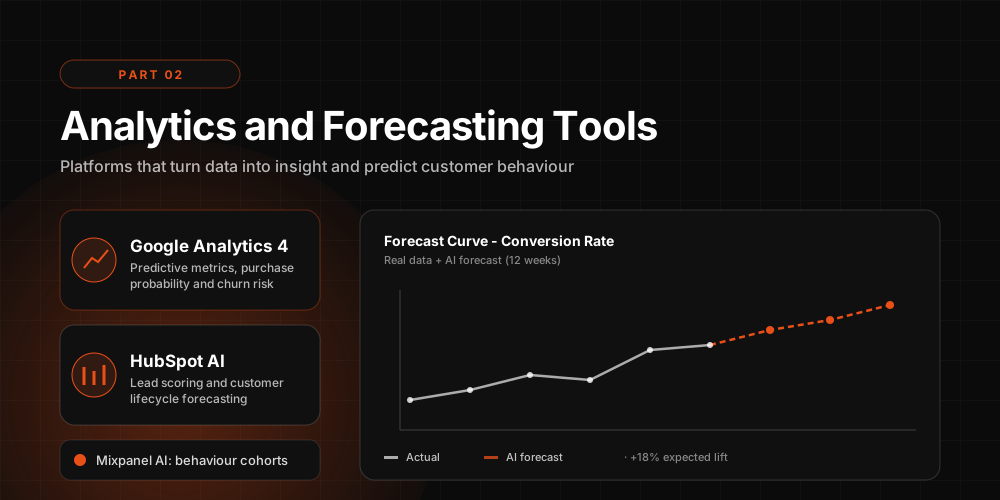
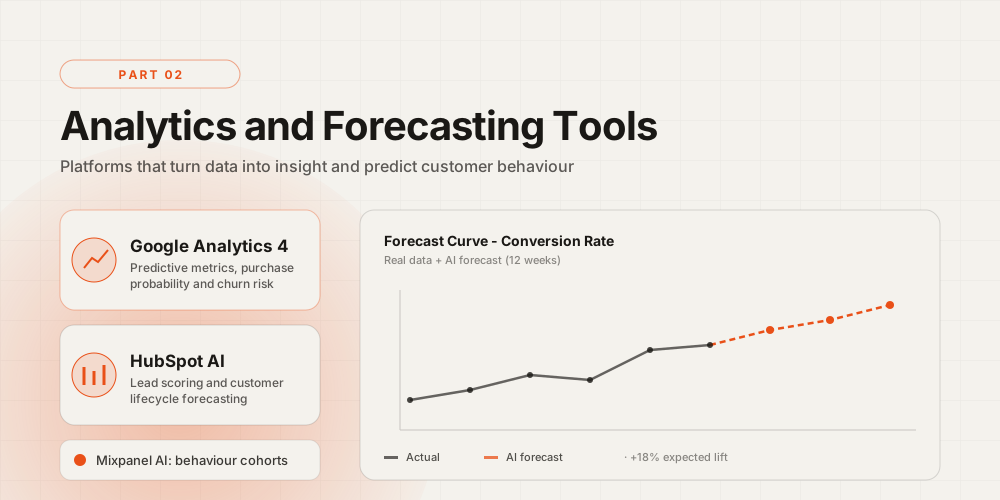
In data visualization and analytical reporting, Tableau AI gives marketing teams powerful insight. Making sense of complex data sets and turning them into clean, visual outputs greatly simplifies decision making. AI-assisted forecasting and automated predictive modeling make strategic planning far more accurate.
Its use cases span campaign analysis, user segmentation, web traffic evaluation, and conversion rate analysis. Tableau AI's biggest advantage is an interface simplified to the point where non-technical users can work with data too. Its real-time data interpretation makes a particular difference for agile marketing teams' decision processes.
How do you get the most out of AI tools?
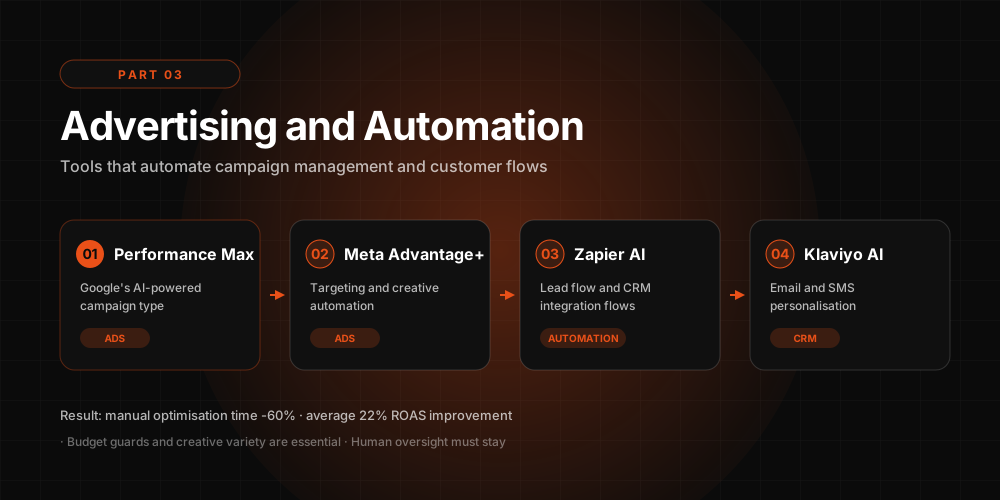
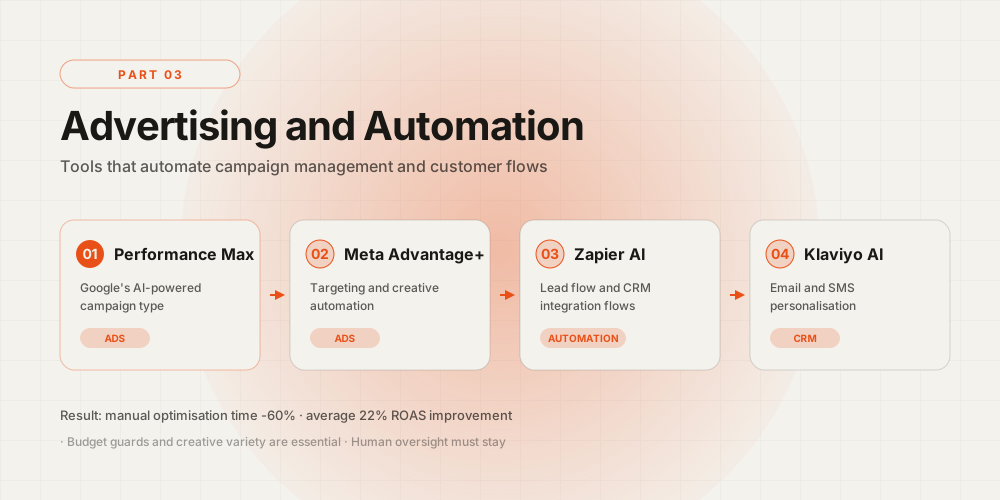
Getting maximum value from AI tools is not about owning the technology; it is about integrating it strategically. Digital marketing teams should first review their own operating structure and build a clear plan for where these tools will be used. Drawing the boundaries of automation correctly frees teams to work more effectively on creative and strategic tasks.
Content production tools, technical analysis tools, ad optimization platforms, and data visualization solutions each serve different functions, and full value comes when they work together. API integrations and cross-platform connections can automate the workflow so that a piece of content is first planned strategically, then written, evaluated for GEO alignment, and finally measured on performance to close the loop.
Each tool also has different strengths. Surfer is ideal for strengthening content coverage; paired with GrammarlyGO for intent-matched tone, the output becomes more balanced. Likewise, visual tools such as Midjourney or AdCreative.ai deliver high conversion when their segment-specific designs are backed by A/B testing.
Another dimension is training. Teams need to learn these tools in depth, not just at surface level. Advanced solutions such as Jasper AI or Tableau AI carry detailed settings and customizations that can make a serious difference in user experience and output quality. However powerful the tools are, the results depend on how skilled the people using them become.
Finally, the analytical capabilities these tools provide should be reviewed regularly. Optimizations built on performance reports, user behavior analysis, content engagement metrics, AI Search visibility, prompt-level representation, and citability data make campaign success sustainable. That is the foundation of a digital marketing approach that shapes not just today but the future.
Conclusion: will marketers who skip AI fall behind?
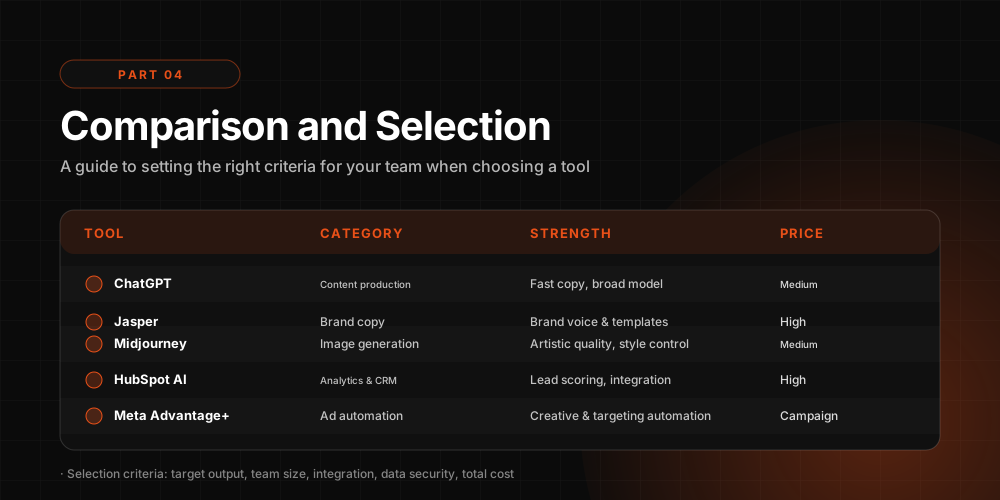
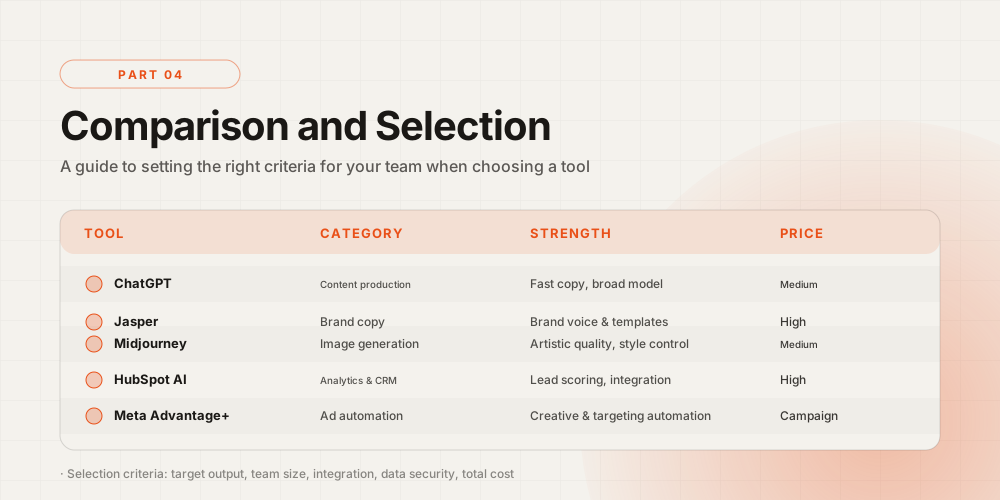
AI has become one of the essential components of digital marketing. The real question is no longer whether using AI is an advantage; it is how large a disadvantage not using it creates. AI does more than accelerate operations; it feeds decision making with data, enabling more consistent and effective strategies.
Marketing teams running on manual processes fall behind AI-assisted competitors in content production, underperform on ad optimization, and stay shallow on data analysis. That means lost time and missed opportunities. For brands running multi-channel marketing in particular, AI-assisted content adaptation, prompt-based analysis, and automation systems deliver a competitive edge.
There is a balance to keep, though. Merely using AI tools is not enough; how effectively, strategically, and creatively you use them is what will decide the outcome. Successful brands blend AI with human creativity to run campaigns that are strong on both personalization and scale.
In the end, AI in digital marketing is not a passing trend but a permanent way of working. Teams that ignore these technologies or adopt them late drift toward a position where they can no longer answer their competitors, their users' expectations, or the growing habit of AI-assisted information discovery. Choosing the right tools, training your teams, and making AI part of a GEO-focused visibility strategy is therefore critical.