The 10 Most Important KPIs for Tracking GEO Success
Track the 10 GEO KPIs that matter most in AI search, from Share of Model and citation rate to sentiment, and measure your brand's generative visibility.

GEO KPIs (Generative Engine Optimization) are the definitive performance indicators for measuring a brand's digital success in the AI era. In a period where answer engines have replaced the traditional search engine, GEO KPIs analyze a brand's reputation across large language models (LLMs), its visibility, and its influence on purchase intent. The answer to what GEO is comes down to this: the craft of getting your brand cited as the single trusted source by AI assistants such as ChatGPT, Gemini, Perplexity, and Claude. In this report, we cover AI visibility metrics and how brands survive in this new ecosystem.
What can GEO (AI optimization) KPIs be?
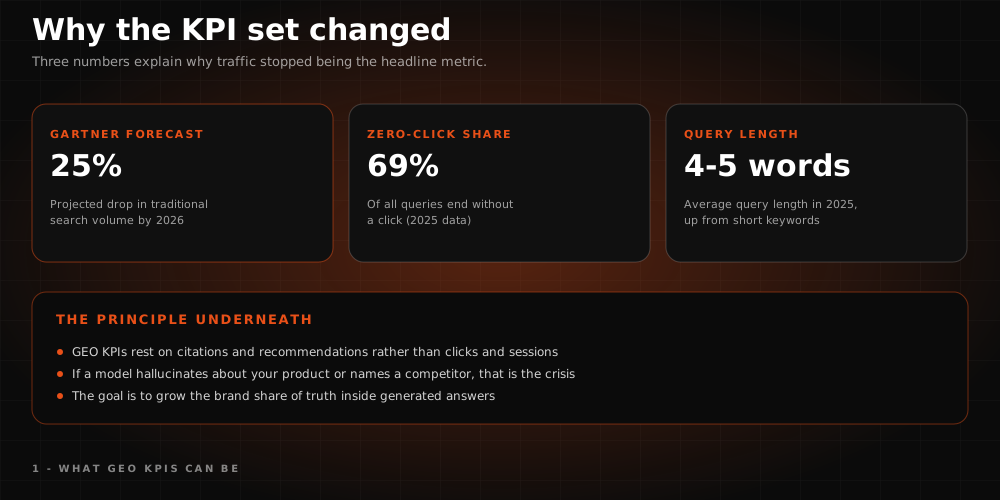
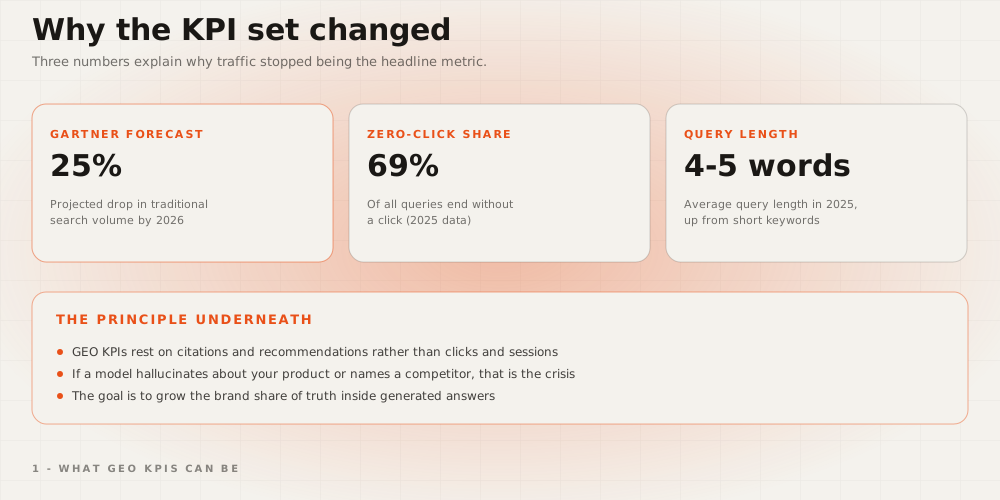
GEO KPIs are built on citations and recommendations rather than clicks and traffic. As Gartner's forecast of a 25% drop in traditional search engine volume by 2026 plays out, users increasingly prefer direct answers from AI over clicking links. The core KPI we focus on at Webtures is how often, and with what sentiment, your brand appears inside the answers AI generates.
Defining a GEO strategy aims to grow the brand's digital share of truth. If an AI model hallucinates about your product (gives false information) or recommends your competitors, that is digital marketing's biggest crisis. For example, if your brand's entity authority is weak, AI may describe you as a generic brand and steer a potential customer toward a competitor.

Setting measurable goals in the AI era
GEO KPIs rest on a simple principle: if you are not visible, you do not exist. For businesses operating under the motto "Invisible to AI = Invisible to Customers," the goals should be:
- Pushing the citation rate above 40% for queries that mention the brand name,
- Placing among the top 3 recommendations for category queries (for example, "Which is the best CRM software?"),
- Locking the sentiment analysis score in positive territory across LLMs (the current versions of GPT and Claude).
These goals build trust, not just visibility. The Webtures GEO methodology presents your brand's data in a structured format so that AI models accept it as training data.
The most important metrics for tracking AI success
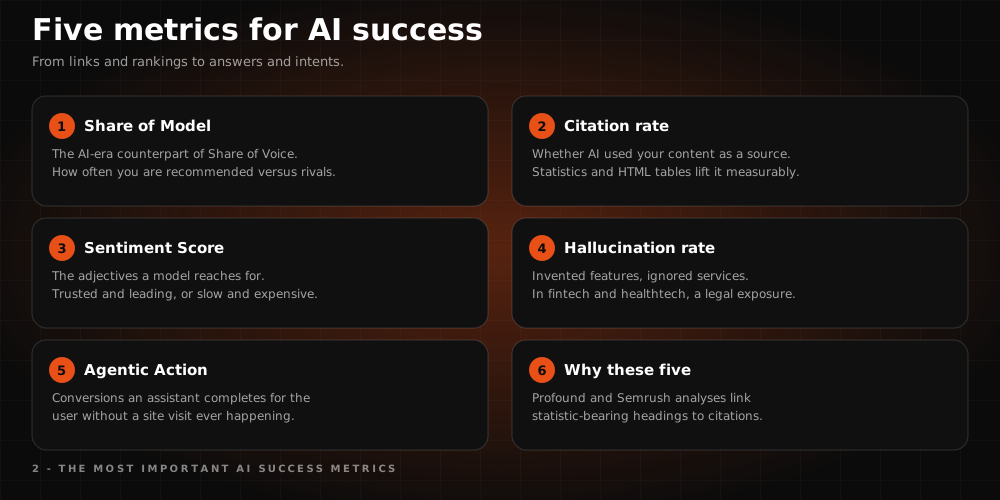
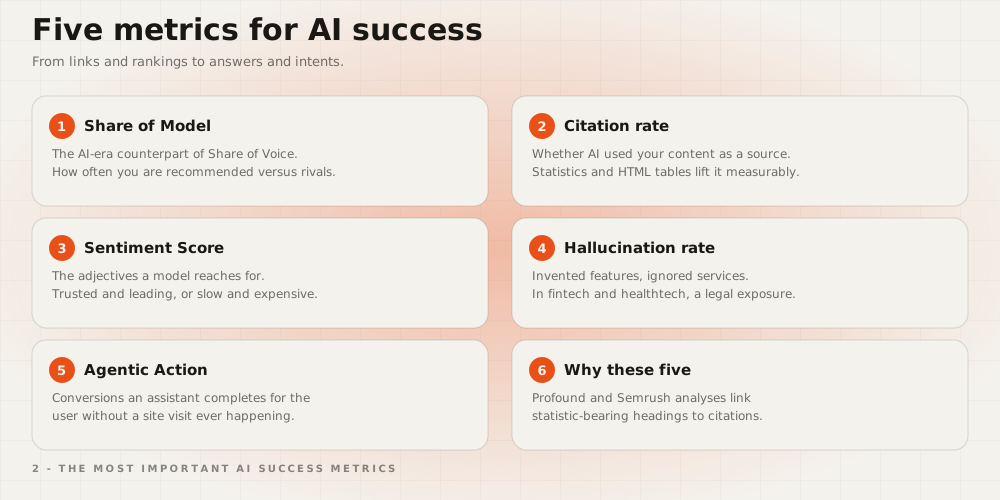
We have moved from the world of links and rankings to the world of answers and intents. With zero-click searches reaching 69% (2025 data), we need a new generation of metrics to measure success. Here are the 5 critical KPIs for tracking GEO success:
Share of Model (SoM): the new name for market share
Share of Model is the AI-era counterpart of the traditional Share of Voice. It measures how often your brand is recommended relative to competitors when users ask an AI assistant a question about your industry. For example, if your brand appears in 7 out of 10 answers Perplexity or ChatGPT gives to "Which is the most trusted bank in Turkey?", your SoM is high.
Citation rate: how often you are named as a source
Citation rate shows whether AI used your content as a source when building its answer. Analyses by Profound and Semrush show that headings containing statistics and HTML tables significantly increase citation rates. At Webtures, we convert your content into formats AI models can easily read and reference.
Sentiment and trust analysis (Sentiment Score)
Sentiment Score is the tone of the adjectives an AI model uses when talking about your brand. Does AI describe you as "trusted," "leading," and "innovative," or as "expensive," "slow," or "complicated"? Because AI synthesizes billions of data points across the internet, this score effectively reflects your brand's cumulative digital reputation. Negative sentiment loses you customers at the very top of the sales funnel.
Brand presence and hallucination control
Hallucination rate is a technical KPI in the GEO world. LLMs can sometimes attribute features to your brand that do not exist, or ignore services that do. In healthtech and fintech in particular, the accuracy of AI-generated information is a legal obligation. Webtures monitors accuracy drift in AI outputs about your brand and intervenes, functioning as a truth engine.
Agentic Action conversions
Agentic Action is when a user's personal AI assistant (agent) interacts with your brand without the user ever visiting your website. For example, a user issuing the command "Book me a meeting with Webtures" and the assistant completing it in the background is an Agentic Action. In the future, traffic will be generated not by people but by the AI agents acting on their behalf.
GEO signals that measure content quality
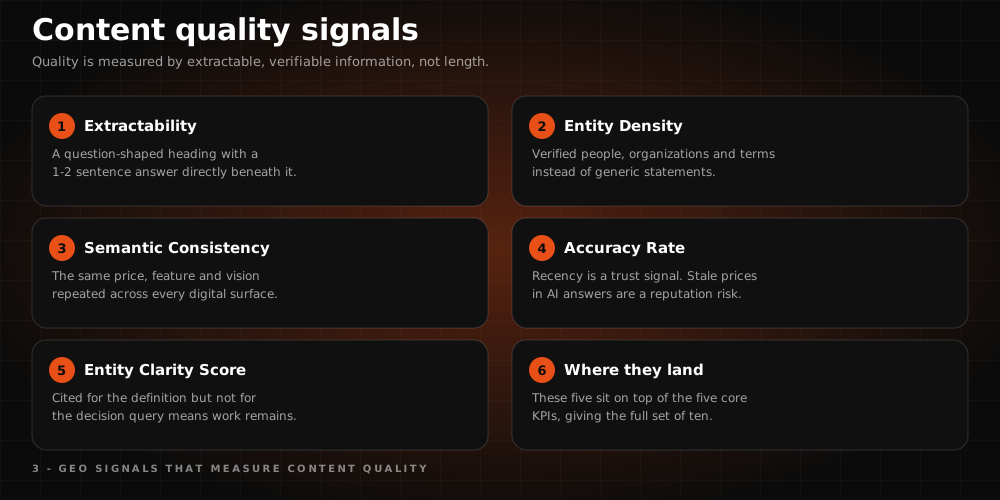
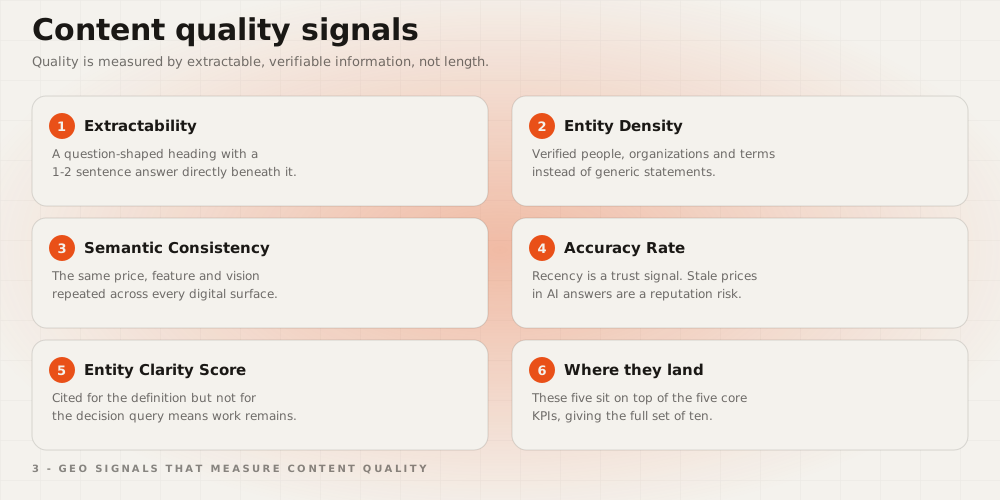
In generative search optimization, quality is measured not by text length but by how easily AI can extract real, verifiable information from it. When an LLM scans your content, it looks past word count to information density, structural clarity, and consistency with other sources. This approach adds five more measurable signals to your KPI set:
Extractability
AI wants to save time and compute when generating an answer. If your answer is buried inside convoluted sentences, the model skips you. H2/H3 headings that target the question directly, followed by a 1-2 sentence summary answer right below the heading, raise extractability.
Entity Density
For AI, quality is measured by how many verified entities (people, organizations, concepts, technical terms) your content carries on a topic. A piece that relies only on generic statements sends a low-quality signal; content that uses relevant statistics, official reports, and technical terms in the right places gets classified as a high-quality authority.
Semantic Consistency
If a piece of information on your website contradicts your social media profile or a forum discussion, AI classifies that information as risky. The quality signal strengthens when the same information (price, feature, vision) is repeated consistently across every digital surface.
Accuracy Rate
AI models treat recency as one of the strongest trust signals. Having AI serve outdated prices or discontinued features about your brand is a major reputation risk. Checking the accuracy of AI-generated answers about your brand weekly is one of the most critical operational metrics.
Entity Clarity Score
Total mention count is mostly noise. The metric that drives action is the entity clarity score, which shows how precisely AI understands your brand. Citation alone is not enough: if AI cites you only for a generic definition (for example, "What is X?") but recommends your competitor for decision-stage queries like "Which is the best X?", your content quality is not yet persuasive. Success means being the number one cited source in decision-support queries.
Tools and methods for managing GEO strategies
Tracking AI visibility requires going beyond static tools like Google Search Console. Queries are now dynamic, and answers are personalized for each user. At Webtures, we use advanced technologies to trace a brand's footprint across AI.
AI simulation and prompt engineering analysis
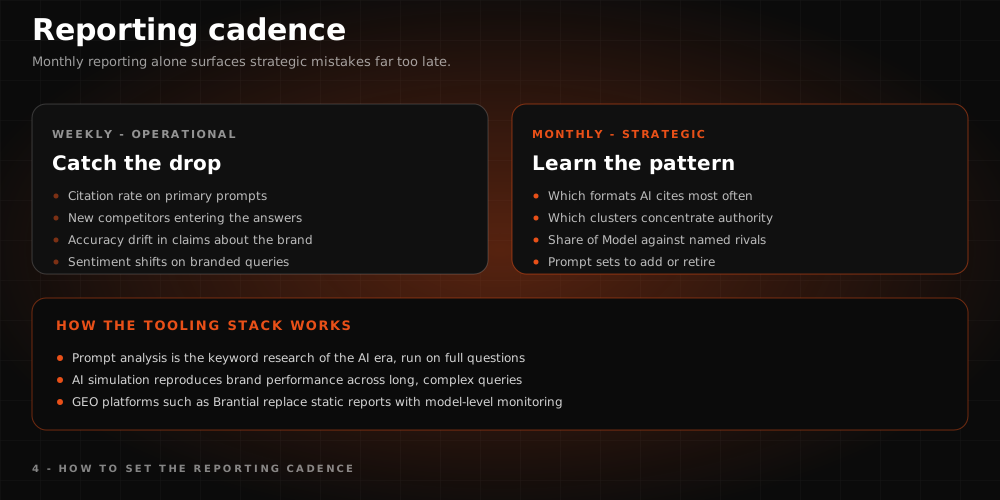
Prompt analysis: Understanding what users ask AI models is the keyword research of the new era. Long, complex queries such as "Which airline accepts pets and has the most flexible cancellation policy?" are replacing searches like "cheapest flight ticket." Average query length has reached 4-5 words as of 2025. We simulate your brand's performance across these complex queries.
Third-party GEO and monitoring platforms
Platforms that analyze the outputs of AI models are replacing traditional SEO tools. Here, you can use next-generation GEO platforms such as Brantial to measure and manage your brand's AI visibility. Brantial lets you track your brand's citation and recommendation performance across ChatGPT, Claude, Gemini, and Perplexity in real time:
- AI Answer Auditing: We analyze which questions place your brand next to which competitors, and which entity class AI assigns to your brand.
- Corporate Knowledge Graph Optimization: We mark up your website's data in machine-readable language (JSON-LD, schema, and so on) so that AI models understand your brand correctly. In systems that operate as citation engines, such as Perplexity, the clarity of your knowledge graph directly affects placement.
- Competitive Gap Analysis: We analyze why AI perceives your competitors as better and close the gaps (the trust gap) in your brand's digital footprint.
How should the reporting cadence be set up?
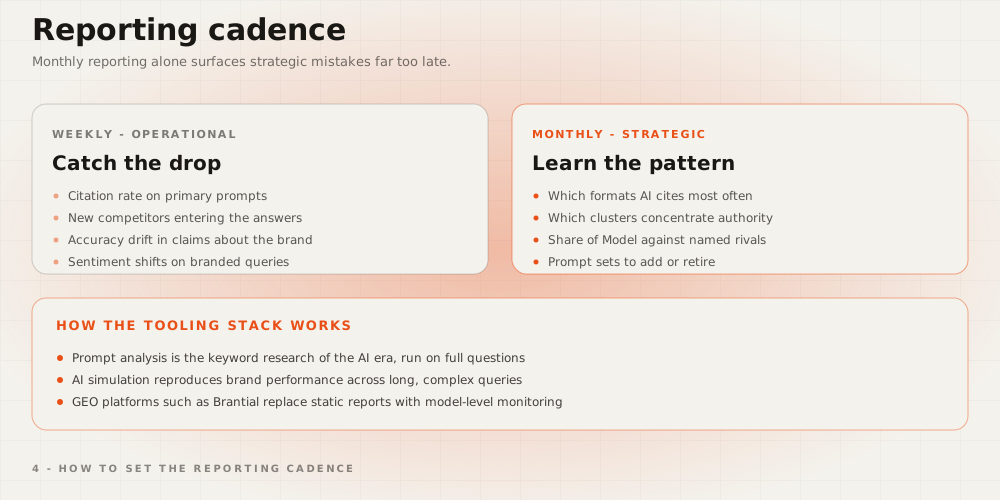
AI models process content far faster than classic search bots. Relying on monthly reports alone means noticing strategic mistakes too late. A healthy GEO measurement routine has two layers:
- Weekly monitoring (operational): Focuses on whether the citation rate has dropped on critical queries (primary prompts) and whether a new competitor has entered the AI answers.
- Monthly learning (strategic): Analyzes which content formats (comparisons, case studies) AI cites most often and which clusters concentrate your topical authority.
Heading into 2026, digital marketing has become an ecosystem where machines generate answers rather than people running searches. Success in the AI era is not how many people visit your site; it is how many people AI recommends your brand to as an expert, and what evidence it bases that recommendation on. Webtures is here to position your brand as the trusted authority of the AI era through this transformation.