How to Update Content Using AI Search Data?
The search ecosystem is moving fast away from its classic keyword-driven structure. Users no longer just type queries into search engines; they converse with AI-powered systems, ask questions, and expect direct answers.

The search ecosystem is moving fast away from its classic keyword-driven structure. Users no longer just type queries into search engines; they converse with AI-powered systems, ask questions, and expect direct answers. This shift makes it essential to build content not just to rank, but to produce answers.
This guide walks through how to read the new data signals emerging in AI-powered search environments and use them to update existing content, step by step. The goal is not to produce content from scratch; it is to adapt existing assets to the new search behavior.
Scope and purpose of this guide
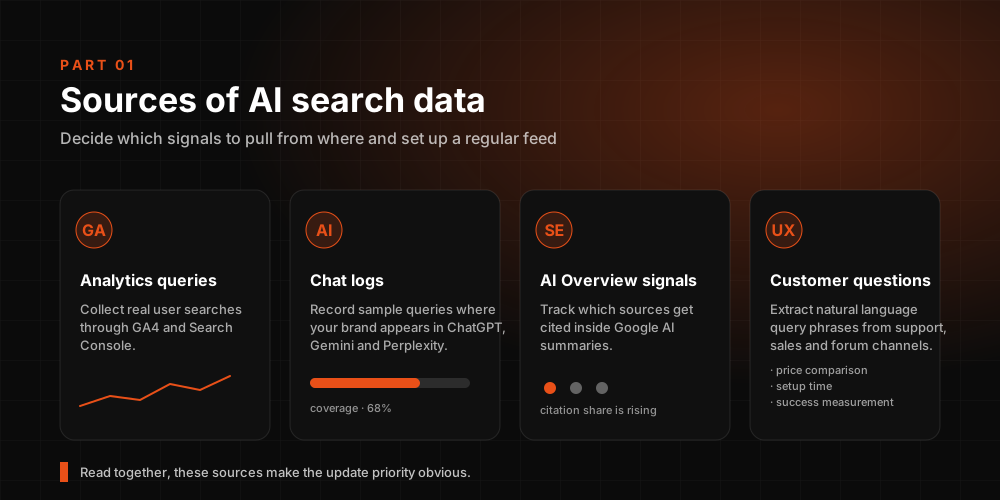
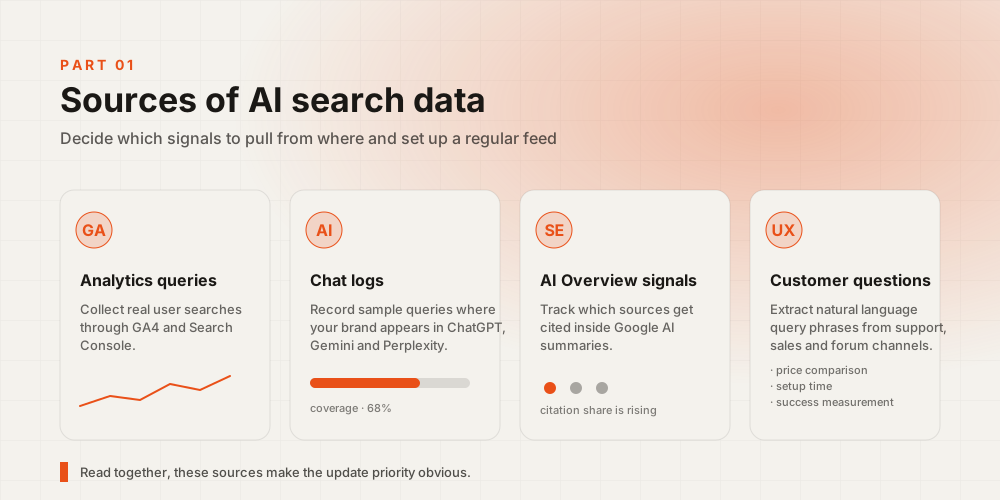
This guide was built to help you understand how AI-powered search systems interact with content and to turn that understanding into actionable content update decisions. The scope covers not just the theory of the shift but which content should be handled how in practice.
Its core purpose is to give content producers and SEO professionals clear answers to these questions:
Does existing content have the potential to appear in AI answers?
Which content can be updated with small touches, and which needs structural rework?
What content formats do AI systems prefer, and how are those formats integrated into existing pages?
Within this frame, the guide does not open a field separate from SEO; it combines existing SEO experience with AI-driven search behavior. Content updating is treated not as a one-off optimization but as a continuously improved system.
How do you read AI-powered search behavior?
The first step to gaining visibility in AI-powered search systems is reading how users actually use them. The goal here is not to rank for a query but to produce a meaningful, contextual answer to a question. AI search behavior therefore generates different signals from classic search habits.
In AI-based tools, users write longer, more descriptive, context-rich phrases. Alongside “what is” questions, decision-support questions such as “which is better,” “what should I choose it by,” and “what is the difference” come to the fore. This creates a search model that expects content not only to inform but to interpret and guide.
Question types users ask in AI tools
The question types that dominate AI-powered search generally fall into four groups. The first group is definition questions aimed at understanding a concept. Users want to learn what a term means, what it does, or in what context it is used. These questions favor content with clear, simple definition blocks.
The second group is comparison and selection questions. Questions like “X or Y,” “which is more advantageous,” and “when should each be preferred” make list and comparison structures important in content. For these questions, AI systems prefer content that separates information cleanly and presents clear differences.
The third group is problem-solution questions. Here the user states a need or a problem and expects a direct solution. These questions raise the odds that content with step-by-step explanations and actionable recommendations gets selected as the answer.
The last group is contextual, scenario-based questions. The user describes a specific situation and expects a tailored interpretation. At this point content must do more than transfer information; it must read the context and produce an answer.
Behavioral differences between classic search and AI search
Classic search behavior is mostly short and keyword-driven. The user scans results and clicks to reach the information, and content is optimized to rank and earn clicks.
In AI-powered search behavior, the user expects the answer itself instead of scanning results. That creates a significant break for content. The goal is now less about driving traffic to a page and more about being the source the answer is built from.
This difference forces a change of approach in content updates too. Keyword density and classic SEO signals are not enough on their own. Content must deliver clarity, contextual coherence, and answerable progression. AI systems more readily use content that satisfies user intent quickly and requires no extra interpretation.
How do you analyze the update potential of existing content?
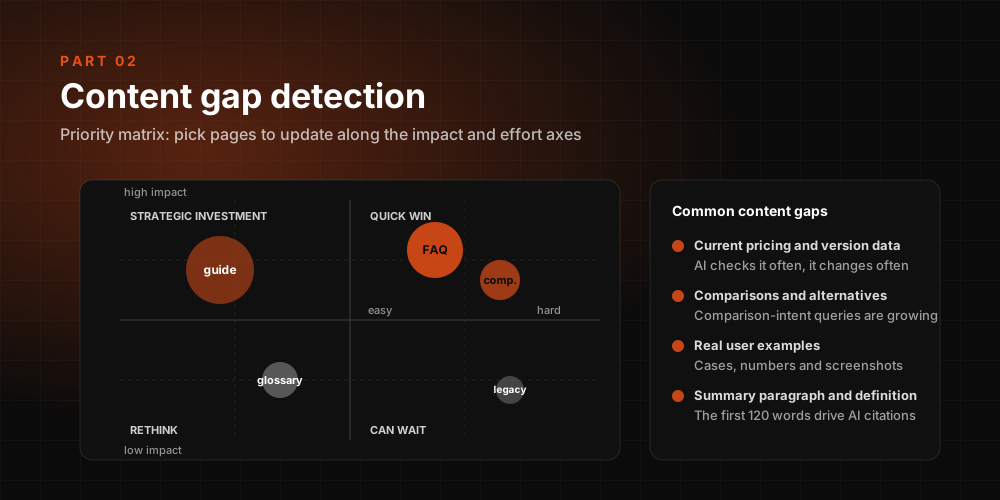
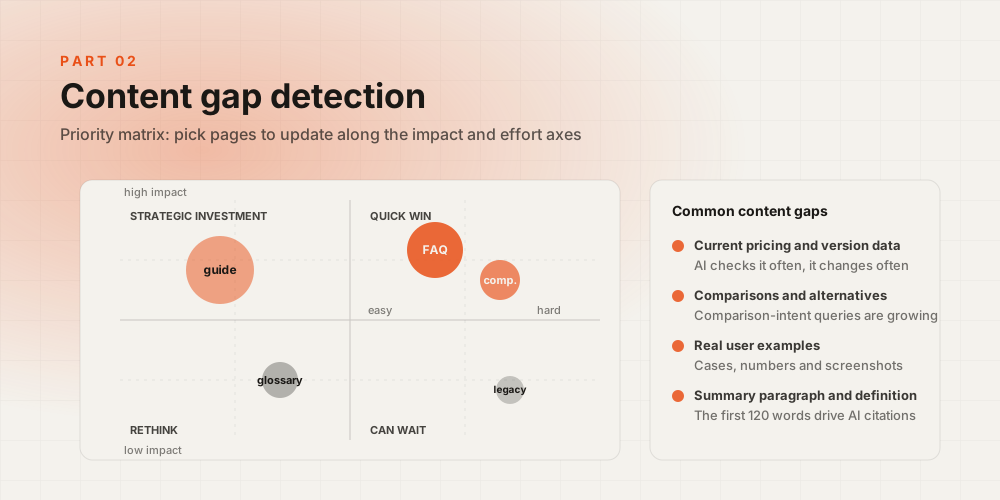
Treating every piece of content the same way is the wrong approach to adapting to AI-powered search. One of the most critical steps in the update process is analyzing which content genuinely carries potential. The goal is not to rewrite everything but to prioritize the pages with a realistic chance of appearing in AI answers.
At this stage, content should be evaluated not just on performance metrics but on its capacity to produce answers. A page may earn traffic yet still lack the clarity, separation, or context AI systems need. The analysis must therefore center on the content’s structure and the information it delivers.
Content with potential to appear in AI answers
Content with high AI-answer potential tends to share certain traits. It focuses on a single topic, defines concepts clearly, and contains sections that can directly answer user questions. Guides, explanatory blog posts, and comparison content are particularly well positioned.
When analyzing potential, evaluate whether the content answers these questions:
Can this content answer a question on its own?
Does it explain a specific concept clearly and simply?
Does it offer a structure that guides the user or supports a decision?
Content that meets these criteria can become more visible in AI-powered search with small structural updates. It does not need a full rewrite; completing the missing context is often enough.
Assessing answerability and content structure
Answerability describes whether AI systems can break content apart and reuse it. Long but scattered paragraphs are a disadvantage here. AI systems prefer sections that answer a specific question cleanly.
When assessing structure, review heading hierarchy, paragraph length, and information flow. Each H heading should carry one main idea, expressed as clearly as possible. Content where definitions, explanations, and examples blur together scores poorly on answerability.
Readability matters for humans; separability into units of meaning matters for AI systems. Structural assessment should therefore consider not only user experience but how reinterpretable the content is by AI.
Update or rewrite? How do you make the right call?
One of the most common mistakes in adapting to AI-powered search is applying the same intervention to every piece of content. Not all content is equally broken. The right call comes from objectively assessing the content’s current structure and the value it delivers.
The core distinction is this: does the content have a core that AI systems can build answers from, or does that core need to be rebuilt? The answer draws the line between updating and rewriting.
Content that only needs structural updates
Content that structural updates can fix is usually focused on the right topic but scattered in its delivery. The core information exists, but definitions are fuzzy, heading hierarchy is weak, or sections that directly answer user questions are missing.
What these pages need is not deletion but reorganization. Adding definition blocks, splitting long paragraphs, and clarifying the content flow is often enough. For AI systems, these interventions meaningfully raise the content’s answerability.
If the content fundamentally answers the right question and aligns with current context, a structural update is the most efficient approach.
Content that needs a rebuild
Some content has an approach problem, not just a structure problem. Pages written for the wrong search intent, pages covering multiple topics at once, or pages whose information has fully expired belong in this group. AI systems do not treat such pages as meaningful answer sources.
Pages that need a rebuild typically share these issues: unclear topic focus, convoluted delivery, and an information structure that does not match the user’s question. Small touches will not help here; the content must be reconstructed.
A rewrite decision is not a failure; it is a strategic step to adapt content to the new search behavior. Properly rebuilt content gains a serious advantage in AI answer visibility.
Delete or merge?
Alongside updating and rewriting there is a third option: removing content from the inventory or merging it with similar pages. For low-quality pages that miss search intent and have no salvageable core, pruning delivers the healthier outcome. If multiple pages try to answer the same question from different angles, consolidating them into a single strong page both concentrates topical authority and removes the ambiguity about which page AI systems should treat as the source.
URL structure matters in these decisions. An updated page should keep its existing URL; when merging or deleting, old addresses should be moved to the target page with permanent redirects. Unnecessary URL changes reset the signals a page has accumulated and delay the expected visibility gain.
How do you structure content for AI answers?
AI-powered search systems evaluate content not as a whole but as meaningful chunks of information. In content updates, how something is said becomes as critical as what is said. Well-structured content is easier for AI systems to understand and more likely to be chosen for answer generation.
The goal at this stage is not to force content into artificial language but to present information more clearly, more distinctly, and with stronger context. Content should consist of clean sections that can respond directly to a user’s question.
Sections that establish definitions and conceptual clarity
Sections that define concepts clearly are among the most valuable content pieces for AI systems. Content that states plainly what its topic is at first glance provides a strong foundation for answer generation.
Core concepts should therefore be defined in open, simple language. Definitions should avoid long, indirect delivery and be settled in a single paragraph wherever possible. This approach improves user experience and lets AI systems lift the relevant section directly as an answer.
Lists, comparisons, and step-based explanations
List and comparison structures are among the formats AI answers draw on most, because they separate information, simplify it, and make decisions easier. They stand out on “which,” “by what criteria,” and “how to” questions.
Step-based explanations offer a strong structure for problem-solution questions. Content that explains a process or method step by step scores high on answerability with AI systems. Updated content should use these structures wherever they fit.
Short, clean answer fragments
AI-powered search systems favor short, clean answer fragments over long passages. This does not mean content should be shallow; it means deep knowledge should be presented more compactly.
Under each H heading, build short sections that state one main idea clearly. These fragments let AI systems split the content and reuse it, and they let users reach the information they need fast.
Extra touches that strengthen an update
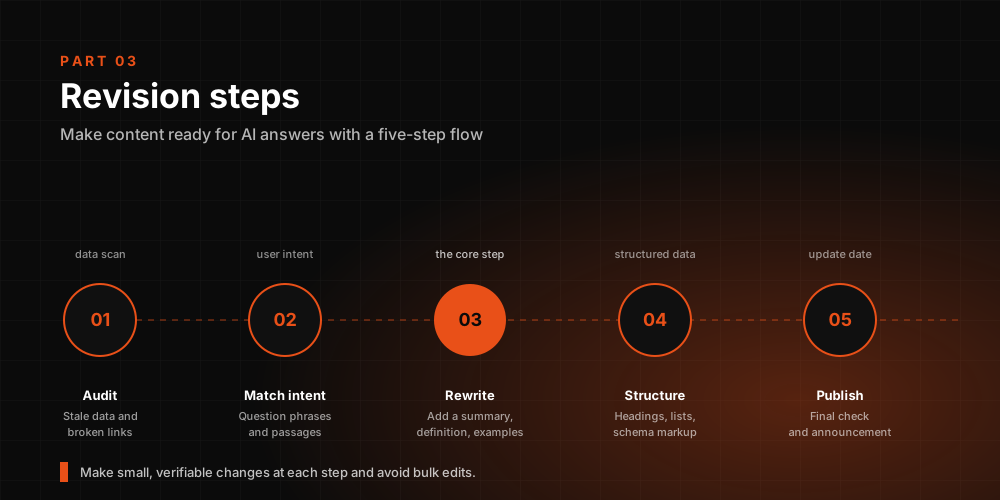
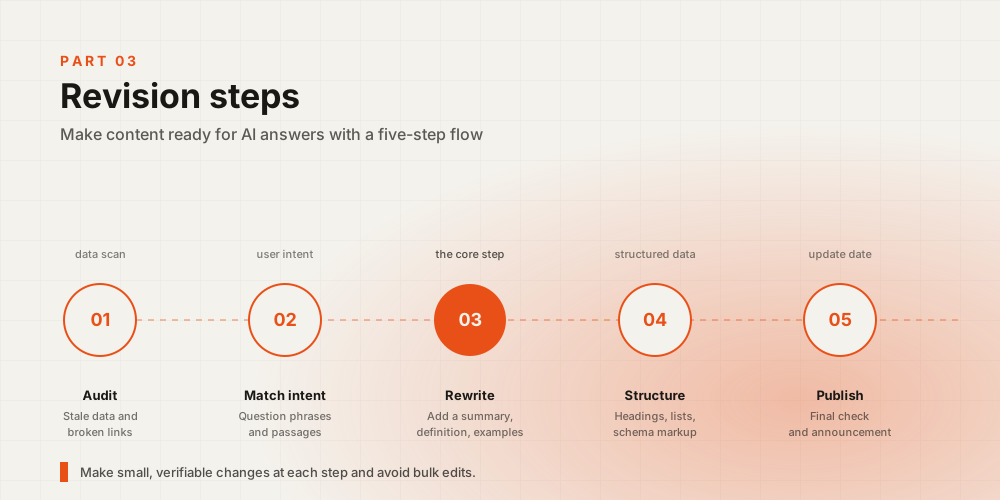
A few content-level touches layered on top of structural work meaningfully raise an update’s payoff in AI answers. The first step is data refreshing: statistics, examples, and date references in the content should be replaced with current sources. Changing the publish date alone is not enough; the model evaluates at the content level whether the information inside the text was genuinely renewed.
The second step is raising citability. Making the first sentence of every main section a clean answer that reads without context, adding short blocks of expert opinion or first-hand experience, and backing claims with references to trusted sources all raise the odds of being cited inside an answer. The final step is entity clarity: naming brands, products, and concepts consistently and completing missing schema markup helps machines classify the page correctly.
Checklist before and after a content update
-
Does the content focus clearly on one main topic?
-
Does the topic match the questions users ask in AI tools?
-
Does the content include open, simple definition sections?
-
Is the heading hierarchy (H2 to H3) meaningful and consistent?
-
Are there long, scattered paragraphs?
-
Does the content have sections that can directly answer a specific question?
-
Are definitions, lists, and step-based explanations clearly separated?
-
Does each H heading carry a single main idea?
-
Were short, clean answer fragments created?
-
Were the statistics and examples in the content refreshed with current data?
-
Is the language natural and human-centered?
-
Is the updated structure citable by AI systems?
-
Does the content help the user decide or move forward?
How do you monitor updated content performance?
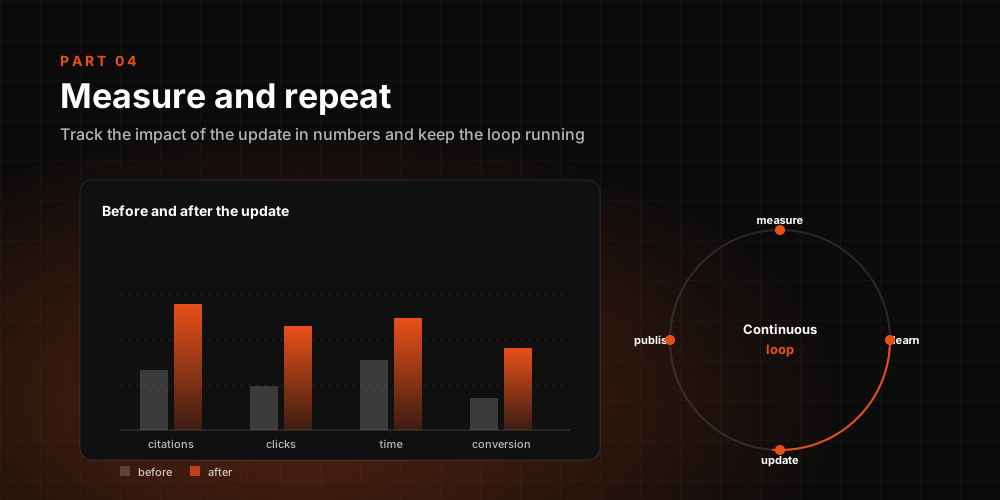
The success of a content update cannot be measured at publish time alone. Updated content’s performance in AI-powered search environments needs regular monitoring. Signals like visibility, citation, and inclusion in answers gain importance here.
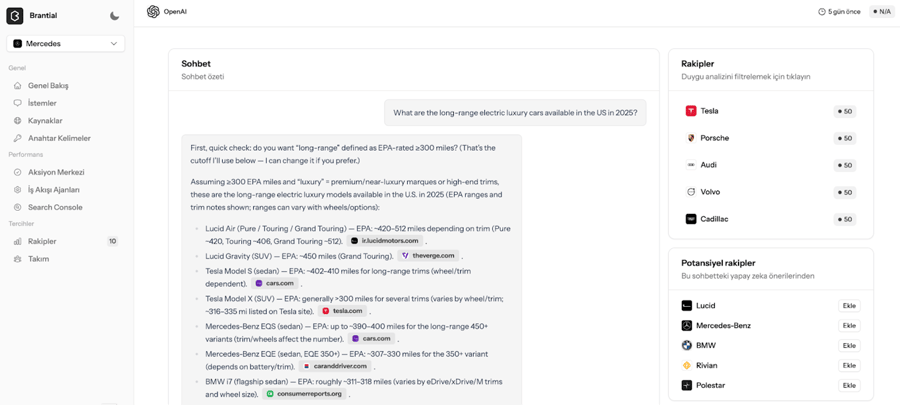
Through ai visibility tool options such as Brantial, you can track the queries a piece of content targets. That shows which content has started appearing in AI answers and where visibility is growing. Performance tracking makes continuous improvement of the update process possible.
Tracking also sets the update rhythm. Fast-aging topics need more frequent reviews, while evergreen guides should be revisited at least every six months as a healthy baseline. Updates do not show up in AI answers instantly; getting changes noticed and converted into visibility usually takes weeks. Measurement should therefore be built as a regular monitoring loop rather than a one-time check.
Common mistakes in AI-focused content updates
The most common mistake in adapting to AI-powered search is trying to write content only for AI. That approach produces unnatural language and delivery disconnected from the user.
Another common mistake is trying to update every piece of content into the same format. Not all content serves the same need, and each requires a different update approach. Focusing only on technical adjustments while ignoring content context also fails to deliver the expected visibility gain.
A successful content update process balances user needs with the working logic of AI systems.