What Is AEO? Answer Engine Optimization Guide
Learn what AEO is, how it works, and how it differs from GEO. Follow the 6-step Webtures guide to becoming the direct answer in answer engines.

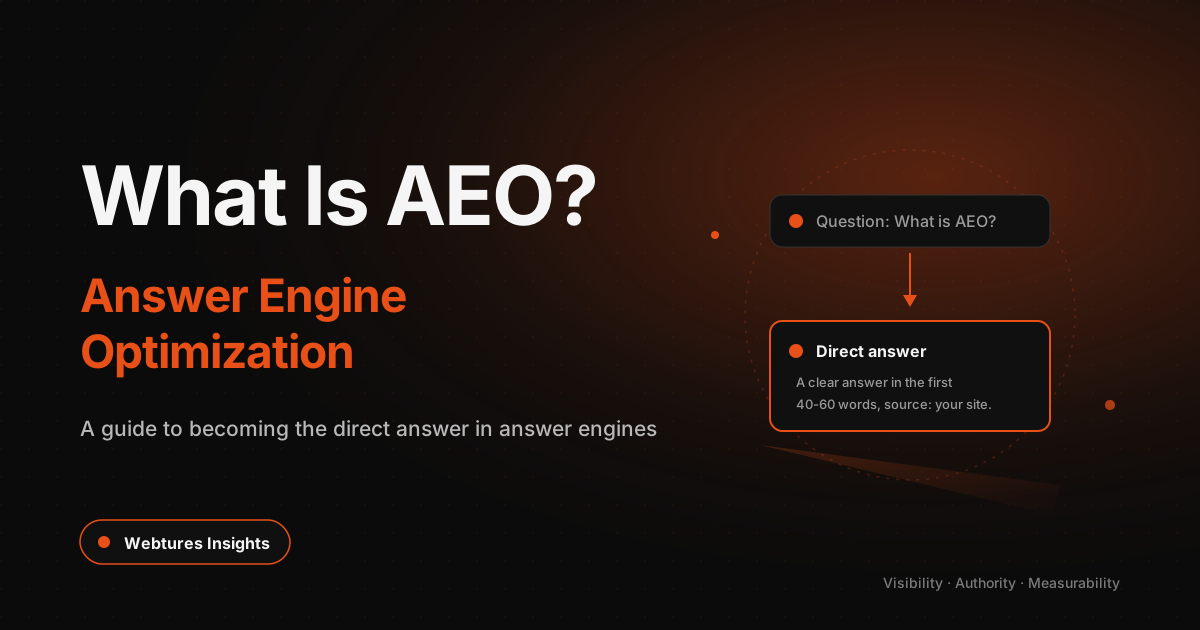
AEO (Answer Engine Optimization) is the practice of structuring your content so an answer engine selects it as the direct answer. Where classic SEO optimizes for rankings and clicks, AEO focuses on a single goal: being the answer to the user's question. Featured snippets, People Also Ask, voice assistants, Google AI Overviews, and generative engines like ChatGPT are all answer surfaces. In this guide we cover what AEO is, how it works, how it differs from GEO, and how to implement it step by step, from the Webtures perspective.
What is AEO (Answer Engine Optimization)?
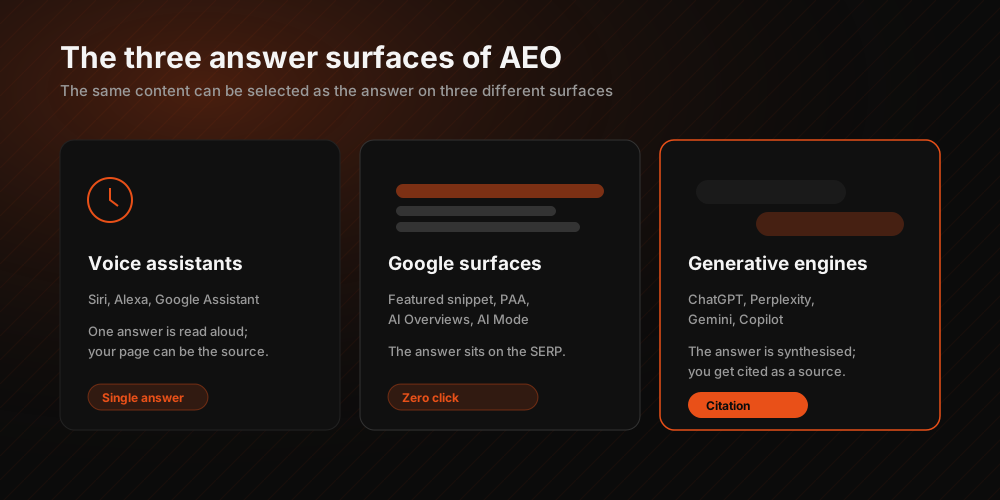
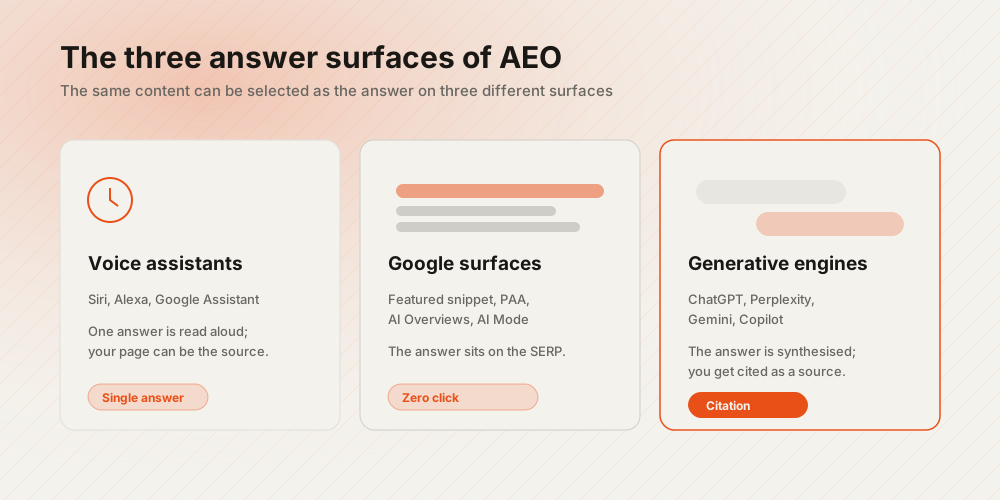
AEO is the optimization discipline that aims for content to be selected as the answer to a question rather than merely ranked in search engines. The term emerged in the featured snippet era; today it covers three types of answer surfaces:
- Voice assistants: Siri, Alexa, Google Assistant. They read out a single answer, and that answer can come from your content.
- Google answer surfaces: featured snippets, People Also Ask, AI Overviews, and AI Mode.
- Generative AI engines: ChatGPT, Perplexity, Gemini, Copilot. They synthesize the answer and cite you as a source.
AEO rests on one core assumption: users no longer expect a list of results, they expect an answer. Being the source of that answer builds visibility and authority even when no click follows.
How does AEO work?
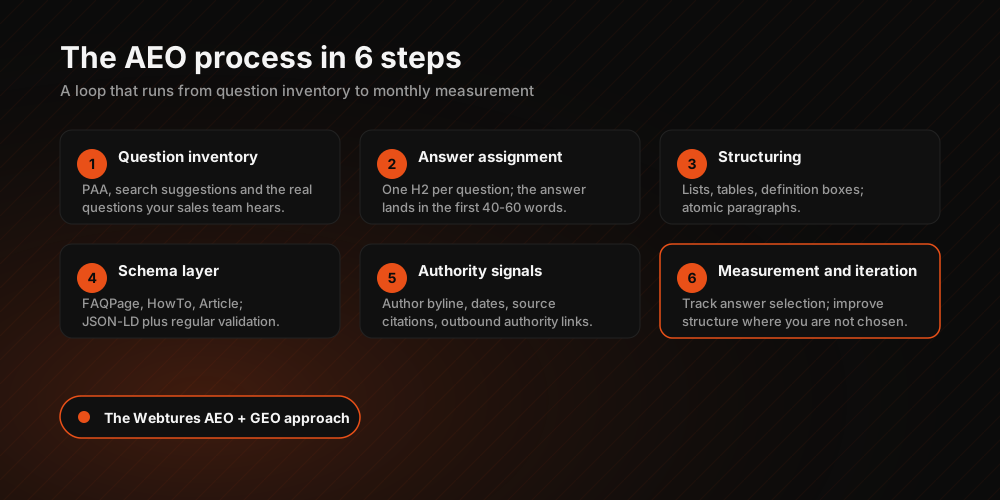
When selecting the best passage for a question, answer engines look at three things: the clarity of the answer, structural parseability, and the credibility of the source. AEO tactics therefore focus on content architecture:
- Question-format headings: H2s should match real queries ("What is it?", "How is it done?", "Why does it matter?").
- A direct answer in the first 40-60 words: The paragraph immediately below the heading should fully answer the question on its own.
- Atomic paragraphs: Every paragraph should read without context; answer engines quote passages in isolation.
- Lists and tables: Present steps as numbered lists and comparisons as tables.
- Structured data: FAQPage, HowTo, and Article schema make your answer machine-readable.
What is the difference between AEO and GEO?
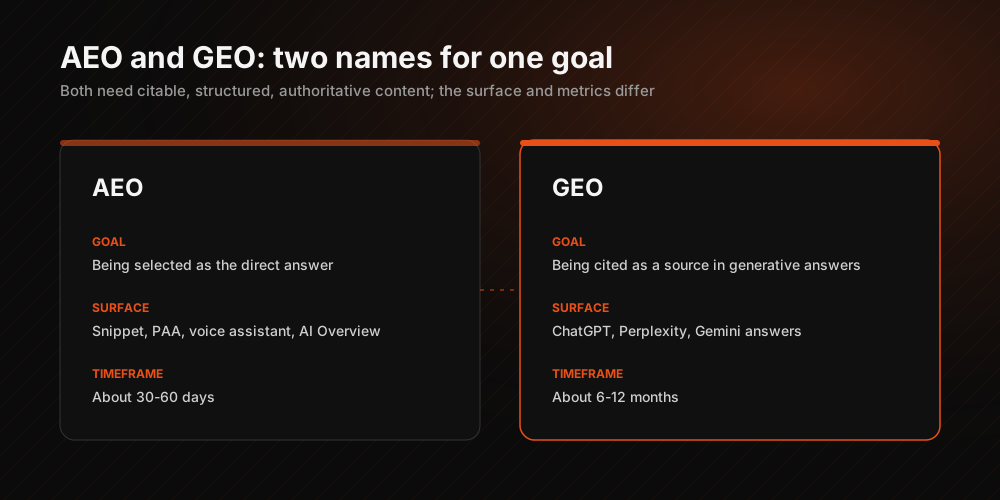
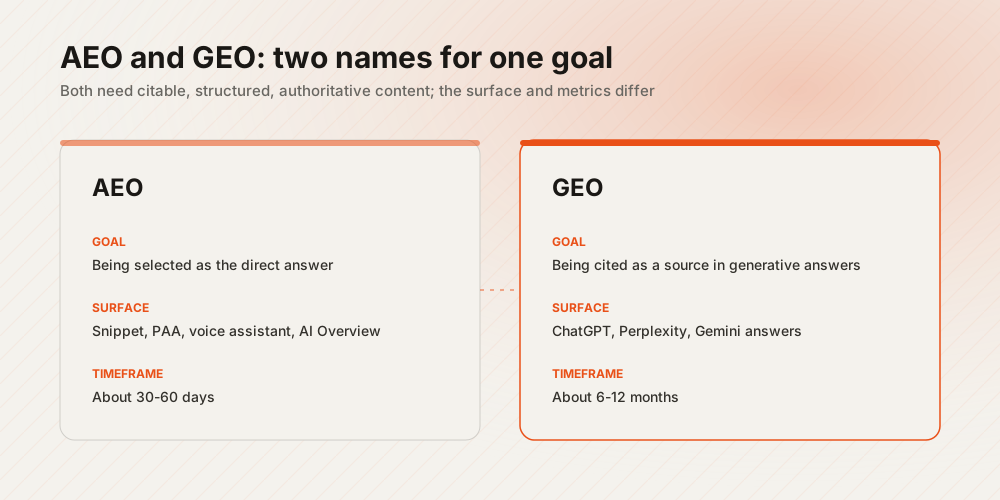
AEO and GEO are largely two names for the same goal; both demand citable, structured, authoritative content. The difference lies in the target surface and the success metric:
| Dimension | AEO | GEO |
|---|---|---|
| Target surface | Snippets, PAA, voice assistants, AI Overviews | ChatGPT, Perplexity, Gemini answers |
| Success metric | Being selected as the direct answer | Being cited as a source, share of voice |
| Typical timeline | Roughly 30-60 days | Roughly 6-12 months |
In practice, rather than separating the two, unify them under a single AI visibility strategy that treats every answer surface as one measurable program.
Why does AEO matter?
Zero-click search is now the rule: when an AI Overview appears, roughly 83 percent of searches end without a click. Users get the answer on the results page or inside a chat interface. In this environment the definition of visibility has changed; ranking first is not enough, you need to be inside the answer.
Turkey sits at the center of this shift: with 94.49 percent of AI-driven web traffic coming from ChatGPT, it leads the world. ChatGPT's search layer is no longer a separate product either; the ChatGPT Search experience is integrated directly into the chat interface. AEO work therefore pays off simultaneously on Google answer surfaces and inside generative engines.
How to do AEO in 6 steps
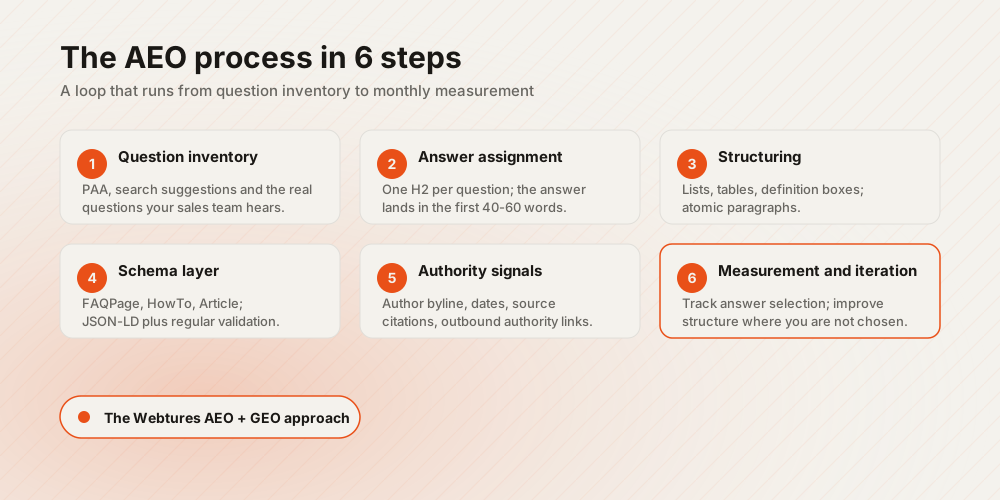
- Build a question inventory. Collect the real questions your audience asks: People Also Ask, search suggestions, questions reaching your sales team, community discussions.
- Assign each question a single, clear answer page or section. One H2 answers one question, and the answer arrives within the first 40-60 words.
- Structure the content. Use numbered steps, bullet lists, comparison tables, and definition boxes.
- Add schema. Implement FAQPage, HowTo, Article, and Organization schema in JSON-LD, and validate it regularly.
- Strengthen authority signals. Add named authors, current dates, source citations, and outbound links to authoritative references.
- Measure and iterate. Track which questions you are selected to answer; where you are not, improve the clarity and structure of the answer.
During implementation, use a comprehensive GEO checklist of 100+ items as your reference; every AEO-related item belongs on it with explanations.
Common AEO mistakes
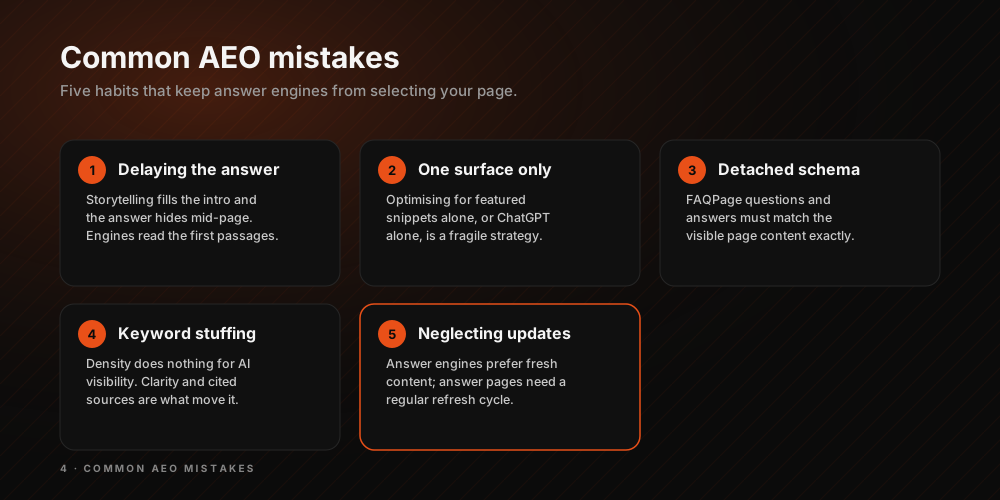
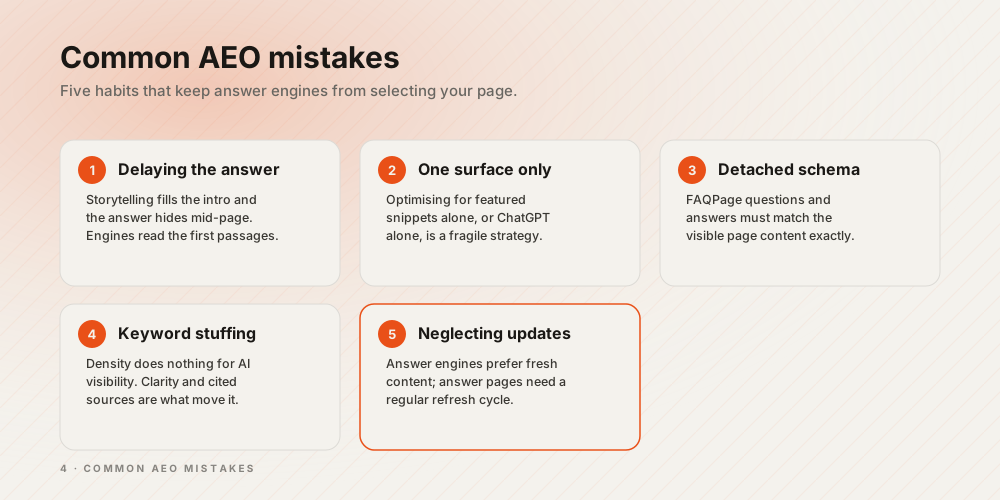
- Delaying the answer: Filling the intro with storytelling and burying the answer mid-page. Answer engines look at the first passages.
- Optimizing for a single surface: Focusing only on featured snippets or only on ChatGPT is a fragile strategy.
- Building schema disconnected from the content: The questions and answers in FAQPage schema must match the visible page content exactly.
- Keyword stuffing: The academic findings are clear; increasing keyword density does nothing for AI visibility, while clarity and cited sources do.
- Neglecting updates: Answer engines prefer fresh content; answer pages need regular refreshes.
The Webtures approach
Webtures runs AEO not as a standalone tactic but under a single measurable model alongside SEO and GEO: question inventory and content architecture, a schema layer, authority building, and monthly answer-selection tracking with a fixed prompt set. With 16 years of strategy experience, we aim to make your brand the source of the answer on both Google answer surfaces and generative engines. To assess where your brand currently stands in answer engines, get in touch with our GEO consulting team.