What is Ahrefs? How do you run a site analysis with Ahrefs?
Explore what Ahrefs is and how to analyze any site with Site Explorer, Brand Radar, Keywords Explorer, Site Audit, and GEO visibility tracking.

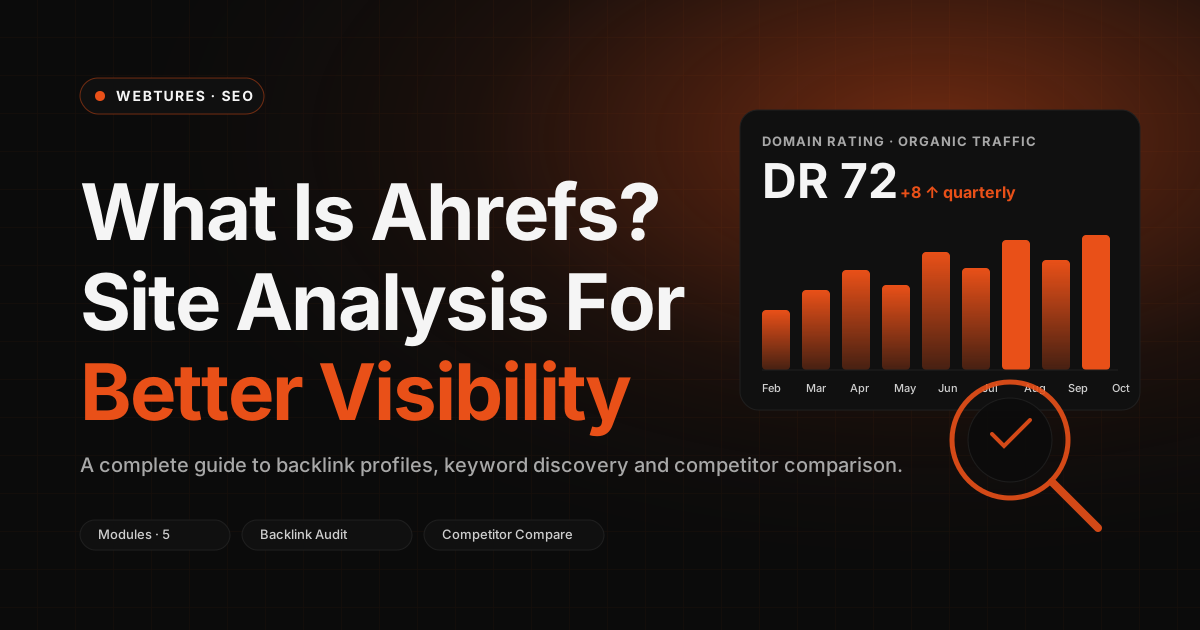
Ahrefs is a comprehensive marketing platform that digital marketing teams use to analyze website performance, competitor visibility, backlink profiles, content opportunities, paid search data, and AI Search visibility. Once known primarily for its backlink and organic search data, Ahrefs today also delivers strategic insight across GEO, AI visibility, Brand Radar, AI Content Helper, competitor source analysis, and content coverage evaluation.
Brand visibility today is no longer limited to classic search results. ChatGPT, Google AI Overviews, AI Mode, Gemini, Perplexity, Copilot, and similar answer systems play a growing role in how users make decisions. That is why tools like Ahrefs should be used not only to see where you rank for which keyword, but to understand which topics your brand is perceived as a source for, which of your pages are citable, and how your competitors are positioned in AI-powered answers.
What is Ahrefs and why use it?
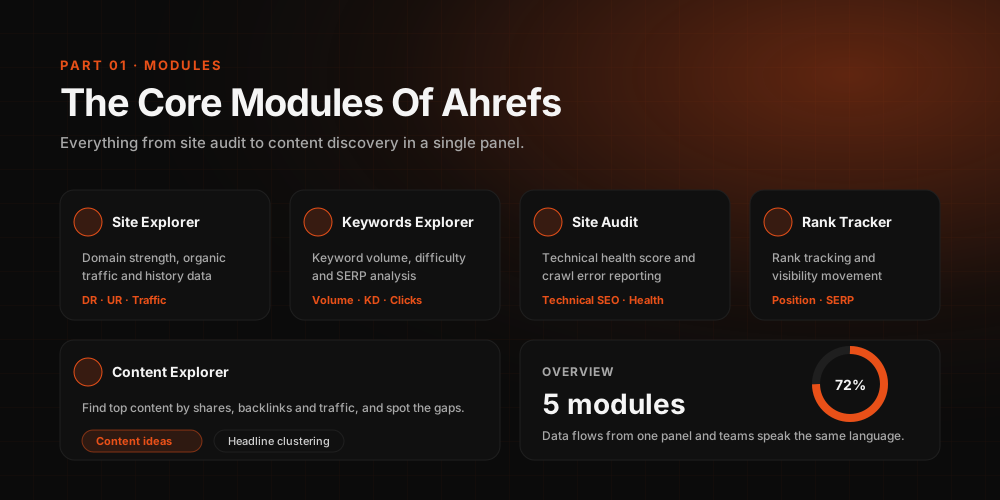
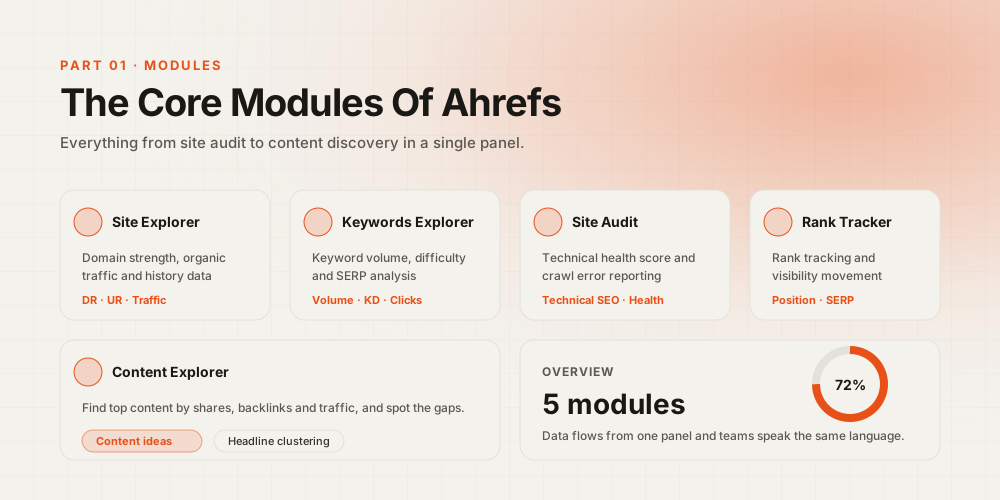
Ahrefs is a digital marketing analysis platform built on tools such as Site Explorer, Keywords Explorer, Site Audit, Rank Tracker, Content Explorer, Brand Radar, AI Content Helper, and Batch Analysis. With these tools you can analyze a website's traffic sources, backlink profile, strongest pages, competitors, advertising data, content gaps, and AI Search visibility.
What makes Ahrefs valuable is that it combines different data sets into a single workflow. A brand can simultaneously examine which of its pages attract traffic, which sources it earns links from, which content its competitors lead with, where answer gaps exist, and how visible it is on AI-powered platforms.
For GEO, Ahrefs offers a powerful data layer that goes beyond keyword or link tracking: source trust, topical authority, entity relationships, prompt intent, citation opportunities, and competitor source visibility can all be worked from its data.
What data does Ahrefs provide?
- Competitor website analysis
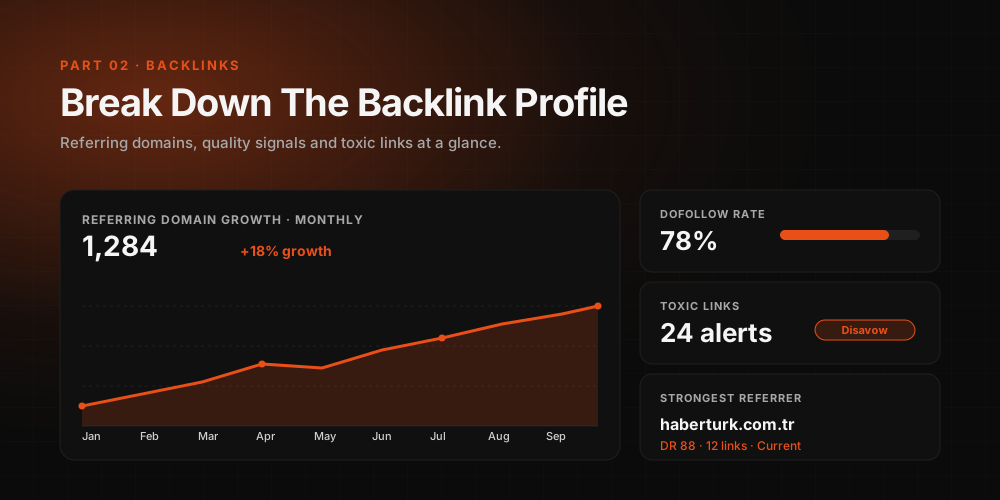
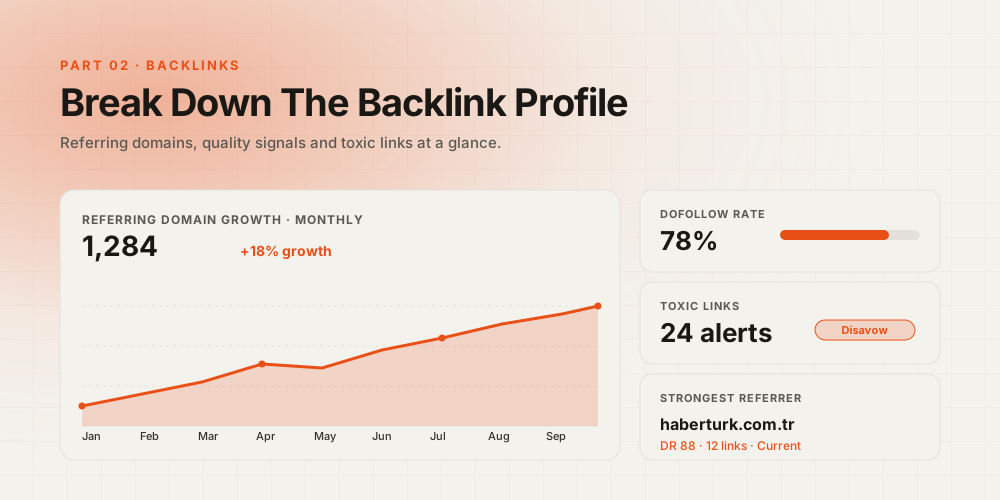
- Backlink and referring domain analysis
- AI Search and Brand Radar visibility
- Organic search and content performance
- Prompt, query, and user intent analysis
- Content gap and topical coverage analysis
- Paid search and competitor ad data
- Technical health checks with Site Audit
- Visibility change tracking with Rank Tracker
- Multi-domain comparison with Batch Analysis and Domain Comparison
Ahrefs features focused on AI and GEO
Brand Radar
Brand Radar is Ahrefs's AI visibility analysis tool. It helps you track which queries, topics, and prompts surface your brand across platforms like AI Overviews, AI Mode, ChatGPT, Gemini, Perplexity, Copilot, and Grok. With it you can analyze brand mentions, citation opportunities, competitor comparisons, AI Share of Voice, custom prompt tracking, and visibility changes over time.
For GEO, Brand Radar is a critical tool for understanding how a brand is perceived inside AI-powered answer systems. Which pages stand out as sources, which competitors appear in the same answers, where visibility gaps exist, and which content needs strengthening can all be identified more clearly with this data.
AI Content Helper
AI Content Helper helps you analyze a piece of content's topical coverage, user intent, and its differences from competing content. The tool evaluates the top-ranking pages for a target topic or query, shows which subtopics your content is missing, and offers recommendations for building a more comprehensive content structure.
In GEO work, this feature should be used not to make content longer, but to make it clearer, more answerable, more citable, and stronger in topical integrity. The goal is not to raise keyword density; it is to make the content respond more precisely to different prompt intents, sub-questions, and entity relationships.
Keywords Explorer and AI intent analysis
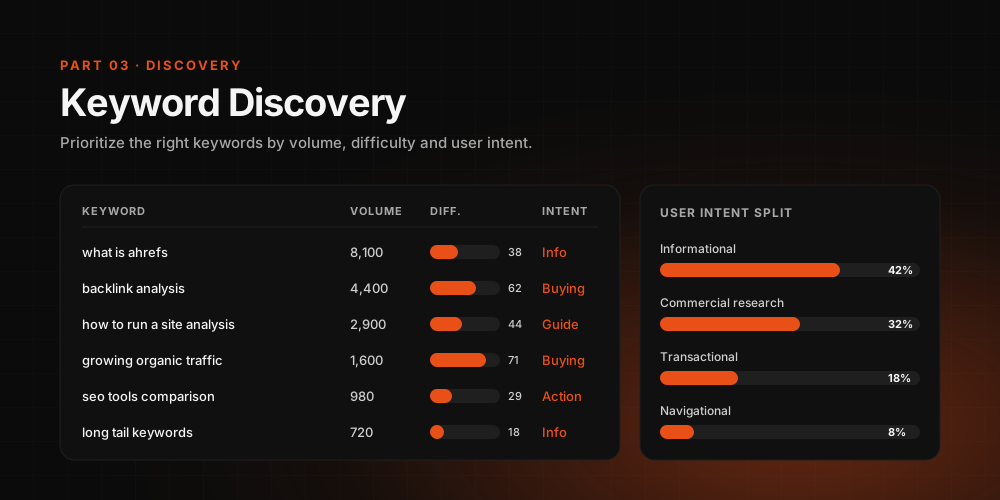
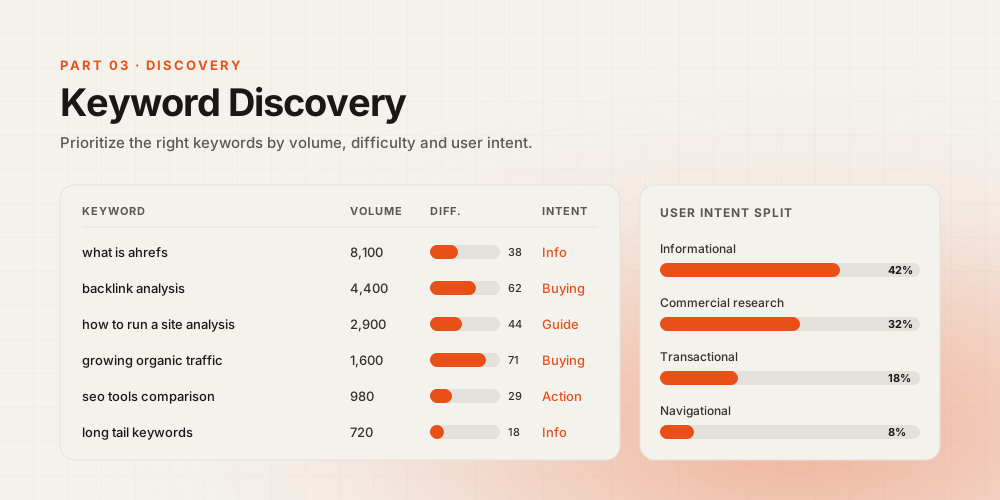
Keywords Explorer is one of the core Ahrefs tools for finding keywords, long-tail queries, question patterns, comparison intent, and content opportunities. Ahrefs's AI-assisted intent analysis helps classify queries into intents such as informational, commercial, transactional, navigational, and branded.
For GEO, Keywords Explorer should not be used for search volume or difficulty data alone. Queries should also be evaluated for prompt potential, answerability, user journey stage, competitor source presence, content gaps, and AI Search visibility.
Site Explorer
Site Explorer helps you analyze any website's traffic sources, strongest pages, backlink profile, competitors, paid search data, and AI visibility signals. You can examine which pages drive a competitor's traffic, which links build its authority, and which content areas it dominates.
With a GEO focus, Site Explorer should be used to understand which topics competitors are positioned as sources for, which of their pages carry citable structure, and which link sources support their brand trust.
Ahrefs Dashboard
The Ahrefs Dashboard is the control panel where you can quickly track the overall status of your projects. From here you can monitor site health, traffic changes, backlink movements, ranking shifts, content alerts, and core per-project metrics. For teams managing multiple sites, the Dashboard speeds up daily checks and prioritization.
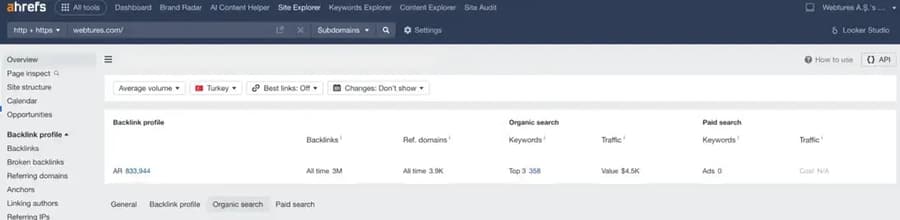
For GEO, the Dashboard brings technical health, content visibility, and backlink changes into one screen, which helps you keep a regular eye on the pages with the highest potential to serve as sources.
Competitor and source analysis with Site Explorer
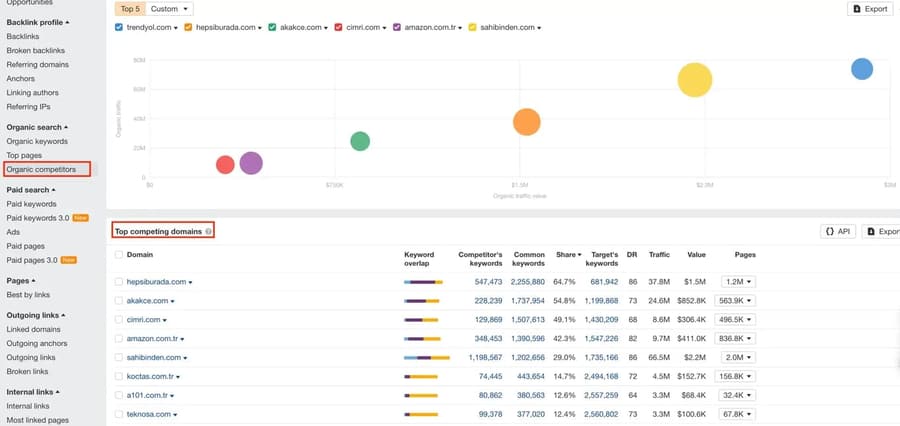
Site Explorer lets you examine a website's or a specific URL's traffic sources, most valuable pages, competitors, and backlink profile in depth. Use this screen to understand why competitors are visible and to decide which pages deserve reinforcement.
Overview
The Overview area summarizes core metrics such as backlink profile, referring domain count, traffic estimates, traffic value, country distribution, competitor visibility, and site growth trends. Use this screen to get a quick read on a site's overall visibility health and where it is gaining strength.
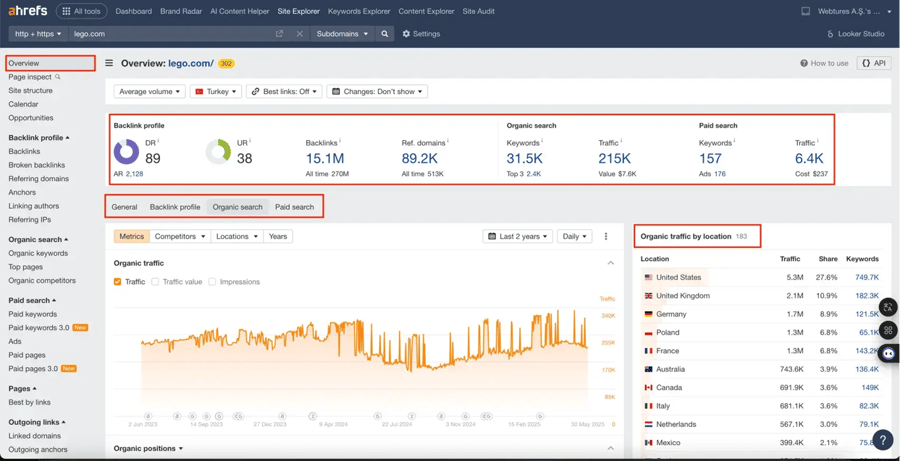
For GEO, treat Overview as the starting screen for understanding which pages and topics earn the brand its value as a source.
Top Pages
The Top Pages section lists a website's highest-traffic or highest-value pages. Here you can see the page URL, estimated traffic, traffic value, keyword count, strongest query, and position data.
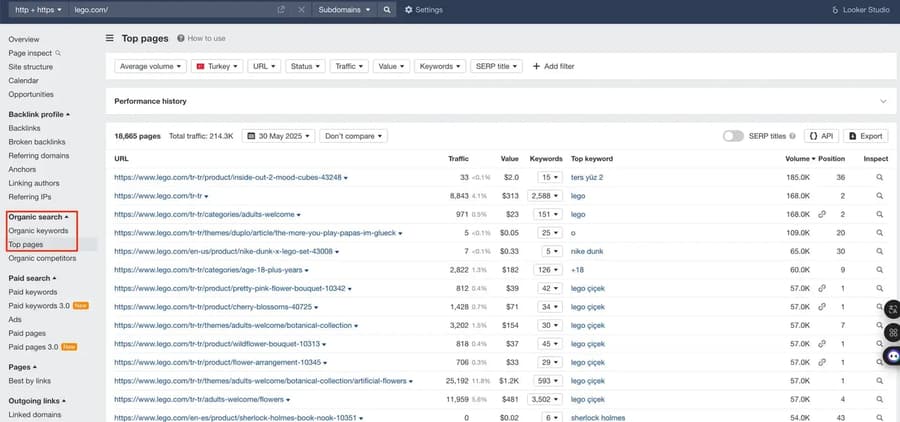
This section matters especially for GEO, because your strongest pages are the content most likely to be shown as sources in AI Search systems. These pages should be reinforced with clear definitions, up-to-date information, structured data, strong internal links, credible references, and explicit answer blocks.
Backlink Profile and citation trust
The Backlink Profile area helps you analyze the links pointing to a website: newly gained links, lost links, broken links, anchor texts, and the dofollow/nofollow distribution. Backlink data should be used not just to count links, but to understand which sources, publications, authors, and topics a brand is associated with.
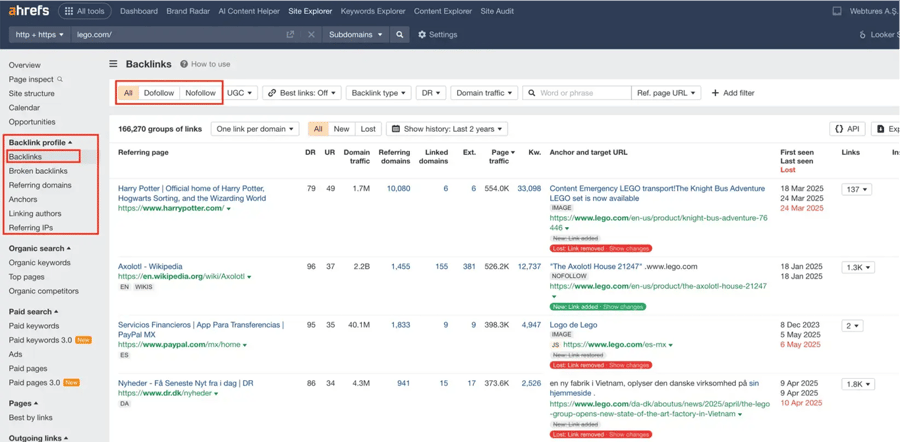
For GEO, the backlink profile is a strong signal for citation trust and entity authority. Links from quality publications, topically relevant content, and credible author profiles can help a brand be perceived as a more trustworthy source in specific areas.
Referring Domains
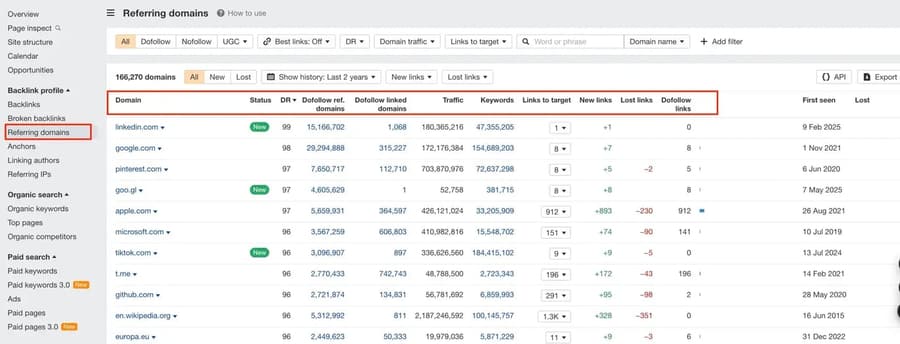
The Referring Domains section shows the distinct domains linking to your site. These domains can be reviewed by criteria such as DR, traffic, link count, country, TLD, or link quality. Low-quality, irrelevant, or risky domains can be flagged, while links from strong domains can be evaluated separately for digital PR and authority strategy.
Linking Authors
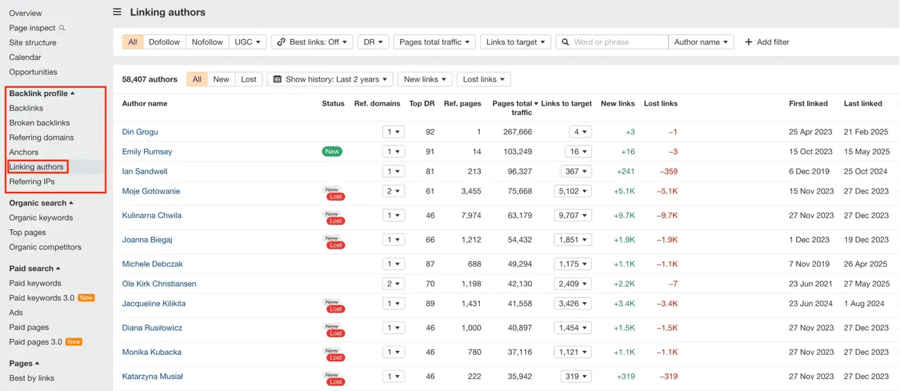
The Linking Authors section lists the authors behind the content linking to your brand or to the site you are analyzing. This screen is valuable for analyzing the creators writing about your brand, lost links, potential collaboration opportunities, and sources where links could be re-earned.
- Shows the authors linking to the brand most often.
- Surfaces content creators worth collaborating with.
- Makes it easier to track lost links.
- Reveals opportunity areas for digital PR and citation earning.
Organic Search and query analysis
The Organic Search and Organic Keywords sections show which queries a site is visible for, which pages attract traffic, which keywords are rising or falling, and where competitors are gaining an advantage.
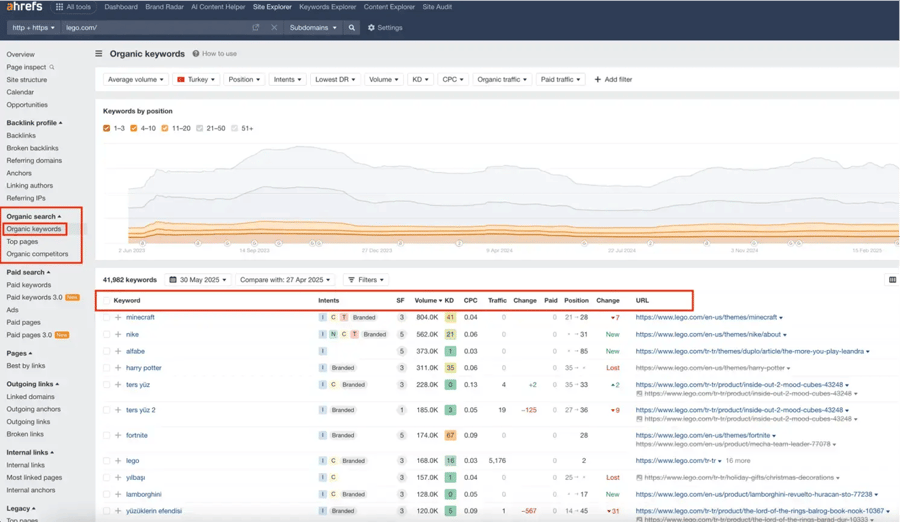
In GEO work, this data can be used to build a prompt map. Rather than looking at a query's volume alone, evaluate user intent, answerability, decision stage, competing sources, and whether the page is citable within AI Search systems, all together.
SERP Overview and Identify Intents
SERP Overview shows how the results for a given query change over time: newly entering pages, disappearing pages, and rising and falling URLs, side by side. The Identify Intents feature helps you understand the user intent behind the query.
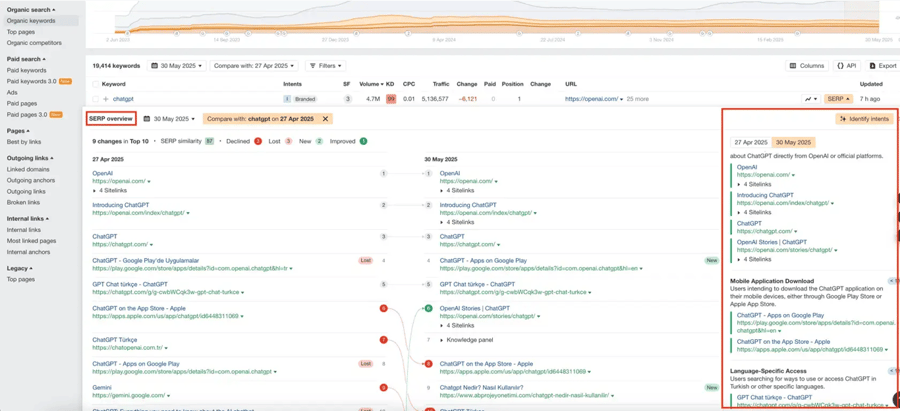
This screen is especially useful for GEO, because it reveals which content formats are strengthening for the same query over time, which sources are pulling ahead, and how user intent is shifting.
Paid Keywords
The Paid Keywords section shows which keywords competitors are bidding on in Google Ads, the cost per click for those keywords, paid traffic potential, ad position, and the associated URLs. This data can be used to understand which offers, products, categories, or conversion pages competitors are investing in.
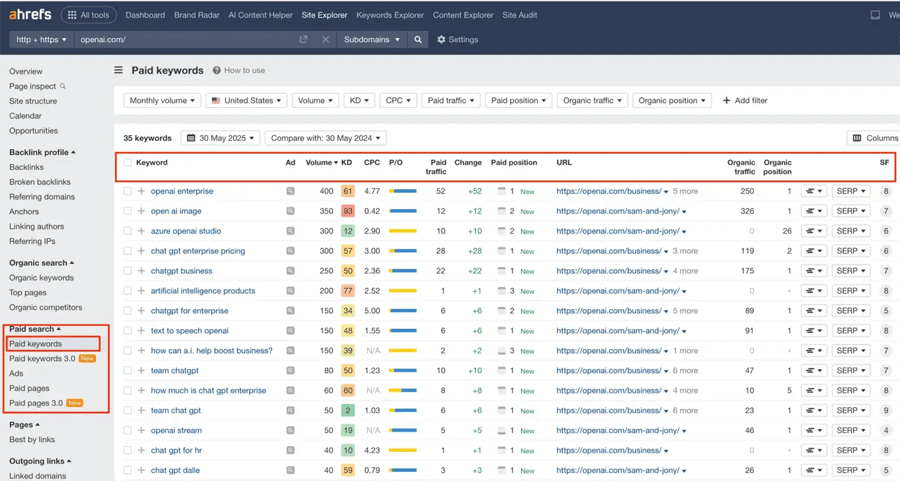
On the GEO side, paid keyword data provides supporting evidence for which queries users rely on at the purchase or decision stage. These queries can be worked into your content as comparisons, product descriptions, pricing, use cases, and decision-support blocks.
Keywords Explorer
Keywords Explorer delivers new query ideas, long-tail phrases, question patterns, parent topic clusters, difficulty scores, volume, click data, and intent analysis. The tool helps you build content planning around user needs and answer structure rather than a simple keyword list.
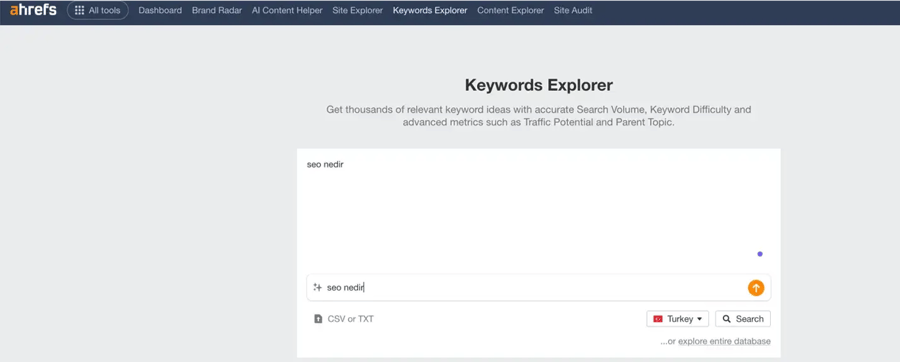
AI Suggest and intent analyses make it easier to see different prompt scenarios during content production. A single topic can split into intents such as "what is," "how to," "comparison," "price," "alternative," "best option," and "who is it for." This segmentation feeds directly into a GEO-focused content architecture.
Rank Tracker
Rank Tracker follows your website's visibility changes over time for the queries you define. Desktop and mobile data can be reviewed separately, competitors can be compared, and you can see which topics you are gaining or losing strength in.
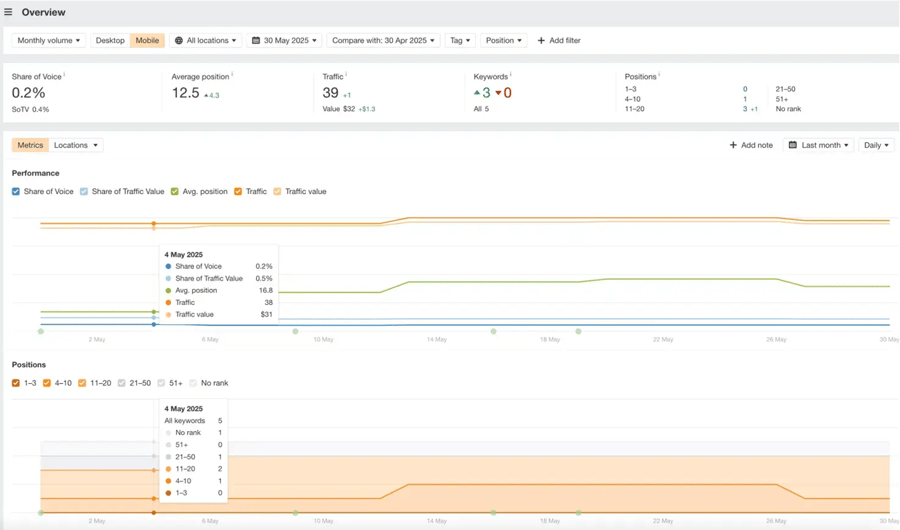
For GEO, Rank Tracker can be used to monitor which queries you are gaining ground on, which content satisfies prompt intent best, and where additional content or page updates are needed.
Site Audit
Site Audit is the Ahrefs tool that analyzes a website's technical health. Crawl issues, broken links, meta tag problems, duplicate title and description fields, redirect errors, indexability problems, and crawl log data can all be reviewed here.
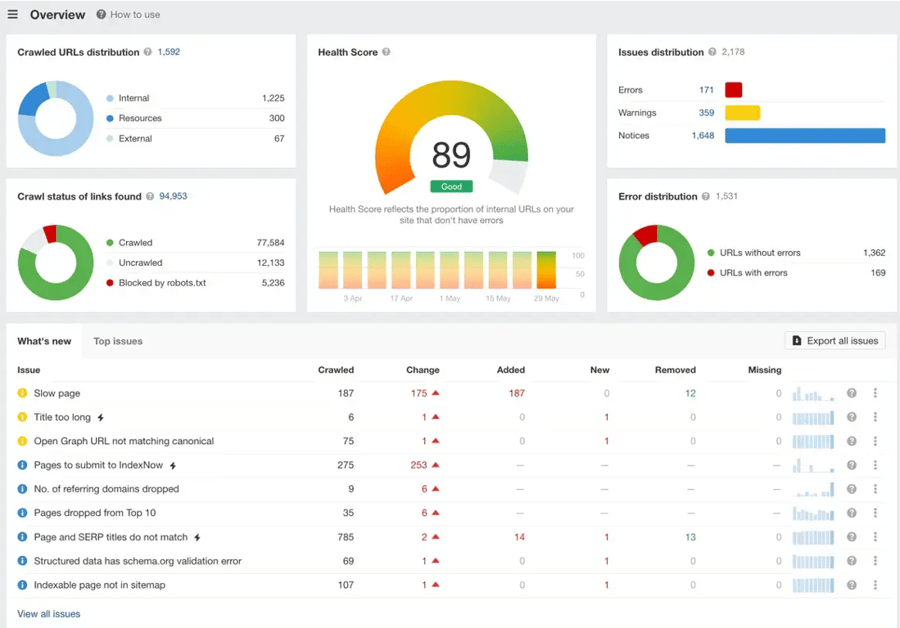
- Broken links
- Meta tag errors
- Duplicate title and description fields
- Crawl and accessibility problems
- Crawl log data
- Internal link and page architecture issues
On the AI Search and GEO side, technical health is a critical foundation. Crawler access, clean URL structure, correct canonical usage, fast-loading pages, readable HTML, structured data, and fewer broken links all contribute to content being perceived as a more reliable source.
AI Content Helper
Ahrefs's AI Content Helper can be used to make content production more strategic and GEO-ready. The tool analyzes competing content for a target topic or query, reveals user intents, identifies missing subtopics, and offers recommendations for improving content coverage.
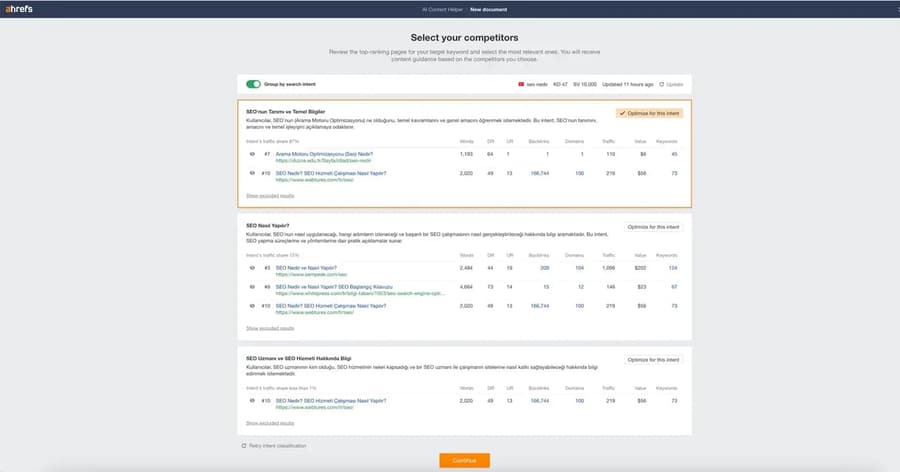
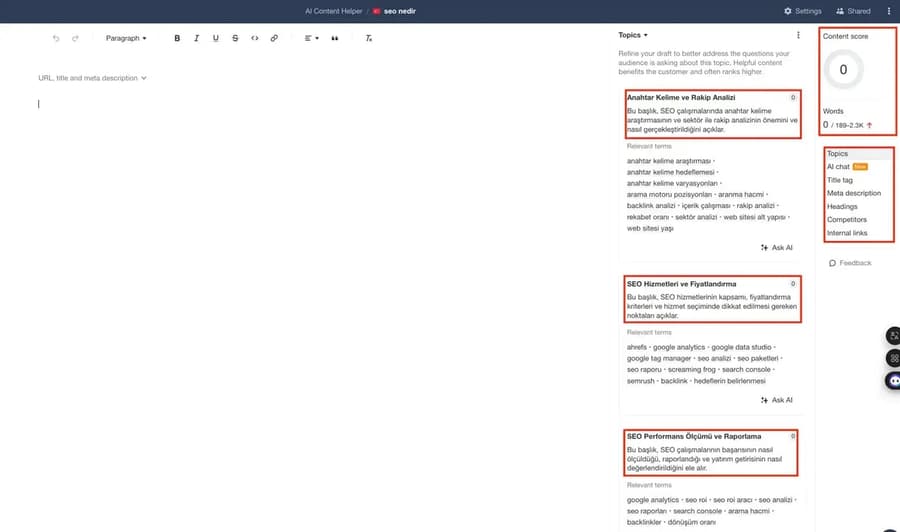
This feature shows which headings your content is missing, which questions need answering, and where clearer explanation is required. The result is content that reads better not only for users but for AI-powered answer systems.
What is Ahrefs Brand Radar?
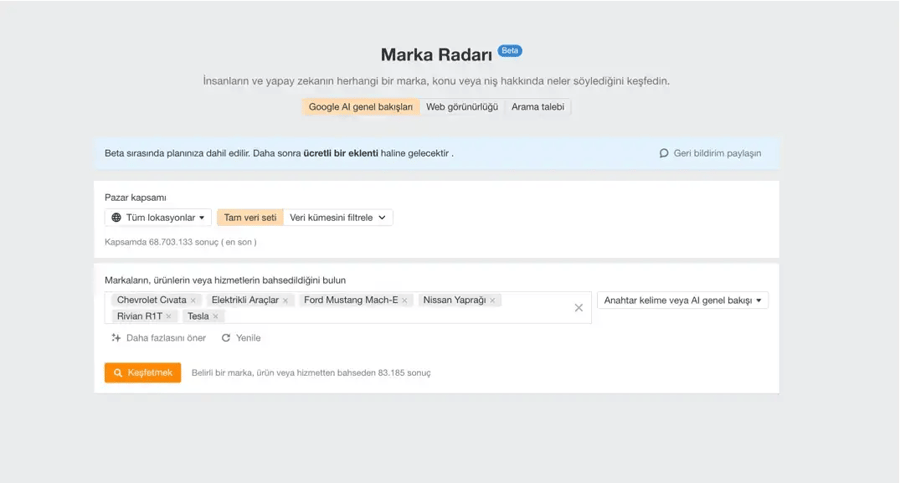
Brand Radar is the Ahrefs tool that analyzes how brands appear across AI-powered platforms. It helps you track which prompts mention your brand, which competitors you are named alongside, which pages earn citations, and where visibility gaps remain.
- Measures AI Search visibility by platform.
- Provides AI Share of Voice and competitor comparison.
- Lets you monitor critical conversations with custom prompt tracking.
- Reveals source opportunities through cited pages and cited domains data.
- Helps you understand which topics, products, and entity areas the brand is associated with.
Batch Analysis and Domain Comparison
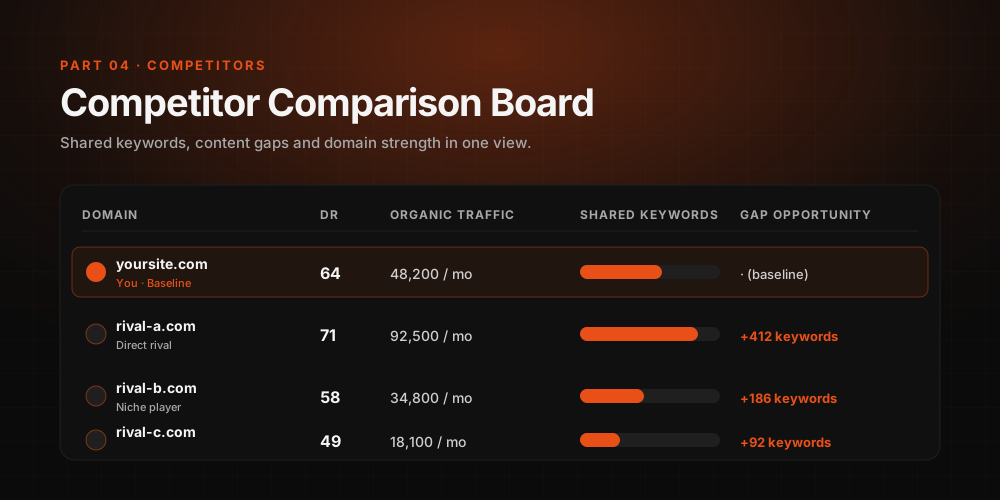
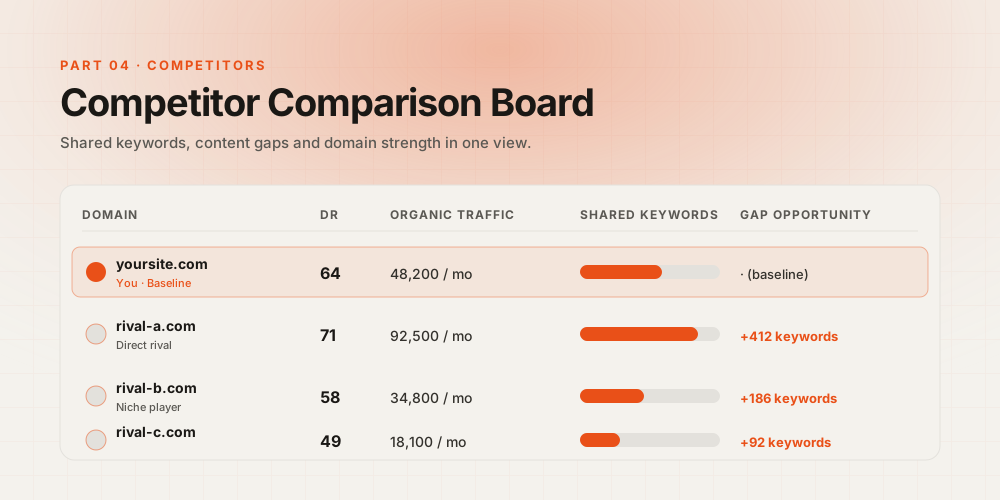
The Batch Analysis and Domain Comparison tools are used to compare multiple domains at once. With them, domain strength, backlink profile, traffic potential, visibility differences, and the distribution of authority among competitors can be analyzed far faster.
In GEO work, these comparisons help you see which competitors generate stronger source signals in specific topics, and where your brand needs more content, digital PR, or citation support.
How should Ahrefs be used in GEO work?
- Track the brand's AI Search visibility and citation gaps with Brand Radar.
- Analyze competitors' strongest source pages with Site Explorer.
- Extract trusted publication, author, and domain opportunities from the Backlink Profile.
- Cluster queries by prompt intent and answer structure with Keywords Explorer.
- Identify the pages with the highest source potential through Top Pages.
- Develop content coverage and fill missing subtopics with AI Content Helper.
- Check crawler access, technical health, and page architecture regularly with Site Audit.
- Fold commercially intent-driven queries into the content plan using Paid Keywords data.
In short, Ahrefs should not be thought of as a tool that only tracks backlinks or queries. In current practice, Ahrefs is a powerful platform for monitoring AI Search visibility, measuring how a brand is perceived as a source, understanding competitors' citation advantages, closing content gaps, and running GEO-focused digital marketing strategy on data. You can visit the official Ahrefs website.