What Is an AI Specialist and What Do They Do?
Explore what an AI specialist does, the skills and education the role demands, and how to build a career in one of technology's fastest growing fields.

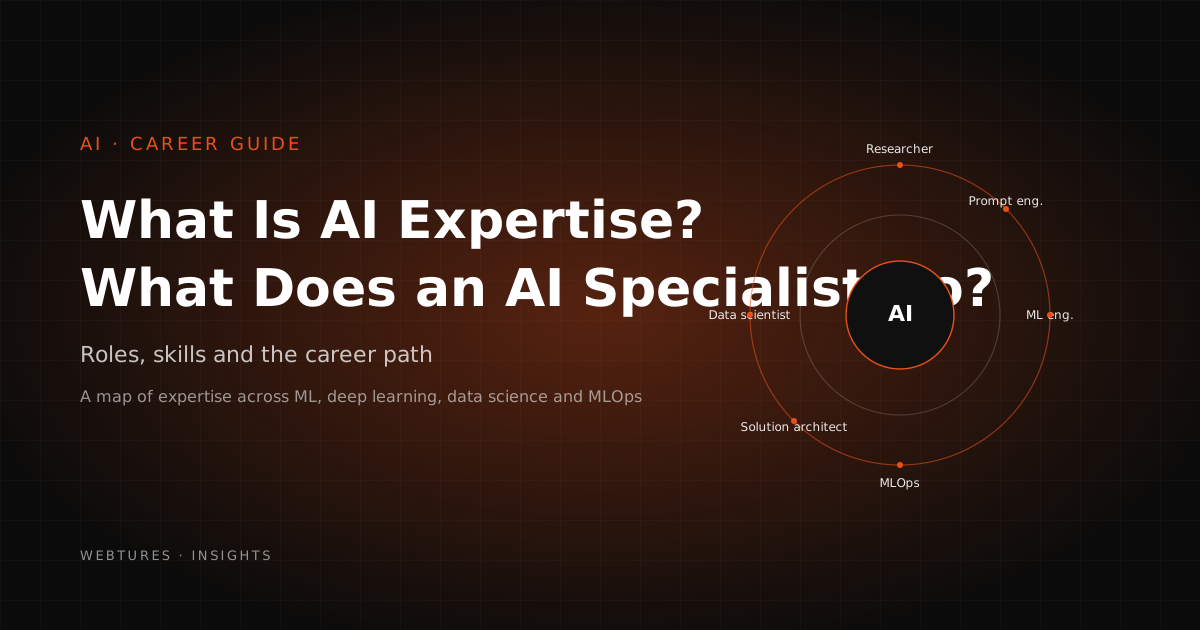
AI specialization is a fast-rising discipline in technology and computing, and it keeps gaining importance. The role centers on designing, developing, and deploying technologies that give machines human-like intelligence. AI specialists use algorithms and datasets to enable computer systems to learn, make decisions, and solve complex problems. They deliver effective solutions across healthcare, finance, education, automotive, and many other industries, automating business processes and raising efficiency. In this article, we cover who an AI specialist is, what they actually do, and how to progress in this dynamic career path.
Who is an AI specialist?
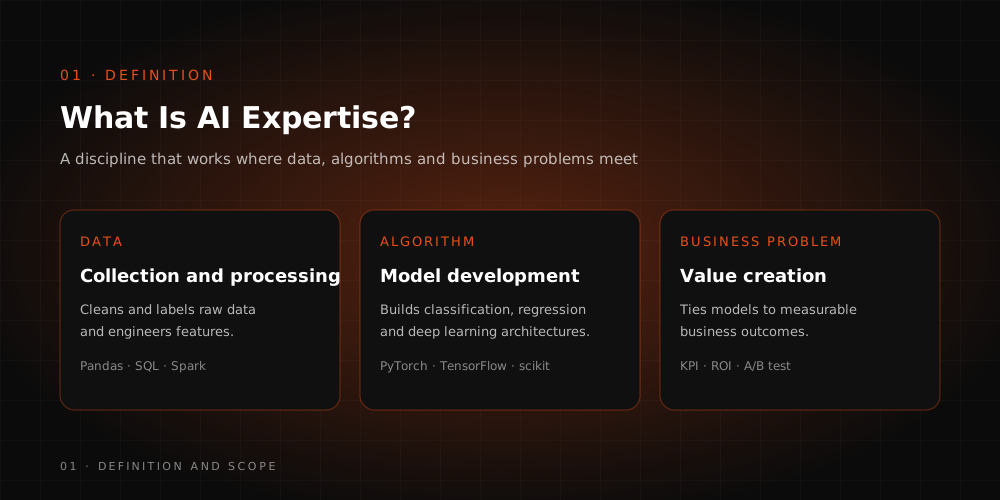
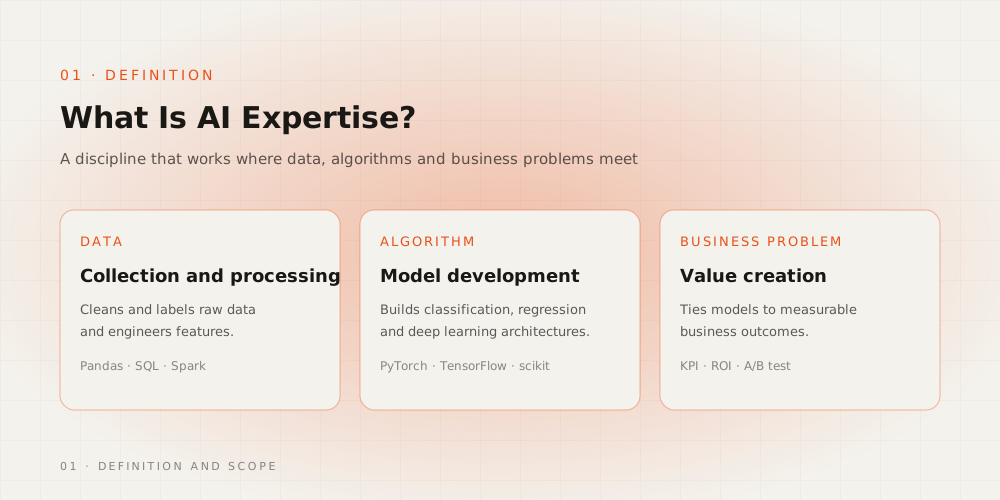
An AI specialist is a technology professional who develops, trains, and deploys machine learning and artificial intelligence systems using algorithms, datasets, and statistical models. They work on the software and hardware solutions that let computer systems mimic human intelligence, with deep expertise in data analysis, software engineering, and algorithm design.
What does an AI specialist do?
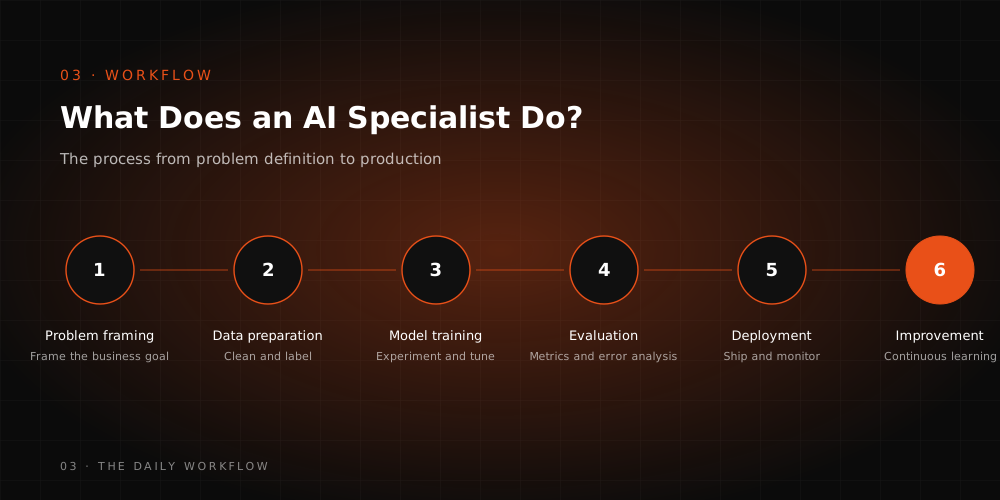
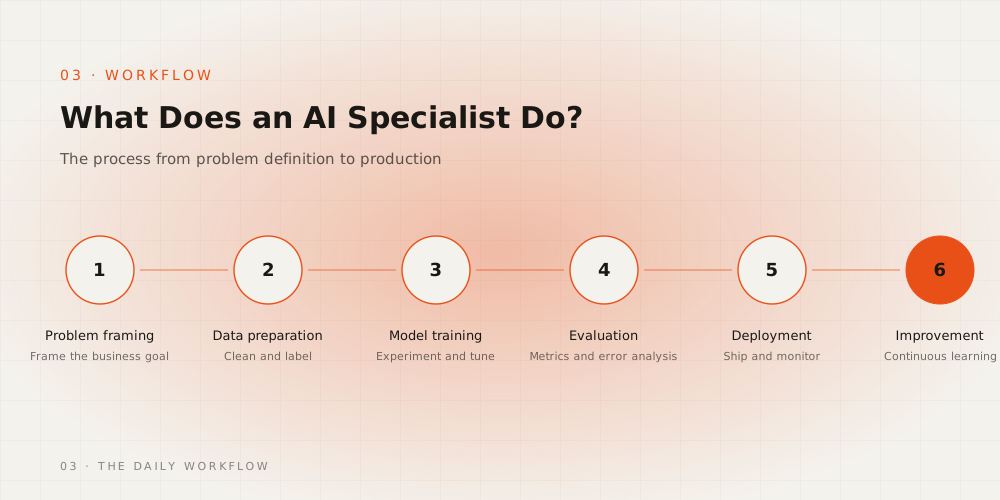
The core job of an AI specialist is to analyze data and build AI models that learn from it and perform specific tasks automatically. The process spans data collection, data cleaning, algorithm selection, model training, and model testing. AI specialists also monitor the performance of the solutions they build and work on continuous improvement.
Responsibilities of an AI specialist
An AI specialist's responsibilities include the following.
- Data analysis: analyzing large datasets and preparing them for processing.
- Model development: building AI systems using statistical models and machine learning algorithms.
- System integration: integrating the models they develop into existing systems and processes.
- Performance monitoring: evaluating model effectiveness and optimizing over time.
Skills and qualifications for AI specialization
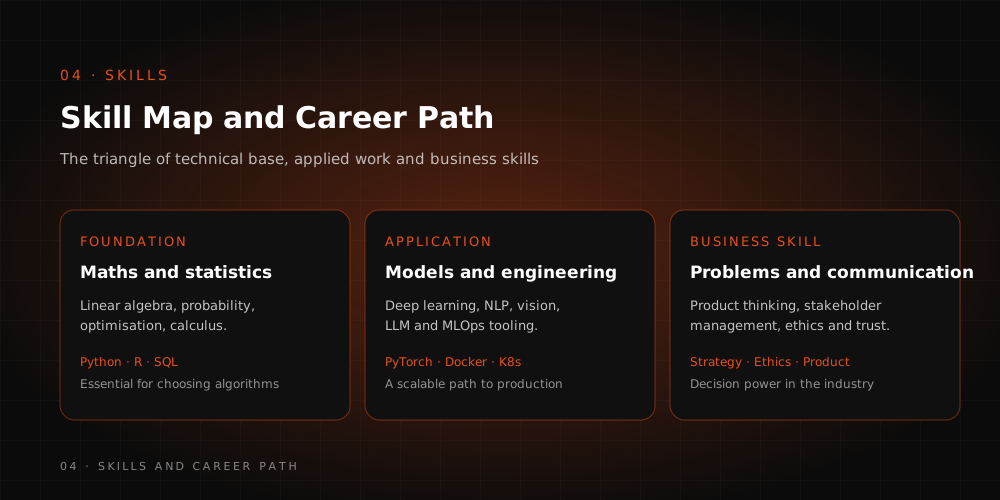
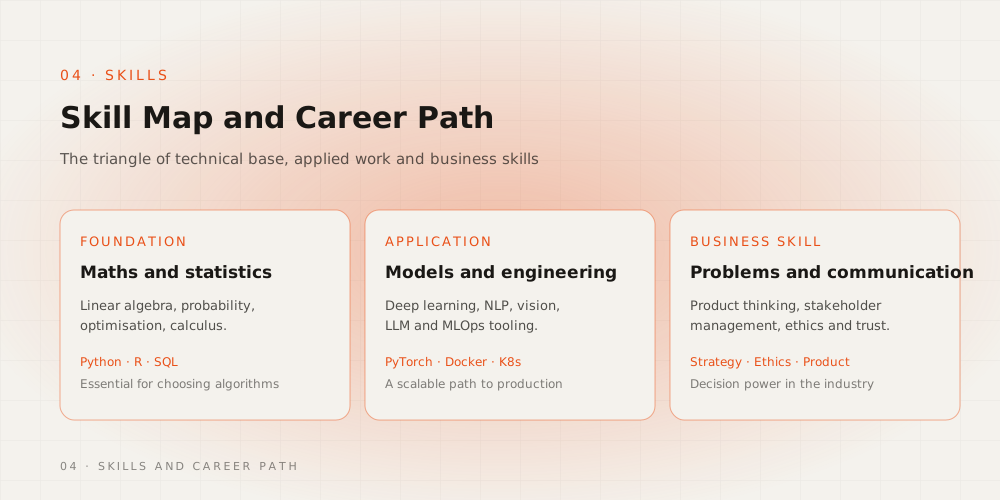
The core skills for becoming an AI specialist include proficiency in programming languages (especially Python and R), statistical analysis, and a solid grasp of machine learning and deep learning techniques. Competence in data management and data visualization also carries significant weight.

Where AI specialists work
AI specialists work across a wide range of industries, from healthcare and finance to automotive and entertainment. They design AI systems that automate everything from product recommendations and customer service to financial transactions and even disease diagnosis. With such a broad field of career opportunities, AI expertise is valuable in every sector where technology is being rapidly adopted.
What education do you need to become an AI specialist?
For anyone aiming to become an AI specialist, the education options range from academic degree programs to online courses. They cover everything from foundational programming skills to advanced AI applications.
University and undergraduate programs
A bachelor's degree in computer science, statistics, mathematics, or engineering is a strong starting point for an AI career. These programs cover fundamentals like algorithm design, data structures, mathematical modeling, and computer systems. Programs with dedicated AI or machine learning coursework are ideal for building deep technical knowledge in the field.
Certificates and online courses
Beyond formal education, certificate programs and online courses from technology companies and learning platforms are effective options for building AI skills. Platforms such as Coursera, Udacity, and edX offer AI courses and professional certificate programs in collaboration with Stanford, MIT, and other leading universities. These courses typically focus on specific areas such as machine learning, deep learning, natural language processing, and computer vision.
Resources for self-directed learning
Self-directed learning is entirely possible on the path to becoming an AI specialist. Platforms like GitHub and Kaggle offer the chance to work with real-world data and build a portfolio. Scientific paper repositories like arXiv.org are valuable for tracking the latest research and deepening your theoretical knowledge. Tutorials and articles on YouTube, Medium, and Towards Data Science round out the learning process with practical guidance.
Challenges AI specialists face
Becoming an AI specialist offers plenty of rewards, but the career path comes with real challenges. They span a wide spectrum, from technical hurdles to ethical questions, and demand that specialists keep their knowledge and skills current.
1. The success of AI models depends heavily on the quality and quantity of the data behind them. Access to high-quality, clean, processed data is a frequent bottleneck in applied AI projects. Privacy laws and data-use regulations can restrict access further.
2. Algorithms are directly shaped by the data that trains them. If the dataset is biased, the model can be biased too. AI specialists must work continuously to identify and mitigate these biases, a challenge that is both technical and ethical.
3. Advanced AI systems such as deep learning models are often perceived as a "black box": how they work and reach decisions is not fully understood. AI specialists work on new methods to make these decision processes more transparent and explainable.
4. The AI field evolves rapidly. Specialists need to stay current with the newest algorithms, tools, and techniques, and that continuous-learning requirement demands a serious investment of time and energy.
5. AI applications can have major effects on society and individuals. Specialists must weigh the potential impact of the systems they build and hold to ethical principles. That commitment is critical to ensuring the technology is used fairly and responsibly.
Overcoming these challenges requires AI specialists to develop not only their technical skills but also their problem-solving, ethical reasoning, and continuous-learning abilities. That is why AI specialization stands out as a constantly self-renewing, dynamic career field.
The AI specialist career journey
An AI career is a dynamic journey that demands continuous learning and adaptation. There are several stages and progression paths for those who want to build a career in the field, from entry-level roles to senior positions. Here are the key steps along the way:
1. Education and training: a foundation in computer science or engineering matters when starting an AI career. After a bachelor's degree, a master's or PhD in AI, machine learning, or a related discipline can deepen your specialization.
2. Internships and entry-level experience: after formal education, internships or entry-level roles help consolidate theoretical knowledge. They offer the chance to work on real-world problems and get familiar with industry standards.
3. Professional certifications: various professional certifications exist in AI and machine learning. They demonstrate depth in your specialty and can help you advance.
4. Senior roles and leadership positions: as your experience and skills grow, you can move into more senior roles and even technical leadership. These positions can include project management, team leadership, and strategic decision-making.
5. Continuous learning and adaptation: because AI technologies evolve constantly, staying on top of the latest trends, tools, and techniques is essential to long-term success.
An AI career is a demanding but deeply rewarding profession that requires strong technical depth and continuous growth. Professionals in the field get to shape technology and deliver innovative solutions to significant societal problems. The journey offers room to grow both personally and professionally.
Why become an AI specialist?
Becoming an AI specialist brings many advantages, both personal and professional. The role puts you at the leading edge of technology with the opportunity to make meaningful contributions to society. Here are some of the core reasons to pursue it:
Industry demand and future prospects
AI has emerged as a field reshaping technology and business in recent years. According to Gartner, AI technologies have the potential to generate enormous economic value in the years ahead. That growth is driving demand for AI specialists and opening broad career opportunities for people who specialize in the field. The need for AI solutions across healthcare, finance, automotive, technology, and entertainment keeps creating new roles for experts.
Personal growth and professional satisfaction
Working as an AI specialist is a profession built on continuous learning and personal development. The field offers the chance to track constantly changing technologies and pick up new skills. The positive impact of AI solutions is also a major source of professional satisfaction for many experts. AI technologies can address significant problems, from diagnosing disease to fighting climate change. As specialists see the social and economic impact of their own work, the value of what they do comes into sharp focus.
Becoming an AI specialist develops not just technical ability but also analytical thinking, problem-solving, and creativity. These experts can advance their own careers and make a real difference in the technology world by building innovative solutions to hard problems. As a career path with broad potential and a promising future, AI offers exciting opportunities for anyone drawn to technology.