What Is GPT-4o? Features and Where It Stands Today
Learn what GPT-4o is, the omni approach it introduced, and its place on the road to the GPT-5 series, with features and practical usage details inside.

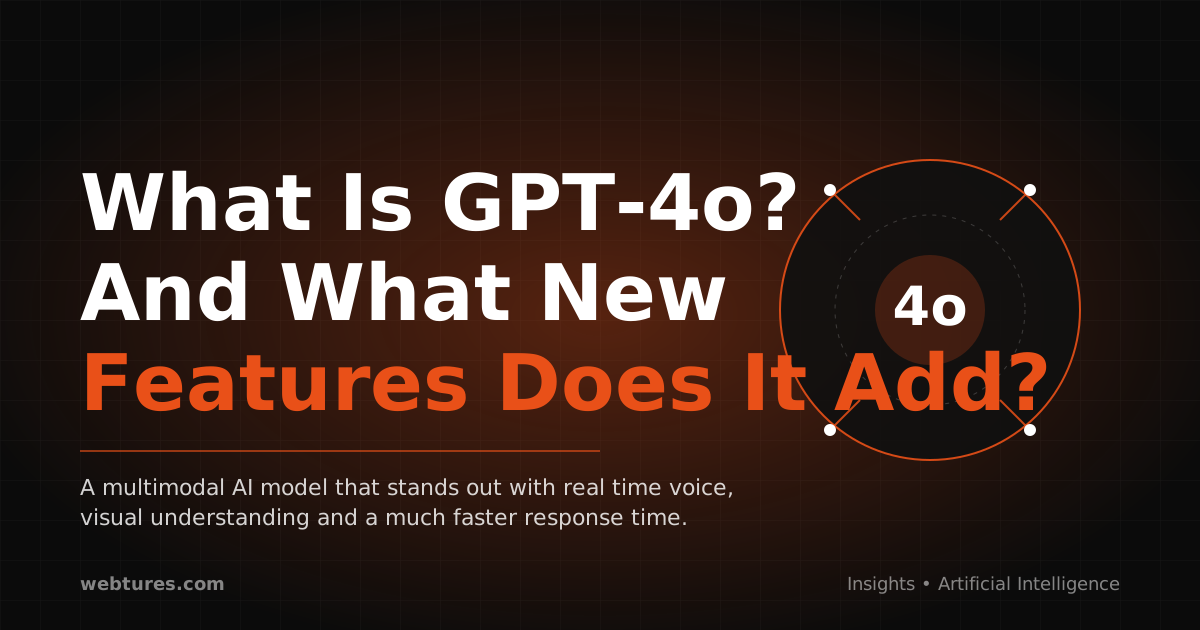
GPT-4o was the multimodal AI model OpenAI introduced in May 2024; while the current series is now GPT-5, the “omni” approach GPT-4o pioneered forms the foundation of today's models. As the fourth version of the GPT family, GPT-4o takes its “o” from “omni,” meaning all-encompassing. The model can work effectively across a wide range of languages and subjects. GPT-4o is equipped to handle text generation, comprehension, translation, summarization, and many other language-based tasks.
GPT-4o stands for “Generative Pre-trained Transformer 4 omni.” The model represented OpenAI’s latest advances in AI and language processing at the time. GPT-4o was trained on an extensive data set and designed to deliver strong performance across different languages and domains.
Unlike its predecessors, GPT-4o was trained on larger and more diverse data sets, which lets it operate with high accuracy across more languages and topics. The model's “omni” quality translates into broad language coverage and flexibility. That made GPT-4o an AI tool fit for global use.
The differences between GPT-4 and GPT-4o
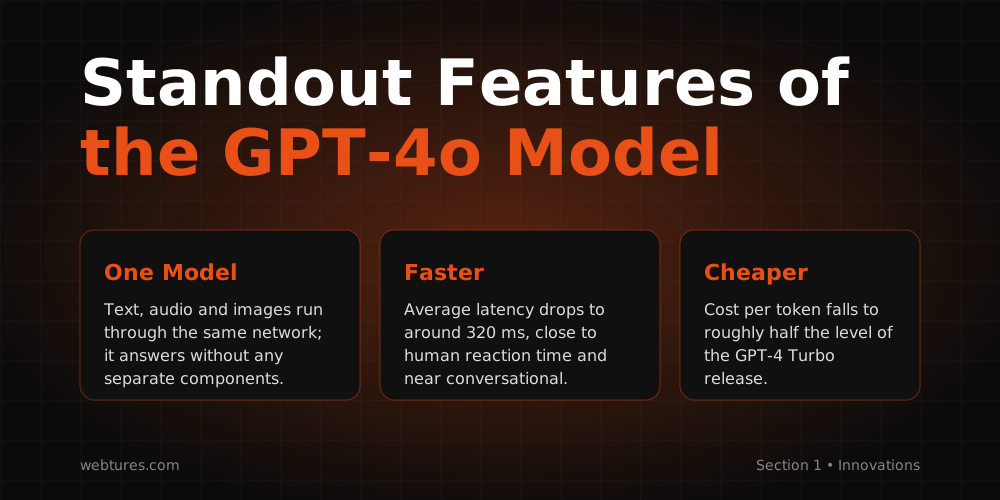
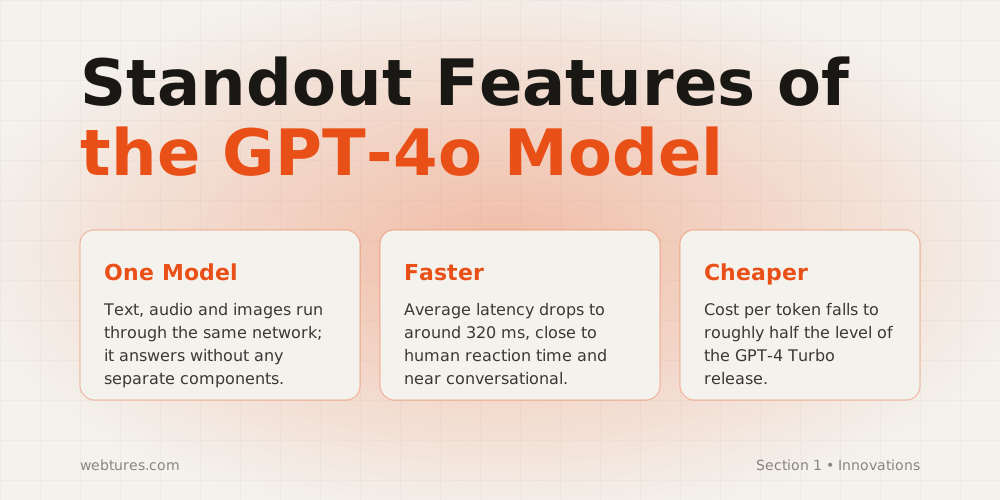
The core differences between GPT-4 and GPT-4o show up in the model's scope, capabilities, and performance. Here are some of the key distinctions:
- Language support and versatility: GPT-4: Supports many languages but performs better in certain ones. GPT-4o: Thanks to its “omni” quality, it offers broader language coverage and higher accuracy across more languages.
- Training data and capacity: GPT-4: Trained on a large data set, but a more limited one than GPT-4o’s. GPT-4o: Trained on larger and more varied data sets, giving it more knowledge and the ability to handle more complex tasks.
- Performance and accuracy: GPT-4: Delivers high accuracy but can still make mistakes in some cases. GPT-4o: Provides higher accuracy and reliability, with strong performance even in rare languages and specialized subjects.
- Application areas: GPT-4: Effective in general language processing tasks. GPT-4o: Broad language support and flexibility open up wider applications across healthcare, education, business, and more.
The innovations and improvements GPT-4o introduced
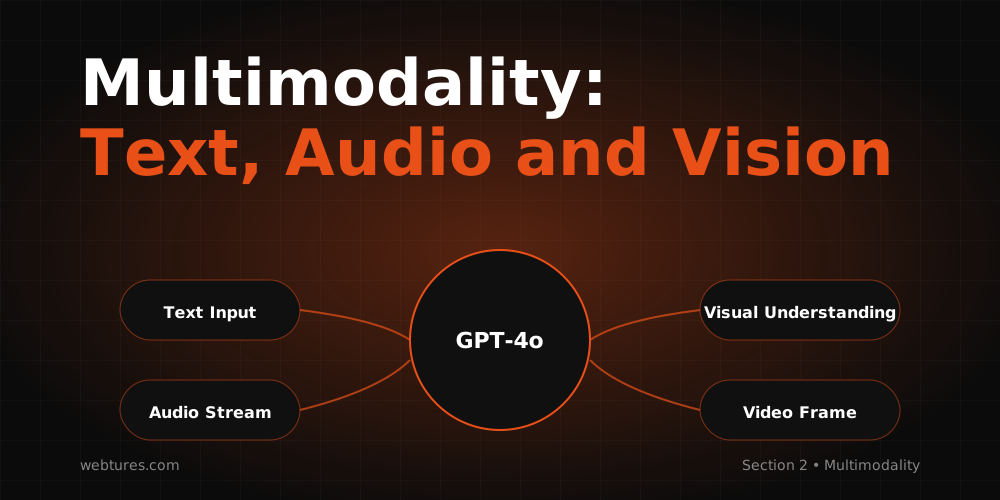
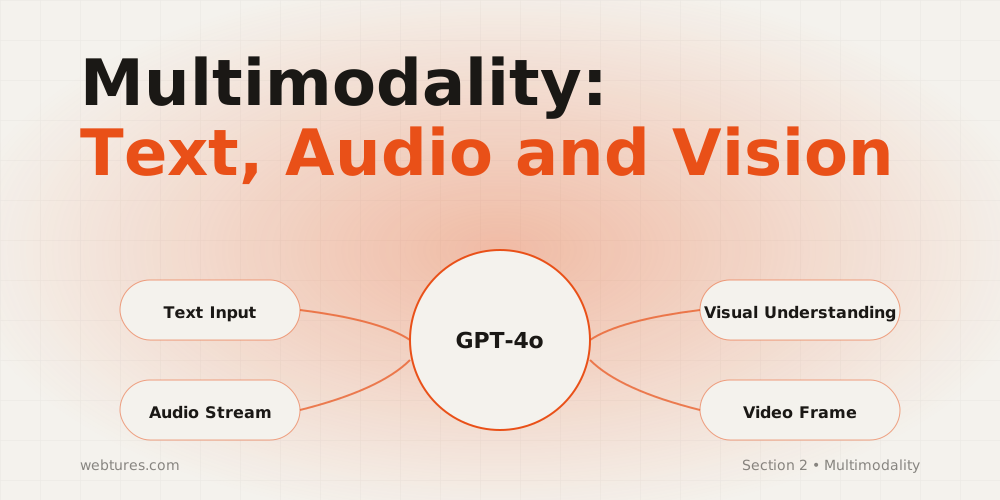
GPT-4o brought many innovations and improvements over previous models. Here are some of the most important:
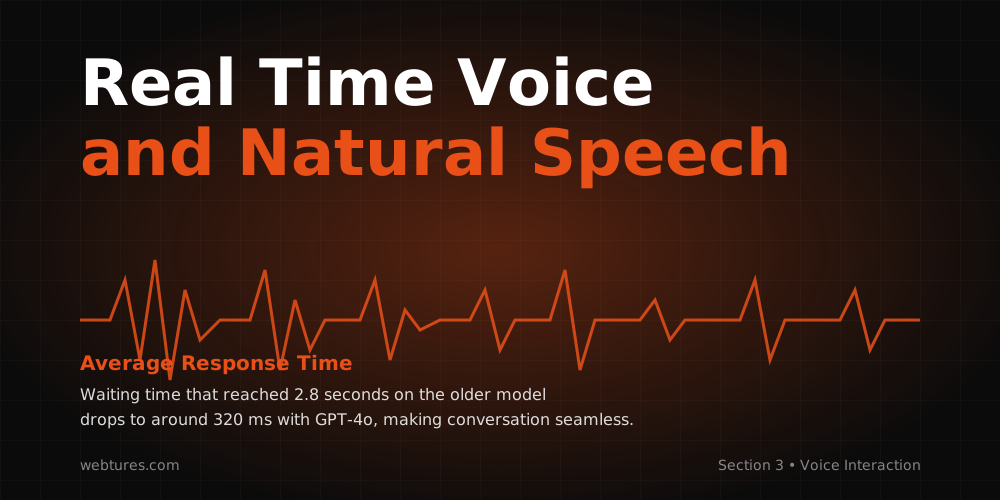
- Advanced voice technology: Voice received major upgrades. GPT-4o operates in far closer to real time and can even be interrupted mid-sentence. The voice assistant can read users' emotional tone through emotion detection and offers multilingual translation across 50 languages, covering 97 percent of the world's population. This dramatically improves the user experience and enables far more natural interactions.
- Desktop vision: The desktop version can now “see” the screen, though the feature activates only with the user's permission. Users can have charts on their screen explained or ask questions about on-screen text. By making screen sharing continuous, this feature lets users collaborate with the model almost like a coworker.
- GPTs accessible to everyone: All users, including those on the free tier, can now access mini task-bot GPTs. This opens the door for millions of new users to discover and build on these capabilities.
- Expanded language support: GPT-4o supports more languages and delivers high accuracy in each, reaching a far broader global audience.
- Larger data sets: The model was trained on bigger and more diverse data sets, giving it a wider knowledge base and more accurate, reliable results across subjects.
- High accuracy and reliability: GPT-4o delivers higher accuracy in language processing tasks, which means more dependable and consistent results for users.
- Flexibility and versatility: The model adapts across languages and subjects, making it usable in a wide range of fields and industries.
- Improved performance: GPT-4o runs faster and more efficiently, sustaining high performance even when working over large data sets.
- Ethics and privacy: GPT-4o is more attentive to ethics and privacy, with improvements in data privacy and security.
Frequently asked questions about GPT-4o (FAQ)
How do you activate GPT-4o?
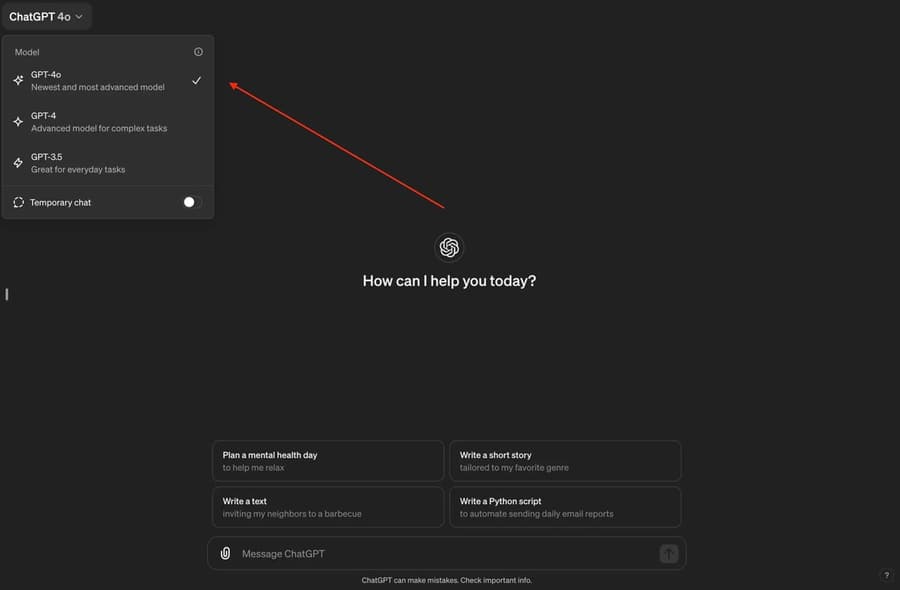
After signing in to your standard GPT account, select the GPT-4o option in the upper left to activate it.
How does GPT-4o work?
GPT-4o is built on the Transformer architecture. Transformer is an AI model architecture that delivers superior performance in language models and excels at language processing tasks. Here are the working principles behind GPT-4o:
- Pre-training: The model goes through pre-training on massive amounts of text data. During this process it learns language structure, word meanings, and the relationships within sentences. This builds the model's general command of language.
- Self-attention: Using the Transformer’s “self-attention” mechanism, GPT-4o understands how each word relates to every other word. This preserves context within the text and produces more coherent, meaningful results.
- Fine-tuning: After pre-training, the model is fine-tuned on specific tasks or subjects. In this process, targeted data sets optimize the model for high performance on specific tasks.
- Language generation: GPT-4o produces new text in response to input, drawing on the language structure and semantic knowledge it has learned. The model generates meaningful, coherent text within a given context.
Which languages does GPT-4o support?
GPT-4o supports a wide range of languages. Here are some of the supported languages and their coverage:
- English: High accuracy and comprehensive language support, with effective results across academic, technical, and everyday contexts.
- Spanish: High accuracy across the different dialects spoken in Latin America and Spain.
- Chinese: Supports Mandarin and other Chinese dialects, adapting to different writing systems and language structures.
- French: Supports regional variations including European and African French.
- German: High accuracy in technical and scientific texts, with effective results in everyday speech as well.
- Arabic: Supports Modern Standard Arabic and the dialects used across different Arab countries.
- Japanese: Supports both Kanji and Kana writing systems, with high accuracy in everyday and formal texts.
- Turkish: Produces accurate, meaningful output in Turkish, generating text suited to the language's structure and context.
This list represents only a portion of the languages GPT-4o supports. The model covers many more, serving a broad user base.
What does GPT-4o cost?
GPT-4o’s usage costs and pricing vary depending on several factors. Here are the essentials:
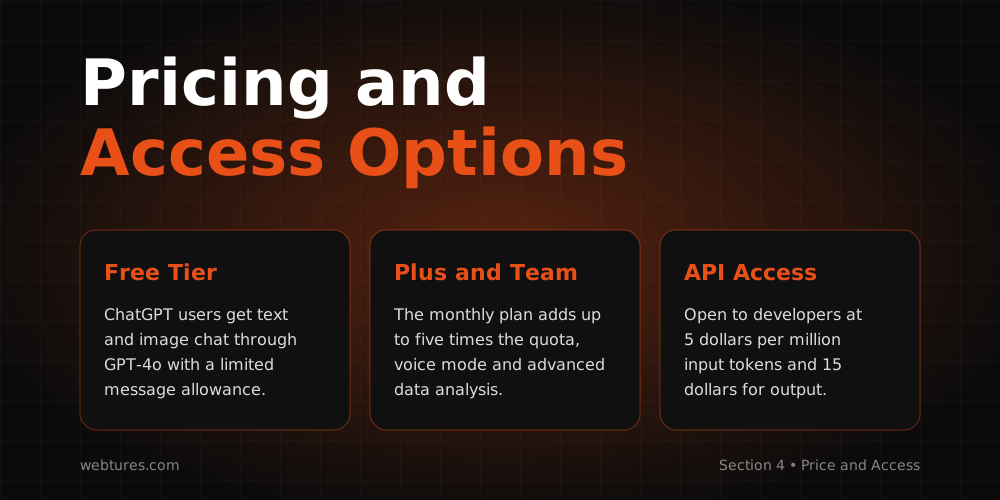
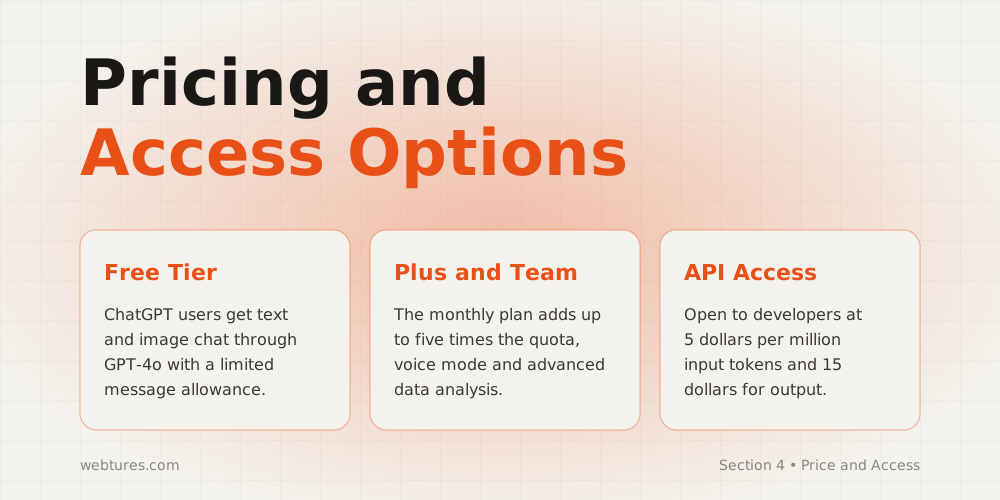
- Subscription fees: OpenAI offers different subscription plans for GPT-4o. Plans vary by usage volume and features, typically billed monthly or annually.
- Pay-per-use pricing: In some cases, GPT-4o usage is billed per request or per character, depending on how much the user draws on the model.
- Enterprise plans: Custom pricing and usage plans are available for businesses and large organizations, designed for high-volume usage and custom integration requirements.
- Developer access: API access is available for developers at set rates, letting them integrate GPT-4o into their own applications.
GPT-4o’s costs and pricing policies can flex with usage needs and budgets. Current pricing is available on OpenAI’s official website.