What Is the AGI Threshold? The Road to Human-Level Intelligence
Understand the AGI threshold: artificial general intelligence describes machines that learn across tasks, marking the critical shift from narrow to general AI.

What is the AGI threshold is a question that sits at the heart of AI's future. AGI, or Artificial General Intelligence, refers to systems that can think, learn, and adapt to new situations the way human intelligence does. Today's narrow AI (ANI) can only perform specific tasks, while AGI has the capacity to make versatile, independent decisions. That difference represents a revolutionary stage in the technology's evolution.
The AGI threshold in artificial intelligence marks the point where machines stop being tools that merely execute programmed commands and become entities that learn and think. Once that threshold is crossed, machines are expected to reach a level that can compete with human intelligence. Scientists argue that crossing it will bring both extraordinary opportunities and serious ethical responsibilities. In this article, you will find a comprehensive look at what AGI is, how it differs from today's AI, why it matters, and where it is headed.
What does AGI (Artificial General Intelligence) mean?
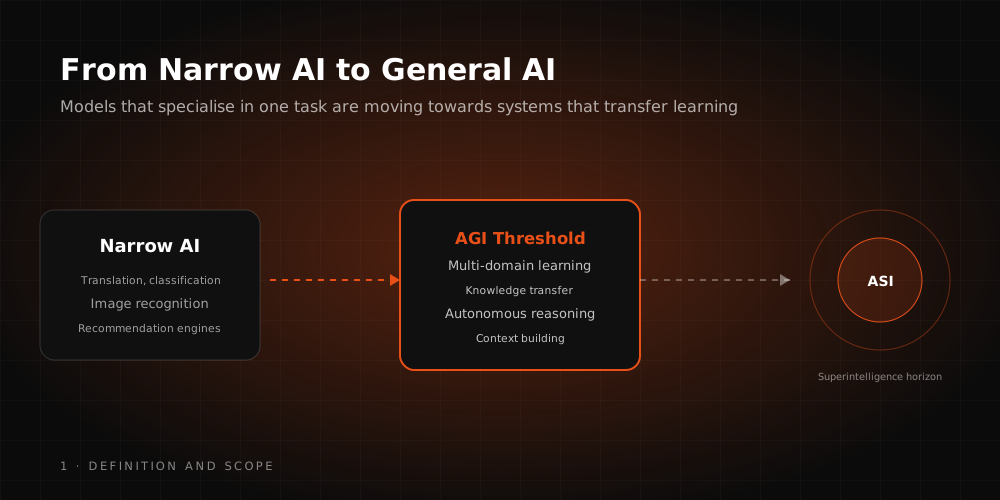
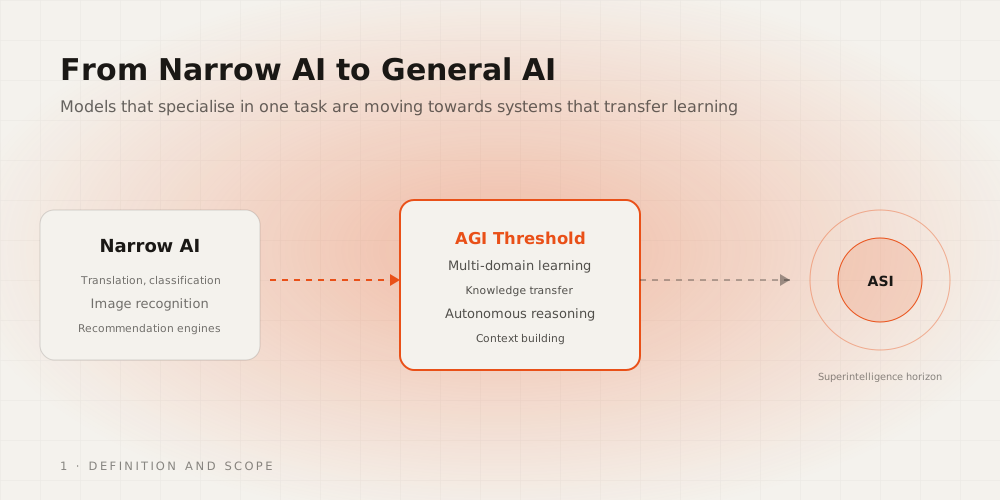
AGI (Artificial General Intelligence) describes AI systems with cognitive abilities comparable to human intelligence. This kind of intelligence is not confined to one specialty; it can adapt to a wide range of tasks and situations. The goal of AGI is to build artificial systems capable of performing any mental activity a human can. In this context, the AGI threshold in artificial intelligence refers to the transition from narrow to general intelligence. Systems like ChatGPT, Siri, and Alexa are examples of narrow AI today; they perform specific tasks but cannot generalize.
Another defining trait of AGI is its capacity to learn. Like humans, it can learn from experience and shape its future decisions accordingly. Such systems could solve complex problems, generate creative ideas, and even behave as if they possessed emotional intelligence. While no truly functional form of AGI exists yet, research labs around the world are working toward that goal.

How does AGI differ from narrow AI?
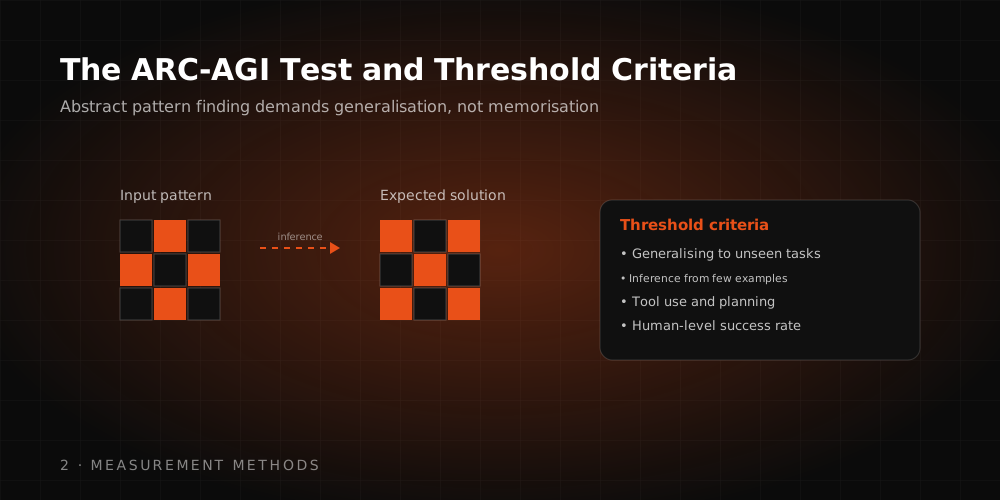
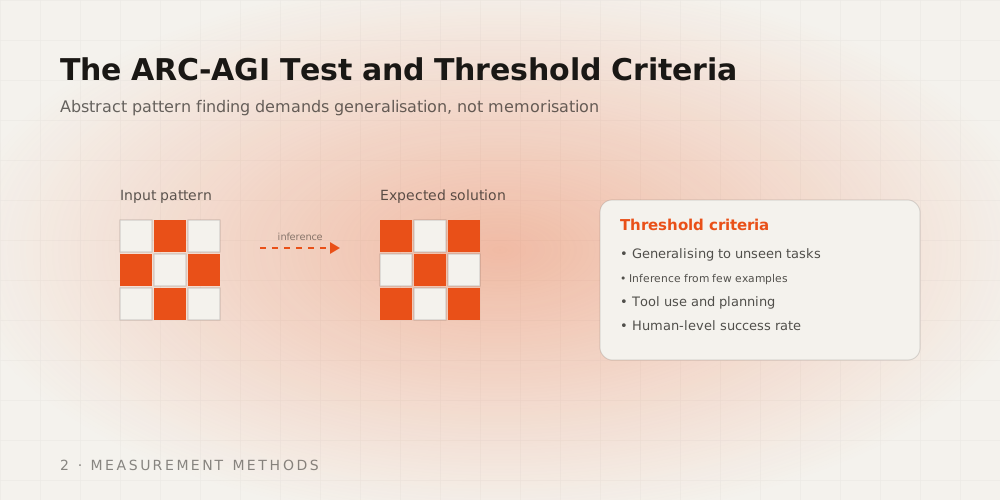
Narrow AI (ANI) refers to systems limited to a single task and a bounded level of intelligence, while AGI (Artificial General Intelligence) represents versatile AI that can learn and solve different tasks on its own. Here are the key differences between the two:
- Task scope:
- Narrow AI: Specialized for a single task (voice command recognition, for example).
- AGI: Can perform different tasks and possesses general intelligence.
- Learning ability:
- Narrow AI: Cannot learn new information; it only works as programmed.
- AGI: Can learn from experience and apply knowledge across domains.
- Flexibility:
- Narrow AI: Limited to specific inputs and unable to adapt to new situations.
- AGI: Adapts to environmental change and produces new solutions.
- Decision-making:
- Narrow AI: Follows the commands it is given.
- AGI: Can analyze independently within its decision-making processes.
These differences are why the AGI threshold is considered a turning point in the technology's evolution. AGI is not just a technological leap; it carries the potential to fundamentally reshape the relationship between humans and machines.
Why does the AGI threshold matter?
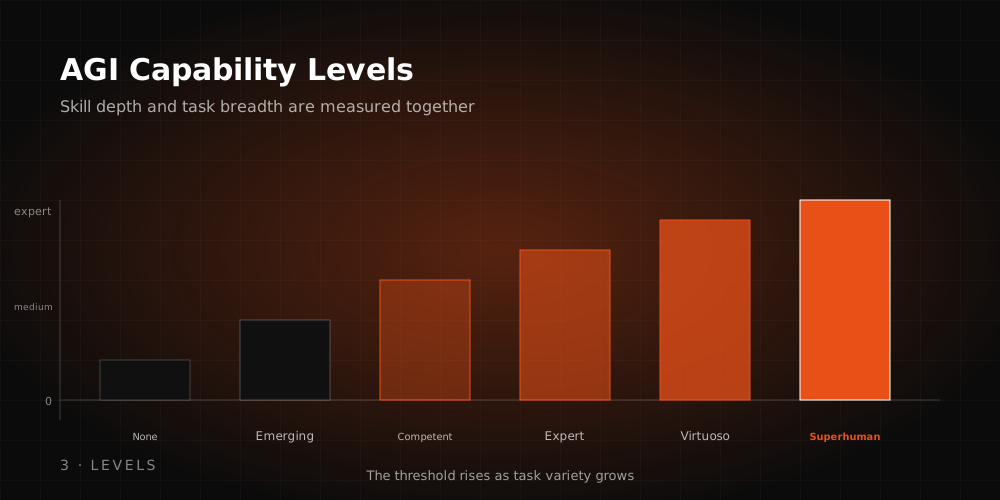
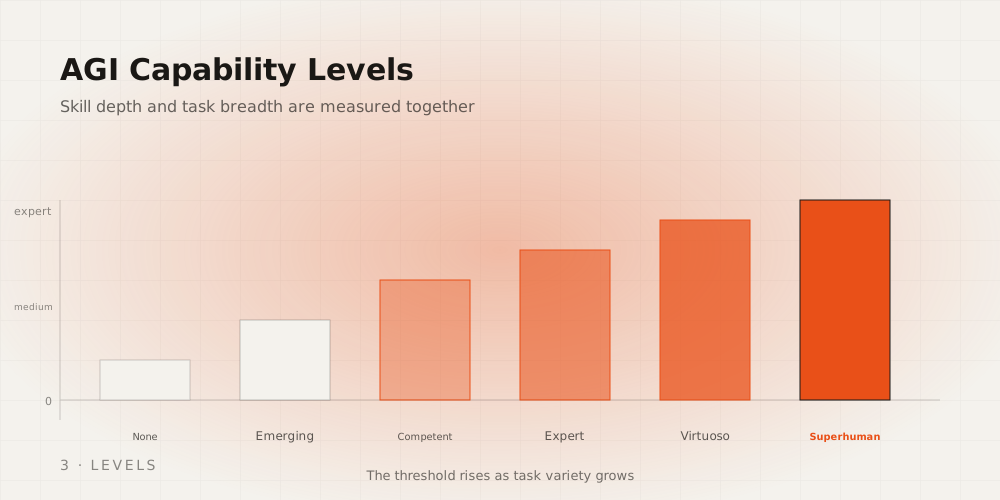
The AGI threshold carries enormous technological, social, and ethical weight because it means creating machines with human-like intelligence. Crossing it would transform AI from a task-focused tool into an entity that thinks, decides, and solves problems much like a person. That shift could drive revolutionary change across healthcare, education, science, industry, and beyond.
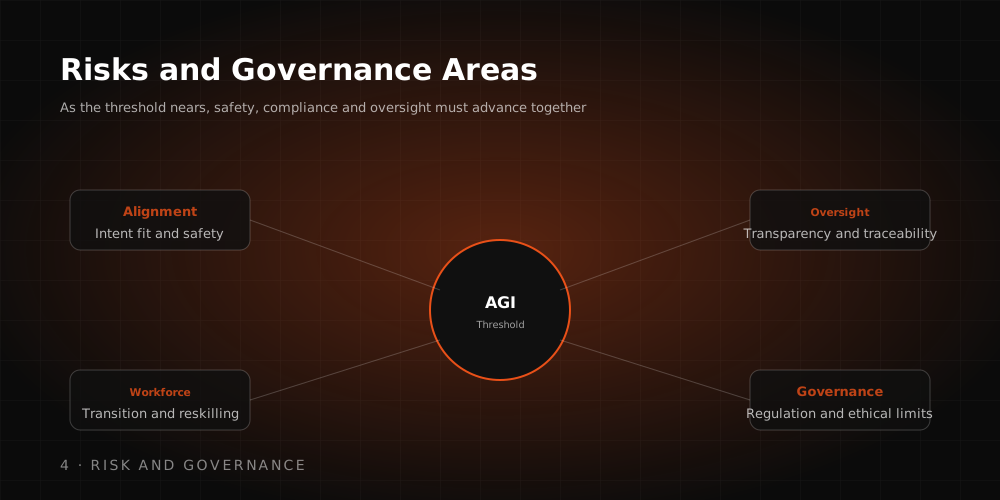
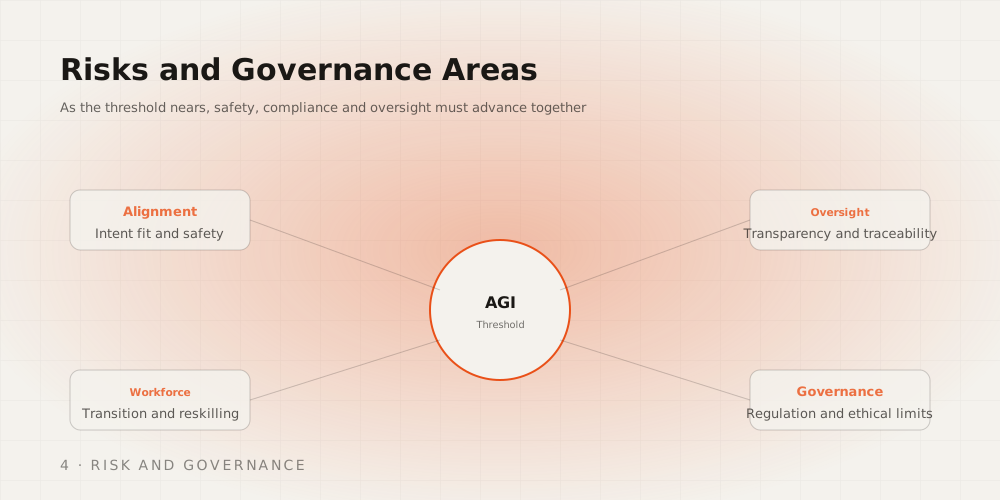
An AGI-powered healthcare system, for example, would not just assist doctors with diagnosis; it could offer real-time recommendations based on how a disease progresses. In education, an AI that understands a student's learning style and serves tailored content could raise success rates significantly. But the responsibilities that come with these advances are equally large. Misuse of AGI, unethical applications, and uncontrollable decision-making processes carry serious risks. The AGI threshold should therefore be treated not just as a technical milestone in AI development but as a serious responsibility.
Crossing the AGI threshold holds both promise and peril for humanity. AGI systems could write their own software, control other machines, and accelerate knowledge production at an unprecedented pace. In the wrong hands, that power could produce consequences impossible to contain. That is why experts argue AGI must be examined carefully not only through a technological lens but through legal, moral, and social ones as well.
How close are we to the AGI threshold?
There is no consensus on when AGI might become real; the timeline shifts depending on how AGI is defined, how the technology progresses, and what resources are available. Here are the current estimates and viewpoints:
- Leading firms such as Meta, OpenAI, and DeepMind are investing heavily in AGI and superintelligence. Meta, for example, is accelerating its superintelligence research with a 14.3 billion USD investment in Scale AI.
- Demis Hassabis (CEO of DeepMind) predicts AGI is possible "within the next 5 to 10 years," which points to around 2030.
- Dario Amodei (CEO of Anthropic) is bolder, projecting a system that could surpass human intelligence by 2026.
- Sam Altman (CEO of OpenAI) has said in interviews that the foundations of AGI could be laid in 2025, though he describes this as "the first working signals" rather than AGI in the classic sense.
Expert surveys are more cautious. According to AIMultiple, AI experts expect AGI around 2040, with some pushing the date out to 2060. The collective forecast of 8,590 experts lands on a median of 2040.
- Live Science, for instance, reflects the frequently cited view that AGI could arrive as early as 2026, yet many experts maintain that true AGI is not yet on the horizon.
- Experts such as Alan D. Thompson and Daniel Kokotajlo point out that LLMs like GPT-4.5 are passing benchmarks at human-like performance levels and see an estimated AGI threshold somewhere between 2027 and 2030.
Is the AGI threshold science fiction, or could it become real?
In the past, the AGI threshold was mostly an idea we encountered in science fiction. Films, books, and series imagined machines that could generate thought, robots that could read emotions, even artificial intelligences that had gained consciousness. Today, technological progress has moved those visions much closer to reality. Large language models (LLMs), deep learning techniques, and brain-inspired architectures have made the goal look far more attainable.
Of course, serious gaps remain between science fiction and reality. Consciousness, self-awareness, and intent, the mental qualities unique to humans, are still unsolved problems for AGI. So while the concept has moved from science fiction to the center of the technology agenda, the road to fully realizing it remains long and demands careful navigation.
Sources: