Why Does Blog Content Matter for GEO?
The established rules of digital marketing are being rewritten by the AI and Large Language Model (LLM) revolution. What we used to call search engine optimization (SEO) was the art of making websites appealing to Google's bots.

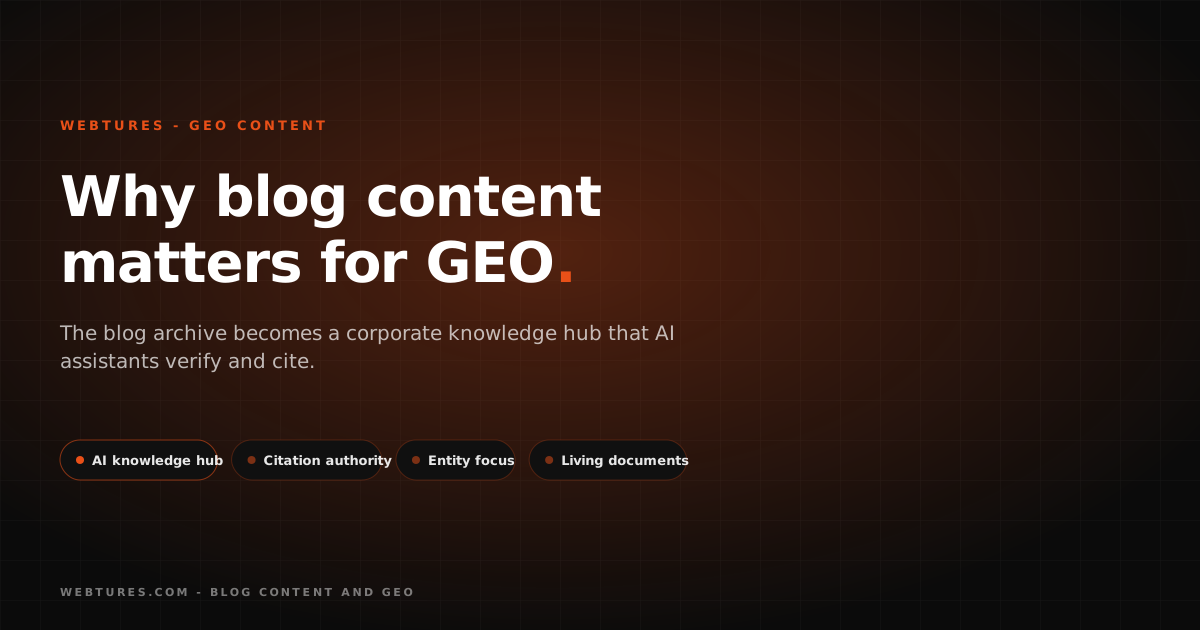
The transformation of the content ecosystem: from blogs to "AI knowledge hubs"
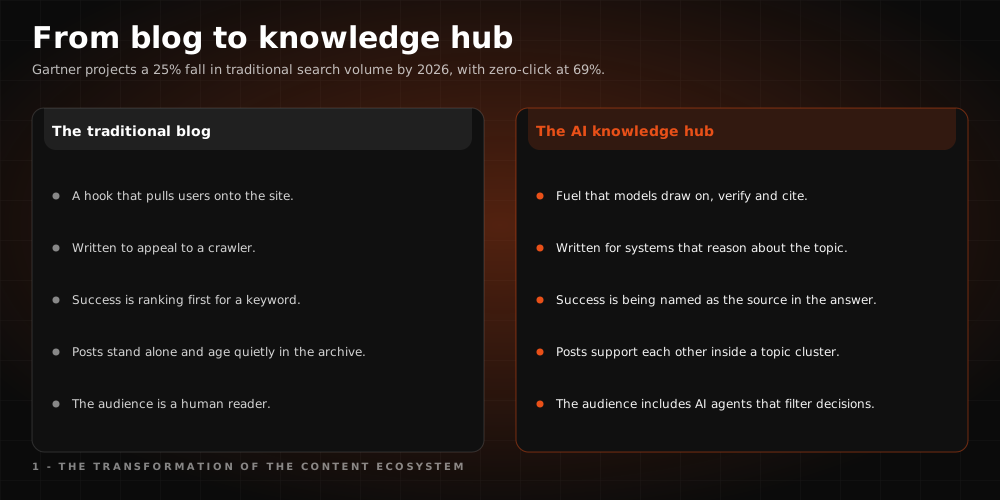
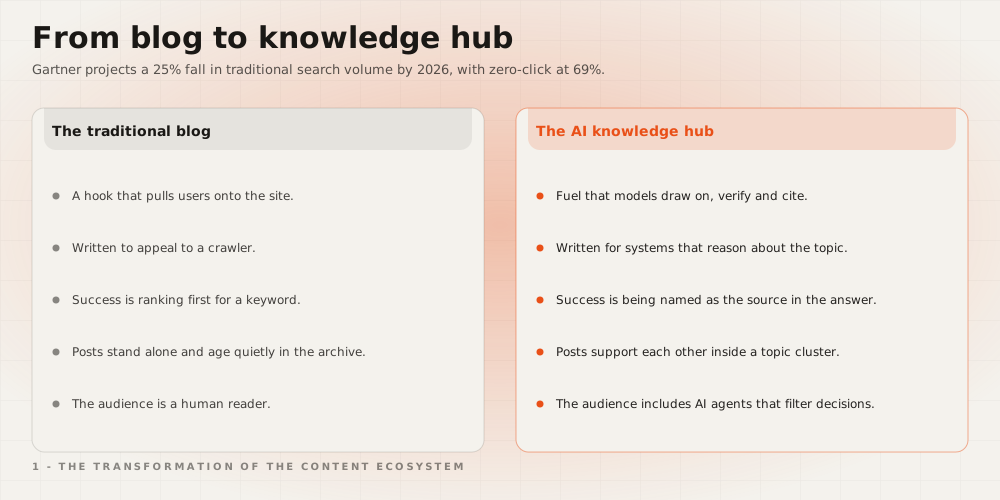
The established rules of digital marketing are being rewritten by the AI and Large Language Model (LLM) revolution. What we used to call search engine optimization (SEO) was the art of making websites appealing to Google's bots. Today, Gartner's forecast that traditional search volume will fall 25% by 2026 and the rise of zero-click searches to 69% have completely changed the playing field.
From the Webtures perspective, we are no longer writing a traditional "blog"; we are building "corporate knowledge hubs" that AI assistants (ChatGPT, Claude, Perplexity, Gemini) will draw on, verify, and cite. In this new era the goal is not to rank first for a keyword; it is to be cited as "the single right source" in the final answer the user receives (the answer engine result).
The role of content in the GEO (Generative Engine Optimization) era
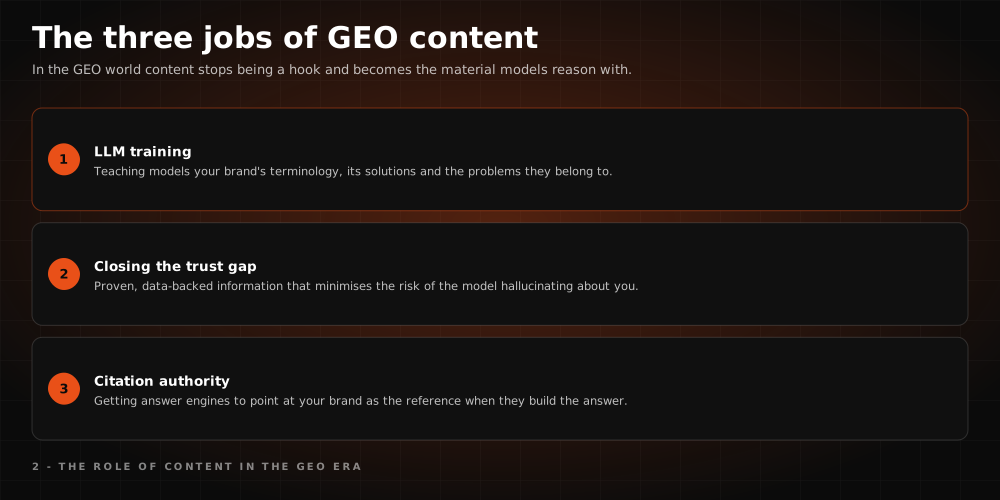
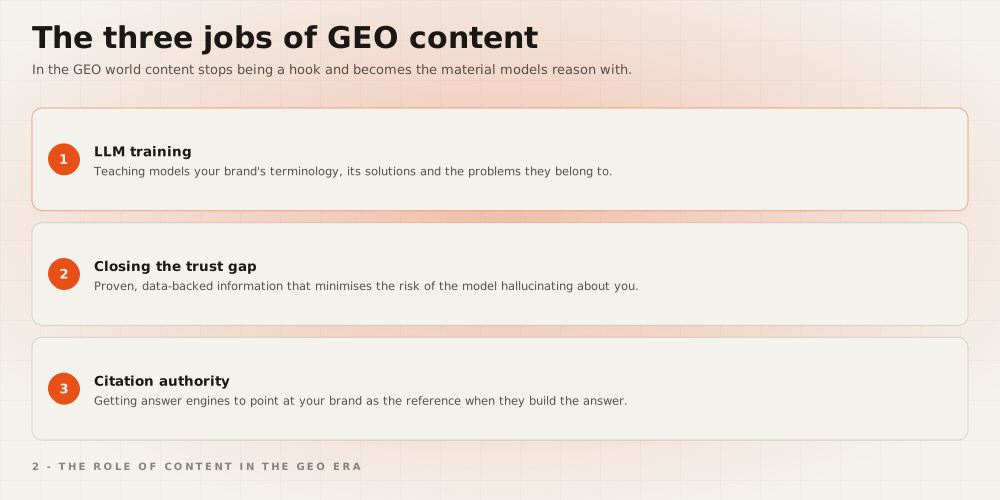
In traditional SEO, content acted as a hook to pull users onto the site. In the GEO world, content is the "fuel" LLMs need for training and inference. With the rise of structures like Google's AI Overviews (formerly SGE), brands now communicate with "thinking" systems rather than with algorithms.
In this ecosystem, your blog content's mission has evolved into:
- LLM training: Teaching AI models your brand's terminology and solutions.
- Closing the trust gap: Providing proven, data-driven information that minimizes the AI hallucination risk.
- Citation authority: Getting answer engines to point to your brand as the reference when building answers.
Content engineering for "algorithmic visibility"
Your website traffic no longer comes from humans alone; it also comes from digital assistants known as AI agents. These agents are the new decision-makers, filtering purchase decisions and presenting end users with only the most refined information. Without a content strategy, appearing on these agents' radar is technically impossible.
GEO success is impossible without a content strategy, because LLMs treat brands they cannot find data on, or cannot access current information about, as effectively nonexistent. For your content to be "consumable" and "interpretable" by AI, it should be structured around these criteria:
1. From keywords to entity focus
Where we once targeted a keyword like "SEO pricing," today we have to understand the prompt logic of AI. Users now ask complex, multi-layered questions like "Is Webtures' SEO service trustworthy, and what are its advantages compared with global competitors?" Your content should define not single words but your brand's (entity's) relationships, context, and authority relative to other concepts in the industry.
2. The power of structured data and format
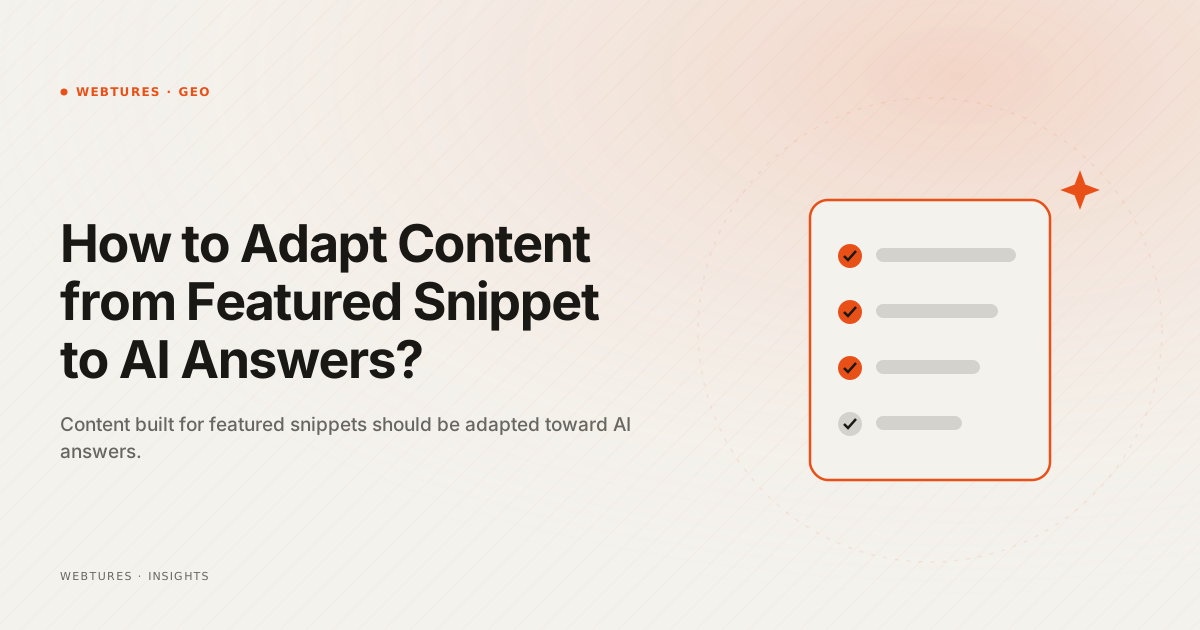
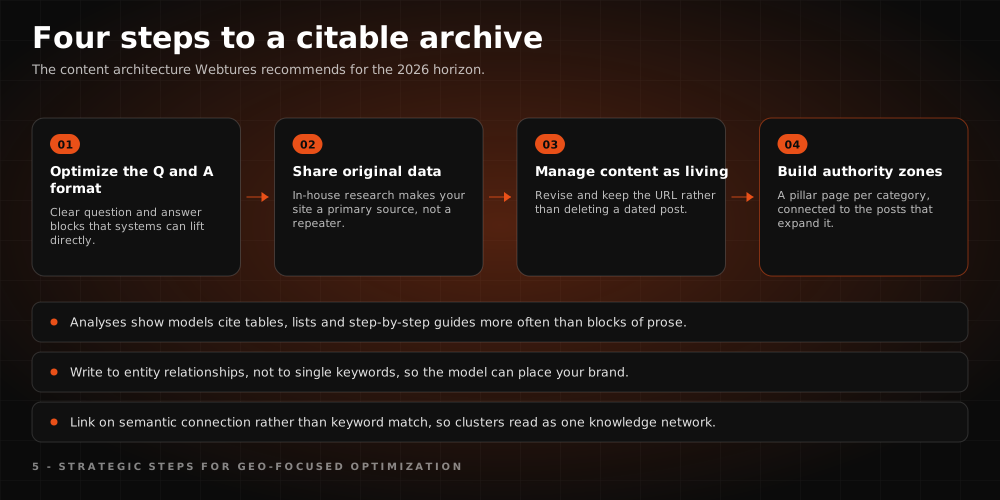
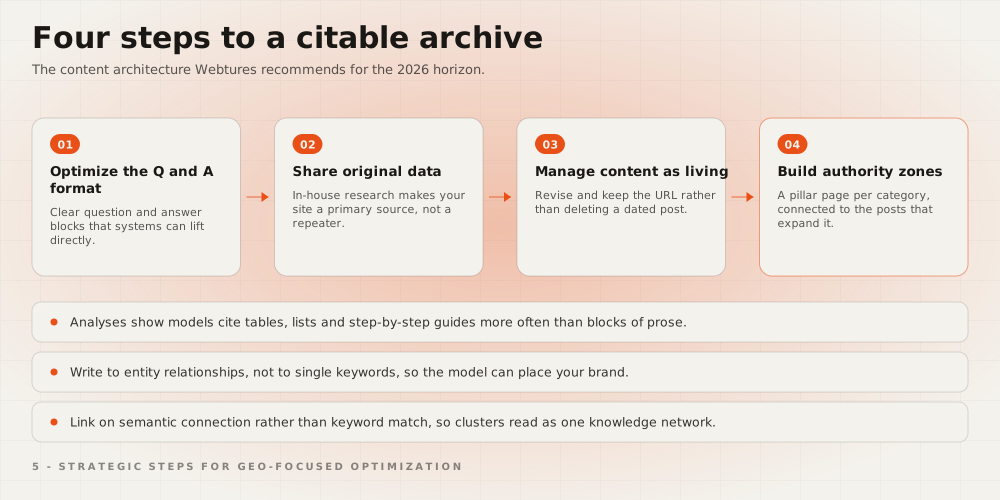
Analyses (Profound and Semrush data) show that AI models cite tables, lists, and infographics more often than blocks of prose. Making your content not just readable but machine-parseable is critical.
- Webtures recommendation: Always use comparison tables, pros/cons lists, and step-by-step guides in your blog posts. These formats increase the odds that AI builds the answer directly from your content.
"Model expectancy" instead of user intent
The traditional concept of search intent (informational, transactional, and so on) has given way to contextual relevance. When answering a question, AI models look for the most current, most authoritative, and most comprehensive source. When optimizing your content, keep these new parameters in view:
Becoming a truth engine
AI does not like vague statements. Instead of hedges like "maybe" or "possibly," present clear statistics, current 2025 market data, and verifiable case studies. The more provable the data behind your brand's content, the more likely AI is to accept the information as accurate and serve it to users.
Semantic depth and vector search
AI models match meaning vectors, not words. When writing about digital marketing, go beyond the surface: enrich the topic with automation tools, data privacy regulations (KVKK in Turkey, the AI Act in Europe), and forward-looking predictive analysis. Your content's "semantic density" is the most critical factor in how AI scores your authority on a topic.
Strategic steps for GEO-focused content optimization
Here is the action plan Webtures recommends for a content architecture ready for the 2026 horizon:
1. Optimize the Q&A format
The questions users and AI agents ask are usually conversational. Include clear, NLP-friendly question and answer blocks in your content. These blocks are the building material that systems like Google AI Overviews and ChatGPT can lift and use directly.
2. Share original data and insight
Instead of repeating what already exists on the web, share the data you produce in-house. Original resources like a "Webtures 2025 Digital Trends Report" act as a primary source for AI models, which radically increases your mention rate.
3. Manage content as dynamic, living material
AI models are highly sensitive to freshness signals. Instead of a static blog post, build "living documents" that are continuously updated with new developments and statistics. For example, instead of deleting a post titled "2024 Strategies," revise it into "2025 and Beyond: Strategies for the AI Era" and preserve the URL's authority.
4. Build category-level authority zones
Individual blog posts do not generate authority with LLMs unless they support each other. Create a pillar page for each category and connect it to posts that expand on the subtopics. This topic cluster structure builds a strong knowledge network for both users and AI models; the model reads which topics your brand goes deep on through these clusters.
Fold existing content into this architecture too: group similar topics, enrich outdated posts with new data, and build internal links between pieces based on semantic connection rather than keywords. The blog then stops being a sum of individual posts and becomes a deep, trusted, continuously current reference in specific categories.
How do you measure and optimize authority zones?
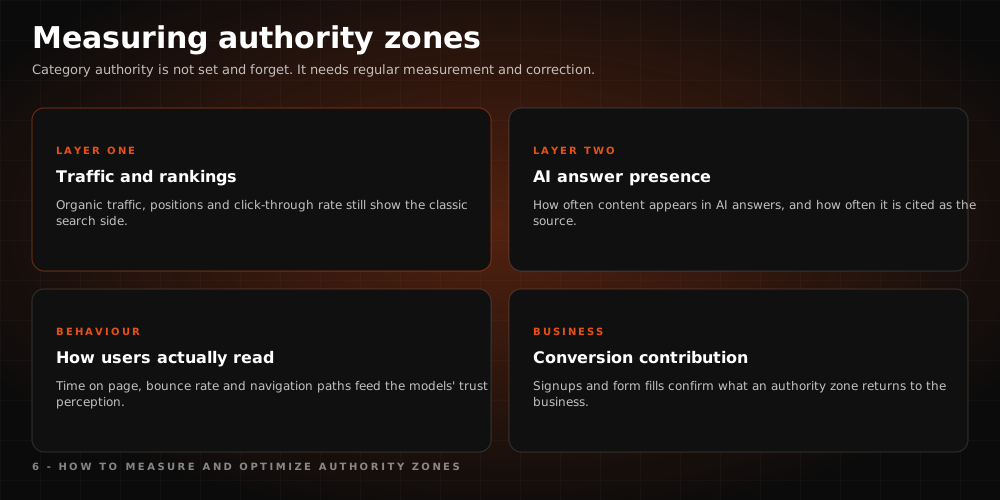
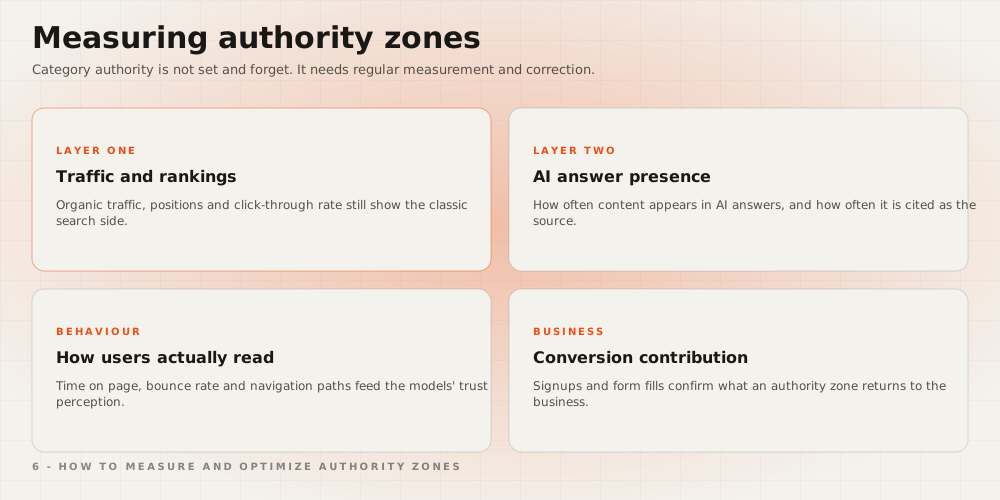
Category-level authority building is not a set-and-forget process; it is a dynamic strategy that requires regular measurement and optimization.
- Two-layer performance tracking: Alongside organic traffic, rankings, and CTR, track how often content appears in AI answers and its citation rate. That data shows which categories are leading and which need support.
- User behavior analysis: Time on page, bounce rate, and navigation paths show which content users find valuable; these signals also feed the models' trust perception.
- Conversion contribution: Conversion metrics such as email signups and form fills confirm what authority zones contribute to business goals.
- A continuous improvement loop: Content that loses currency gets revised with new data and trends, staying a living part of the authority zone.
In this new digital era dominated by AI, content should be produced not just to be read but to be understood and distributed by algorithmic systems. Your brand's digital presence will be directly proportional to your content's "reputation" with AI.
This is exactly what Brantial AI was designed for: taking that "algorithmic reputation" out of the hands of chance. The platform builds a vital bridge between the value your brand produces and the way AI processes that value; it ensures your content is not just indexed but absorbed by AI. To prove your industry authority to AI models and extend your digital shelf life, rebuild your strategy around the data-driven vision Brantial.ai provides; in the future, only the brands AI "recommends" and references will stay competitive.