
SI-Sourced Traffic Up 400.8% At Blue Diamond
Users arriving from SI platforms grew 400.8% year on year over the last 3 months and new users grew 416.01%. See the GEO strategy and the five steps behind it.
Client: Blue Diamond · bluediamond.com.tr

The traffic, visibility and conversion figures in this case study were measured with Google Analytics 4 and Google Search Console together.
Published:
In our work with Blue Diamond we added users' changing search and discovery behaviour to the strategy alongside classic SEO performance. As ChatGPT and other generative SI platforms took a larger role in research and purchase decisions, we treated Blue Diamond's visibility on those platforms as a growth area in its own right.
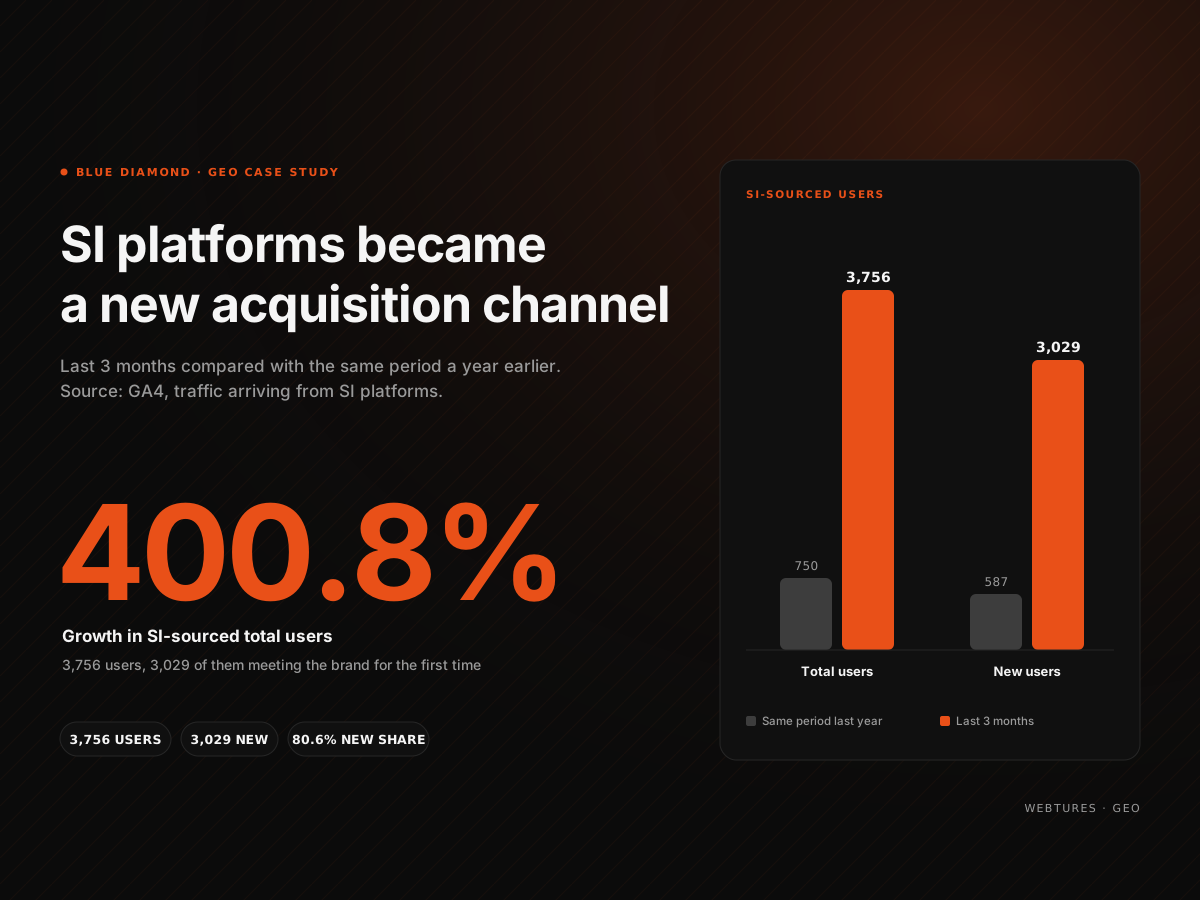
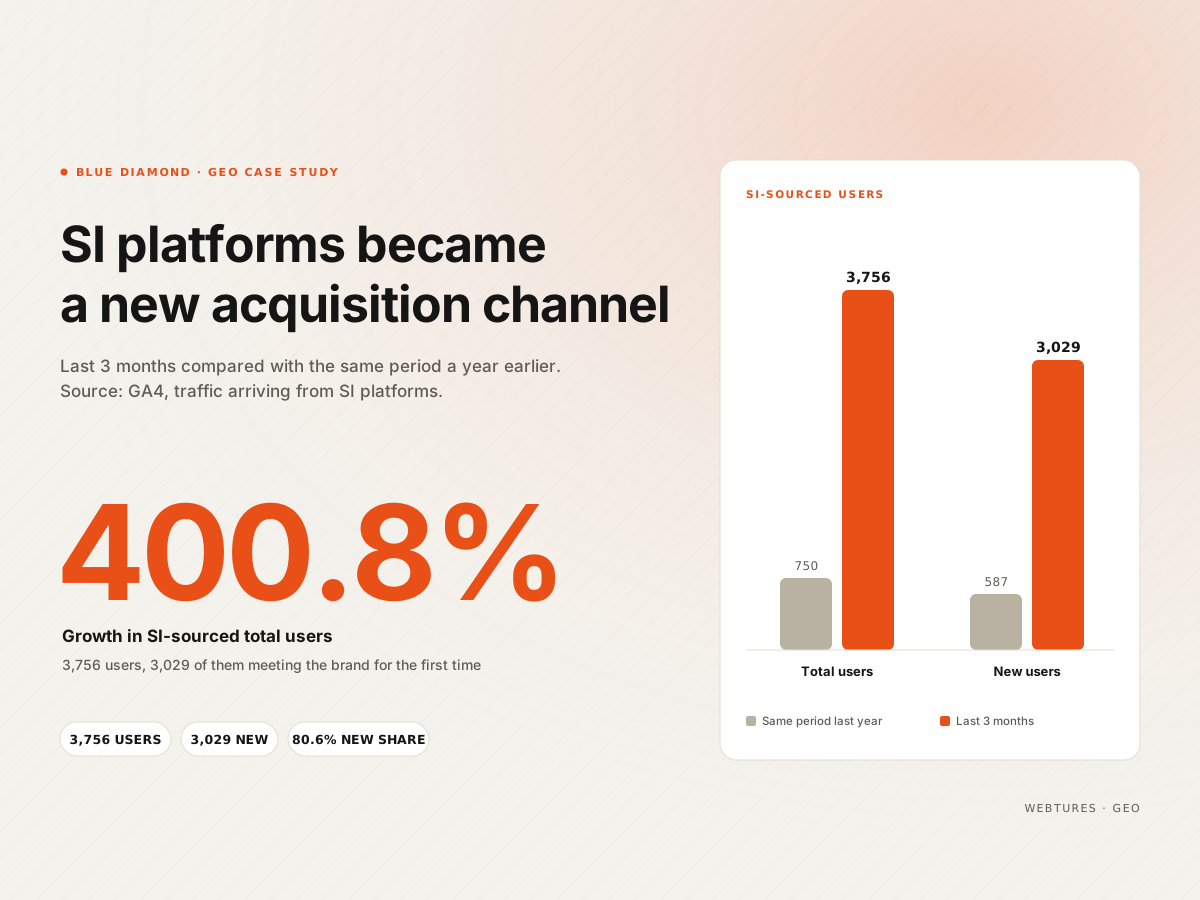
As a result of the GEO (Generative Engine Optimization) programme, comparing the last 3 months with the same period a year earlier, total users arriving from SI platforms rose 400.8% to 3,756 and new users rose 416.01% to 3,029. The real outcome was not only the traffic growth: SI platforms started to become a measurable new user acquisition channel for Blue Diamond.
| Headline performance indicator | Result |
|---|---|
| Growth in SI-sourced total users (year on year) | 400.8% |
| SI-sourced total users (last 3 months) | 3,756 |
| Growth in SI-sourced new users (year on year) | 416.01% |
| SI-sourced new users (last 3 months) | 3,029 |
| New-user share | 80.6% |
Why we brought GEO into the Blue Diamond strategy
When we assessed the project we saw that the diamond and jewellery buying process does not consist of direct product searches alone. Before buying, users look for information on carat, cut, colour, clarity, certification, ring selection, diamond comparisons, proposals and jewellery care.
That research used to happen largely on Google; ChatGPT and similar platforms are now among the important touchpoints in the process. So the question was no longer only "Which queries does Blue Diamond appear for on Google?". We added "When users ask SI platforms about these topics, where does Blue Diamond sit in that ecosystem?" and built the GEO strategy on that shift.
The aim was to use Blue Diamond's existing content strength in diamonds and jewellery to make the brand a stronger source of information both in traditional search engines and in generative SI-assisted research. This is the same framework that underpins our GEO consulting service.
The GEO goals we set for Blue Diamond
Rather than positioning GEO as a new channel independent of SEO, we treated it as an extension of the existing organic growth strategy. The main goal was to support the topics and product groups where Blue Diamond is already strong within the SI ecosystem as well.
| Focus area | Goal |
|---|---|
| Technical structure | Make it easier for SI systems to discover and interpret Blue Diamond content |
| Topic coverage | Widen topic coverage across diamonds and jewellery |
| Content structure | Build content blocks that answer users' natural-language questions directly |
| Semantic authority | Strengthen semantic authority on diamond and jewellery topics |
| Internal linking | Improve the semantic relationship between guides and category and product pages |
| User acquisition | Increase users and new users arriving from SI platforms |
| Measurement | Make the effect of GEO measurable in Analytics |
What the GEO work delivered
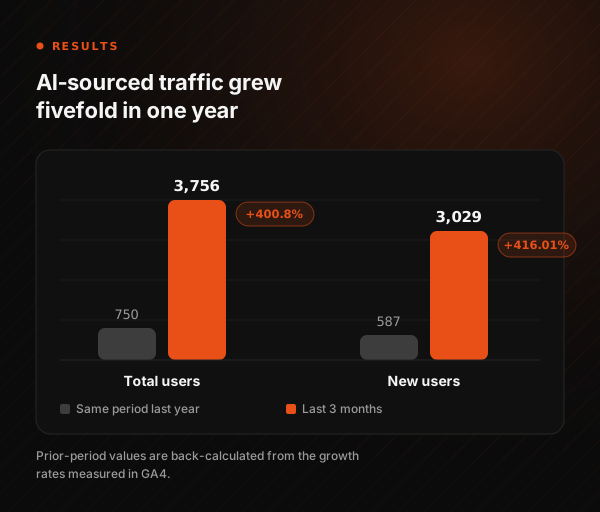
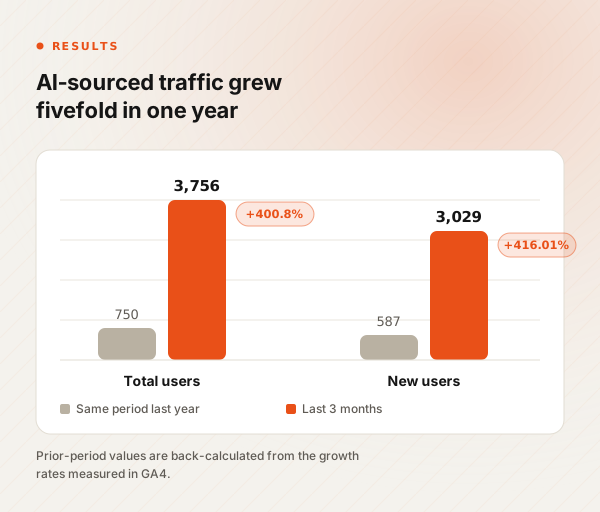
We did not want to judge the effect of the GEO work on a theoretical notion of "SI visibility" alone. We tracked users reaching the Blue Diamond website from SI platforms separately and measured performance on real traffic data. Comparing the last 3 months with the same period a year earlier showed strong growth.
SI-sourced total users up 400.8%
Total users arriving at the Blue Diamond website from SI platforms reached 3,756, a 400.8% increase on the same period a year earlier. The figure showed that GEO is not only a visibility exercise expected to pay off in the future; it had started to become a measurable channel that brings users to the site directly.
SI-sourced new users up 416.01%
In the same period new users arriving from SI platforms rose to 3,029, a 416.01% increase. A point we watched closely was how much of the total consisted of users meeting Blue Diamond for the first time.
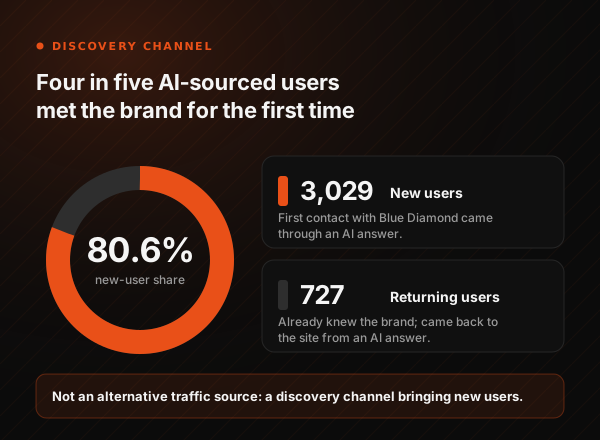
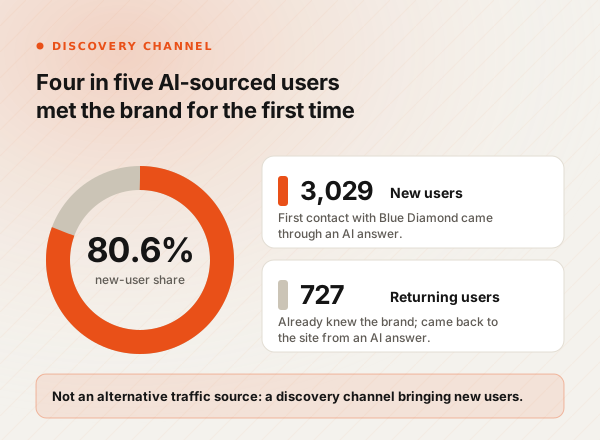
That 3,029 of 3,756 users were new showed that SI platforms are not merely an alternative traffic source for Blue Diamond; they had started to become a discovery channel that brings the brand new users. We describe how we isolate SI traffic in GA4 in how to measure SI traffic in Google Analytics.
The GEO strategy we applied for Blue Diamond
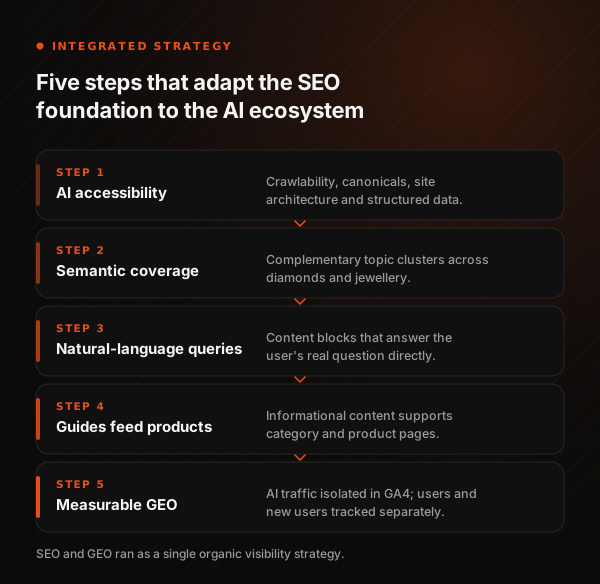
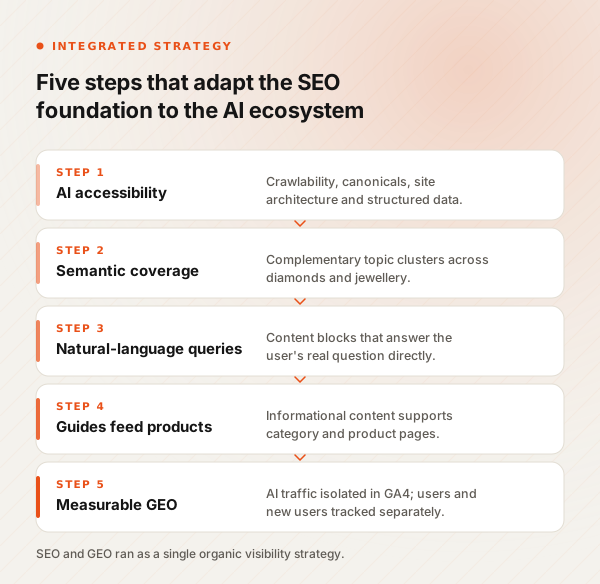
We did not treat SEO and GEO as two separate disciplines. We built an integrated strategy that adapts the technical foundation, content quality, semantic relationships, site architecture and authority signals developed over years of SEO to the generative SI ecosystem. The strategy rested on three questions: Can SI systems reach Blue Diamond content? Do they read the content and the relationships between pieces correctly? Does Blue Diamond have enough topic coverage to answer users' diamond and jewellery questions?
1. We assessed SI accessibility and the technical foundation
We first reviewed the existing technical SEO foundation from a GEO perspective: crawlability and indexability, plus canonical structures, site architecture, structured data and the technical accessibility of content. The aim was not only to have pages indexed by Google, but to build a structure in which pages, entities and the relationships between content can be interpreted clearly by machines. You can check where your own site stands with our SI agent readiness scan.
2. We widened semantic coverage across diamonds and jewellery
We did not judge content on single keywords. Instead of Blue Diamond being visible through product pages alone, we set out to build an information ecosystem that meets users across the whole research journey leading up to the purchase decision. Content was organised as complementary topic clusters: diamonds, jewellery, product attributes, buying guides, comparisons, care and use, and user questions.
3. We developed content for natural-language queries
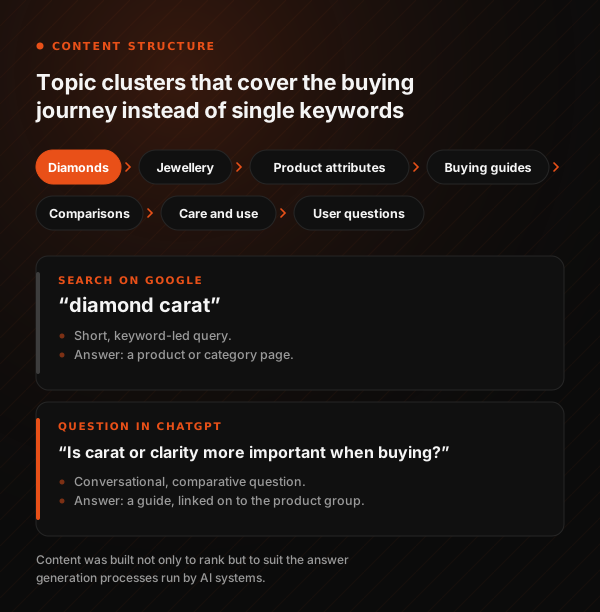
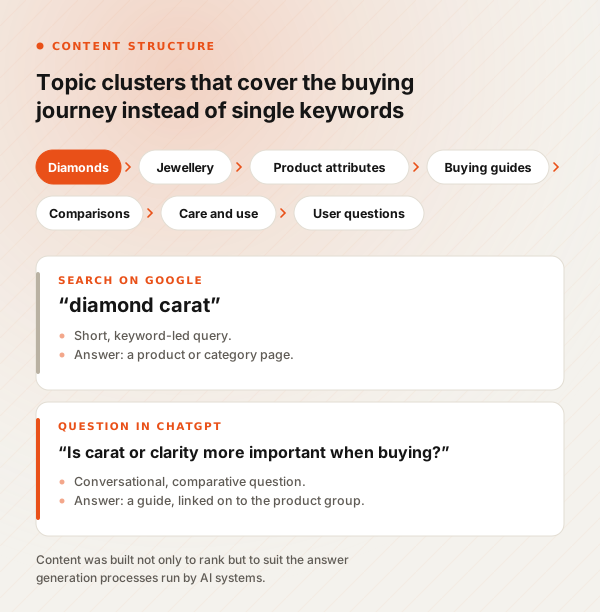
On Google a user may type a short query such as "diamond carat", while in ChatGPT the same need is phrased conversationally: "Is carat or clarity more important when buying a diamond?". So instead of content built on keyword usage alone, we created content blocks that answer users' real questions clearly and directly, with definitions, comparisons and the questions that shape the purchase decision answered as plainly as possible.
4. We strengthened the link between informational content and commercial pages
We positioned guides not as standalone traffic pages but as an information layer supporting product and category pages. A user researching diamond selection may not yet be ready to buy; getting the information they need from Blue Diamond lets the brand meet them earlier in the journey. We therefore strengthened internal links between guides and the related category and product groups.
5. We made GEO performance measurable
Saying "we are visible on SI platforms" was not enough; we wanted to see how many users that visibility brought to the site. We isolated traffic from SI platforms in Analytics and tracked total users, new users and period-on-period growth separately. The indicators worth tracking are collected in the top ten GEO KPIs.
What we did on the Blue Diamond project
Rather than focusing on a single optimisation, we handled technical SEO, content, semantic structure and measurement together:
- Assessed SI systems' access to the site from a technical standpoint.
- Ran crawlability and indexability checks.
- Improved the semantic structure of content.
- Widened topic coverage in the diamond and jewellery categories.
- Brought users' natural-language questions into the content strategy.
- Built content blocks that answer questions directly.
- Strengthened internal links between guides and category and product pages.
- Reviewed structured data and entity signals.
- Isolated referral traffic from SI platforms.
- Measured GEO performance period by period.
We ran all of this not as independent actions but as parts of a single organic visibility strategy in which SEO and GEO feed each other. How the same approach is set up for online retail is covered in SI in e-commerce GEO strategies.
The result of GEO with Blue Diamond
Comparing the last 3 months with the same period a year earlier, we increased Blue Diamond's total users from SI platforms by 400.8% and new users by 416.01%. The real outcome of the project is not only those two growth rates: instead of positioning GEO as a separate, experimental area, we adapted Blue Diamond's existing SEO strength to next-generation search and discovery behaviour.
Today a user does not reach Blue Diamond only through a classic Google result; research carried out in ChatGPT and other SI platforms creates new touchpoints with the brand. That is why we no longer judge organic visibility only by "Where do we rank on Google?", but by "When a user researches a product, category or topic, at which points in the digital ecosystem does Blue Diamond appear?".