How to Develop GEO Strategies With AI?
How to build GEO strategy with AI: a five-stage workflow, Share of Model tracking, intent-gap analysis, technical GEO and product data, with a tool table.

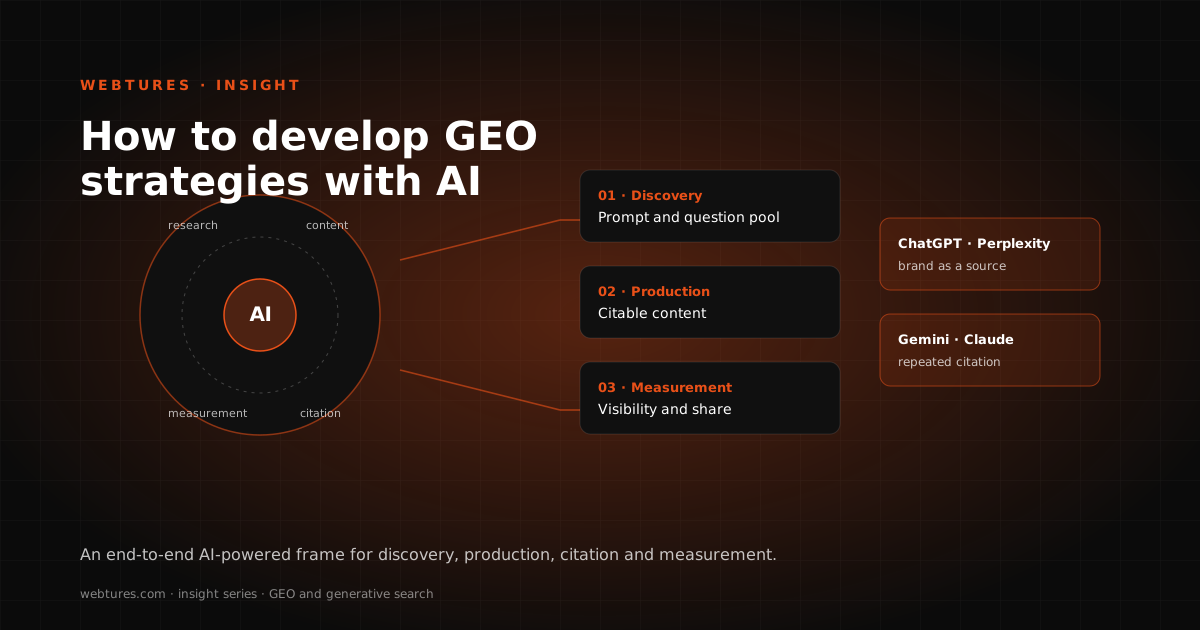
Digital marketing has moved from an era where users searched for links on search engines to the "Answer Engine" era, where AI assistants (ChatGPT, Gemini, Perplexity) generate direct answers. Gartner's 2024 forecast projects that traditional search engine volume could drop by 25% by 2026. This shift makes it essential to structure content so that it is interpretable, verifiable, and citable not only for humans but also for Large Language Models (LLMs). Generative Engine Optimization (GEO) aims to position brands as "citable" authority sources in this new ecosystem.
LLM-friendly content structure and authority
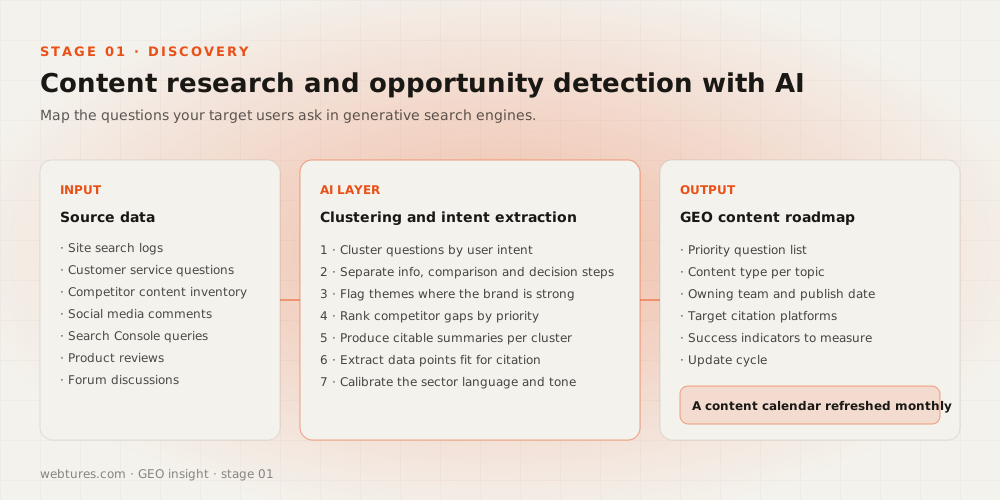
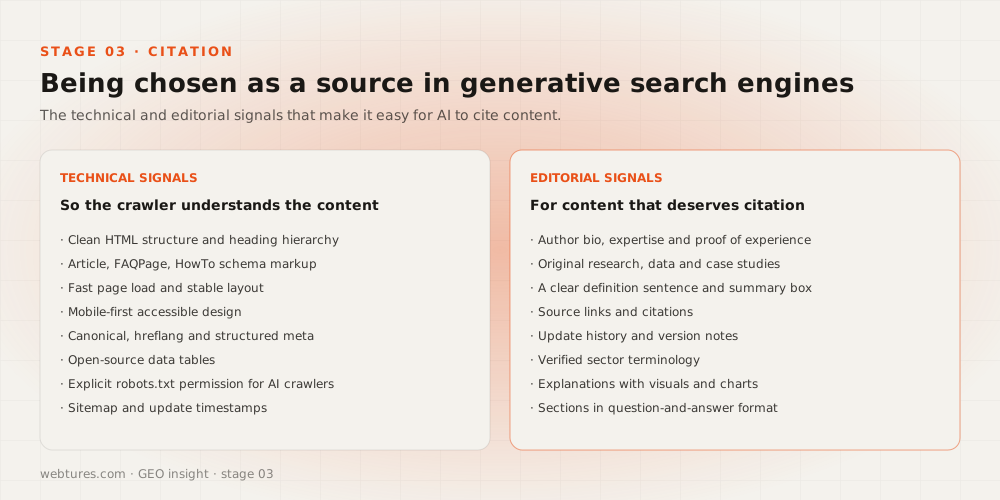
AI models do more than crawl content; they synthesize it by interpreting context, source trust, and topical relationships. Content development is therefore no longer about raising keyword density but about building "information density" and "structural accuracy." From the Webtures perspective, the following criteria determine whether an LLM treats your content as a reliable source:
- Citability: The content carries directly referenceable statistics, original data, and expert opinions.
- Structural hierarchy: Clean HTML structures, tables, and strategically placed bullet lists that make the content easier for LLMs to parse.
- Trust score: The content rests on verifiable sources to reduce the risk of hallucination.
Contextual headlines and prompt matching
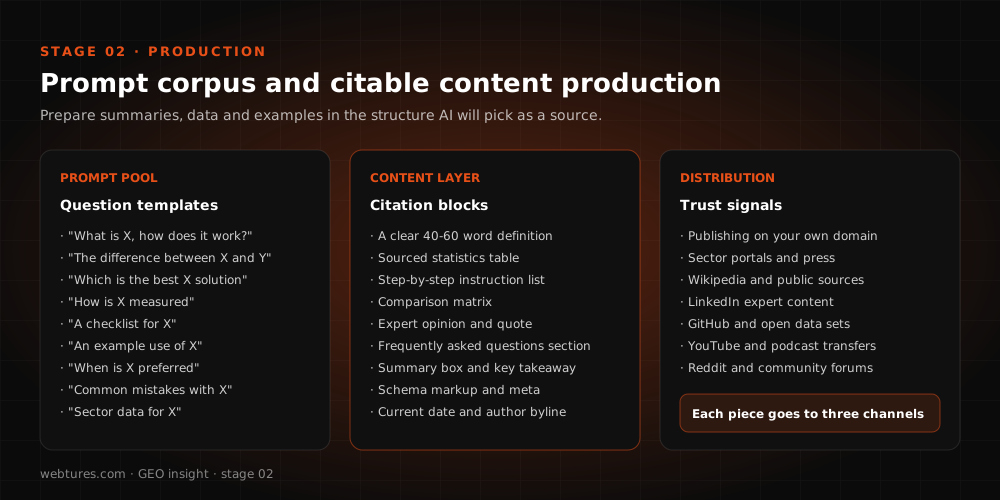
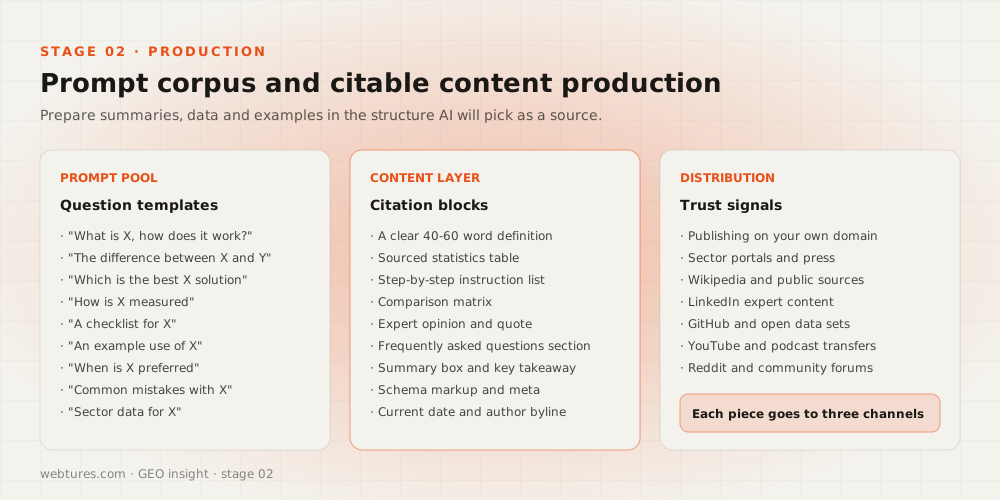
The era of the "clickable headline" is fading while "contextual matching" grows stronger. Zero-click studies published in 2026 show that most Google searches end without a click, with users getting their answer on the results page or inside an AI chat window. Headlines should be written to tell the AI model exactly what the content is about, not merely to pull users onto the site. Clickbait headlines should give way to semantically coherent headlines that answer the question directly.
Raising content quality through "answer value"
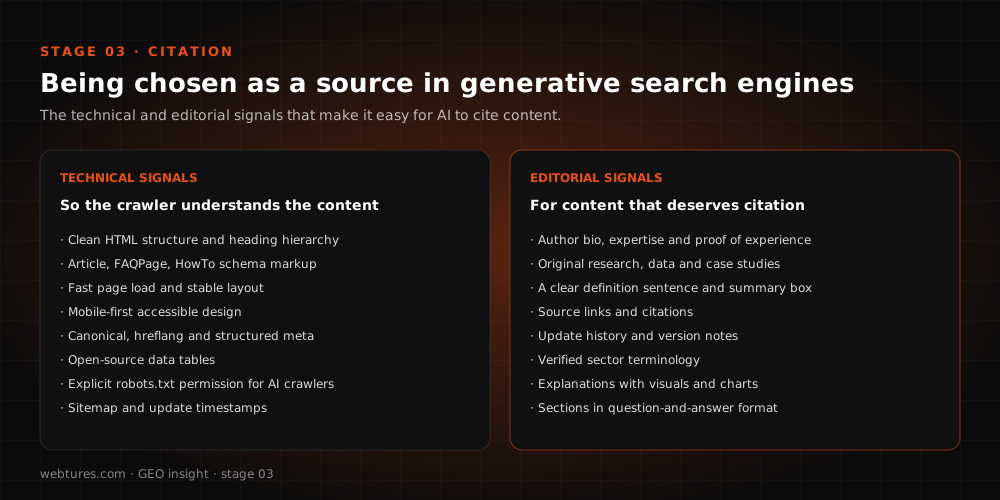
AI goes beyond fixing grammar; it analyzes the "utility coefficient" of content. In a GEO strategy, content quality is measured by the ability to solve a problem in as few steps as possible. Content should be comprehensive and satisfying enough that the user never needs a follow-up query.
AI-based recommendation and guidance systems
AI-based systems no longer suggest keywords; they map user intent. Content strategies personalized around your audience's interests do more than catch trends; they position your brand as the primary authority (entity authority) on the topic.
Real-time trend integration
Static content is giving way to dynamic content fed by real-time data streams. AI models may assign lower trust signals to outdated information. A living content strategy fed by social signals, news sources, product data, and brand mentions keeps your brand visible for "right now" queries.
Entity-driven content ideation
Focus not only on what your audience searches for but on the context in which they search. AI analyzes user profiles to surface their hidden needs. These insights turn your content from a static answer repository into an intelligent guide that engages the user.
The AI-assisted GEO workflow: five stages
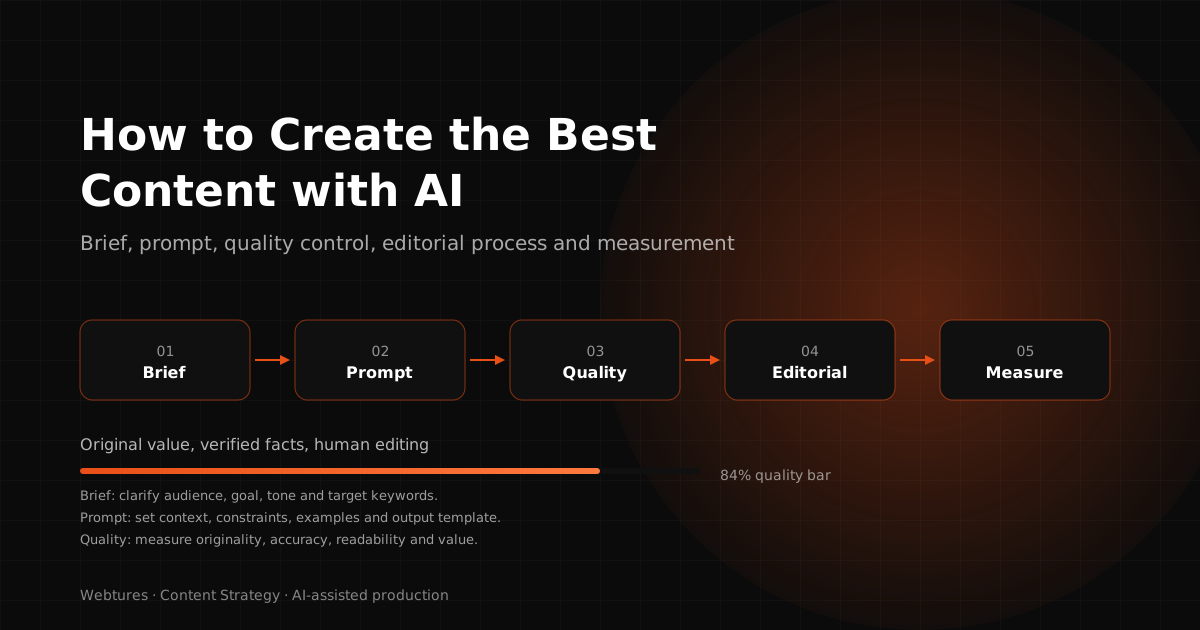
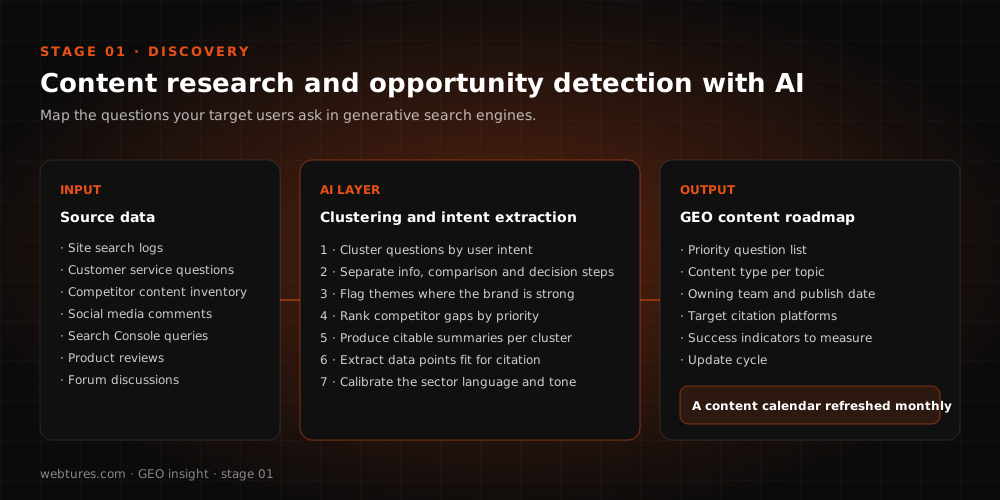
The table shows where AI is the tool in a GEO programme and where it is only an accelerator. The sector-independent plan is in the 2026 GEO roadmap.
| Stage | Input | Tool | Output |
|---|---|---|---|
| 1. Intent map | Category questions, fan-out sub-queries | Search Console generative AI report, Brantial query set | The intent space to target |
| 2. Gap analysis | Sources cited for competitors | Brantial, manual answer reading | Data voids and missing entities |
| 3. Content production | First-party data, cases, expert opinion | Model plus editor; three tests (same without the name, has a number, has a reason to save) | Context-free citable passages |
| 4. Structure audit | Draft content | Schema validator, passage checklist | Tables, definition boxes, FAQPage, Product |
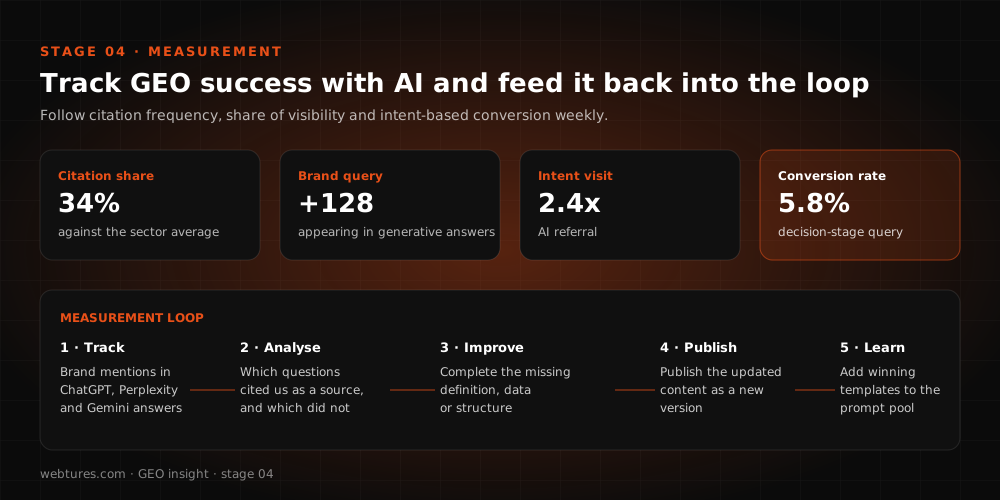
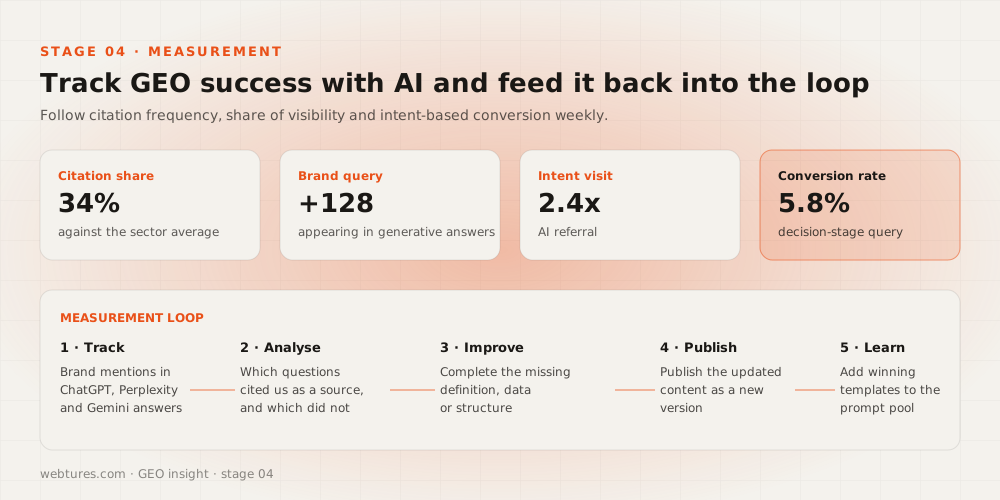
| 5. Measurement | Post-publication answers and traffic | Brantial, GA4 AI Assistant channel | Share of Answer, citation rate, AI-sourced conversions |
Share of Model and next-generation competitor analysis
In classic visibility work, competitor analysis mostly meant rank tracking; in GEO it becomes "Share of Model" tracking. Understanding how AI models describe your competitors, which prompts recommend them, and which sources they are associated with delivers a strategic edge.
Competitors' entity strategies
AI tools analyze which concepts (entities) your competitors are associated with. If a competitor owns "fast delivery," you need to decide which gap concept, such as "sustainable packaging," you will claim. This is a competition of brand perception far more than a keyword competition.
Detecting data voids
Topics your competitors have not covered are "data voids" for AI models. Filling those voids with original, high-quality content makes you one of the strong sources AI can cite on that topic. Beyond classic search visibility, this strategy helps you build a perception of singular authority inside AI conversations.
Differentiation and emphasizing unique value
LLMs synthesize general information from across the web, but they cannot copy original experience. In competitor analysis, highlighting proprietary insights only your brand can offer increases the likelihood that AI cites you.
Semantic analysis of competitor content
Analyzing your competitors' highest-engagement content reveals which question patterns are popular. AI runs these analyses so you can produce answers that are not merely similar but more comprehensive and more current.

Intent gap analysis with AI
"Keyword gap" analysis has given way to "intent gap" analysis. Whether you can answer users' complex prompts and multi-step questions more convincingly than your competitors determines your GEO performance.
Model-level visibility tracking
Tracking how often and in what context your brand is recommended on platforms like ChatGPT or Gemini is impossible with manual methods. GEO platforms such as Brantial measure your brand's visibility and sentiment across AI models and report clearly where your gaps are.
Detecting and integrating missing entities
Identifying semantic concepts present in competitor content but missing from yours deepens your coverage. AI determines which subtopics or terms are missing for the topic to feel complete.
Comparative answer quality analysis
AI can evaluate your answer and your competitor's answer to the same question like an impartial referee. By analyzing which answer is more direct, more provable, and more user-friendly, it helps you optimize your content strategy.
Future-focused opportunity discovery
AI analyzes tomorrow's trends, not just today's. By detecting the rising long-tail prompts specific to your industry, it lets you become the authority in that space before competition forms.
User intent and query expansion with AI
Keyword research has given way to user intent mining. Users no longer enter word fragments; they enter detailed problems and scenarios as prompts.
Data collection and intent analysis
AI analyzes millions of queries to determine what users are actually trying to solve (the job to be done). Search volume gives way to metrics like intent density and conversion probability.
Separating informational and commercial queries
Datasets analyzing more than 41 million AI prompts globally show that users are directing not only informational but also commercial queries straight to AI engines. This makes the split between informational and commercial queries strategic. Each query type demands its own content architecture: informational queries call for comprehensive, well-sourced answers, while commercial queries call for structures that lay out comparisons, pricing, and decision criteria clearly.
Predictive strategy
Rather than building strategy on historical data alone, AI-based systems predict future query and prompt trends. By answering the question of what people will ask next month, they let you build a proactive content calendar.
User intent and the conversion funnel
AI can distinguish whether a user simply wants information or is at the purchase stage far more precisely than traditional methods. Optimizing your content around that distinction lets you reach the right user at the right moment.
Technical GEO: crawl budget and infrastructure
AI agents consume content differently from traditional crawlers. Technical GEO architects your site infrastructure as a high-quality information source for these agents. Slow-loading or technically flawed pages can be flagged by answer engines as sources with low citation potential; performance is no longer just a UX metric, it is a trust signal.
Value-driven crawl budget management
AI engines want to focus crawl resources on the most valuable, most current, and most trustworthy pages. Pages with high citation value should therefore be prioritized, with crawl intensity directed toward these critical areas. Structural HTML elements, especially tables and numbered lists, are known to be cited at high rates in AI answers; these formats pay back crawl budget fastest.
Hallucination-proof content auditing
Regularly auditing existing content reduces the risk of being cited incorrectly or misleadingly. Consistent, contextually accurate use of brand, product, and person names (entities), plus current statistics backed by verifiable sources, lowers the chance of a model generating false information about your brand. Analyzing which sections of frequently cited sources get referenced in competitor or AI answers shows where to deepen your existing content.
Product data optimization for intelligent assistants
In the future of e-commerce, AI agents will make or heavily influence purchase decisions. Product descriptions must be machine-readable and structured.
Hyper-personalized product experience
AI rewrites product descriptions on the fly based on a visitor's past behavior and preferences, creating dynamic content that leads with technical detail for a technology enthusiast and with aesthetics for a design-driven user.
Semantic attribute matching
Product descriptions should be stripped of subjective praise and enriched with concrete attributes such as dimensions, materials, and energy class. AI assistants rely on this structured data when comparing products.
Psychological triggers and AI perception
AI analyzes user reviews to build an overall sentiment profile of a product. Product descriptions that stay consistent with real user experience, never contradict price, stock, shipping, or return information, and preempt likely concerns (such as installation difficulty) increase purchase probability.
Multimodal search and visual asset optimization
Images are no longer decoration; they are search queries in their own right. Technologies like Google Lens and ChatGPT Vision can understand the products and context inside an image.
Visual recognition and entity tagging
AI recognizes the objects in an image, so your visuals must be in full contextual alignment with your content. Every detail, from the file name to the surrounding text, should tell the AI model what the image is.
Image quality and structured data
High-resolution, original images are read by AI as a quality-source signal. Marking up images with Schema.org structured data such as `Product` or `HowTo` helps you stand out in multimodal search.
Accessibility and AI description
Alt text now matters not only for accessibility but for describing the image to AI models. Alt text that describes the image accurately and in detail improves your visibility in visual search.