AI-Powered Email Marketing Content Ideas (2026)
Seven content types, segmentation layers, subject-line and measurement rules for AI-powered email marketing, updated for Gemini summaries and the AI Inbox.

What is AI-powered email marketing?
AI-powered email marketing is the model in which AI works at both ends of the email programme: on the sending side, content, segments, subject lines and send times are produced by models; on the receiving side, the AI layer in Gmail and Outlook summarises the email, prioritises it and sometimes answers on the user's behalf. When we published this article in 2024 only the sending side existed. In 2026 the equation changed: Gmail's more than 2.5 billion users see an email through its Gemini summary first. Content ideas therefore have to answer "what survives when AI reads it" before "what to write with AI".
Webtures' position: in email, AI is not a writing tool but part of the measurement and consent architecture. Content produced without the right data, the right consent and the right measurement is only spam produced faster.
Which email content can AI produce?
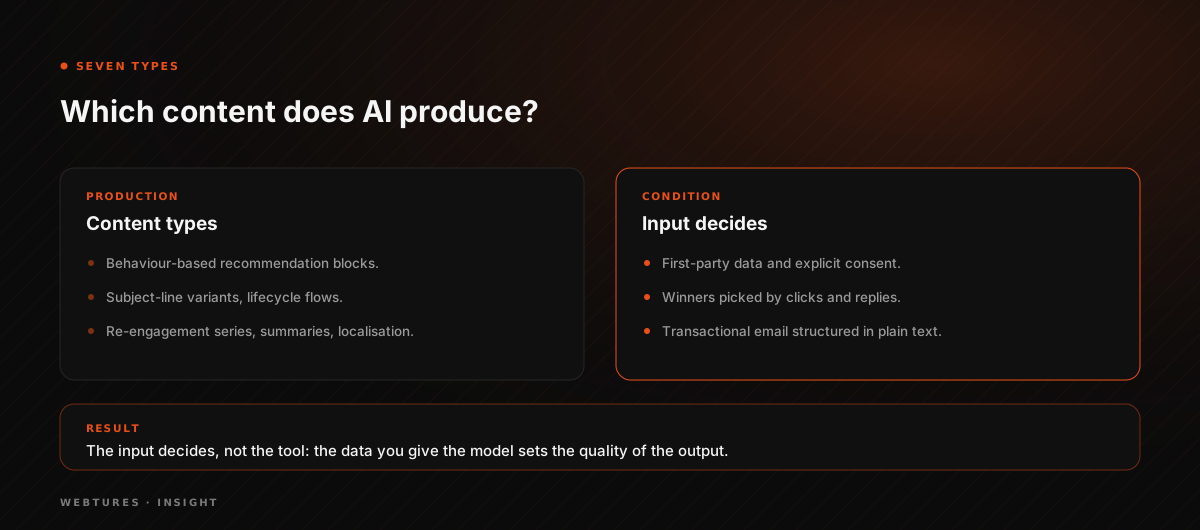
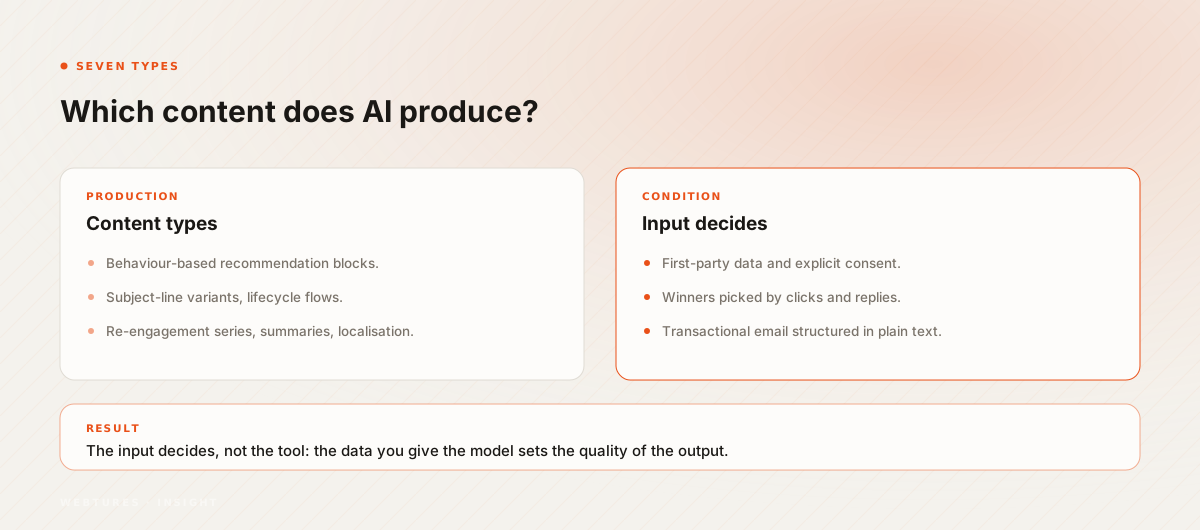
The seven content types below are where AI delivers concrete results in enterprise email programmes. In each, the input decides, not the tool: the data you give the model sets the quality of the output.
- Behaviour-based product and content recommendations. A different block for each recipient from purchase history, browsing and abandoned carts. Condition: first-party data and explicit consent.
- Subject-line variants. The model produces ten, the test compares only three; pick the winner by clicks and replies, not opens.
- Re-engagement series. A three-email series for subscribers silent for six months; remove those who do not return. In 2026 this series is the precondition for staying visible in the AI Inbox.
- Newsletter and executive summaries. A two-sentence summary of long content at the top of the email; Gemini will extract the same summary, so writing it yourself keeps control with you.
- Lifecycle flows. Welcome, post-first-purchase, renewal and churn risk; models predict churn risk early from behaviour data.
- Localised versions. Language and cultural adaptation of the same campaign for TR and EN lists; rewriting, not translation.
- Text-based transactional emails. Orders, appointments, invoices: date, price and conditions explicit in plain text, structured for both the summariser and the agent reading the email.
How do you personalise and segment with AI?
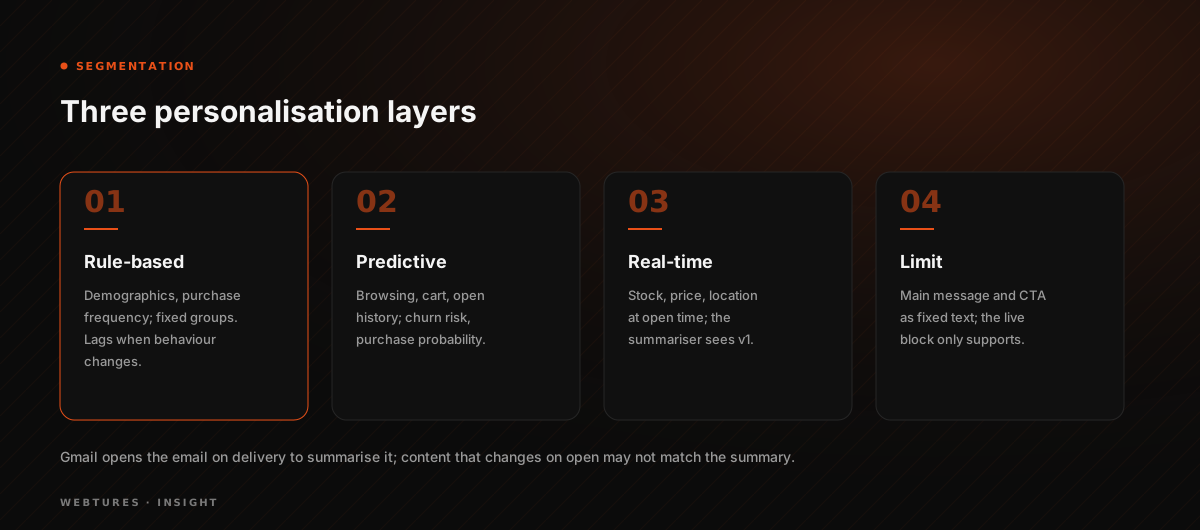
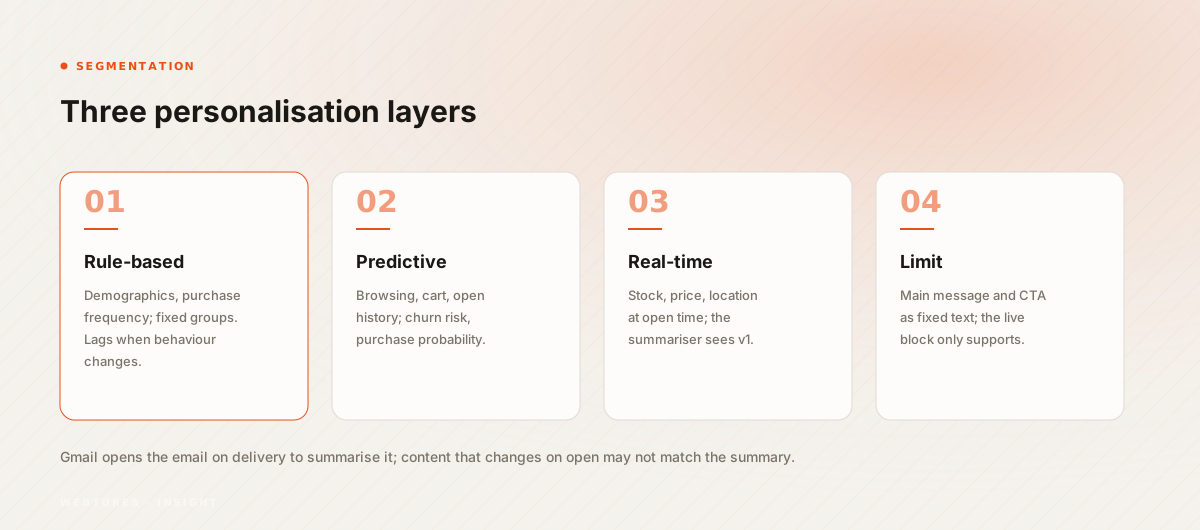
In 2026 personalisation is not putting a name in the greeting field but producing the segment from behaviour. Enterprise programmes run three layers:
| Layer | Input | Output | Limit |
|---|---|---|---|
| Rule-based segment | Demographics, purchase frequency | Fixed groups | Lags when behaviour changes |
| Predictive segment | Browsing, cart, open-click history | Churn risk, purchase probability | Needs first-party data and consent |
| Real-time personalisation | Stock, price, location at open time | A block updated on open | The summariser sees the first version |
The last row matters: Gmail opens the email on delivery to produce a summary. Content that changes at open time may not match what the summary saw. So the main message and call to action must be fixed text; the real-time block is supporting material only. The data side of personalisation is built together with consent management; we treat that setup as part of the measurement architecture in our article on the digital marketing plan for the agent era.
How does AI improve send time and subject lines?
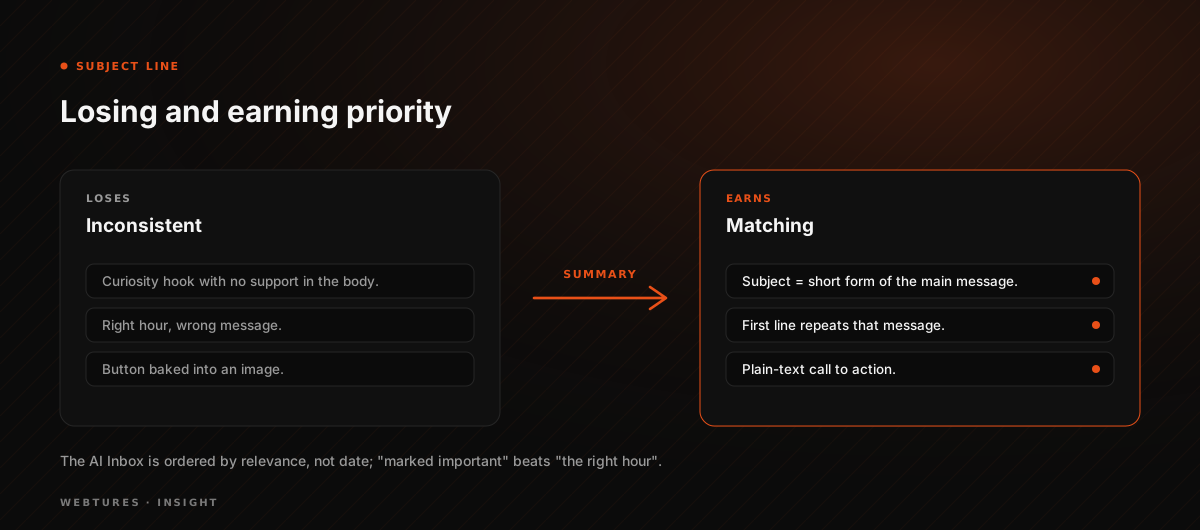
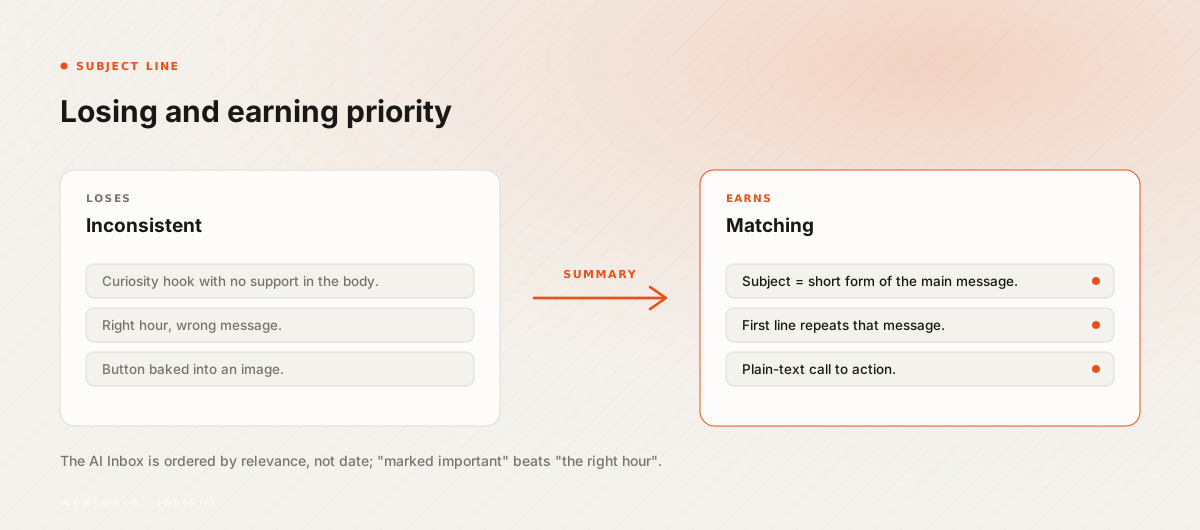
Send-time optimisation picks an hour from each recipient's own open history. In 2026 its return is smaller than it was: the AI Inbox shows email in order of relevance, not date, so "being marked important" decides more than "the right hour". On subject lines, the AI layer treats a mismatch between subject and body as a low-value signal; a curiosity-driven subject line with no support in the body now produces a loss of priority, not an open.
The practical rule: the subject line is the short form of the email's main message, and the first line of the body repeats that message. When the summariser matches the two, the email earns a chance of entering the "important" briefing. We explain how the receiving-side AI layer works in detail in email marketing in the AI inbox.
How do you analyse email campaign performance with AI?
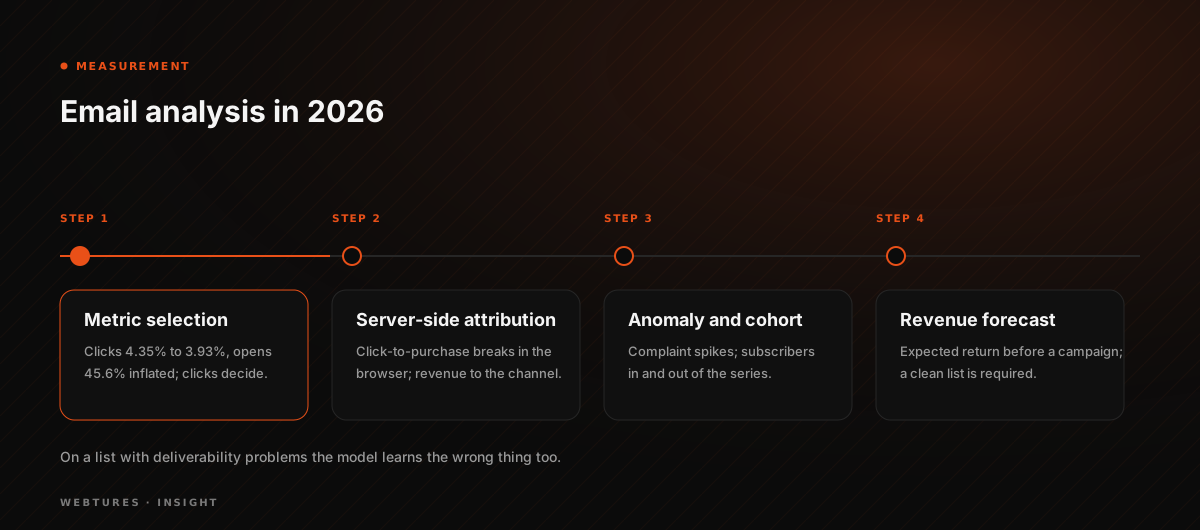
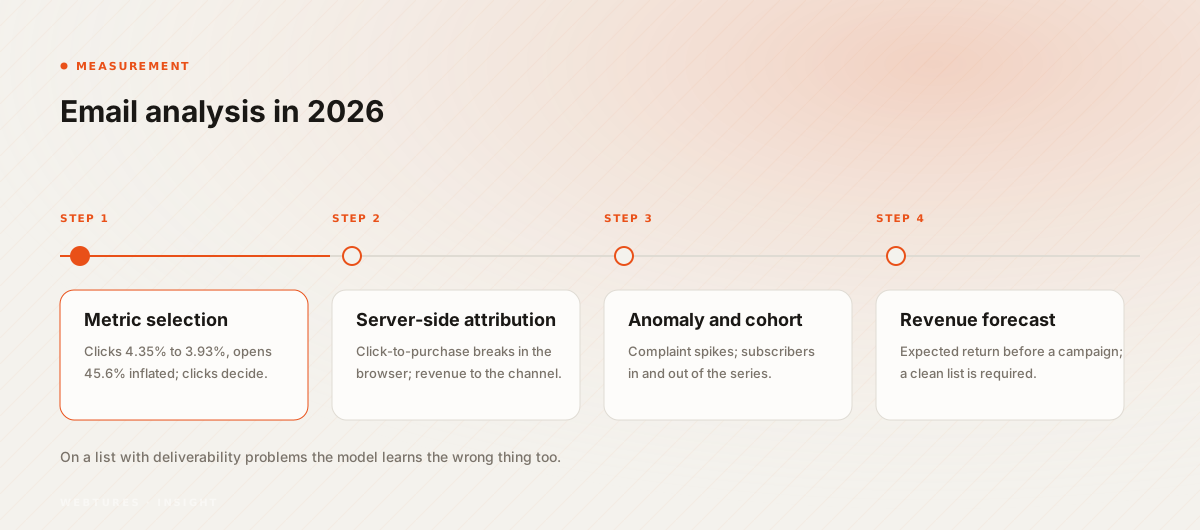
Measurement asks for two changes in 2026. First, metric selection: according to industry data, after Gmail's AI summaries went live click-through fell from roughly 4.35% to 3.93% while open rate rose to 45.6%; the second number is inflated by automatic opens. Keep open rate in the report, but let clicks, replies and revenue decide. Second, attribution: the path from email click to purchase can break in the browser; server-side measurement writes email revenue to the right channel. We give the setup step by step in Google Tag Manager in the agent era.
On the analysis side AI does three jobs: anomaly detection (a sudden rise in complaint rate in one segment), cohort comparison (subscribers who entered the re-engagement series versus those who did not) and revenue forecasting (expected return before a campaign). All three need clean data; on a list with deliverability problems the model learns the wrong thing too.
What are the common mistakes in AI-powered email marketing?
- Picking the A/B winner by open rate. Automatic opens crown the wrong variant.
- Message and button baked into an image. The summariser sees nothing; the agent finds nothing to click.
- "Personalised" bulk sends to the whole list instead of segments. A name field is not personalisation.
- Sending generated content unread. Wrong price, wrong date; agents process that information as is.
- Feeding models with data collected without consent. Privacy rules did not change; penalty risk and list loss.
- Continuing to send to an inactive list. The shortest route to disappearing from the AI Inbox.
How does Webtures build an email programme?
We treat email as a channel of agentic commerce: the structuring done for the agent in the product feed is done in the email body too, because the agent reading the email looks for the same information. The setup has four steps: sender identity and technical foundation (SPF, DKIM, DMARC, one-click unsubscribe), a structure audit for the summariser, server-side measurement and consent management, and a wake-up series for the inactive list. You can find the commerce-side counterpart of these steps on the Agentic Commerce Readiness page; to have your email programme assessed against the 2026 inbox, contact the Webtures team.