Email Marketing in the AI Inbox: Writing for the Summariser
How Gmail's Gemini summaries and the AI Inbox changed email marketing: falling clicks, inflated opens, five structural signals and agents that read email next.
What is email marketing in the AI inbox?
Email marketing in the AI inbox is an email strategy built on the fact that the message you send is read, summarised, prioritised and sometimes answered by an AI layer before a human sees it. The old entry in our glossary described mailing as "a bulk sending method that delivers product, service and campaign information to a target audience"; the sending side is still that, but the receiving side changed. In early 2026 Google switched on a Gemini-based layer in Gmail that summarises, prioritises and filters: the email is summarised before the user sees it, classified as "important" or "later", and in the AI Inbox view sorted by relevance rather than chronology. Gmail had more than 2.5 billion users as of August 2025; that layer is the majority of the market.
Webtures' thesis: email is no longer written for the reader first but for the summariser; the email that passes the summariser reaches the reader.
How did Gemini summaries change open and click rates?
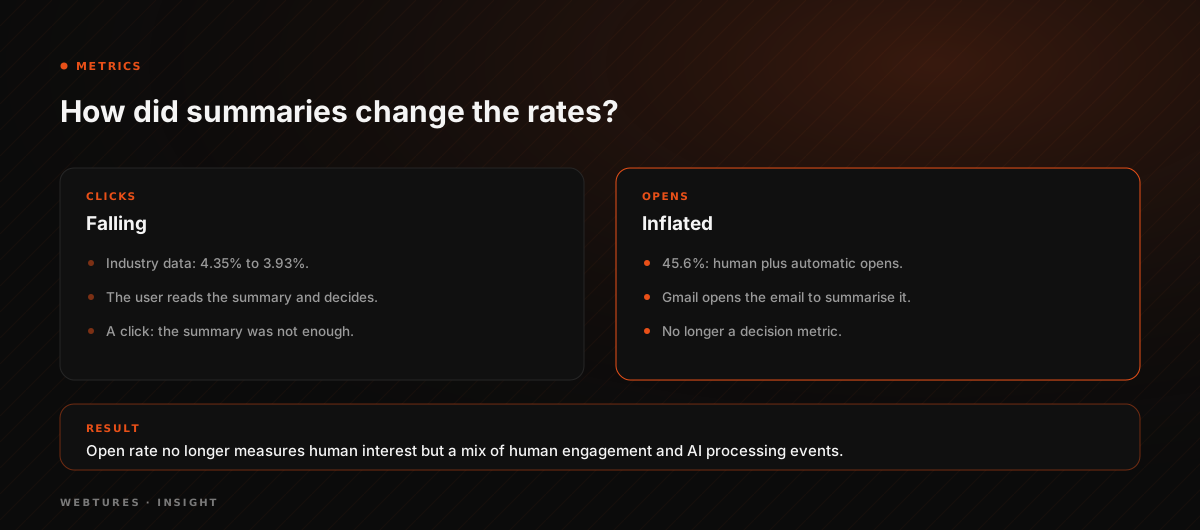
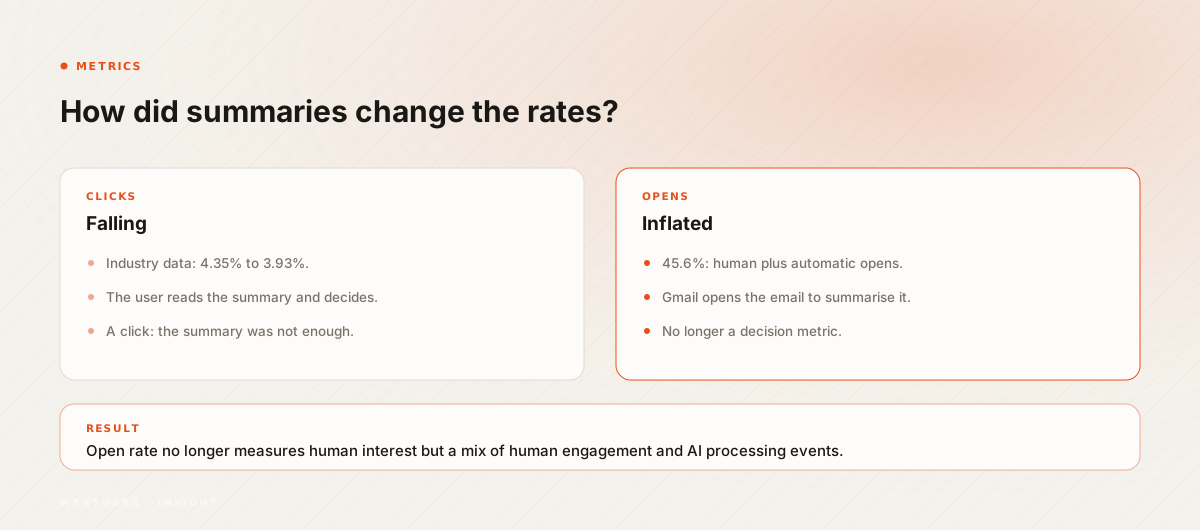
According to industry analysis of billions of emails, after Gmail's AI summaries went live click-through fell from roughly 4.35% to 3.93%, while open rate rose to 45.6%. The second number is misleading: Gmail opens the email automatically to generate a summary, and some sending platforms record that automatic open as a human open. In 2026 open rate is a mix of real human engagement and AI processing events. The user reads the summary and decides without ever opening the email; a click comes only when the summary is not enough.
| Metric | Meaning in 2024 | Meaning in 2026 | What to do |
|---|---|---|---|
| Open rate | Human interest | Mix of human and AI auto-opens | Stop using it as a decision metric; read it with clicks and replies |
| Click rate | Content interest | Interest the summary could not satisfy | Leave a value the summary cannot complete |
| Reply rate | Rare, valuable | May rise with AI-drafted replies | Separate human replies from assistant replies |
| Spam complaints | Content quality | Includes the AI's "low value" classification | Structure and clarity: the five signals below |
What does Gmail's AI layer look at in an email?
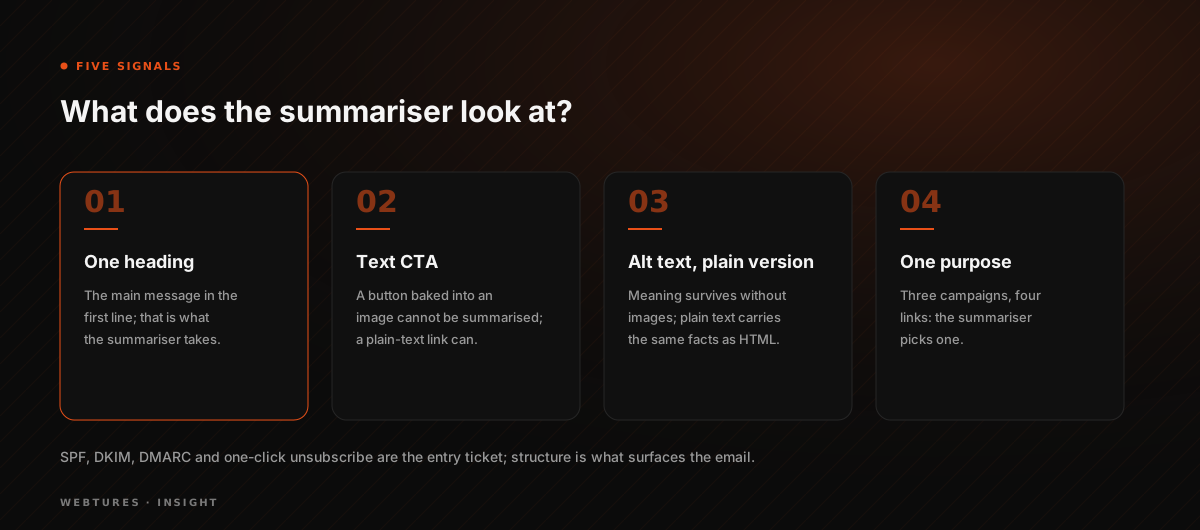
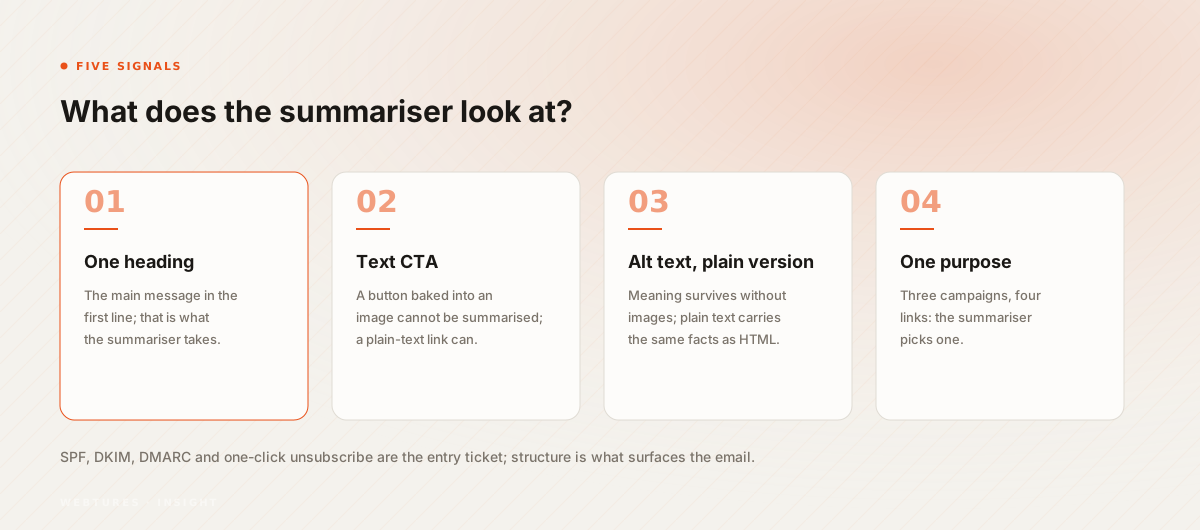
In 2026 content quality is a deliverability signal: Gmail's AI evaluates the clarity, structure and value of the email and adds a semantic layer on top of the traditional spam filter. Five structural signals stand out for the summariser to produce an accurate summary:
- One heading that states the main message. What the email wants, in the first line; that is what the summariser takes.
- A primary call to action written as text. A button embedded in an image cannot be summarised; "Book a slot", "Download the report" must be a plain-text link.
- Descriptive alt text on images. The email must keep its meaning with images unloaded.
- A plain-text version carrying the same information as the HTML. Most platforms generate plain text automatically and drop critical details; check it.
- One email, one purpose. Three campaigns and four links: the summariser picks one and drops three.
The technical foundation has not changed: SPF, DKIM, DMARC, one-click unsubscribe and a low complaint rate. In 2026 those are the entry ticket; what surfaces the email is structure.
How do you earn priority in the AI Inbox?
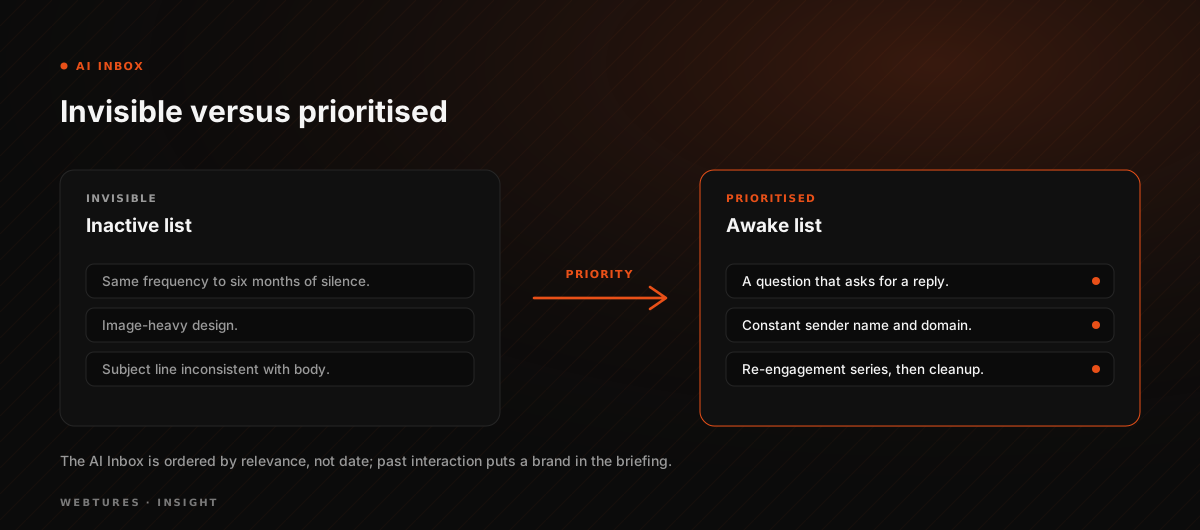
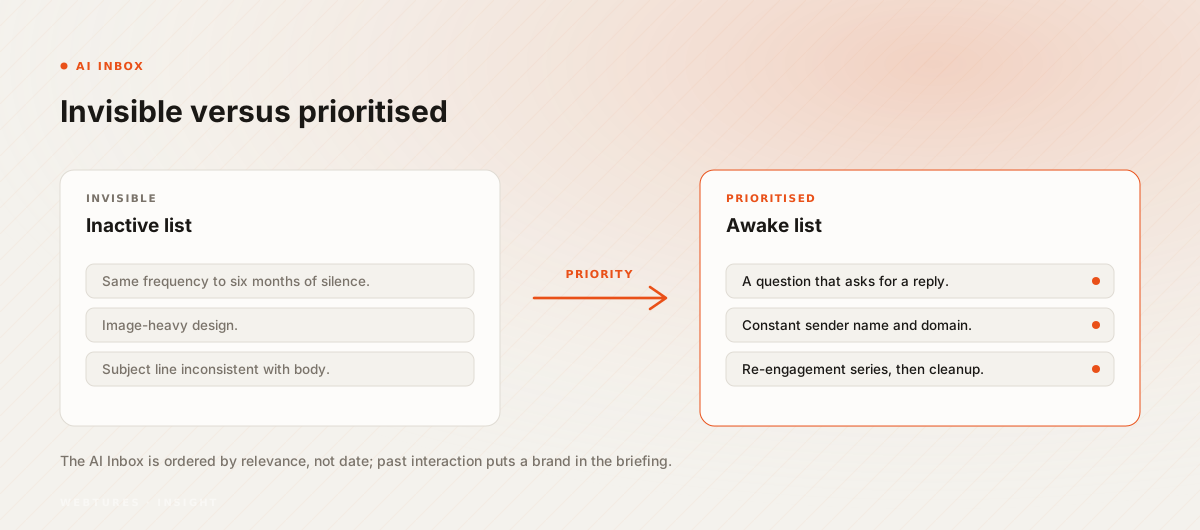
The AI Inbox takes the inbox out of date order and turns it into a personalised briefing of "important conversations and updates". Whether a brand enters that briefing depends on the user's past interaction with it: what they opened, replied to, clicked. That means less growing the list and more waking it:
- Sending at the same frequency to a subscriber inactive for six months means never appearing in that inbox; lower the frequency, run one re-engagement series, then remove those who do not return.
- Ask for a reply: a question, a one-click survey. A reply is the AI Inbox's strongest "important" signal.
- Keep sender name and domain constant; the summariser uses sender consistency as a trust signal.
What will agents that read email change?
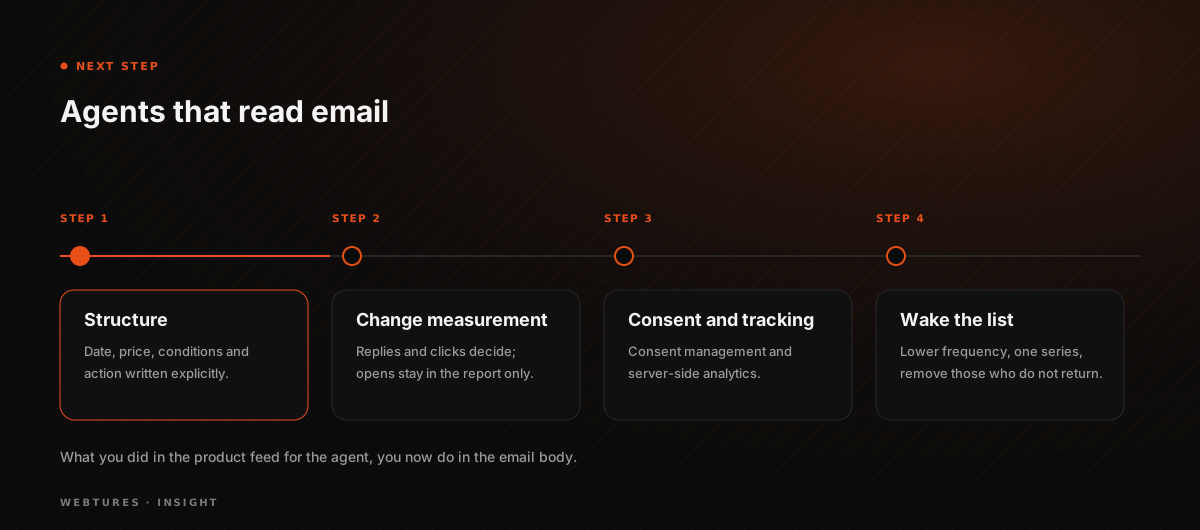
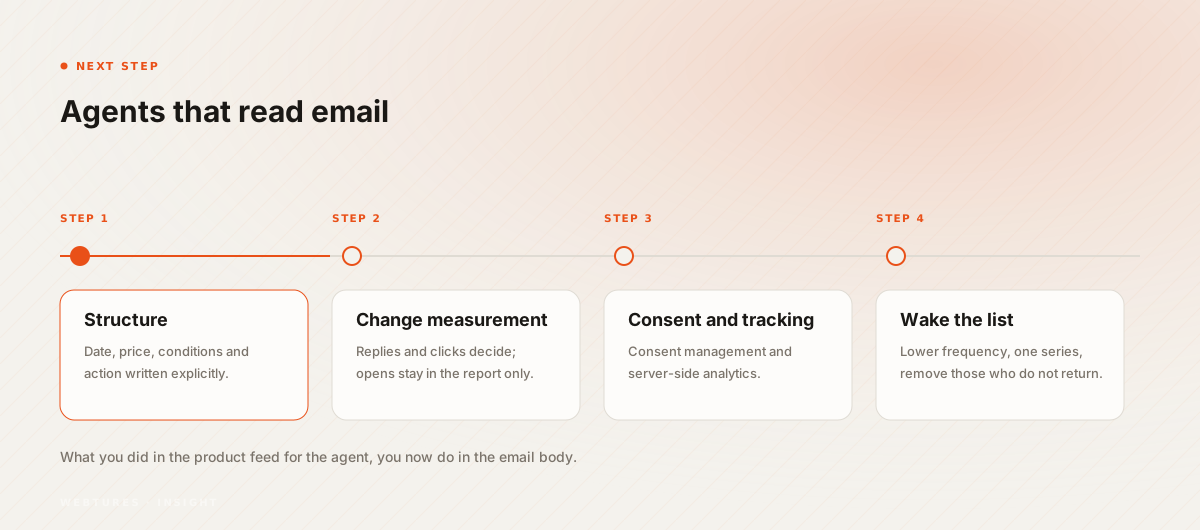
Summarising is the first step. The next is assistants that answer email on the user's behalf and evaluate the offer inside it: "is this discount right for me", "add this appointment to the calendar". The agent wants to read the information in the email in structured form; date, price, conditions and action must be written explicitly in the text. This is the email leg of agentic commerce: doing in the email body what you did in the product feed for the agent. Personalisation is changing direction too; we covered AI-generated email content ideas separately, and in 2026 its boundary must be set together with consent management and server-side measurement.
What are the most common mistakes in the AI inbox?
- Deciding on open rate. Auto-opens inflate the number; an A/B test judged on opens picks the wrong winner.
- Image-heavy design. One large image with text baked in: the summariser sees nothing.
- Misleading subject lines. The AI layer treats a subject-body mismatch as a low-value signal.
- Continuing to send to an inactive list. The shortest route to disappearing from the AI Inbox.
- Neglecting the plain-text version. The summariser often reads from there.
How does Webtures build email marketing?
We treat email not as a standalone channel but as part of the measurement and consent architecture: sender identity and technical foundation, a structure audit for the summariser, reply- and click-led measurement (open rate stays in the report but not as a decision metric), a wake-up series for the inactive list, and server-side analytics so email revenue lands in the right channel. For enterprise brands we do this within digital strategy consulting; to have your email programme assessed against the AI inbox, contact the Webtures team.
Growth & GEO
Let us make your brand visible in AI search.
Share your goals, we'll come back with a custom growth plan within one business day. A strategy lead will reach out personally.
Get in touch