Digital PR for AI Answers: How to Get Cited in the Agent Era
Build digital PR for citations, not links: the source pool of answer engines, the mention-citation gap, a seven-step method and measurement, with industry data.
What is digital PR in the agent era?
In the agent era, digital PR is the work of making sure a brand appears accurately, consistently and verifiably in the sources that AI answers draw on; its measure is not how many outlets ran the press release, but whether the brand is mentioned when ChatGPT, Perplexity, Gemini or Google AI Overviews answer a category question, and which source gets cited. The old definition in our glossary described digital PR as "the discipline of managing reputation and visibility across online channels". Correct, but no longer sufficient. Answer engines learn about a brand not from the brand's own site but from third parties. According to a 2026 industry index that merged more than 680 million citations across five platforms between August 2024 and April 2026, roughly 50 websites now decide which brands are visible inside AI answers. Digital PR's new job is to put the brand on those sites.
Webtures' thesis: PR for links is over, PR for citations has begun; both go to the same sources with different content.
Where do AI answers get their sources?
Each platform builds a different source pool, and that should be the first data point of any digital PR plan:
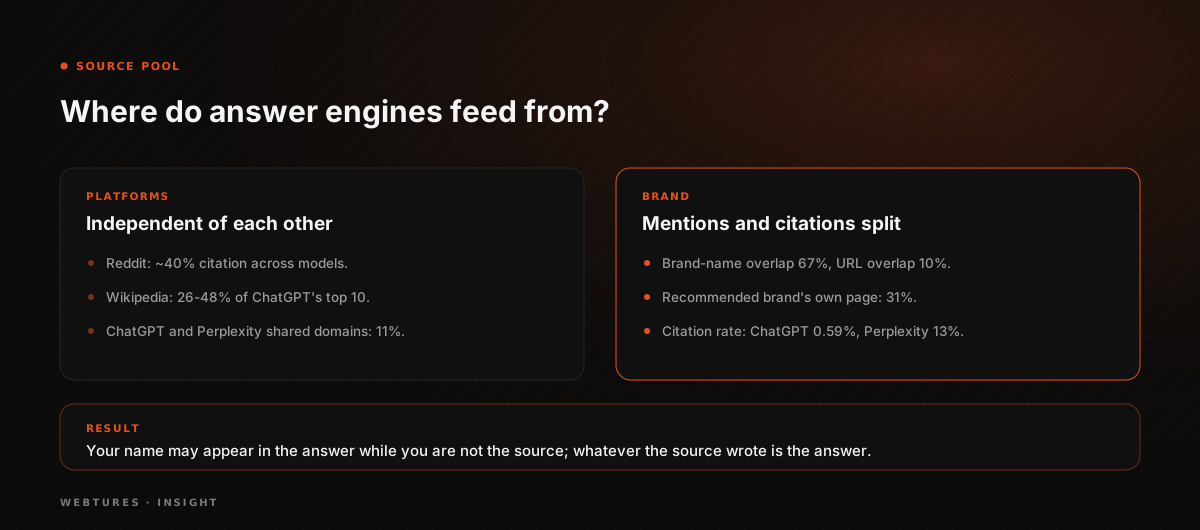
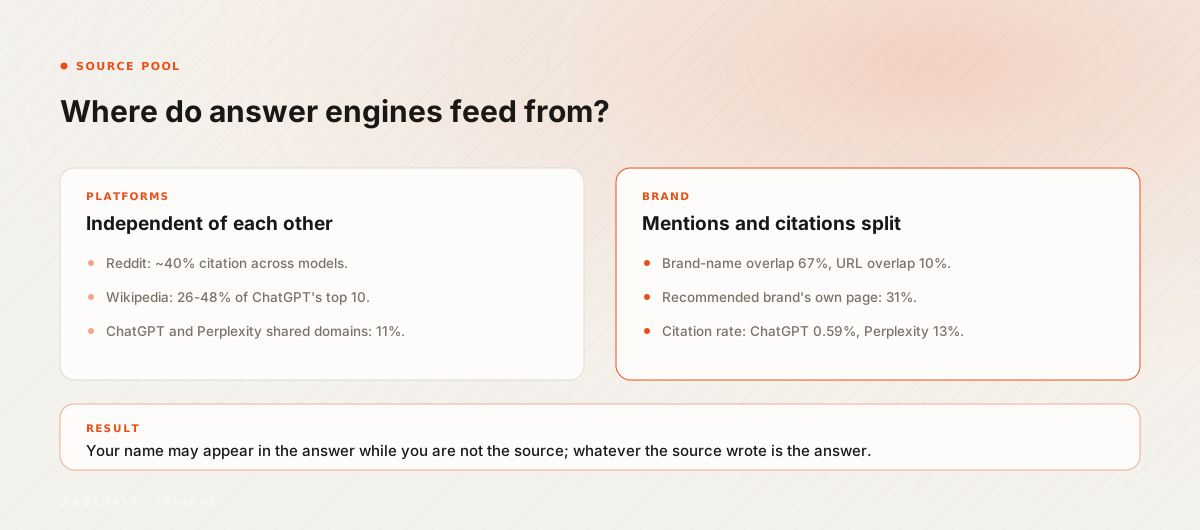
- Reddit is the most frequently cited source across every major language model; industry measurements put its citation frequency at roughly 40%.
- Wikipedia alone takes 26% to 48% of ChatGPT's top-10 citation share.
- Platforms are independent of each other. Only 11% of domains are cited by both ChatGPT and Perplexity. A 2026 study of 34,234 AI responses measured the brand citation rate at 0.59% on ChatGPT and 13.05% on Perplexity, a 46-fold gap.
- Mentions and citations are splitting apart. Across 596,723 prompts only 10.2% of cited URLs appeared on more than one engine, yet overlap of brand names inside the answer text reached 67.4%. When a brand is recommended, its own page is cited as the source only 31% of the time.
What these numbers mean for digital PR is clear: your brand name may appear in the answer while you are not the source. Whatever the third-party source wrote becomes the answer. So PR's goal is not "being mentioned" but being mentioned correctly.
What is the difference between PR for links and PR for citations?
| Dimension | PR for links (2015-2023) | PR for citations (2026) |
|---|---|---|
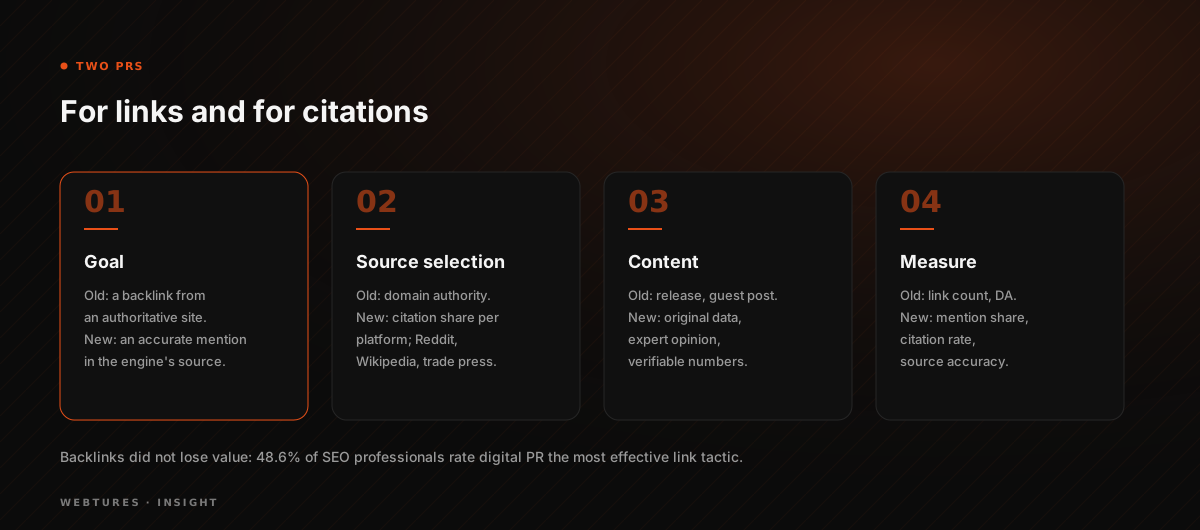
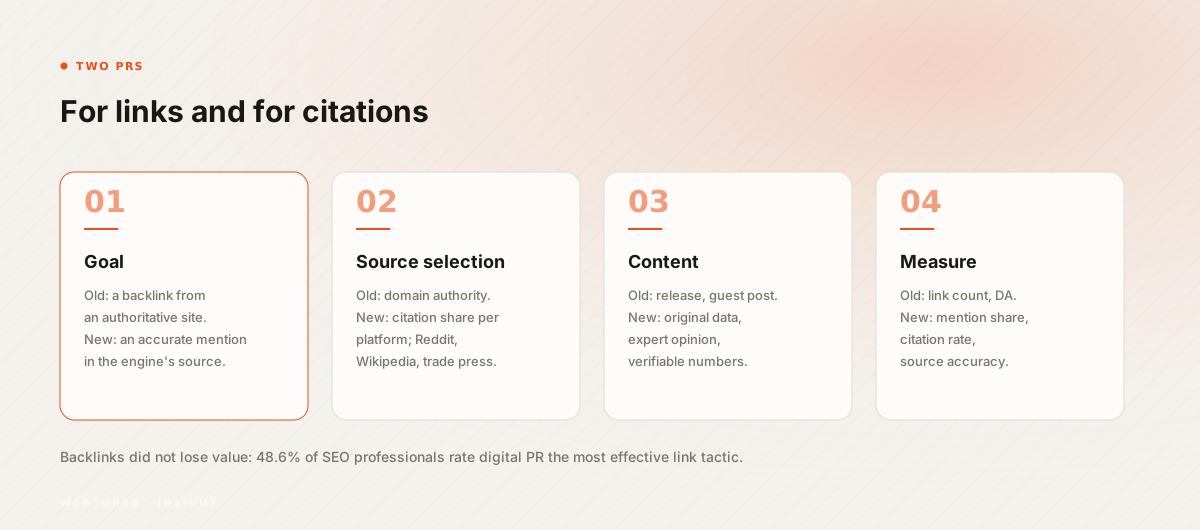
| Goal | A backlink from an authoritative site | An accurate mention in a source the answer engine uses |
| Source selection | Domain authority | Citation share per platform: Reddit, Wikipedia, trade press, expert blogs |
| Content format | Press release, guest post | Data, original research, expert opinion, verifiable numbers |
| Measure | Link count, DA/DR | Mention share, citation rate, source accuracy |
| Duration | Campaign | Continuous: models change source preferences month to month |
Backlinks did not lose their value; they still decide classic search, and 48.6% of SEO professionals rate digital PR the single most effective link-building tactic of 2026. What changed is that the same work now has to produce a second output: being cited in AI answers. Answer engines do not use the backlink graph as a citation signal; they draw on training data and real-time web retrieval.
How do you do digital PR to get cited?
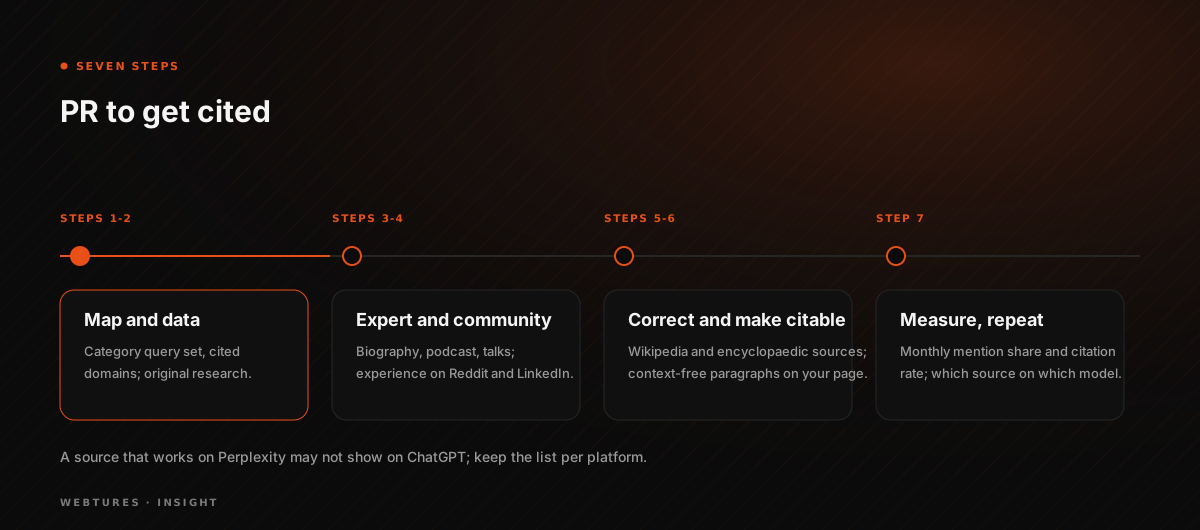
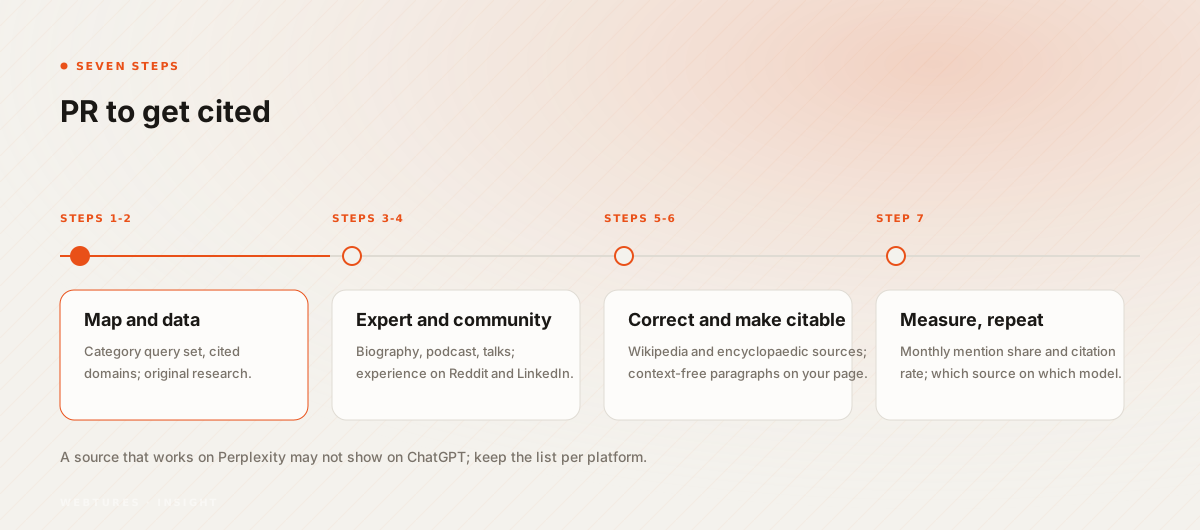
- Map the sources. Run your category query set on ChatGPT, Perplexity, Gemini and AI Overviews; list the domains that get cited. That list is your media list. Webtures built this map on 5,000 prompts for the automotive report.
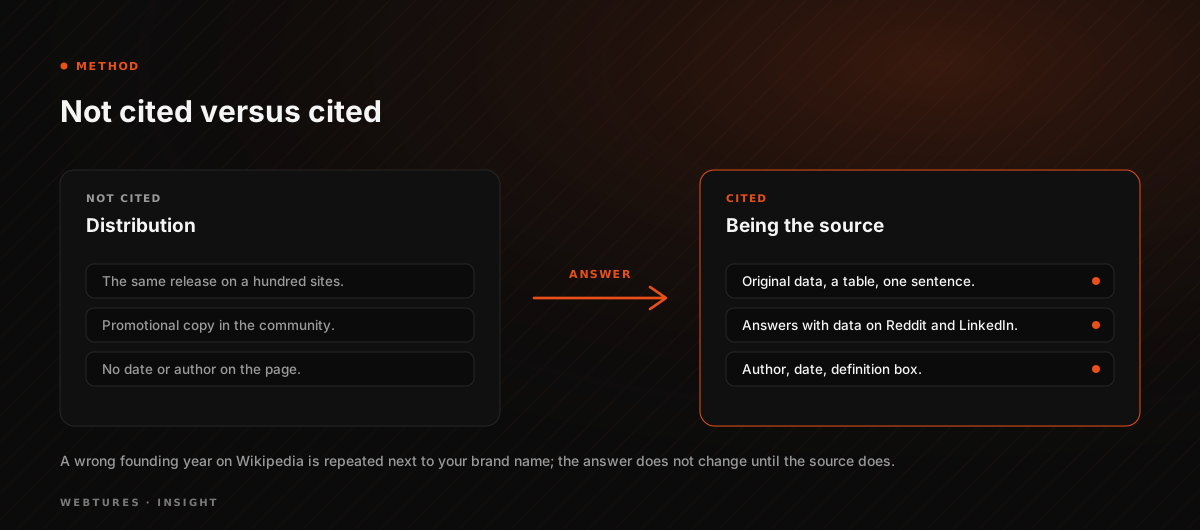
- Produce original data. Answer engines like numbers: your own research, industry measurement, case results. Not a release, but a quotable sentence and a table.
- Build expert presence. Author biography, LinkedIn profile, conference talk, podcast: the answer engine is looking for an answer to "who said this".
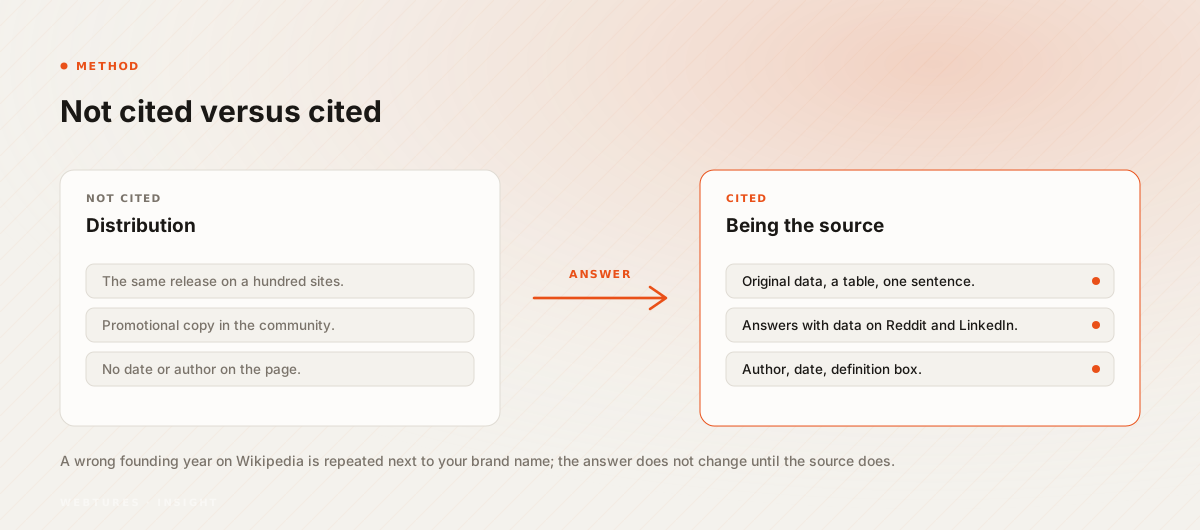
- Join the community, do not advertise in it. Answer questions with data in Reddit and LinkedIn threads; promotional copy is not cited, experience is.
- Correct Wikipedia and encyclopaedic sources. A wrong founding year, an old title, a missing product: the answer engine repeats the error next to your brand name. Corrections must be source-based and transparent.
- Make your own site citable. Otherwise the brand is mentioned but the 31% rule applies: the source is someone else. Context-free paragraphs, definition boxes, dates and authors on every page.
- Measure and repeat. Monthly mention share and citation rate; which source works on which model. A source that works on Perplexity may not show on ChatGPT.
How does digital PR merge with reputation management?
A wrong or negative statement inside an answer engine is more persistent than a page in search results: the user sees one answer, not ten results. That is why in the agent era digital PR and online reputation management work as one team. Reputation is no longer the question "what shows up on Google" but "what does the assistant say", and the way to fix the answer runs through fixing the source.
What are the most common digital PR mistakes in the agent era?
- Syndicating a release to a hundred sites. The same text in a hundred places, none of them in the answer engine's source pool.
- Looking only at domain authority. A forum thread with a high citation share can be worth more than a high-authority site that never gets cited.
- Planning for a single platform. 11% domain overlap: the list that works for ChatGPT may be useless for Perplexity.
- Confusing mentions with citations. Your name appearing does not make you the source; if the source is wrong, the answer is wrong.
- Not measuring. Without mention share and citation rate, the PR budget cannot be told apart from the ad budget.
How does Webtures build digital PR?
Digital PR is the distribution layer of our Generative Engine Optimization work: first a category-level source map and multi-model mention measurement, then production of original data and expert presence, then source-based placement and monthly measurement. The output is not a clippings file but a table showing which source carries the brand on which model, and a source list the brand's own team can keep running. To measure how your brand is mentioned inside AI answers, contact the Webtures team.
Growth & GEO
Let us make your brand visible in AI search.
Share your goals, we'll come back with a custom growth plan within one business day. A strategy lead will reach out personally.
Get in touch