AI Visibility in the Automotive Industry: Brantial Report Findings
Explore how automotive brands rank in AI answers with Brantial's 5,000-prompt analysis covering AI visibility scores, brand mentions, and multi-model presence.

Automotive is one of the sectors where visibility in AI-powered search is being redefined fastest. To measure that shift with concrete data, the automotive report prepared by Brantial sets out how often, and in what form, brands appear in AI answers. Query sets representing different user intents were run across multiple AI models in a standardized way, which moves the analysis past classic SEO metrics and makes visibility inside AI measurable.
How was the report produced?
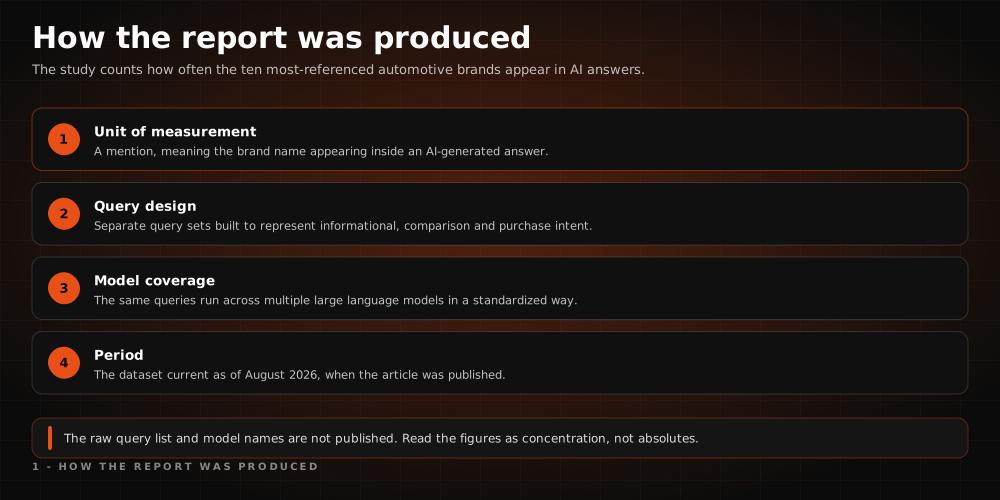
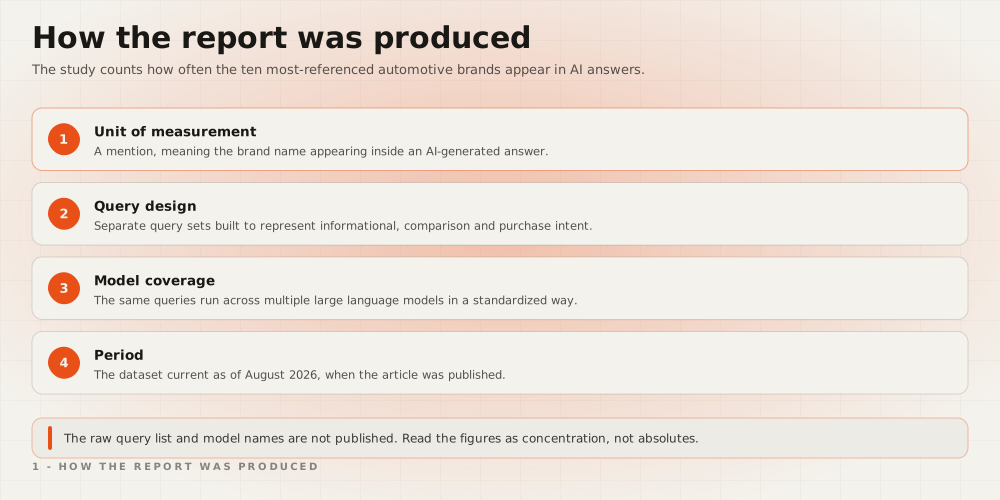
The report counts the presence of the ten most-referenced automotive brands in AI answers. The scope of the measurement:
- Unit of measurement: a mention, meaning the brand name appearing inside an AI answer.
- Query design: query sets built to represent informational, comparison and purchase intent separately.
- Model coverage: the same queries run across multiple large language models in a standardized way.
- Period: the dataset current as of August 2026, when this article was published.
A transparency note: the report does not publish the raw query list or the model names. The figures below come from the aggregate output Brantial released, and no per-brand score is disclosed. Read them as a measure of how concentrated the sector is rather than as absolute values. Brantial is one of the tools Webtures uses for AI visibility measurement.
How is AI visibility distributed in automotive?
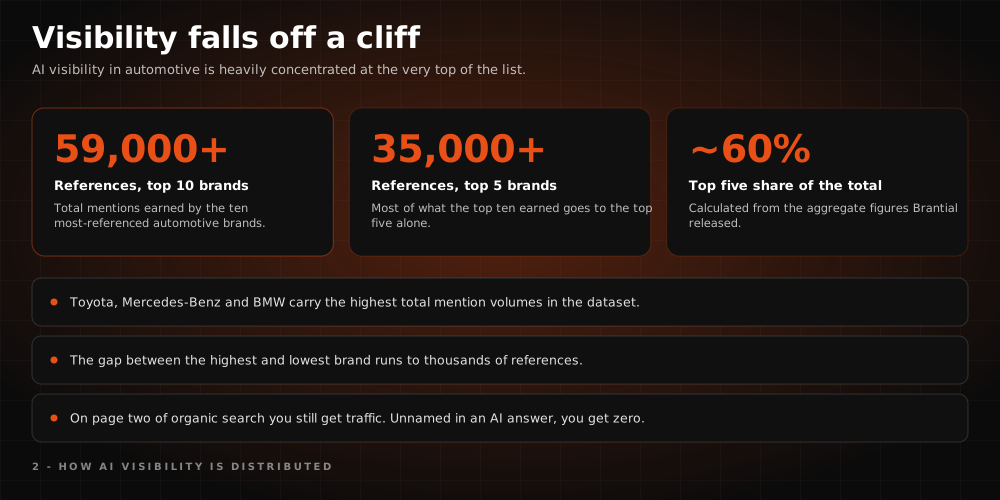
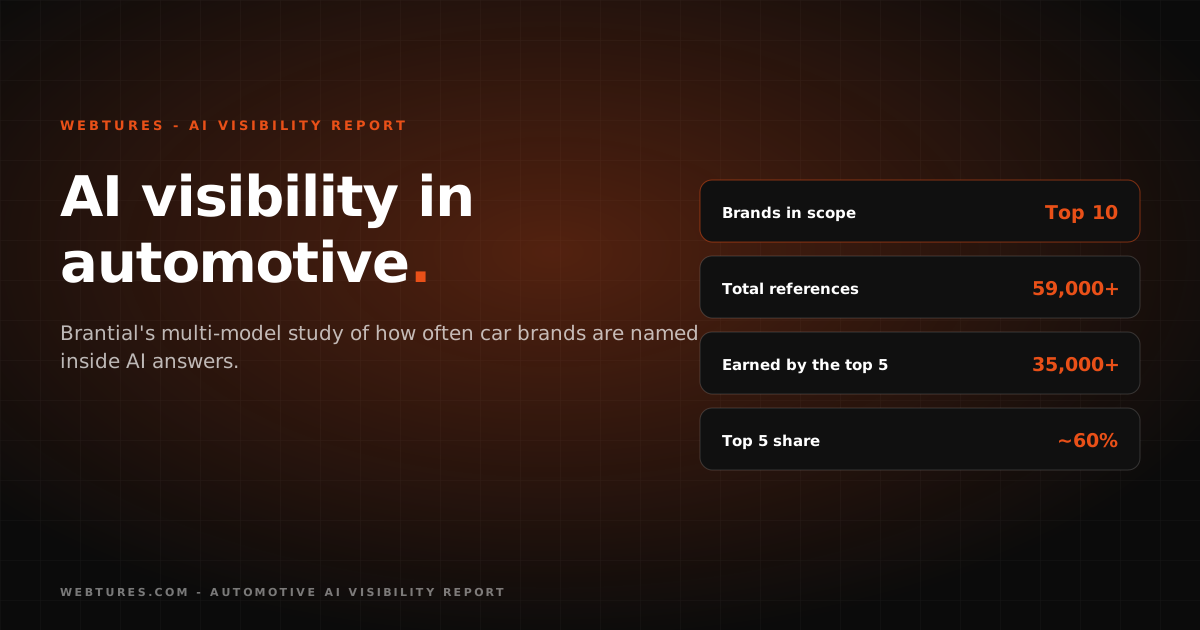
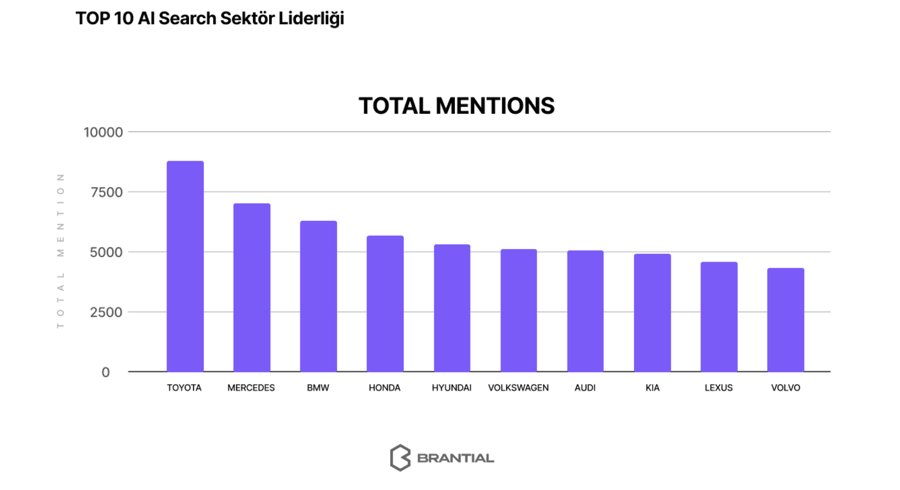
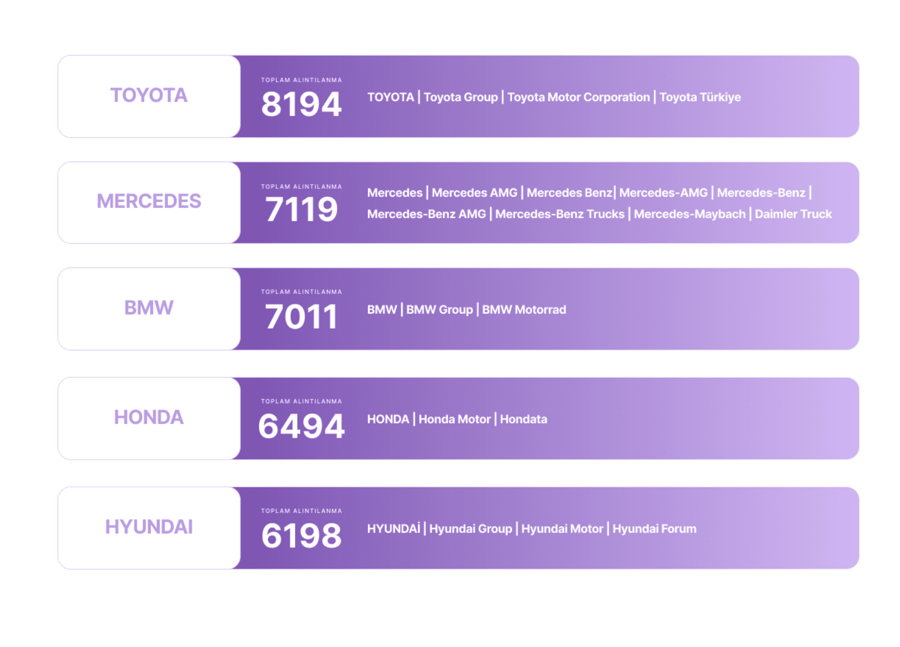
AI visibility in automotive is heavily concentrated. According to the report, Toyota, Mercedes-Benz and BMW carry the highest total mention volumes, and most of the references earned by the top ten brands go to the top five alone.
| Finding | Value |
|---|---|
| Brands in scope | Top 10 automotive brands |
| Total references, top 10 brands | More than 59,000 |
| References earned by the top 5 | More than 35,000 |
| Top 5 share of the total | Roughly 60 percent (calculated) |
| Highest-volume brands | Toyota, Mercedes-Benz, BMW |
| Gap between highest and lowest brand | Thousands of references |
A gap of thousands of references between the highest and lowest brand shows visibility is not distributed linearly but falls off a cliff. In classic organic search, page two still means some traffic. In an AI answer, not being named means zero.
Why does the same query return different brand lists across models?
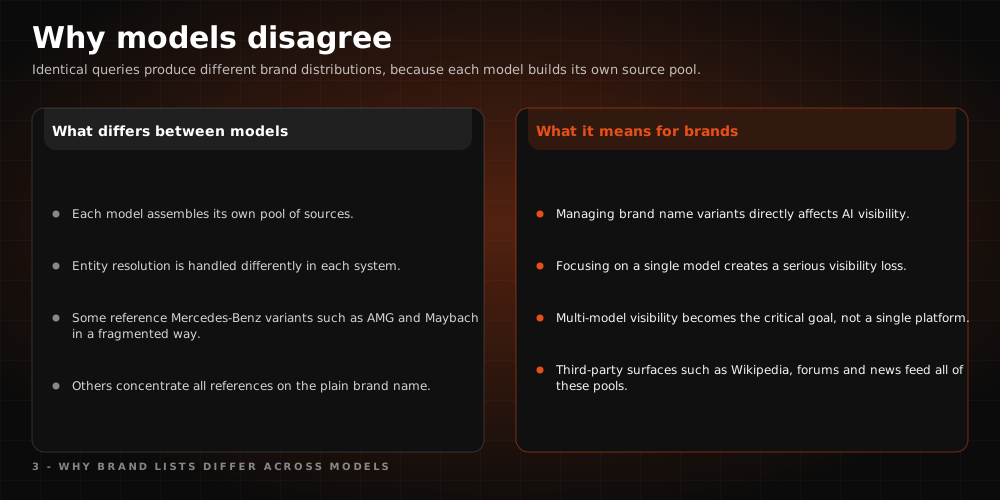
Because each model builds its own source pool and resolves entities differently. One of the study's most critical findings is that identical queries produce different brand distributions in different AI models.
- Some models reference Mercedes-Benz variants (AMG, Maybach and others) in a fragmented way.
- Others concentrate on the plain brand name.
Two practical consequences follow: managing brand name variants directly affects AI visibility, and focusing on a single model creates a serious visibility loss. The critical goal for brands is now multi-model visibility.
What does the AI Visibility Score measure?
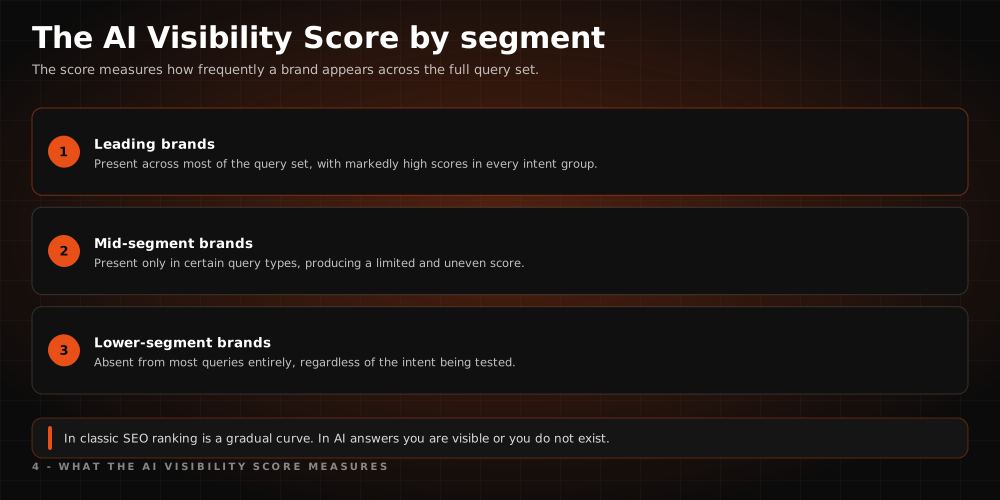
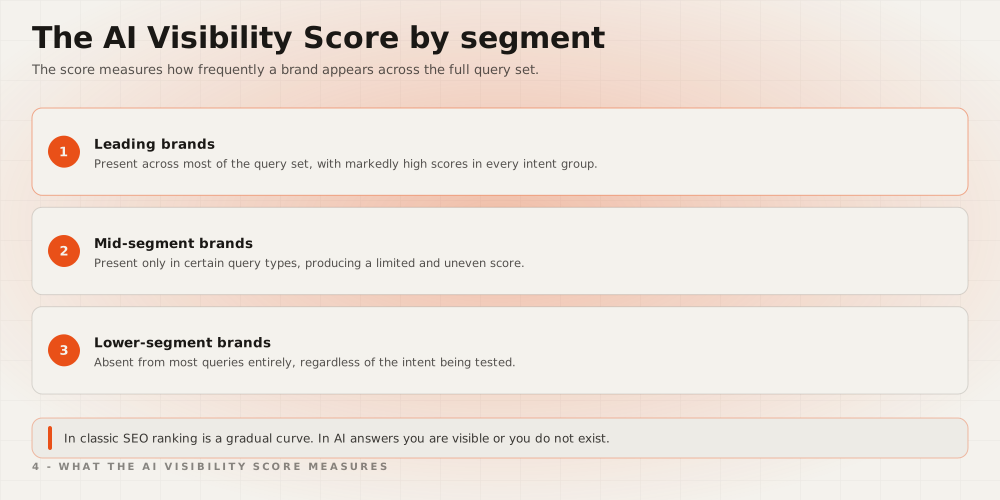
The AI Visibility Score measures how frequently a brand appears across the full query set. Broken down by segment, the picture is clear.
| Segment | Presence in AI answers |
|---|---|
| Leading brands | Appear across most of the query set, with markedly high scores |
| Mid-segment brands | Appear only in certain query types, limited score |
| Lower-segment brands | Absent from most queries entirely |
In classic SEO, ranking is a gradual curve. In the AI ecosystem, competition settles into a far sharper model: you are either visible or you do not exist.
Why has competition moved from rankings into the answer itself?
Because AI systems serve the user a single answer rather than ten blue links. To produce it, they pull data from many sources and select specific brands from among them. Winning a ranking is no longer enough; being cited by the AI is what counts.
This marks an era in which visibility is judged on presence rather than position. We cover how to build that on the content side in our guide to content optimization for AI-powered search engines.
What should brands take from this?
The report shows AI visibility is fed not by one channel but by the entire data surface surrounding a brand. Four points stand out:
- Your own website content alone is not enough to appear in AI answers.
- Wikipedia, forums, news sites and third-party platforms have become decisive.
- Managing brand name variants directly affects visibility.
- A multi-model AI strategy is required, not a single-platform one.
The brands that come out ahead will not simply be the ones doing SEO. They will be the ones that understand how AI systems work and feed them verifiable data. We collected the content-side rules in the five golden rules of GEO-ready content, and if you want to tie this to a marketing plan, see our piece on how to use GEO as a marketing tool.
The picture puts the GEO (Generative Engine Optimization) approach squarely at the center of digital visibility. To measure where your brand currently stands in AI answers, get in touch with the Webtures team.