How should GEO be used as a marketing tool?
Turn GEO into a marketing engine: learn how prompt intent analysis, Share of Model tracking and multimodal content place your brand inside AI answers.

Visibility in the digital world is no longer a fight for the top of the blue links. It is a fight to become part of the answer AI generates. User habits are shifting from query-based search to conversational discovery, so a brand has to be positioned not only in search engines but inside the answers of large language models such as ChatGPT, Gemini, Perplexity and Claude.
This piece sets out how Webtures, a senior digital marketing team of 16 years, uses GEO (Generative Engine Optimization) as a marketing tool.
How should GEO be used as a marketing tool?
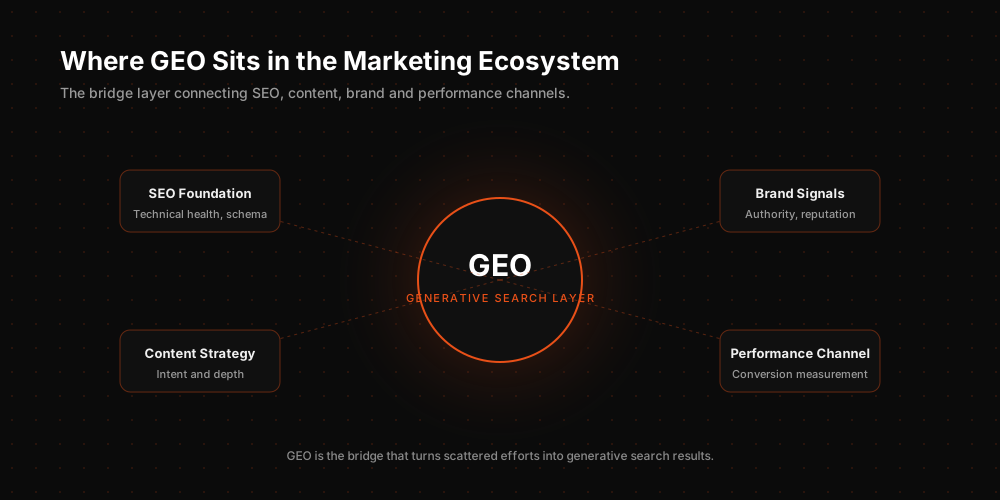
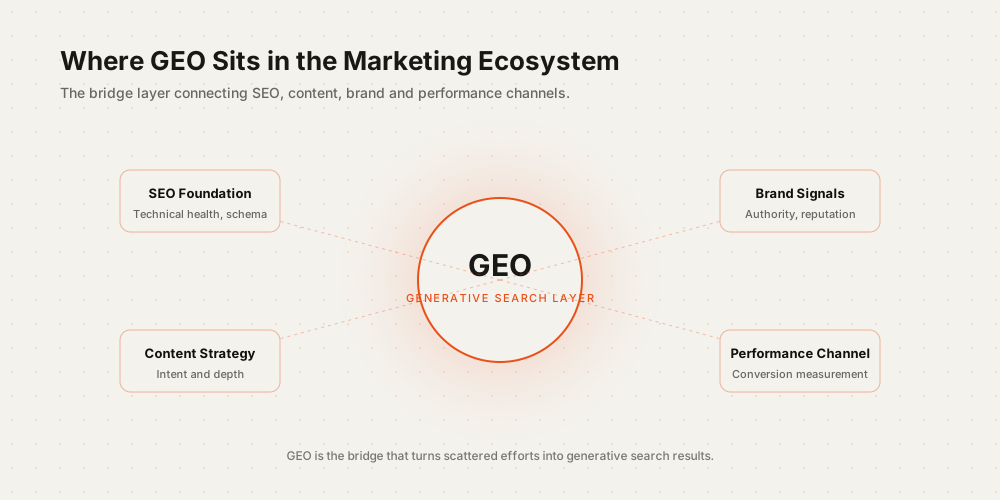
Using GEO as a marketing tool means turning your website from a passive storefront into a data source that language models draw on. Your audience no longer types single-word queries; it asks for comparisons, reasoning and recommendations.
One question sits at the centre of the strategy: why should an AI assistant recommend you to its user? The answer comes from three places. First, technical data that machines can read (Schema Markup, JSON-LD). Second, brand facts that stay consistent across every source. Third, a digital footprint left in industry publications and credible news outlets.
The measure of success changes too. Click-through rate alone is no longer enough; citation frequency and Share of Model come into play. To see how those metrics work in practice, read our guide to content optimization for AI search.
Is search volume really falling?
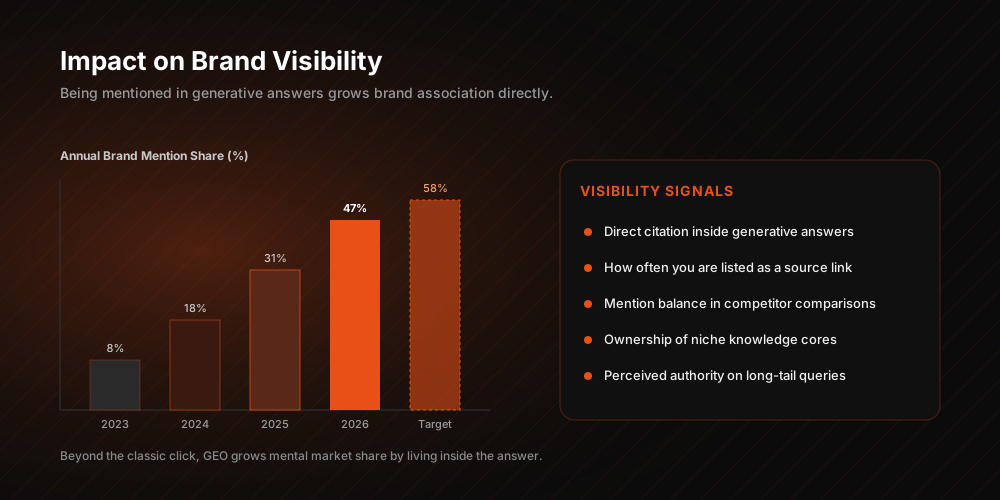
What is verifiable is the change in behaviour, not a precise volume figure. In February 2024 Gartner published a forecast expecting traditional search engine volume to drop 25 percent by 2026 (source).
That was a projection, and there is no industry-wide measurement confirming a decline of exactly that scale. What can be observed in the field is narrower but more concrete: click-through rates fall on queries where the answer completes on the results screen, and part of informational demand moves straight into chat interfaces.
The practical conclusion is simple. There is no need to wait for the volume debate to settle. Measuring whether your brand appears in AI answers for your own query set tells you far more than any general market forecast. For the underlying shift in search surfaces, see what is a search engine.
What are the ways to turn GEO into a marketing tool?
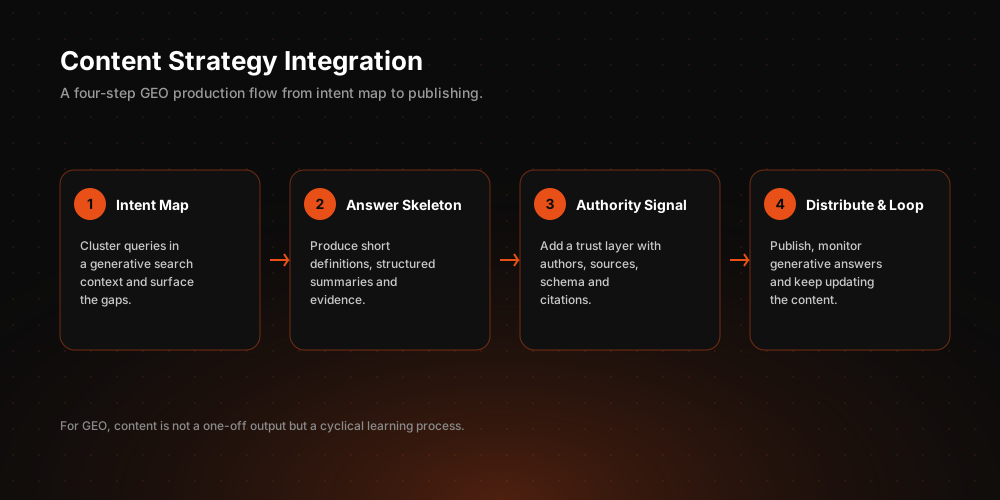
Four practice areas connect GEO to marketing: prompt intent analysis, Share of Model measurement, multimodal content and community listening. Each is covered below.
1. Analyse prompt intent, not just audiences
In GEO, persona work gives way to decoding the intent behind the question a user asks an AI. Demographics still matter, but the shape of the question decides the answer.
- Users no longer type "running shoes". They ask "Which mid-priced running shoes suit asphalt without causing knee pain, and why?"
- Semantic content clusters are built to serve these long-tail, contextual questions. Definition, comparison, price and use-case layers of a topic live in one connected cluster rather than in scattered pages.
- A paragraph that reads without surrounding context is far more likely to be cited. Lead with the clear answer, then give the reasoning. For audience work, see how to define your target audience.
2. Compete for Share of Model, not just rankings
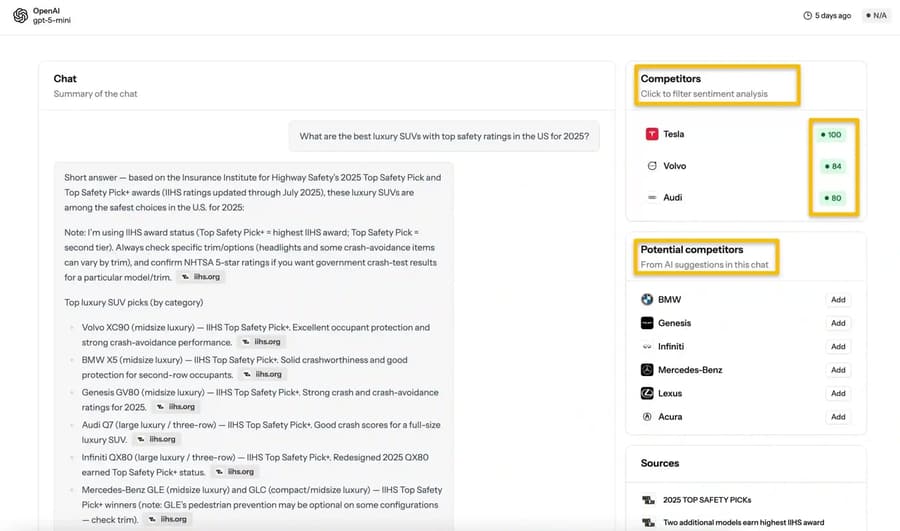
The real question is not what competitors do on their websites but how language models talk about them. This measurement does not replace competitor analysis; it sits on top of it.
- Gap analysis: identify where models describe your sector incompletely or incorrectly. Filling those gaps with original data is the fastest route to being cited.
- Sentiment: track the tone in which models mention your brand. Once a negative frame settles in, a model can drop you from its recommendations.
- Measurement tooling: this tracking is too scattered to do by hand. Brantial was built for exactly this and is our own product within the Webtures ecosystem; it shows which model cites your brand, for which query and in what wording, benchmarked against competitors. Other AI visibility tools exist as well. Whichever you choose, check that its measurement method is transparent.
3. Communicate multimodally: go beyond text
Most current language models are multimodal, which means they read image, audio and video signals alongside text. That turns video and visual production from an aesthetic preference into a technical requirement.
- Video transcripts, image alt text and the data inside infographics become the text layer models can reach. A video published without a transcript is largely invisible to them.
- Do not leave the numbers inside an infographic trapped in the image. Publish the same data as an HTML table and mark it up with structured data. In our experience machine-readable tables and lists make citation easier, while figures embedded in an image rarely make it into an answer.
4. Close the feedback loop: listen to dark social
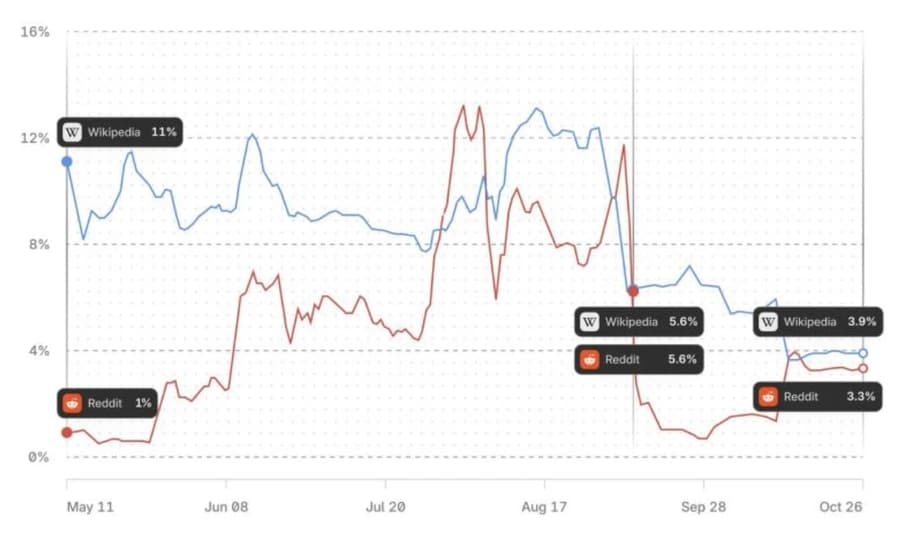
A large share of conversation about your brand no longer happens on your site. Reddit, Quora and industry communities are among the sources language models draw on most often.
- Scan how users naturally talk about your brand. Once that conversation enters a model, it can outweigh your own corporate copy.
- Build the content plan to answer the questions and objections raised on those platforms directly. A page that answers a common objection clearly gets cited more than a general article on the same topic.
Where does a GEO programme start?
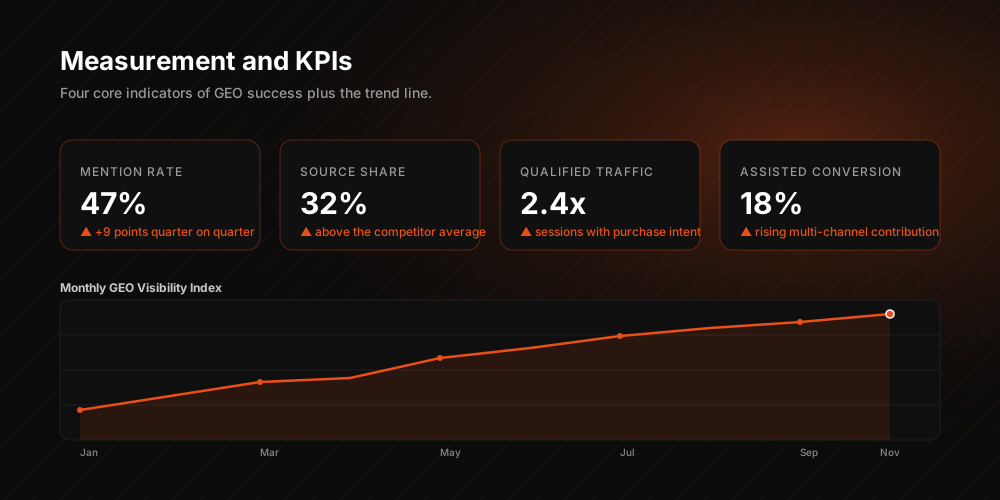
A GEO programme starts with measurement, not content. Content produced before you know what is missing tends to repeat the areas that were already fine.
- Build a prompt set from the questions real customers ask.
- Run those queries across the main answer engines and record who gets cited.
- List what the models get wrong or miss, and prioritise the pages that correct it.
- Fix the technical side: structured data, organisation facts and source consistency.
- Repeat the measurement. GEO is a recurring loop, not a one-off campaign.
For the content format itself, our five golden rules of GEO content work as a practical checklist.
The end of the search era, the start of the answer era
Marketing cannot be separated from SEO, nor GEO from marketing. The contest is not for a spot among a limited set of blue links; it is for lasting authority inside the answers produced by systems such as ChatGPT, Gemini and Perplexity.
In the Webtures view, the marketing of the future is not chasing algorithms to reach people. It is convincing AI assistants through accuracy, transparency and data quality. The biggest win is not a click; it is a model recommending you to its user without hesitation.
To see how we work in this area, explore our GEO service page.