What is a search engine? How do search engines work?
Learn what a search engine is, how crawling, indexing and ranking work, and which popular, privacy-focused and Turkish search engines to know.

What is a search engine?
A search engine is a software system that finds pages related to a user's query in its own index and ranks them. Its job is to surface the most relevant documents out of billions, in seconds.
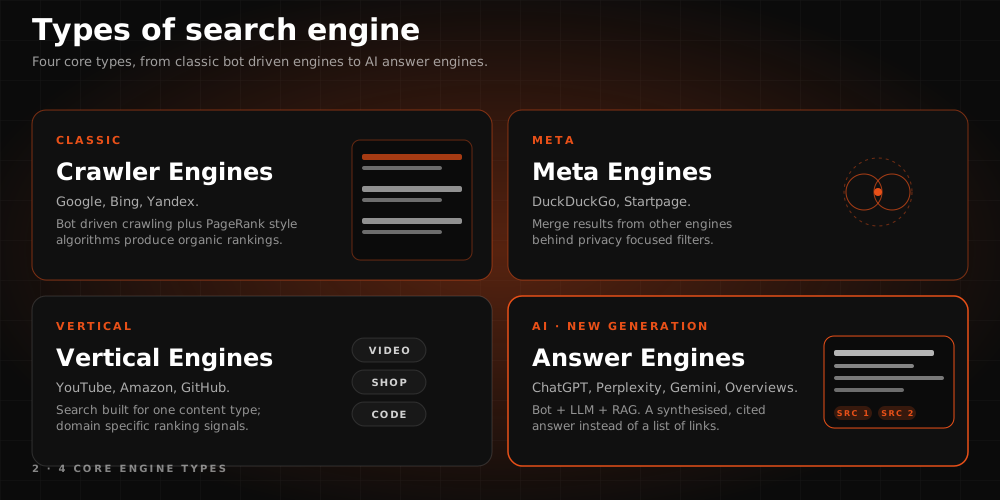
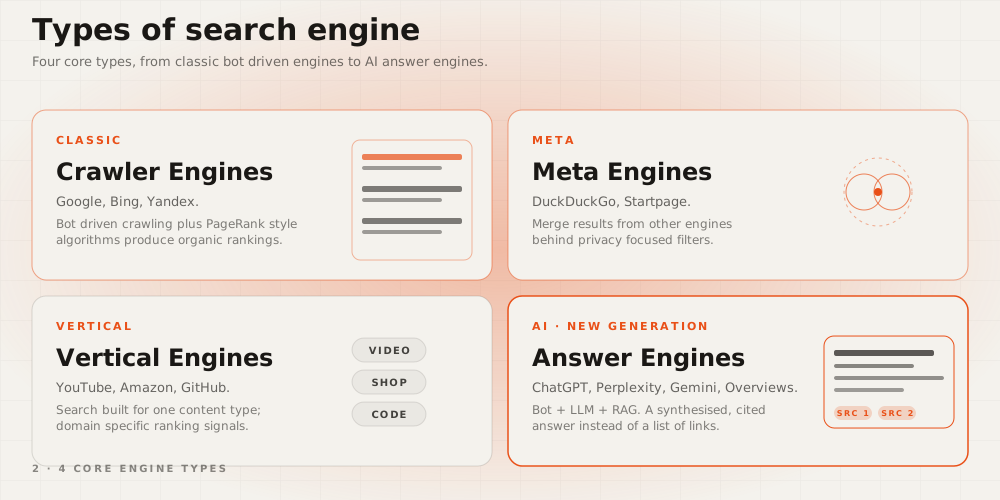
Google is the first name that comes to mind, but Yandex, Bing, Baidu and DuckDuckGo are all in active use. Market share leadership, however, still belongs to Google.
As publishing became easier, the volume of pages on the web grew accordingly. This is where search engines come in: ranking algorithms filter the content and take the user to the closest answer to their query.
As of 2026 the picture has one more layer. AI-generated answer surfaces now sit alongside the classic list of blue links, so the definition of a search engine covers answer-generating systems as well.
How do search engines work?
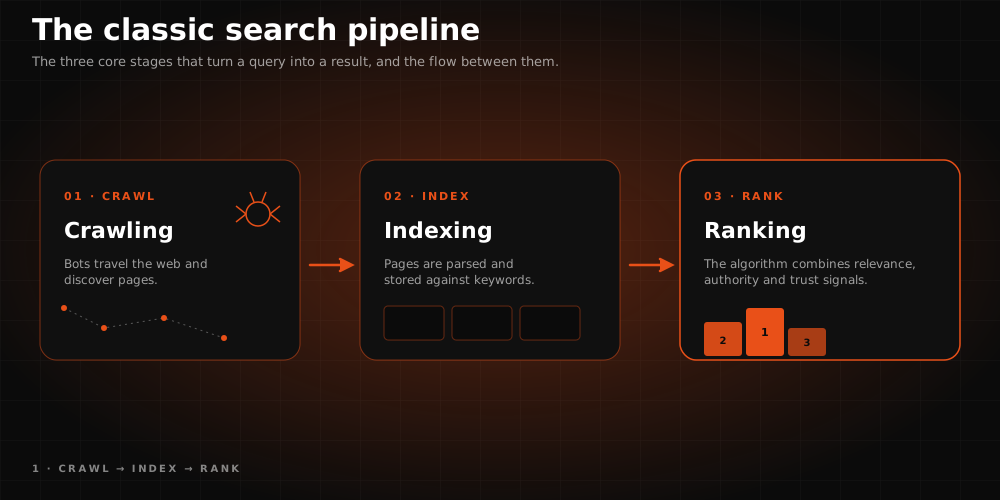
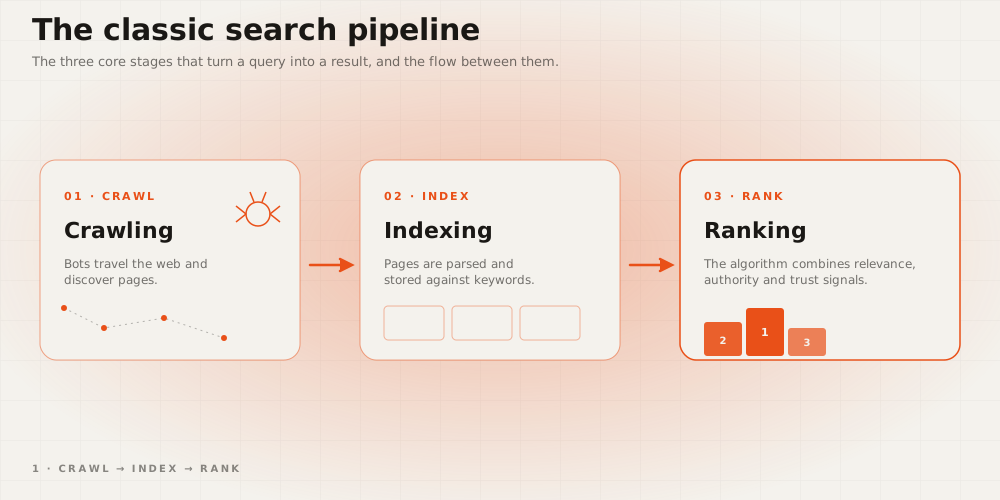
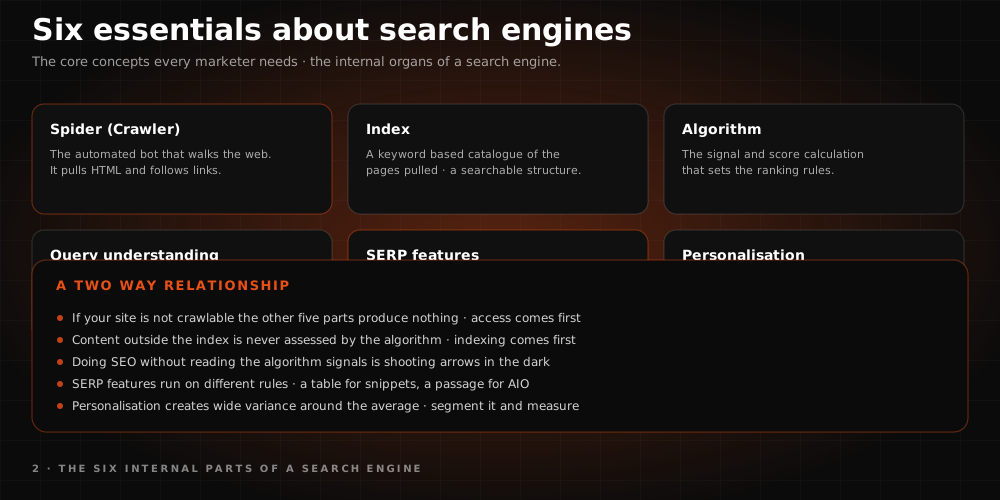
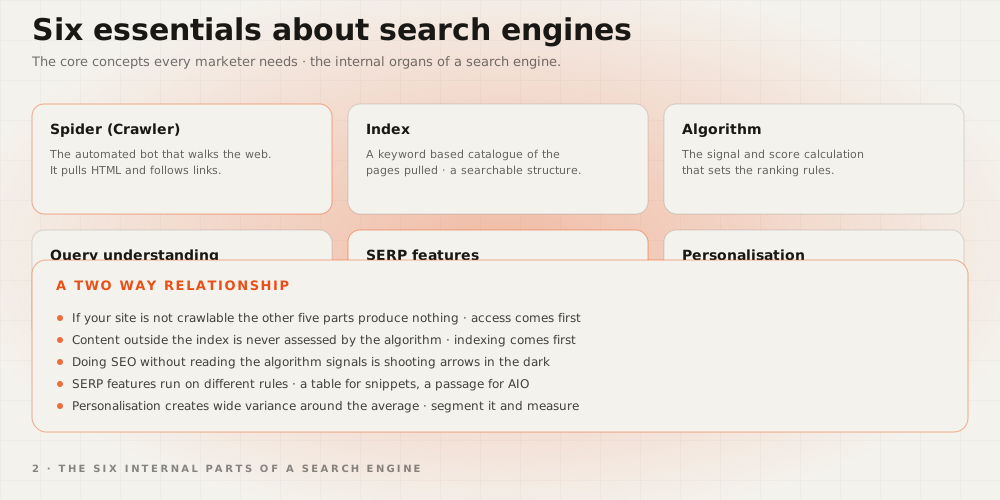
Search engines run a three-stage cycle: crawling, indexing and ranking. The engines differ, but these three stages are common to nearly all of them.

The crawl, index and rank cycle
- Crawling: Crawl bots, also called spiders, travel the web and fetch pages. Sitemaps and internal links act as navigation for them.
- Indexing: Crawled pages are processed and stored in a data structure called the index. Indexed pages are recrawled and refreshed at intervals.
- Ranking: When a query arrives, relevant pages in the index are ordered by algorithms. Semantic match between query and content, page experience, site authority and freshness are the main signals.
What happens when a search is made?
When a query is entered, the engine first identifies candidate pages in the index, then ranks them. A results page is more than one list; featured snippets, image blocks, map packs and answer boxes share the same screen.
Context shapes ranking as much as the query itself:
- Location: queries such as "pharmacy near me" depend directly on location.
- Language: the engine favours results in the user's language.
- Search history: earlier sessions can personalise results.
- Device: mobile and desktop result layouts can differ.
Do all search engines return the same results?
No. Every engine uses its own index and its own ranking algorithm, so the same keyword produces different results. A query on Google and the same query on Yandex diverge substantially. Location, device and personalisation signals widen that gap further.
How do answer engines work?
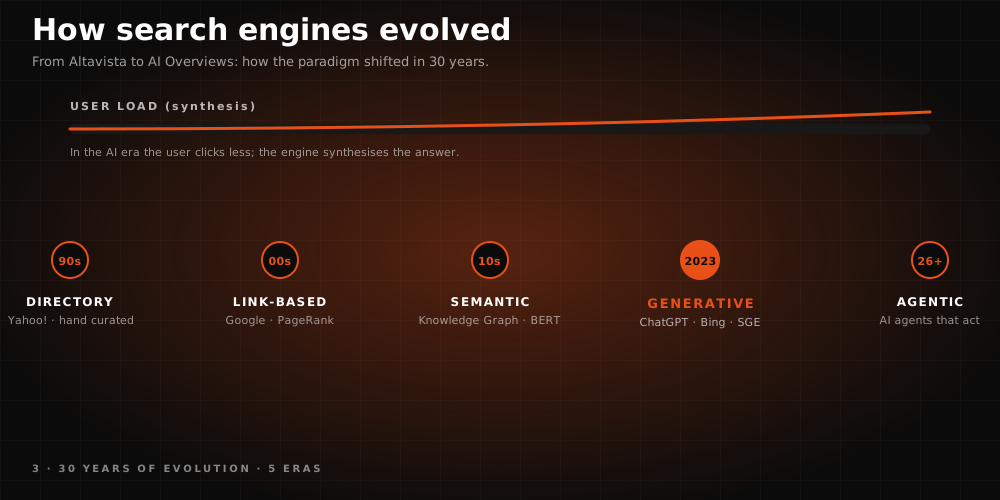
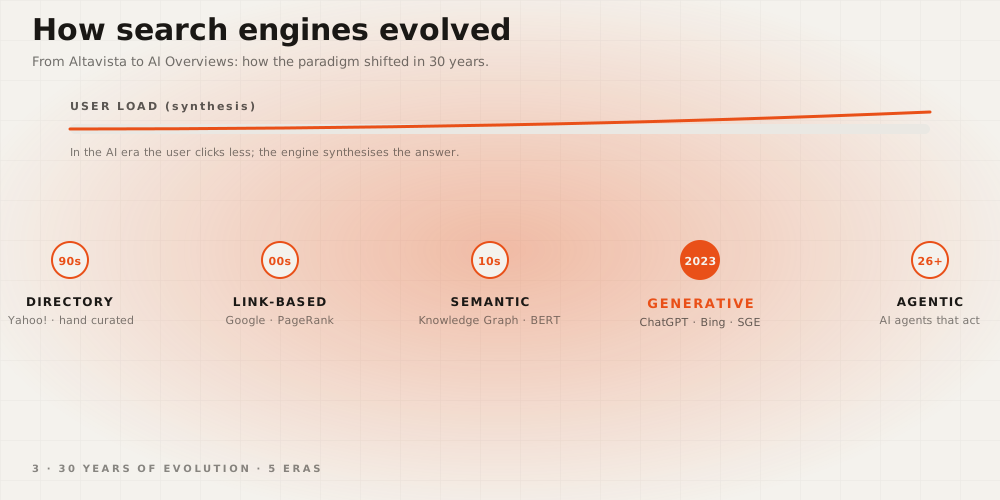
An answer engine returns generated text instead of a list of links. Google AI Overviews and AI Mode, ChatGPT web search, Perplexity, Microsoft Copilot and Google Gemini are the main surfaces in this category today.
They differ from classic engines on two points. First, the system breaks a query into sub-questions and runs several searches instead of one. Second, it summarises the sources it finds into a single synthesised answer and shows citations beneath it.
The measure of visibility has changed accordingly. In classic search the goal was to rank at the top; on answer surfaces the goal is to be cited as a source inside the generated answer. The discipline that targets this is called Generative Engine Optimization, or GEO.
What is the difference between classic search and an answer engine?
- Output: a classic engine returns a ranked list of links, an answer engine returns a synthesised paragraph.
- Clicks: when the answer completes on screen, the user may never visit the site. This behaviour is called zero-click search.
- Measurement: rank tracking gives way to citation frequency and brand mention tracking.
- Content format: short paragraphs that read without surrounding context, plus tables and lists, are easier to cite. Our five golden rules of GEO content cover the format in detail.
These two surfaces are not alternatives to each other. Answer engines are largely fed by classic search indexes, so solid technical foundations and crawlable content are a precondition on both sides. For the practical side, see our guide on content optimization for AI search.
What are the most popular search engines?
Search engine usage varies by country. Google leads globally by a wide margin, but local engines hold serious share in some markets.
- Google: founded in 1998 by Larry Page and Sergey Brin. The engine with the largest global market share.
- Bing: launched by Microsoft in 2009. It also feeds the Copilot answer layer.
- Yandex: founded in 2000, strong across Russia and neighbouring markets.
- Baidu: founded in 2000, China's largest search engine.
- DuckDuckGo: a privacy-focused engine built on a no-tracking promise.
- Yahoo: founded in 1994 by Jerry Yang and David Filo, today a portal that leans largely on other infrastructures.
- Seznam: the Czech local search portal, founded by Ivo Lukacovic in 1996.
SEO strategy is built around Google in most markets. Even so, a strategy is not complete until you measure the other engines and answer surfaces that hold share in your target market.
Which privacy-focused search engines are worth knowing?
Privacy-focused search engines aim not to accumulate query history in a profile tied to the user. Large engines, by contrast, process data such as IP address, clicked results and query refinements for personalisation and ad targeting.
The options that are active and widely used today include:
- DuckDuckGo: the best known name in the category, returning results without building a personal profile.
- Startpage: serves Google results through an intermediary layer without passing user identity.
- Brave Search: runs its own independent index and integrates with the Brave browser.
- Ecosia: directs part of its ad revenue to tree planting and foregrounds privacy settings.
- Qwant: a Europe-based engine that limits data collection.
- Mojeek: an independent engine with its own crawler and index.
- MetaGer: a Germany-based meta search engine that combines several sources.
- SearXNG: open source meta search software you can host on your own server.
Some projects in this space have shut down or gone unmaintained over the years. Before recommending an engine at organisational level, check that it is still active and see where its index comes from.
What are marketplace and product search engines?
A large share of product searches does not start in a general search engine but in the marketplace's own search box. That makes on-platform search optimisation a separate workstream for e-commerce brands.

- Google Shopping: a product search surface that first launched in 2002 under the name Froogle.
- Amazon: founded in 1994 by Jeff Bezos. Its on-site search is one of the global starting points for product queries.
- Trendyol: founded in 2010, today one of Turkey's largest e-commerce platforms.
- Hepsiburada: one of Turkey's first large e-commerce sites, serving a wide catalogue through on-site search.
- Cimri: a price comparison engine founded in 2008.
- Akakce: founded on 3 November 2000, Turkey's first product price comparison platform.
Ranking signals inside a marketplace differ from classic SEO: product title, image quality, sales velocity, stock status and review score come first.
How does search inside social platforms work?
Search boxes on social platforms only scan their own content. Even so, a significant share of users, younger audiences in particular, run discovery searches there.

- YouTube: a search surface in its own right by volume. Titles, descriptions and caption text influence ranking.
- Instagram and TikTok: weighted towards discovery and product search. Captions, on-screen text and tags form the text layer.
- LinkedIn: used to search for people, companies and expertise.
- X (formerly Twitter): preferred for news and real-time information.
On-platform search is part of a brand's total visibility, so it belongs in the same plan as web search rather than in a separate silo.
What happened to Turkey's own search engines?
Turkey has seen several homegrown search engine ventures announced over the years, but none reached lasting market share. Yaani and Vuhuv are the best known among them.
Projects like these can be short-lived; some closed quietly a few years after launch. Before adding a local engine to a marketing plan, verify that it is still operating and check its real usage volume.
How do you build visibility across search engines?
Visibility work now runs on two legs: ranking in classic results and being cited on answer surfaces. Both rest on the same foundation, namely crawlable technical infrastructure and verifiable content.
- Check that your site is crawlable and that its key pages are indexed.
- Make sure each page answers one question clearly.
- Move critical data into tables and lists, and mark it up with structured data.
- Keep brand information consistent across every source; answer engines hesitate where facts conflict.
- Measure citations and brand mentions alongside classic rankings.
Webtures is a senior digital marketing team of 16 years working from Istanbul and London, and we manage search and answer surfaces within a single visibility plan. Explore our GEO service, and see how we place GEO inside a marketing plan in GEO as a marketing tool.