Best AI Search Analytics Tools for Marketing Leaders
Discover the best AI search analytics tools to track visibility, monitor citations, and optimize strategies across AI-driven platforms.

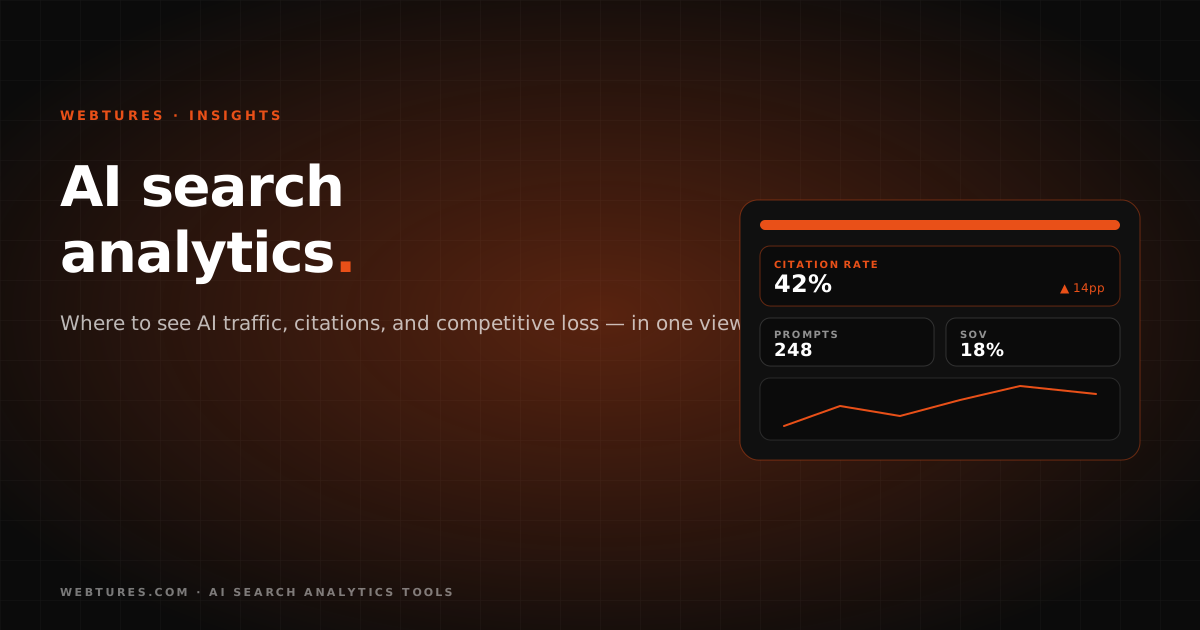
In today’s competitive digital landscape, marketing leaders can no longer rely on traditional SEO or surface-level keyword data. Search behavior is evolving rapidly, and artificial intelligence is now at the center of how users discover, interact with, and evaluate content. To stay ahead, leaders need more than just numbers — they need insights.
AI-powered search analytics tools go beyond raw data by uncovering patterns, predicting trends, and providing actionable recommendations that drive measurable growth. From understanding audience intent to tracking competitors and optimizing campaigns in real time, these tools are transforming the way marketing strategies are built.
In this guide, we’ll explore the best AI search analytics tools that every marketing leader should consider to stay ahead of the curve and make smarter, faster, and more impactful decisions.
Why Marketing Leaders Need AI-Powered Search Analytics
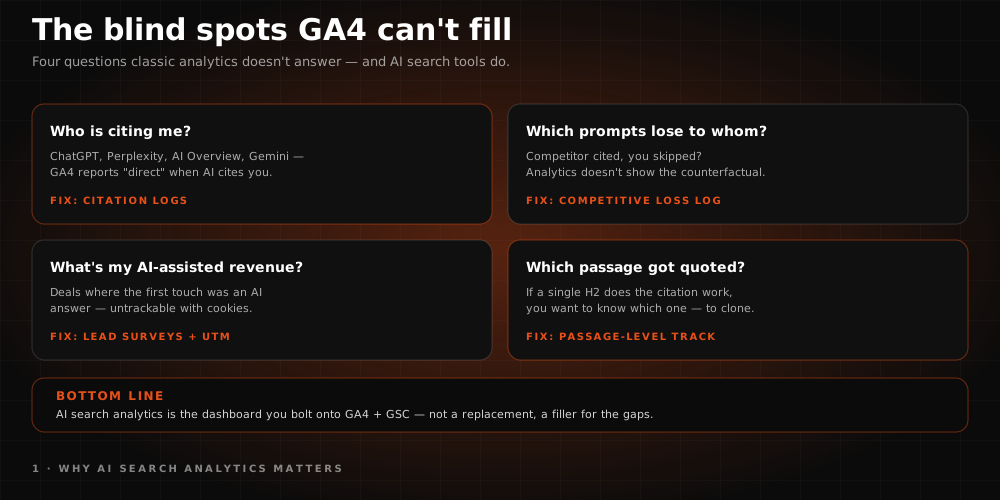
Marketing leaders are expected to make fast, data-driven decisions that directly impact growth. Traditional analytics solutions often provide static metrics — impressions, clicks, and rankings — but fail to capture the deeper insights behind user behavior. This is where AI-powered search analytics becomes essential.
Artificial intelligence can process massive datasets at scale, uncover hidden trends, and even predict future search behavior. Instead of simply reporting what has already happened, AI tools highlight why it happened and what should happen next. For marketing leaders, this means:
- Smarter strategic decisions through predictive analytics and real-time insights.
- Stronger competitive advantage by identifying opportunities competitors may overlook.
- Improved ROI by aligning campaigns with audience intent and reducing wasted spend.
- Faster execution with automated reporting, keyword clustering, and optimization suggestions.
In short, AI-powered search analytics enables marketing leaders to go beyond surface-level data and craft strategies that are proactive, precise, and future-ready.
Brantial in AI Search Analytics
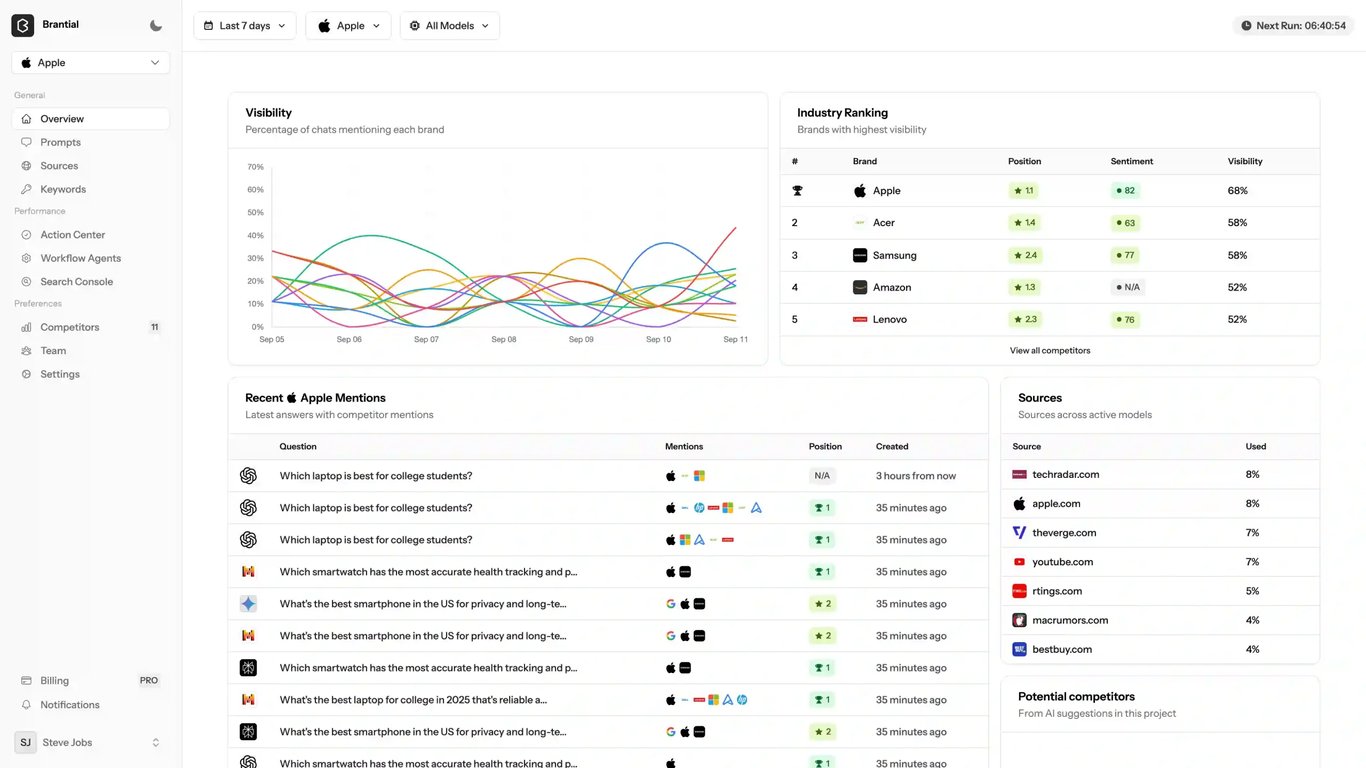
Brantial is an AI-driven platform that redefines search visibility by moving beyond the limits of traditional SEO. Instead of focusing solely on ranking higher in classic “blue links,” Brantial helps brands position themselves within AI-powered search experiences — from Google SGE to ChatGPT, Gemini, and Perplexity. Its mission is clear: to ensure that brands remain visible, trusted, and cited across the new landscape of AI-based search engines and large language models (LLMs). With user search behavior shifting rapidly, Brantial enables marketing leaders to adapt to where audiences are actually seeking answers today, which is why it stands out as one of the best AI search analytics tools available.
Key capabilities include:
- AI Search Visibility Analysis – Tracking how brands appear in AI-driven platforms.
- LLM Citation Monitoring – Understanding when and how large language models reference brand content.
- Strategic Transition from SEO to GEO – Guiding brands through the shift from traditional SEO to Generative Engine Optimization.
- Content & Technical Strategy Development – Helping brands produce trustworthy, quotable, and accessible content in the AI era.
In essence, Brantial transforms the goal of “ranking high on Google” into a broader vision: being part of AI-generated answers that shape user decisions. For marketing leaders, this represents a future-proof approach to staying visible and relevant as search evolves.
Semrush AI SEO Toolkit
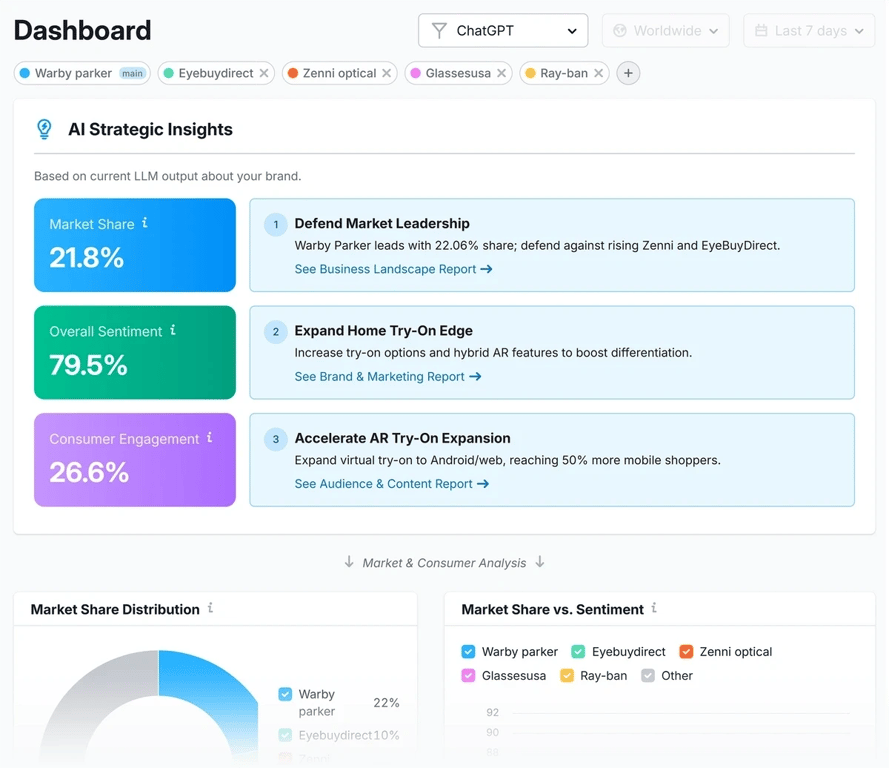
Semrush has long been a staple in the world of SEO, and with its AI SEO Toolkit, it has successfully extended its expertise into the realm of generative search. What sets Semrush apart is how quickly it can provide strategic insights with minimal setup. You simply enter your domain, and the tool immediately generates a landscape analysis — highlighting your positioning in AI-driven results, your brand’s sentiment profile, and the key prompts that bring you visibility, which firmly places it among the best AI search analytics tools.
The toolkit provides three primary dashboards: Business Landscape, Brand & Marketing, and Audience & Content. These together offer a comprehensive overview of your AI presence. For instance, the Business Landscape dashboard visualizes your market share in AI-generated responses compared to competitors, making it easier to see if your share of voice is growing or shrinking. Another highlight is sentiment analysis: while many platforms show how often your brand is mentioned, Semrush goes further by revealing whether those mentions are framed positively, negatively, or neutrally. One of the most impressive aspects is its ability to break down query intent, showing not only which prompts are driving mentions but also the intent behind them. This makes it one of the most actionable and future-ready platforms for businesses adapting to generative search.
ZipTie
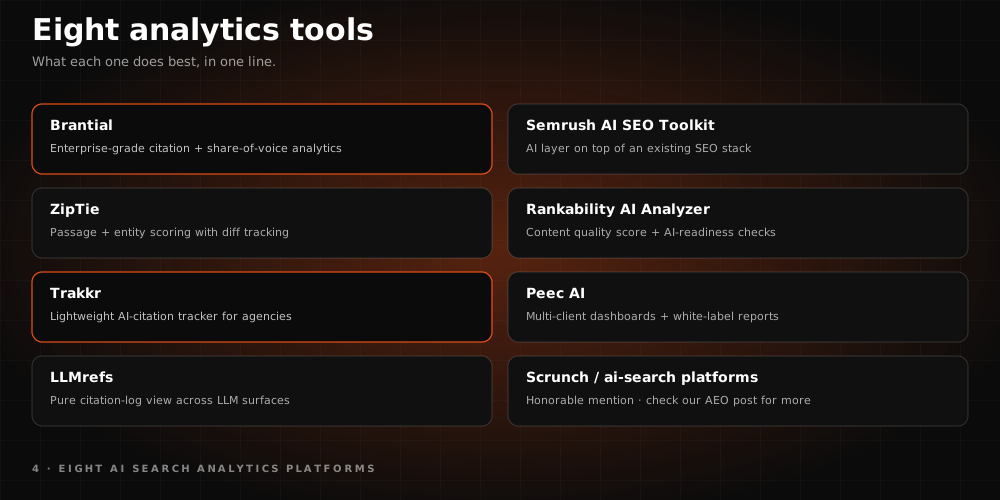
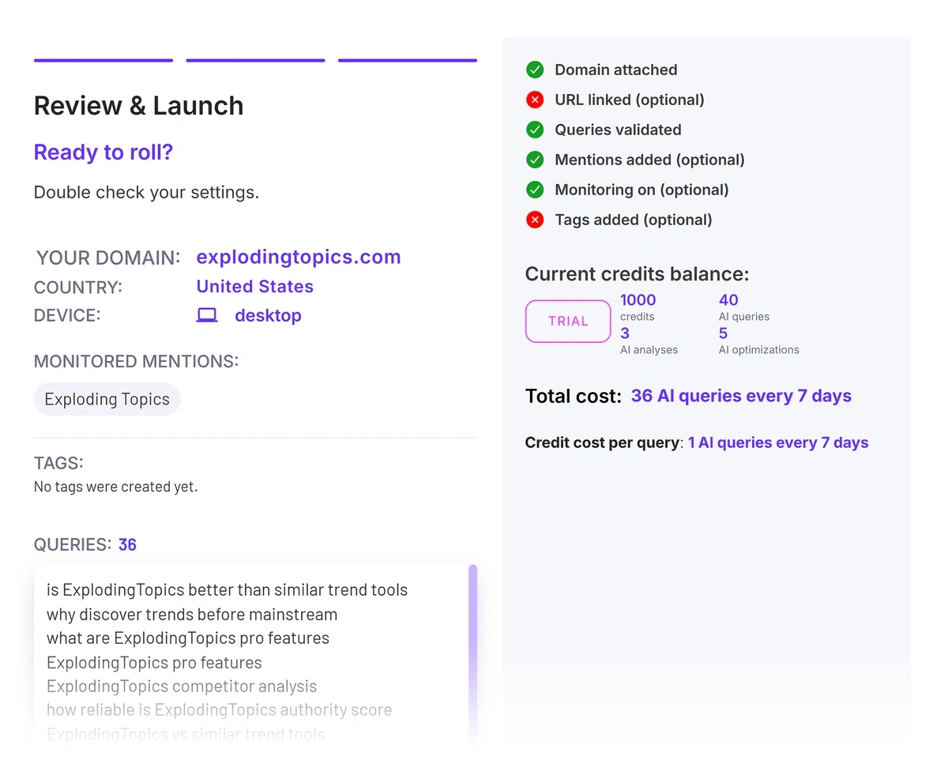
ZipTie is designed with simplicity in mind, making it ideal for teams that want a clear overview without getting lost in overly complex dashboards. Its focus is on three core metrics: mentions, citations, and sentiment across Google AI Overviews, ChatGPT, and Perplexity, which is exactly why it belongs to the category of the best AI search analytics tools.
The platform introduces an easy-to-understand metric called the AI Success Score, which consolidates visibility, sentiment, and citations into a single number. This broad score is useful for routine monitoring, while additional breakdowns allow for deeper analysis when needed. One of the most practical features is its AI Overviews analysis, showing not just whether your brand appears in these panels but also how frequently they are triggered for the queries you’re tracking. Combined with its strong query-level filtering and sentiment analysis, ZipTie strikes the right balance between clarity and actionable depth, making it a reliable option for any team exploring the best AI search analytics tools.
Rankability’s AI Analyzer
Rankability’s AI Analyzer is designed to extend traditional SEO workflows into the world of AI-powered search, helping brands understand how they and their competitors are positioned inside generative results. By running prompt-level testing across engines like ChatGPT, Perplexity, and Google AI Overviews, it provides marketers with a clear picture of visibility that integrates naturally with existing Rankability features, which makes it stand out as one of the best AI search analytics tools.
One of its strongest advantages is competitive citation analysis, which allows teams to measure how often competitors are referenced versus their own brand. This delivers a concrete sense of market share within AI-generated responses. Because it connects seamlessly to Rankability’s content optimizer and keyword research modules, users can move directly from insights to content updates without switching platforms. For agencies and in-house teams already working with Rankability, this creates an efficient, streamlined workflow and confirms its role as one of the best AI search analytics tools available today.
Trakkr
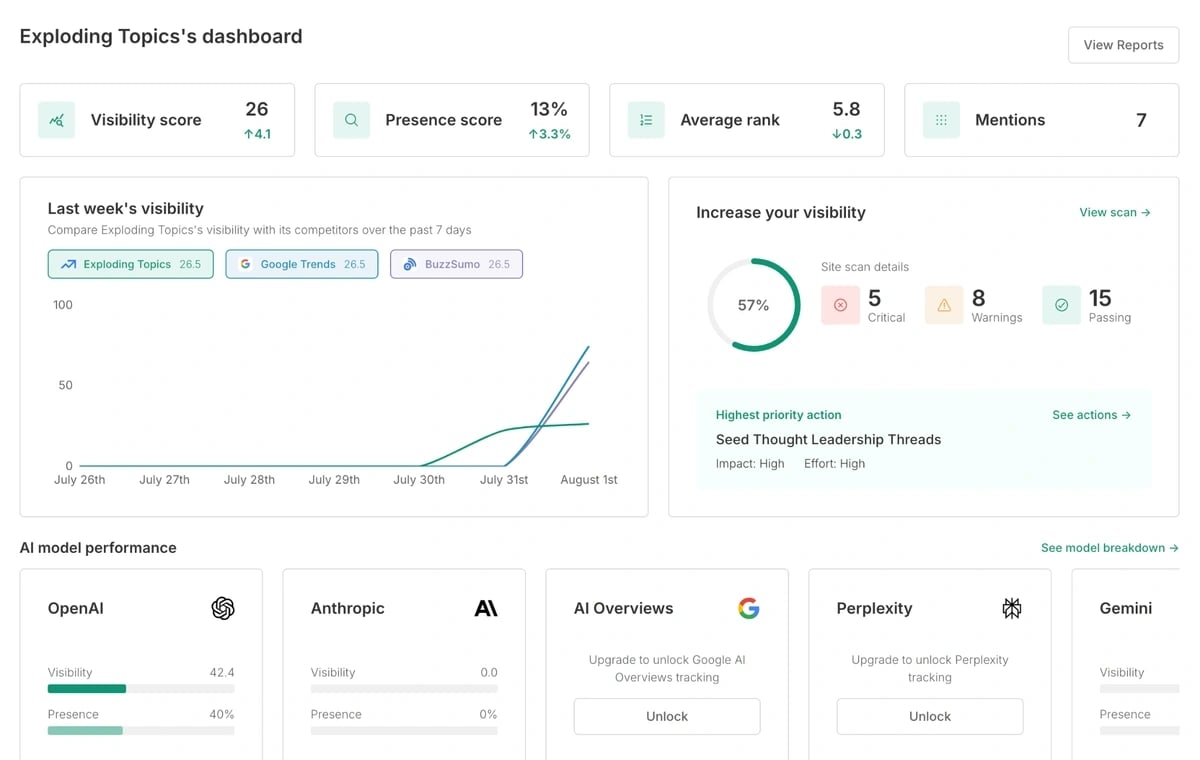
Trakkr appeals to teams that want to go deeper than surface-level visibility tracking by adding crawler behavior and referral traffic analysis into the mix. Unlike many platforms that stop at sentiment or share of voice, Trakkr reveals which AI crawlers are actually visiting your site, which pages they are indexing, and how this activity shapes brand mentions across large language models — a level of detail that secures its place among the best AI search analytics tools.
Its reporting includes LLM Traffic insights, competitor leaderboards, and sentiment analysis that highlight not only where your brand appears but also how it is perceived. The citations report adds another layer, showing which sources AI platforms rely on when mentioning your business. While its prompt suggestions can sometimes feel too generic, the ability to combine technical crawler data with visibility and sentiment analysis makes Trakkr a sophisticated solution that justifies its ranking as one of the best AI search analytics tools for forward-looking marketing teams.
Peec AI
Peec AI was built from the ground up for AI search visibility rather than being adapted from traditional SEO tools, which is why many marketers view it as one of the best AI search analytics tools available today. It specializes in monitoring brand presence across platforms such as ChatGPT, Perplexity, and Google AI Overviews, giving businesses a clear sense of how they are represented in both branded and non-branded contexts. By distinguishing between these two categories, Peec AI provides a nuanced understanding of when your brand is searched directly and when it appears organically within broader industry topics.
Another strength of Peec AI lies in its structured reporting. It delivers share-of-voice analysis, sentiment insights, and citation source breakdowns in a way that’s easy for teams to interpret and agencies to share with clients. Since AI-generated results can vary from one run to another, Peec AI verifies prompts multiple times to increase accuracy. This commitment to reliable tracking and its ability to package complex AI visibility data into accessible reports make Peec AI not only practical but also future-ready, solidifying its position among the best AI search analytics tools.
LLMrefs
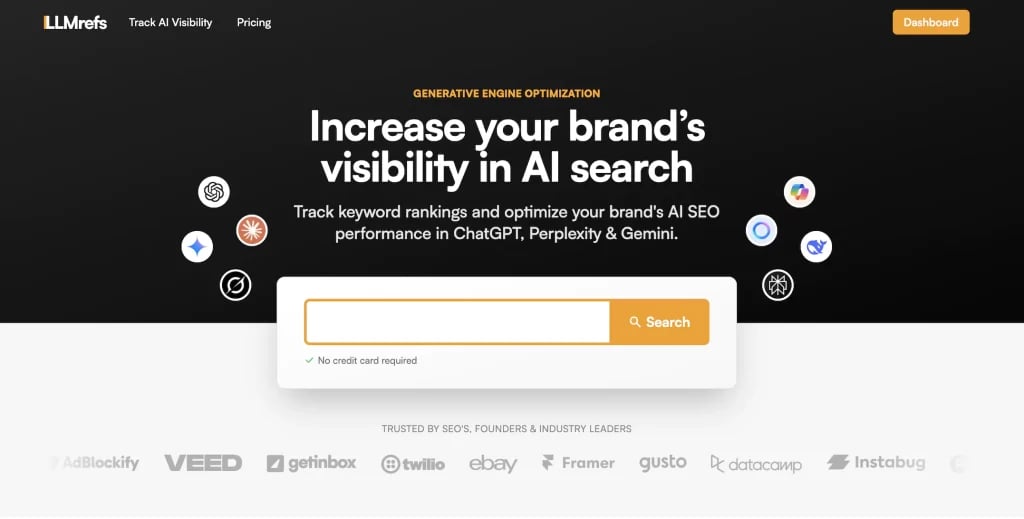
LLMrefs positions itself as both an AI keyword explorer and a rank tracker, giving marketers visibility into exactly where their products or services appear — or fail to appear — in AI-generated answers. This dual focus on exploration and monitoring sets it apart from simpler dashboards and earns it recognition as one of the best AI search analytics tools for businesses that want practical, actionable guidance. Its proprietary metric, the LLMrefs Score (LS), makes it easy to spot opportunities at a glance, showing where visibility is strong and where optimization is urgently needed.
In addition to its scoring system, LLMrefs provides weekly trend reports, competitor benchmarking, and GEO hygiene checks, such as ensuring llms.txt files are present, semantic URLs are in place, and proper indexing is maintained. These practical recommendations extend beyond raw data to offer direct steps for improving how a site is interpreted by large language models. Because it balances accessibility with useful depth, LLMrefs is particularly appealing for startups and small teams looking for quick wins, yet it still holds enough sophistication to be regarded as one of the best AI search analytics tools shaping strategy in 2025.
Scrunch AI
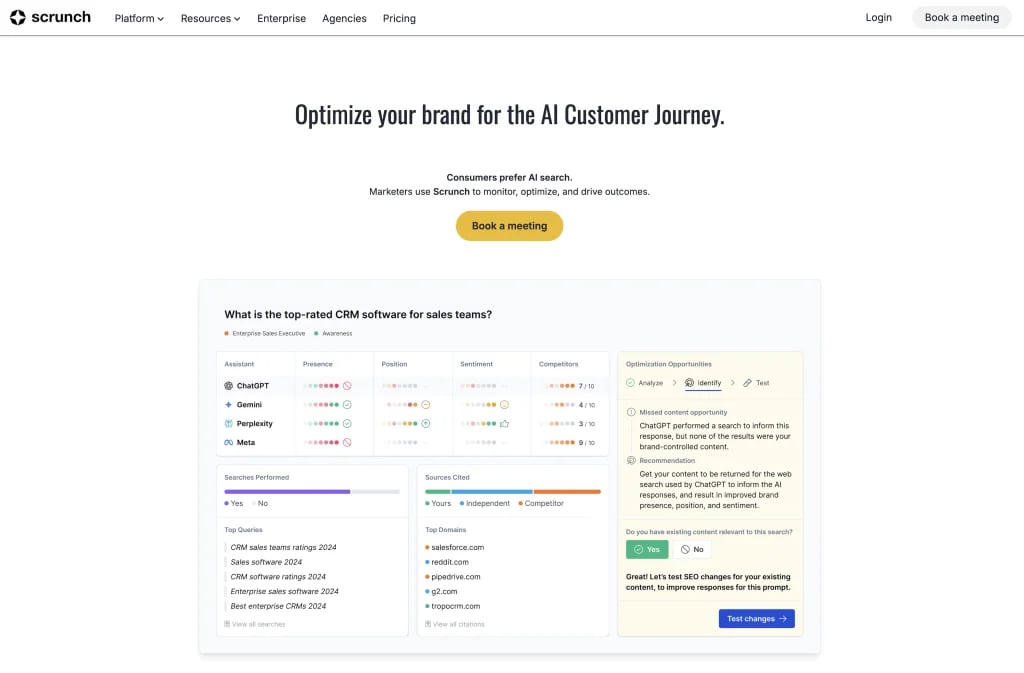
Scrunch AI goes a step further than many monitoring platforms by not only tracking brand visibility but also actively helping organizations optimize their sites to be more “readable” to AI engines. Its Agent Experience Platform (AXP) creates structured, machine-friendly layers of content that improve how large language models interpret and surface information, a forward-thinking capability that justifies its place among the best AI search analytics tools. With prompt-based monitoring across hundreds of brands, misinformation detection, and journey-mapping features, Scrunch AI blends visibility with optimization in a way few competitors can match.
What makes Scrunch AI especially valuable is its enterprise-ready focus. Early case studies show measurable gains in AI-driven traffic when its optimization frameworks are applied, proving that it doesn’t just measure outcomes — it influences them. For smaller companies, it might feel too advanced, but for larger organizations committed to reshaping their content infrastructure, Scrunch AI is a powerful ally. By combining monitoring, technical enablement, and strategy alignment, it fully deserves recognition as one of the best AI search analytics tools for businesses preparing for long-term success in the AI-driven search era.
Gumshoe AI
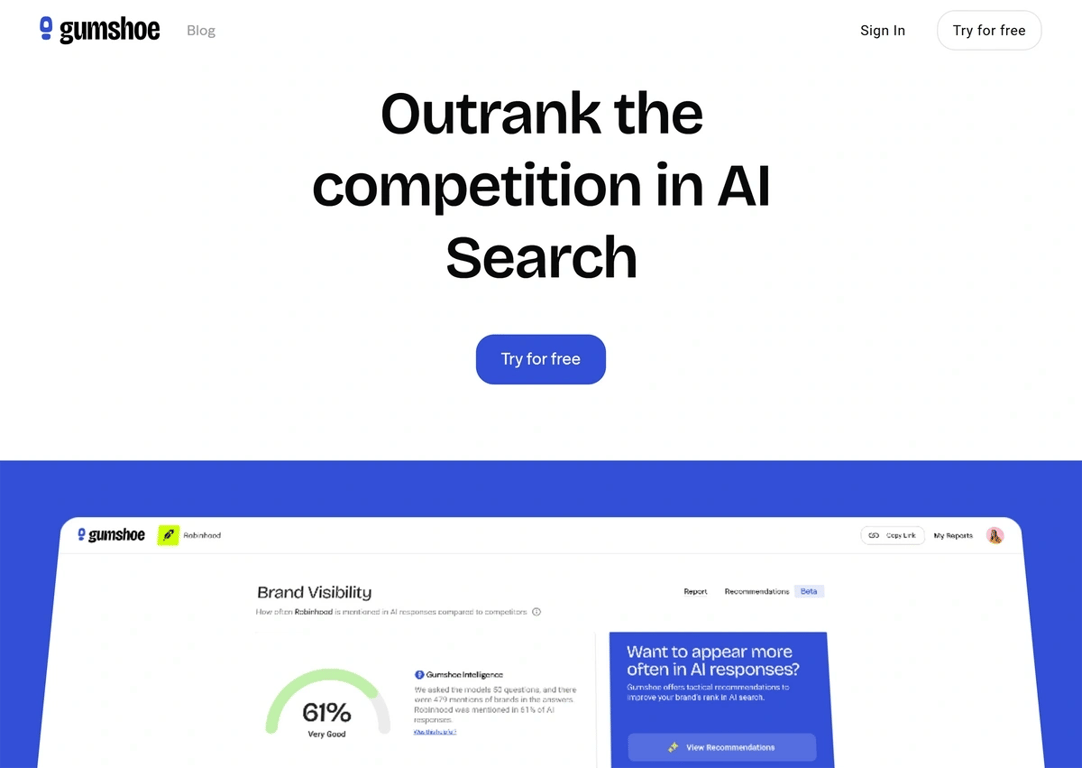
Gumshoe AI takes a distinct approach by centering its analysis on persona-specific visibility, showing not just if your brand appears but how different audience segments encounter it in AI-driven conversations. This layered perspective makes it especially useful for marketing teams that need to tailor strategies to varied customer profiles and secures its place among the best AI search analytics tools. By defining products or services, Gumshoe builds prompt sets aligned with user personas, then tracks how responses from ChatGPT, Google AI Overviews, and other models mention or exclude your brand in relation to those personas.
Its Persona Visibility analysis is one of the standout features, offering insight into which user types most frequently encounter your brand and which segments are underrepresented. In addition, Gumshoe provides source-level tracking that identifies the domains most commonly cited alongside your mentions, uncovering potential partners or backlink opportunities. While its page-level optimization guidance is still relatively simple compared to other platforms, the ability to connect AI visibility directly to user personas makes it unique. This strategic lens confirms Gumshoe AI’s reputation as one of the best AI search analytics tools for businesses that want to link visibility with audience relevance.
AthenaHQ
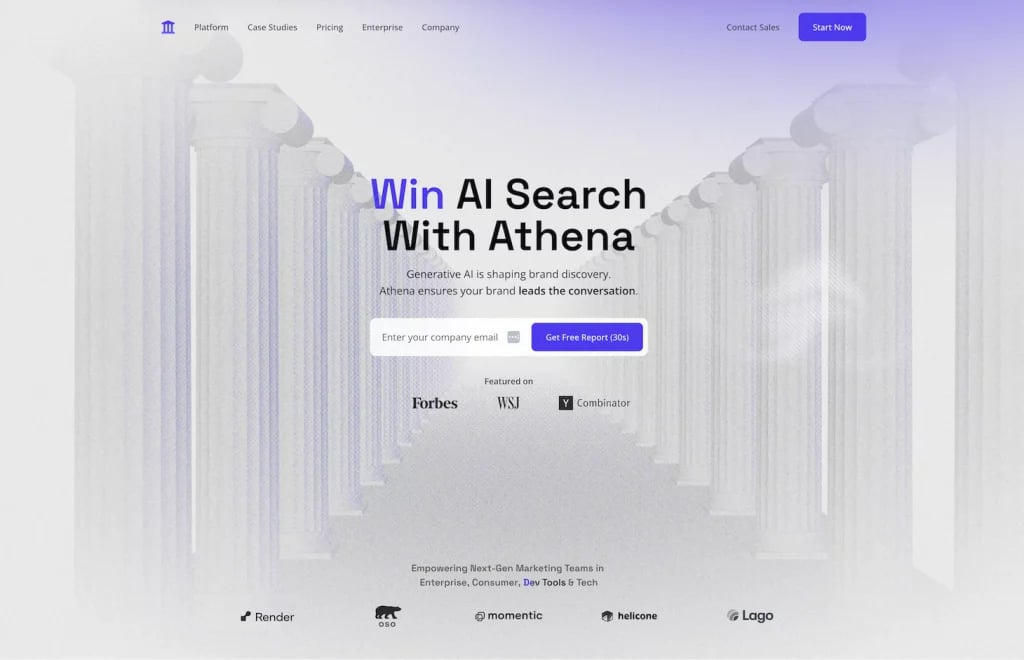
AthenaHQ is positioned as a comprehensive enterprise-level solution for AI visibility, offering deep tracking across major platforms including ChatGPT, Claude, Gemini, DeepSeek, and Perplexity. Its broad coverage ensures brands can see how often they appear in generative results and how those appearances compare against competitors, a level of reporting that firmly places it among the best AI search analytics tools. One of its most valuable features is the Share of Voice metric, which quantifies a brand’s presence relative to others, making it easier for marketing leaders to measure dominance in the fast-changing AI landscape.
Beyond visibility counts, AthenaHQ excels in prompt analytics and source domain tracking, showing which prompts drive mentions and which domains are most responsible for citations. This allows businesses to identify which external sources influence their AI visibility the most and adjust outreach or PR strategies accordingly. While its volume estimates are broad, the platform delivers highly actionable intelligence that can directly inform both content and marketing investments. With its mix of intuitive reporting and competitive benchmarking, AthenaHQ is consistently regarded as one of the best AI search analytics tools for brands that want to lead, not just follow, in generative search.
Am I On AI
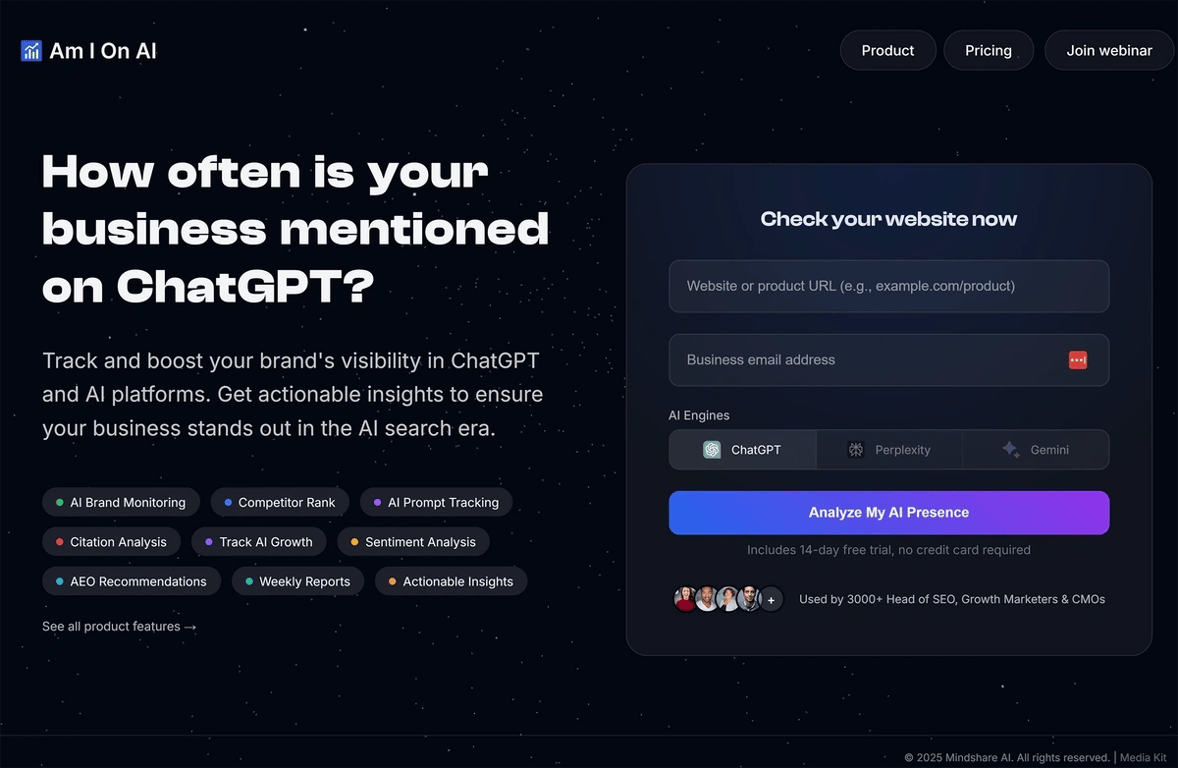
Am I On AI focuses almost entirely on ChatGPT monitoring, making it a specialized tool for brands that want to understand exactly how OpenAI’s model presents them in user-facing answers. It works by scanning a wide set of prompts, collecting the full ChatGPT responses, and highlighting where your brand is mentioned, which is why it belongs to the category of the best AI search analytics tools. Unlike general dashboards, it allows you to open each response in detail, see competitor references, and examine the underlying sources ChatGPT cites when shaping its answers.
This level of prompt-level granularity is its greatest strength, giving marketers visibility into both the content and context of mentions. The platform also surfaces source tracking, showing the exact domains and articles ChatGPT relies on when referencing your brand, which helps guide future content and outreach strategies. While it lacks advanced trend filters and requires more manual interpretation than enterprise-focused platforms, its unmatched detail ensures that companies relying heavily on ChatGPT gain valuable insights. For businesses where ChatGPT is a critical discovery channel, Am I On AI is undeniably one of the best AI search analytics tools to include in a monitoring stack.
Tracking AI visibility is only valuable when paired with a clear action plan. Webtures' digital marketing services and GEO optimization expertise help brands translate analytics insights into consistent presence across AI-powered search platforms.
Would you like to work with us ?
Share your goals, we'll come back with a custom growth plan within one business day. A strategy lead will reach out personally.
Get in touch