Managing AI Hallucinations and Misinformation in AI Search
Learn how to prevent AI hallucinations and misinformation about your brand through accurate content, entity clarity, and proactive GEO strategies.

As AI-powered search systems go mainstream, brands are no longer represented only in search results but directly inside the answers themselves. This significantly raises the risk of misinformation and hallucination-driven crises. Because AI models do not always verify information in real time, they can present inaccurate or incomplete claims about a brand. That shapes user perception directly and can erode brand trust. In highly competitive industries especially, false information spreads fast and becomes hard to contain. Crisis management is therefore no longer the job of PR or social media teams alone; it is now a core responsibility of SEO and GEO teams as well. Crisis management in AI search should be built on content accuracy, source diversity, entity clarity, and strategies that indirectly shape how models learn about your brand. This approach keeps your brand represented accurately and consistently in AI answers.
What is AI hallucination and why is it risky for brands?
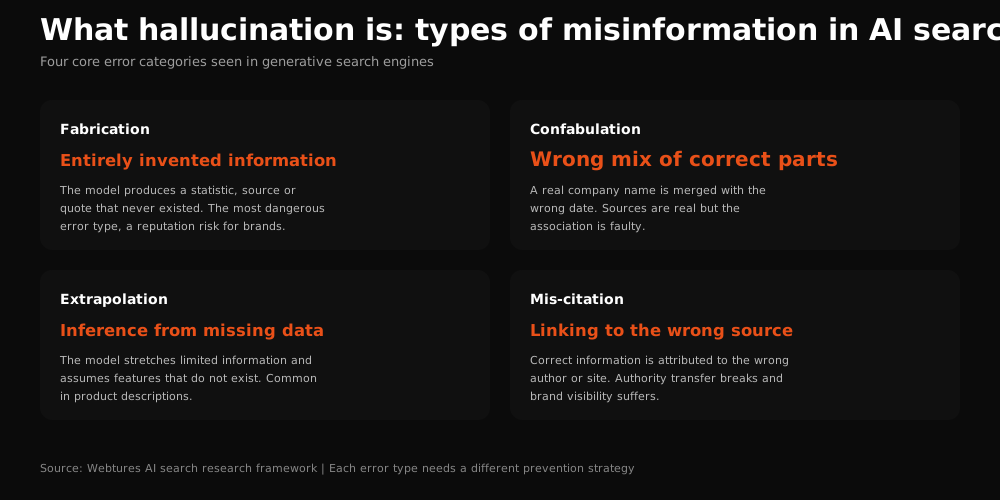
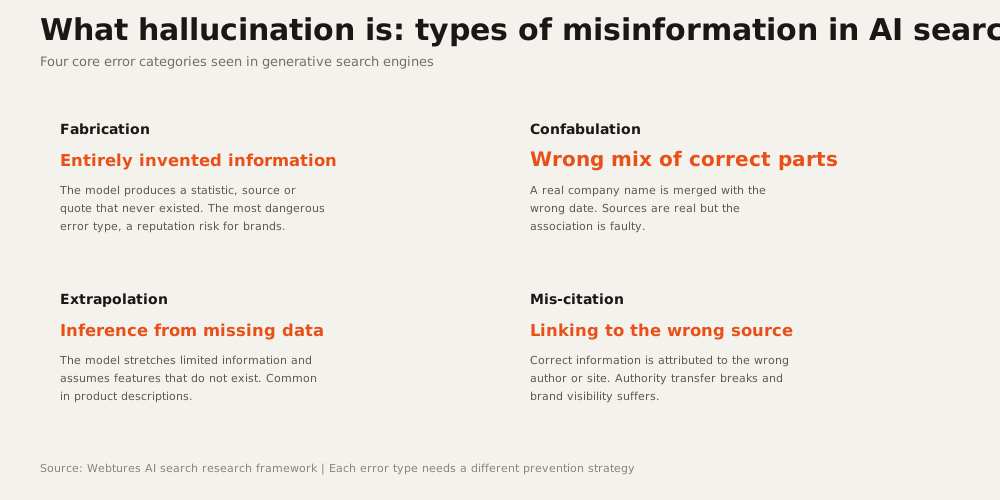
Hallucination is when an AI model presents false or unverified information as fact. For brands this carries serious crisis potential, because users generally treat AI answers as trustworthy. When a model invents an incorrect price, service detail, or past event about a brand, customer trust takes a direct hit. Hallucinations usually stem from missing data, conflicting sources, or a model being pushed to infer beyond what it knows. New brands and companies with a weak digital presence face this risk most. When AI systems cannot find enough signals, they guess, and those guesses can be wrong. Brands should therefore build strong, consistent data signals that minimize the model's gap-filling behavior. The risk can be reduced substantially with the right content strategies and entity management.
How does misinformation spread across the AI search ecosystem?
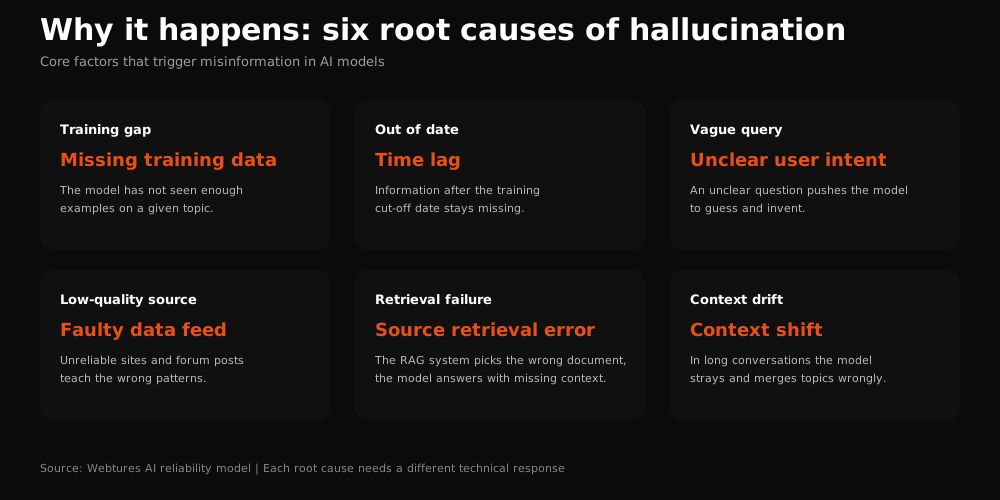
AI search systems pull data from many sources to generate answers, and cross-source verification is not always ideal along the way. If a false claim appears on multiple platforms, an AI model may interpret it as verified fact. Forums, low-quality blogs, and user-generated content play a critical role in spreading this kind of misinformation. And because AI models are trained on historical data, outdated information can still surface in answers. For brands, that means both mispositioning and reputational damage. Misinformation does not stay inside AI either; users share it on social media and carry it to wider audiences. Crisis management should therefore cover the entire digital ecosystem, not just AI platforms. Proactive content production and careful source management are the core ways to contain that spread.
How does brand damage form in AI answers?
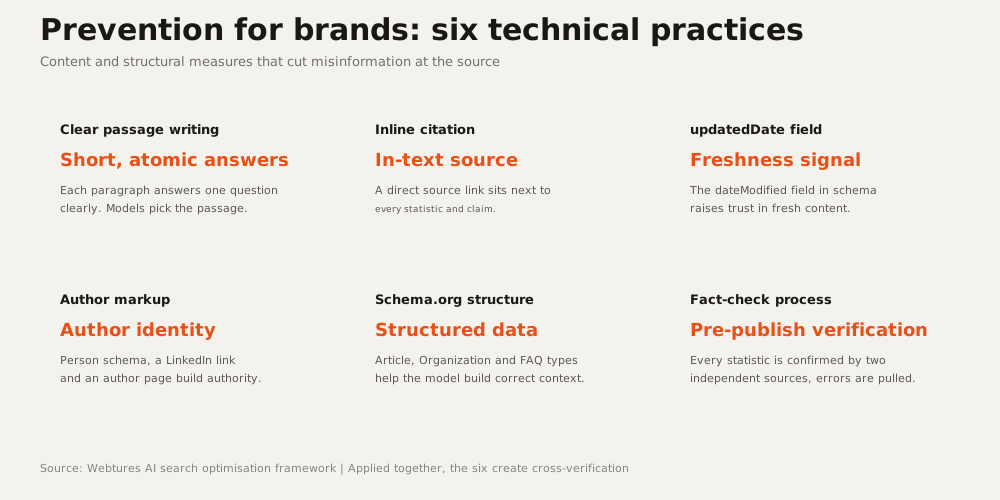
Brand damage in AI answers typically follows three scenarios: fabricated information, incomplete representation, and negative framing. When data about a brand is thin, an AI model references competitors more often, creating an indirect invisibility that weakens brand awareness. Fabricated information, on the other hand, causes a direct loss of trust. When a product's features are described incorrectly, the user experience suffers. Negative framing is more complex; if a model repeatedly references past negative content, brand perception can tilt negative. This is a critical risk for brands that have already been through a crisis. Brand damage often grows unnoticed because users rarely question AI answers. Regular AI visibility analysis and content audits are essential to catch these risks early.
How do you keep AI answers accurate?
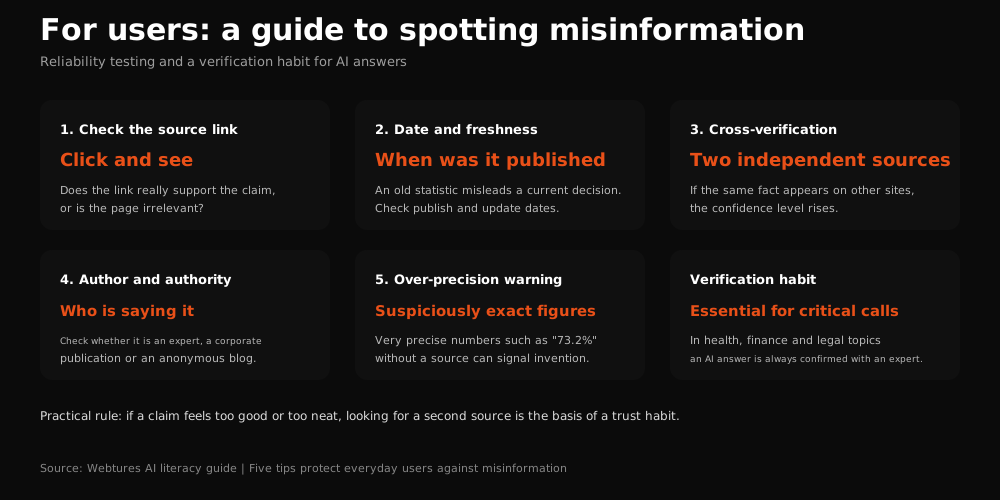
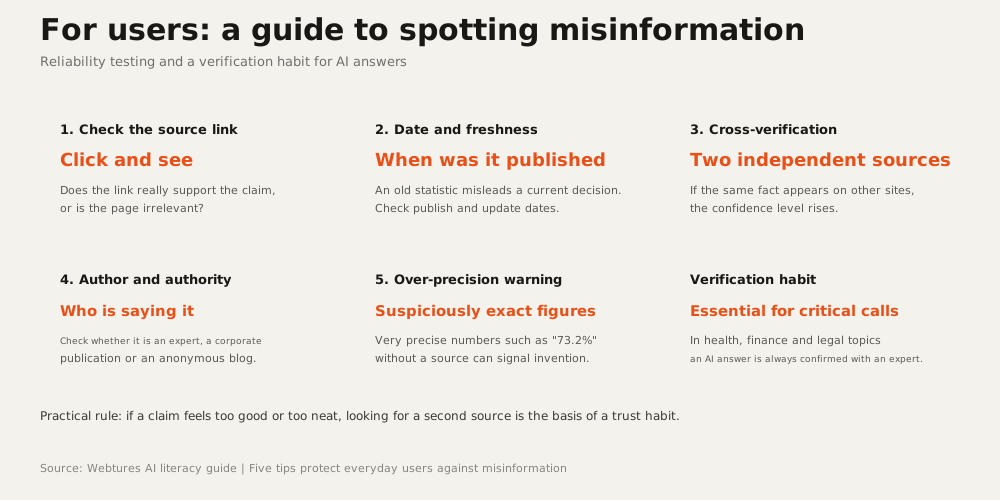
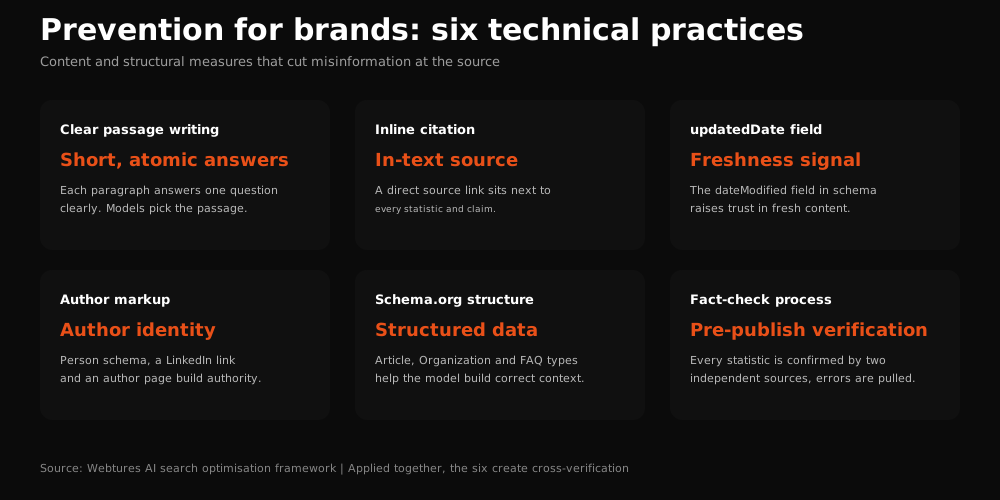
The primary way to improve accuracy in AI answers is to feed the data pool models draw from with the right signals. That goes beyond publishing accurate content on your own website; it requires consistent information across multiple platforms. Structured data, clear and unambiguous writing, up-to-date information, and presence on authoritative sources are the core components. AI models tend to treat clear, explicit, and repeated information as more reliable, so the same fact appearing across several trusted sources raises its accuracy. Avoiding vague phrasing, defining things precisely, and answering user questions directly also matter, because they reduce the model's chances of drawing a wrong inference. Accuracy is not just a technical issue; it is a strategic content planning discipline.
Structured data and open data
Structured data is a key signal that helps AI systems interpret content correctly. With schema markup, product, service, organization, and person information can be defined precisely, reducing the risk of misinterpretation. Organization, Product, and FAQ schema in particular standardize a brand's core facts. An open data approach makes that information accessible and verifiable by anyone, which points AI models toward more reliable sources. Structured data matters for AI visibility as much as it does for SEO. Presenting data explicitly stops the model from inferring and lets it use the correct information directly, which minimizes hallucination risk.
A multi-source verification strategy
The more trusted sources an AI system sees a fact in, the more it treats that fact as accurate. Brands should therefore invest beyond their own websites, into third-party platforms. Press releases, industry platforms, authoritative blogs, and databases all play a critical role. The same information appearing consistently across platforms creates a strong verification signal for AI models. This strategy is vital for newer brands, because models score credibility by source diversity. Multi-source verification lowers misinformation risk while building brand authority. It is one of the foundational building blocks of GEO strategies.
Proactive GEO strategies before a crisis
Crisis management in AI search is not limited to what you do once a crisis hits. What matters most is taking precautions before one forms. Proactive GEO strategies keep the brand represented correctly in AI answers. They include content standardization, entity definition, information freshness, and source diversity. Regularly analyzing AI answers also helps surface potential risks early. A proactive approach keeps the brand in control; interventions made mid-crisis usually arrive too late. GEO strategies should therefore be treated not only as a visibility lever but as a risk management tool.
Using entity SEO for information clarity
Entity SEO gives a brand a clear, consistent identity across the digital world. Because AI models operate on entities, they want to see precise definitions of a brand. Brand name, services, products, and market positioning should all be stated explicitly so the model does not draw wrong inferences. Entity SEO also prevents information confusion, which is critical for brands with similar names. Clear entity definitions produce correct matches in AI answers, an advantage for both visibility and accuracy.
Content freshness and version control
Because AI models can draw on historical data, outdated content is a risk. Content needs to be updated regularly, especially volatile facts such as prices, product features, and service details. Version control tracks what was updated and when, reducing the risk of stale information circulating. Fresh content is a stronger signal for AI models and supports accurate answers.
Response and correction strategies during a crisis
When an AI-driven crisis breaks, a fast and accurate response is critical. The first step is identifying where the false information originates. Accurate counter-content should then be produced and distributed, and correction requests can be filed on the relevant platforms. Transparent communication matters too; users should reach the correct information quickly. AI answers cannot be controlled directly, but they can be influenced indirectly, which makes producing and distributing accurate content the most effective intervention.
Detecting and monitoring false content
Content surfacing in AI answers needs regular monitoring. Defined prompt sets can be used to analyze brand visibility, and when false or missing information is detected, action should follow fast. Monitoring surfaces crises at an early stage, which shortens response time and minimizes damage.
Producing counter-content with accurate information
The most effective response to false information is strong, accurate content published on platforms AI models can access. It should be clear, explicit, and verifiable. Over time, the model starts referencing the accurate version. Counter-content is one of the core tools of crisis management.