How to Do Regional GEO: Regional GEO Techniques
Regional GEO is the practice of structuring a business's location data, service descriptions, and reputation signals so that AI-driven search engines can cite them directly.

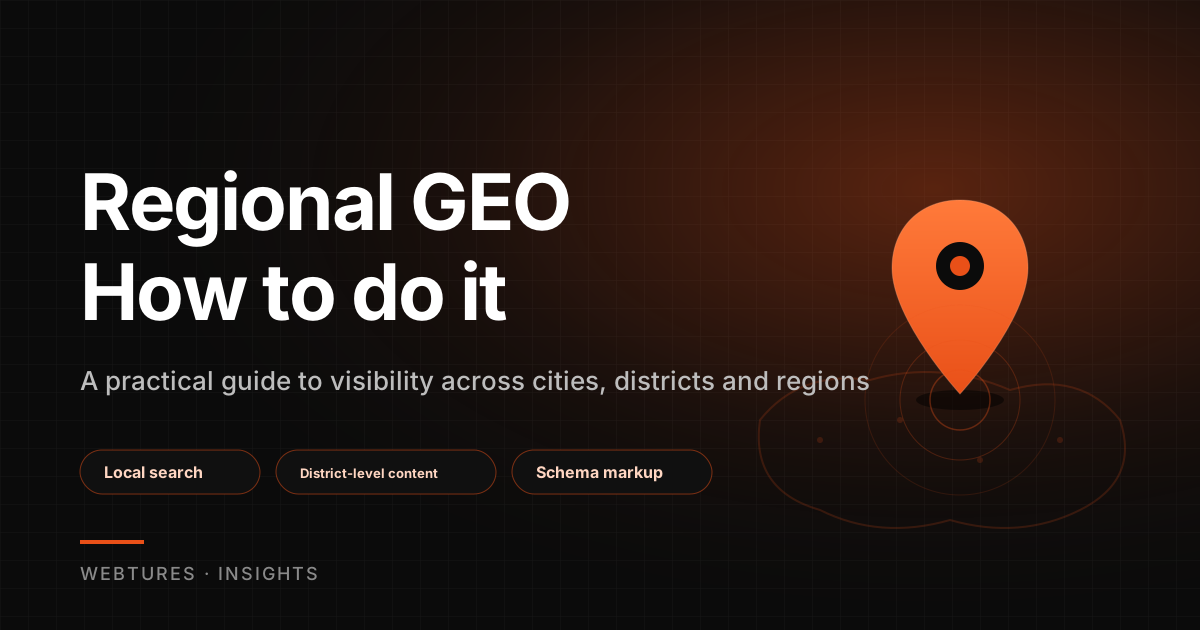

Regional GEO is the practice of structuring a business's location data, service descriptions, and reputation signals so that AI-driven search engines can cite them directly. People no longer type "nearest pizza place" and scan blue links; they ask ChatGPT, Gemini, or Perplexity, "Which restaurant is open right now, has easy parking, and offers gluten-free options?" In that shift, local SEO is rapidly giving way to local GEO (Generative Engine Optimization).
In a 2024 forecast, Gartner projected that traditional search engine volume would fall by roughly 25% by 2026. The exact figure is debatable; the direction is not. Industry analyses show that a substantial share of Google searches now end without a click to any website. After 16 years in digital marketing, the Webtures team reads that picture one way: the goal is no longer pulling traffic to your site, it is appearing inside the final answer the model produces.
What is regional GEO and how does it differ from local SEO?
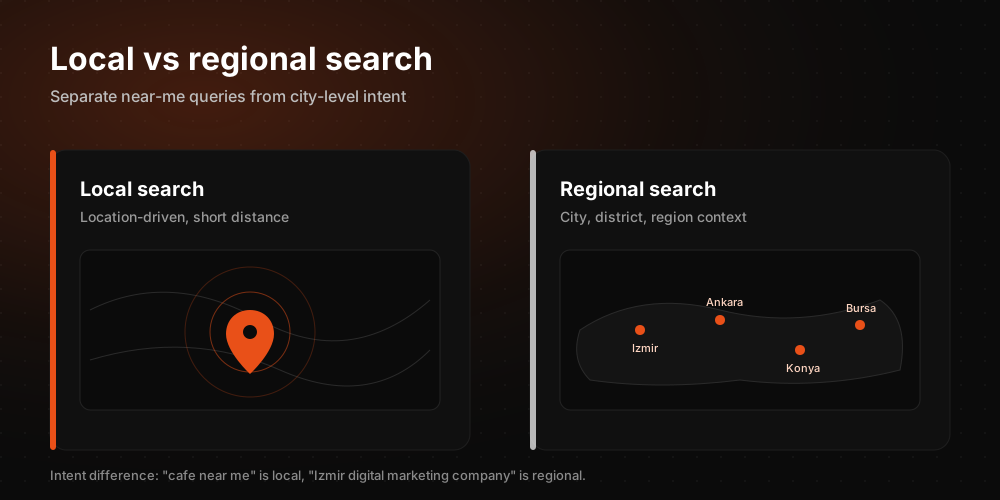
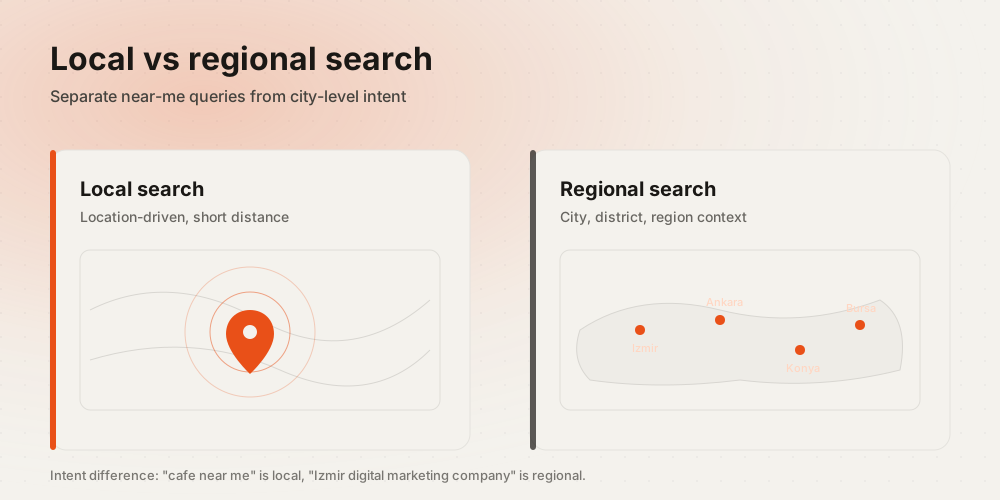
Regional GEO is the work of getting a local business selected as a trusted source by AI assistants. Local SEO aims for a position in the map pack; regional GEO aims for a mention inside the answer itself.
- Local SEO produces a ranking, regional GEO produces a sentence.
- Local SEO rests on keyword matching, regional GEO rests on entity definition and data consistency.
- Local SEO is measured in clicks, regional GEO is measured in citations and brand recall.
The two are not alternatives. Technical infrastructure, page speed, and structured data are the shared foundation of both. We covered that foundation in our explainer on what GEO is and how it differs, and the day-to-day practices follow below.
How does the AI-driven local algorithm work?
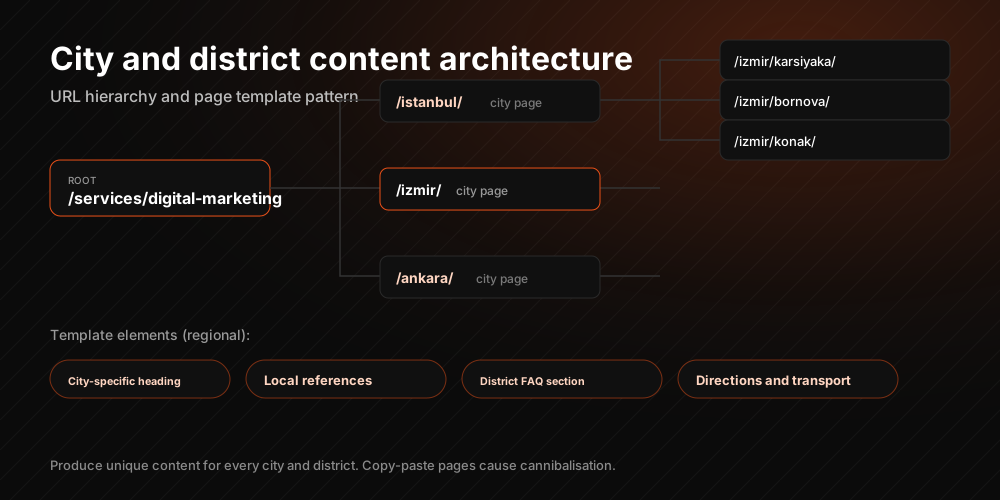
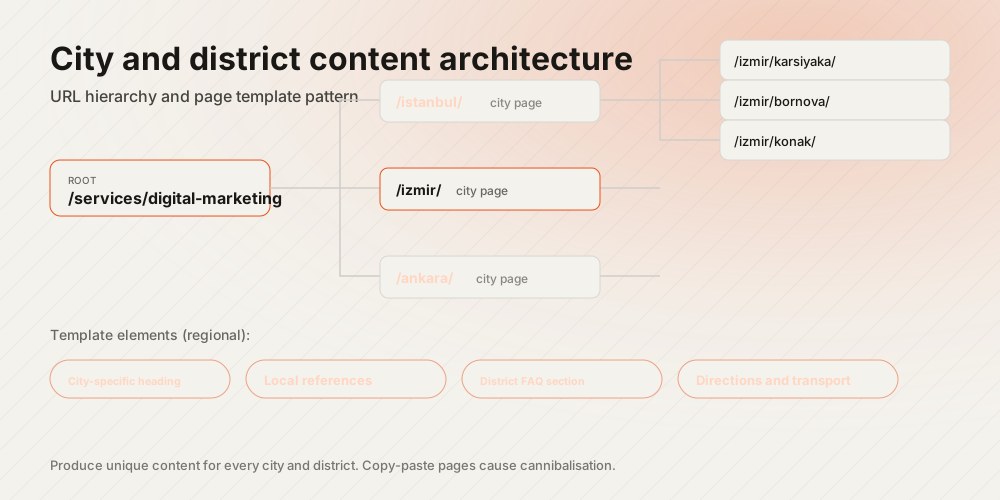
AI engines evaluate a business on entity authority and semantic relevance rather than keyword density. The model gathers scattered data about the business, looks for contradictions, and when it finds one, it avoids recommending that business at all.
Three layers get scanned during that evaluation:
- Structured data consistency: whether the business name, address, and phone number (NAP) match exactly across every authoritative record.
- Sentiment analysis: not the star count on reviews but the context inside them. If "fast service" appears across hundreds of reviews, the model surfaces the business for users in a hurry.
- Digital footprint: how often the business is cited on local news sites, industry directories, and social platforms.
Where does NAP consistency need to hold?
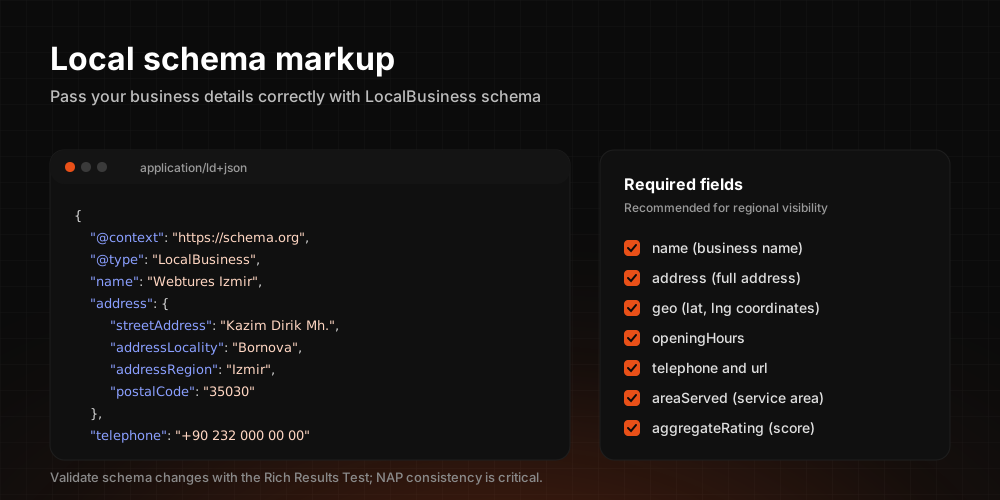
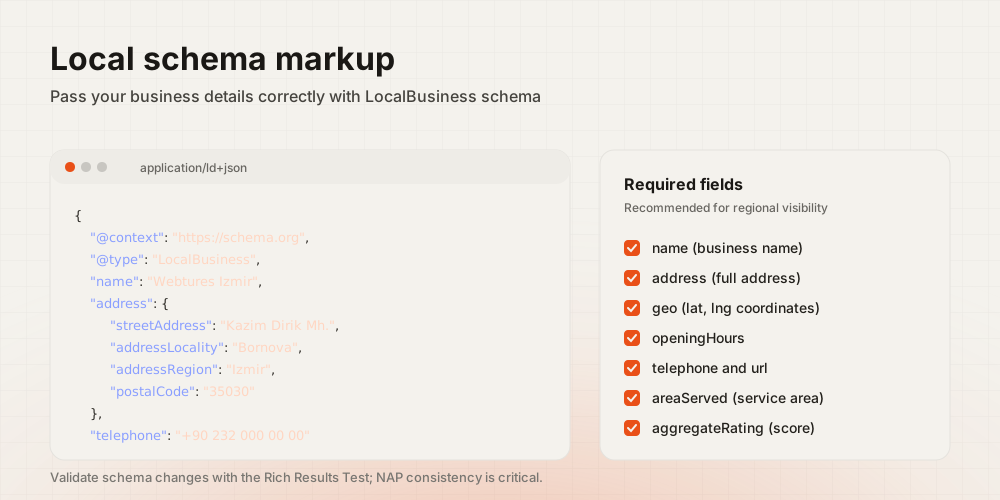
NAP consistency means the business name, address, and phone number are identical across every record that carries source authority. AI models treat those records as feeding points, so a single incomplete or contradictory listing creates a trust gap.
These are the records worth prioritizing, and our Google Business Profile guide walks through the setup step by step:
- Google Business Profile: the hub of the local data layer. Enter services with full descriptions, not bare headings.
- Apple Business Connect: the equivalent surface for Apple Maps and Siri.
- Bing Places: the source record for the Microsoft ecosystem and Copilot.
- Yandex Business: still a meaningful local directory in several markets, including Turkey.
- Your own contact page and its LocalBusiness schema.
How do you build a regional GEO strategy?
A regional GEO strategy rests on three pillars: data feeding, review management, and digital consistency. The goal is for an AI assistant to name your brand, without hallucinating, when someone asks for the most trusted provider in your area. Our broader playbook on GEO visibility strategies for local businesses covers the wider programme.
1. Fill the business profile like a dataset
Google Business Profile is no longer a storefront, it is a dataset for language models. Enter your services with detailed descriptions; the model pulls answers to specific queries such as "stain-guaranteed cleaning" straight from that text. Signage, interior, and product photos are analyzed too, and they shape the model's read on the atmosphere of the venue.
2. Manage context in reviews, not keywords
Customer reviews determine the label AI attaches to your business. Encourage customers to describe the experience in detail. Instead of "it was great," a review like "being open on Sunday and the valet service solved my problem" surfaces you for queries about places open on Sunday. Your replies carry signal as well, so answer with solutions rather than templates.
3. Close the trust gap
The biggest risk for AI models is producing false information. If your opening hours differ between Instagram and your website, the model flags that inconsistency as a risk and avoids recommending you. Synchronize your data across every platform from a single hub. Getting your brand mentioned in local press and industry blogs strengthens entity authority even without a backlink.
How do you adapt to voice and conversational search?
Adapting to conversational search starts with rewriting content so full-sentence questions receive full-sentence answers. Users are not typing robotic keywords; they are speaking naturally, a shift we mapped in Voice Search 2.0 and the rise of conversational search.
- Old query: "24-hour pharmacy downtown"
- New prompt: "Which pharmacy near me is open right now and stocks baby formula?"
Revise the FAQ section of your site with questions phrased in natural language and paragraphs that answer clearly in the first sentence. Every passage should read correctly on its own, because that is the unit a model quotes.
How is regional GEO measured?
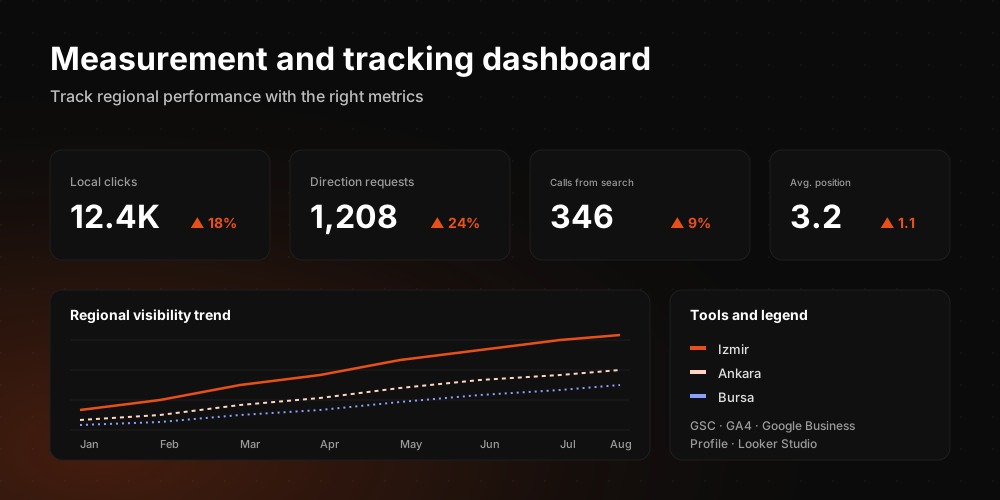
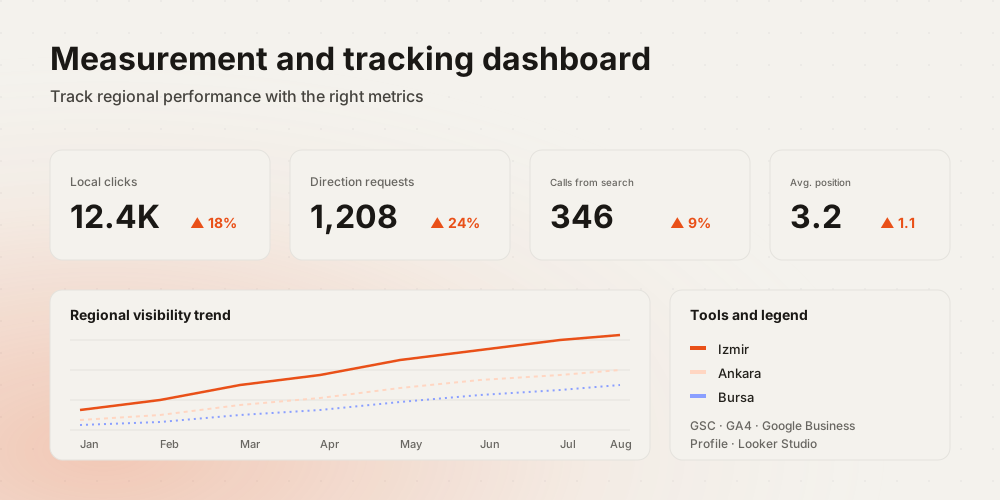
Regional GEO is measured through citation tracking rather than rank tracking. The measurement frame has four parts:
- Citation rate: how often assistants name your brand on regional queries.
- Accuracy: whether the information the assistant gives matches your real data. Wrong opening hours are a defect to fix, not a detail.
- Review context: whether recurring themes in reviews match your intended positioning.
- Referred activity: direction requests, calls, and site visits originating from your business profile.
The new constitution of visibility
Local SEO is no longer a ranking race. It is a process of data verification and reputation management. Optimizing your business for an answer engine is how you appear inside the AI assistants that now sit between you and your customers.
The Webtures recommendation is simple: match the quality of your service in the physical world with the quality of your data in the digital one. To plan your regional GEO work with us, get in touch.