How to Use AI in E-Commerce GEO Strategies
AI in e-commerce GEO strategy: intent and context, structured data, share of voice in AI answers and the six data fields an agent needs to build a cart.

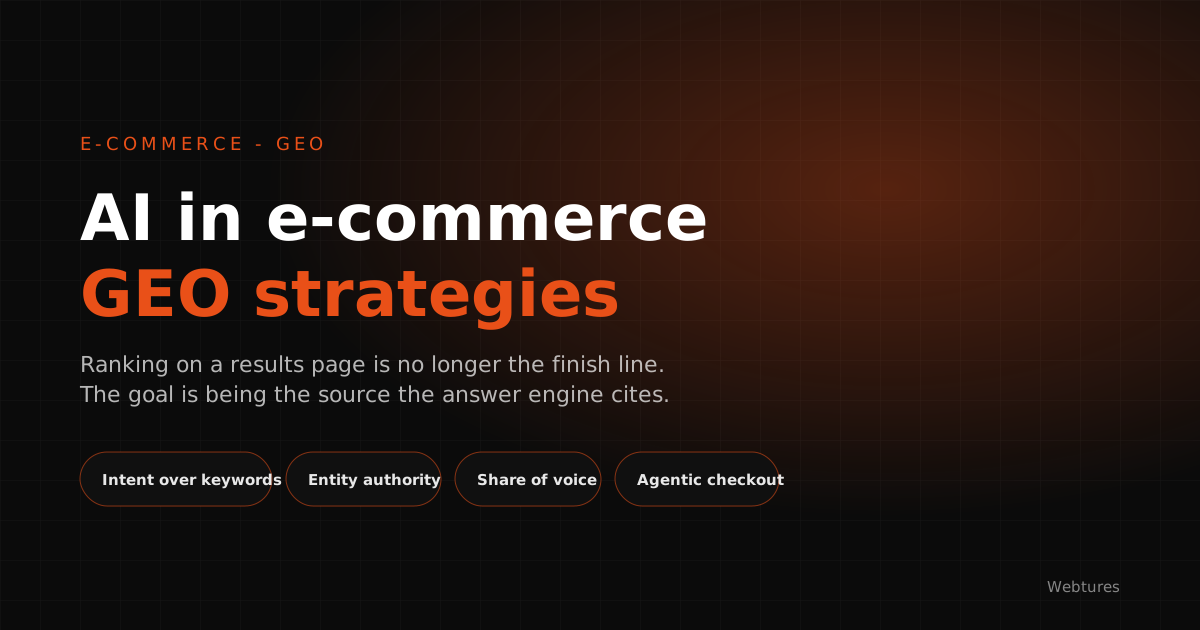
The rules of digital commerce have shifted from a world where users clicked links to one where AI assistants (AI Agents) decide on their behalf. Ranking on traditional search engine results pages (SERPs) is no longer enough; the goal is to appear as the single trusted source inside the final answers produced by Answer Engines such as ChatGPT, Perplexity, Claude and Google AI Overviews. Gartner projects that traditional search engine volume will fall by 25 percent by 2026, and for e-commerce brands the visibility battle is now built on citation and recommendation rather than clicks.
Why GEO (Generative Engine Optimization), not just SEO?
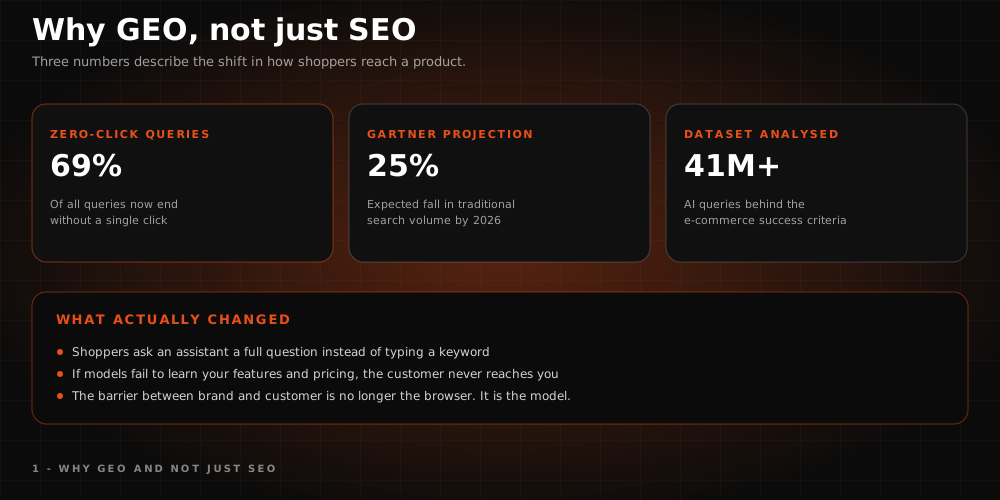
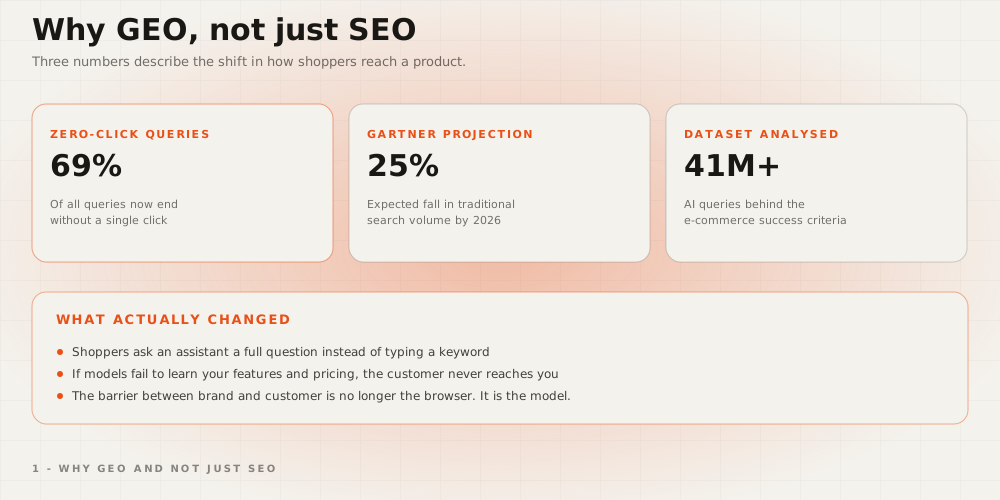
In the traditional search world, users typed keywords when shopping and got lost among hundreds of links. Today, zero-click searches have reached 69 percent of all queries. Instead of visiting an e-commerce site, users now ask their AI assistant a question like "What is the best running shoe for flat feet within my budget?" and receive a direct answer.
At Webtures, we define this transformation not as another algorithm update but as digital marketing's shift into the era of reputation and accuracy. GEO strategies make sure Large Language Models (LLMs) recognize your brand as a trusted authority. If AI models fail to "learn" your brand, your product features and your price advantage correctly, your potential customer never reaches your site. In the new order, the barrier between your brand and the customer is no longer the browser; it is the AI layer.
Data-driven GEO strategies: an integrated approach for e-commerce
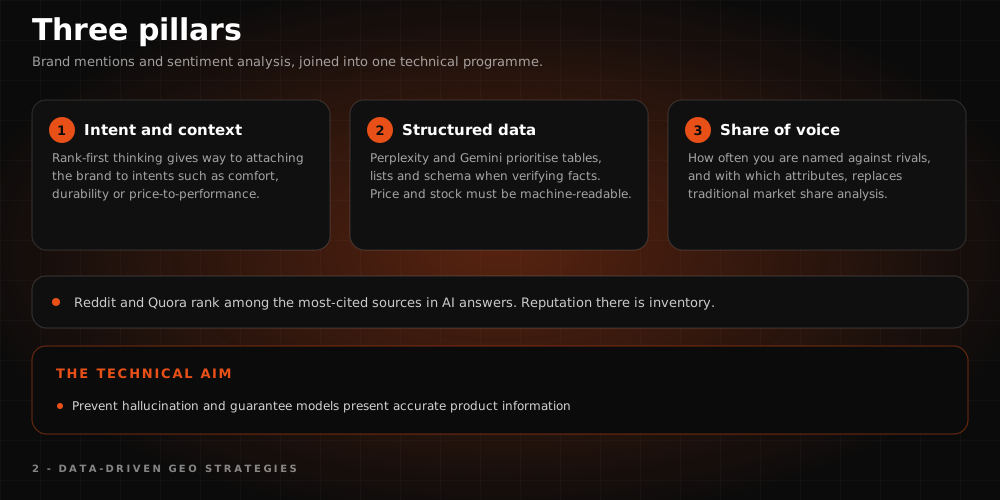
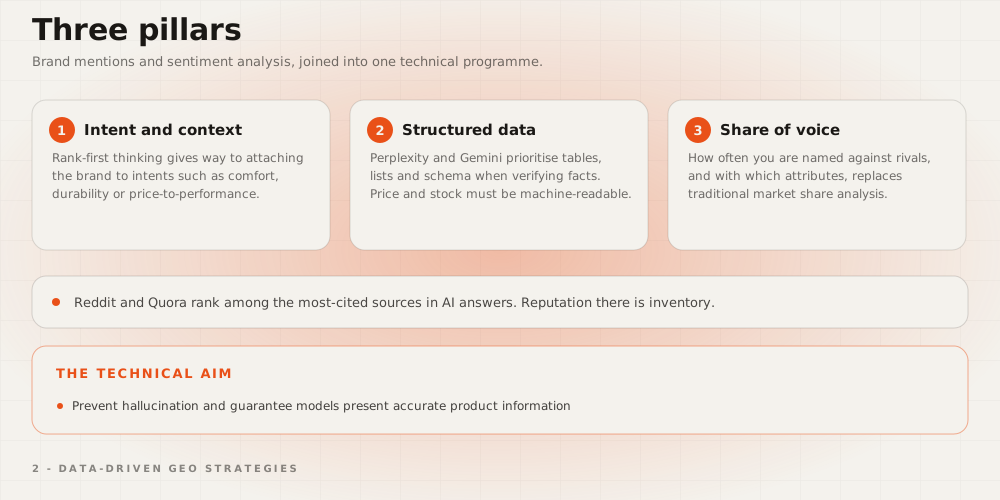
Managing how AI models perceive your brand is the technical union of Brand Mentions and Sentiment Analysis. Drawing on datasets built from the analysis of more than 41 million AI queries, we group the success criteria for e-commerce brands into three main pillars:
1. Intent and context, not keywords
Ranking first for "men's running shoes" used to be the goal. Now the model needs to associate your brand with intents such as comfort, durability or price-to-performance.
- The Webtures approach: We revise your product descriptions and on-site content into natural-language formats that LLMs (Large Language Models) can connect semantically. Building on the fact that Reddit is the most-cited source across answer engines, at roughly 40 percent citation share across models, we manage your brand's reputation across Dark Social and community-driven platforms.
2. Structured data and entity authority
Systems like Perplexity and Google Gemini prioritize structured data (HTML tables, lists, schema markup) when verifying information. Analyses show that well-structured HTML tables significantly increase citation rates in AI answers.
- Technical action: We make sure the price, stock and specification data on your product pages is machine-readable, so AI bots (Agents) can parse and process it instantly. The aim is to prevent AI hallucinations and guarantee that models present fully accurate information about your products.
3. Share of voice and competitor benchmarking
Share of Voice inside AI answers is replacing traditional market share analysis. When a user asks "Which are the best robot vacuum brands?", how often your brand is mentioned relative to competitors, and with which attributes (budget-friendly or premium, for instance), becomes critical.
- Strategic move: With Webtures GEO protocols, we identify the queries where your brand trails competitors and use co-occurrence strategies to place your brand in the same context as the sector leaders.
4. The data fields an agent needs to add the product to the cart
In 2026 a third column was added: being recommended in the answer engine is not enough, the shopping agent must be able to verify the product and put it in the cart. The product page and the feed must carry these fields from one source:
| Field | Schema equivalent | What it means for the agent |
|---|---|---|
| Product identity | gtin, mpn, sku | Matches the product by number, not by name |
| Price and currency | offers.price, priceCurrency, priceValidUntil | Budget filter; a conflict with page text keeps it out of the cart |
| Stock and delivery | availability, shippingDetails | Only in-stock, deliverable items are recommended |
| Returns and warranty | hasMerchantReturnPolicy | Risk signal; a criterion the agent uses in comparison |
| Attributes | additionalProperty, material, energy class | Intent matching such as "suitable for flat feet" |
| Agent protocol | ACP feed (/.well-known/acp.json), UCP | Lets the agent build the cart and start payment |
The sector example is in the automotive and spare parts GEO guide, the protocol map in the agent-native transformation guide.
The e-commerce conversion funnel in the AI era
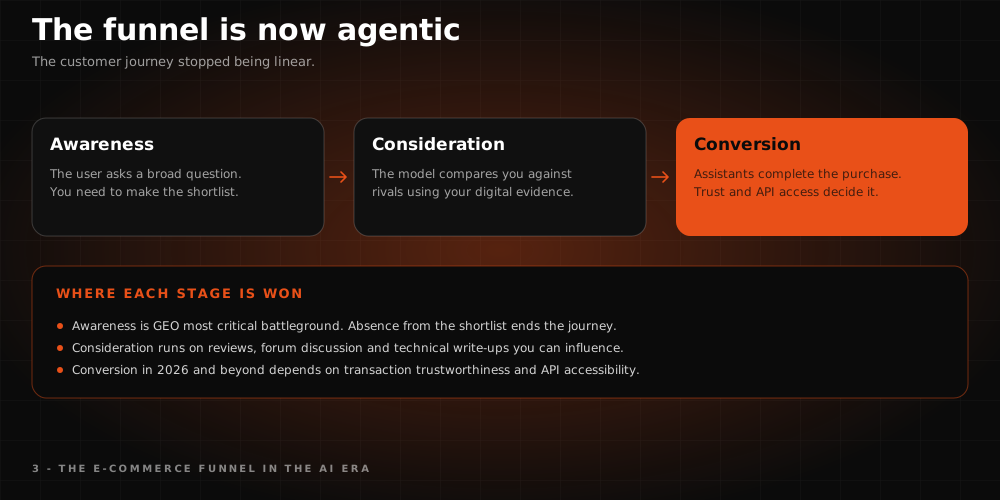
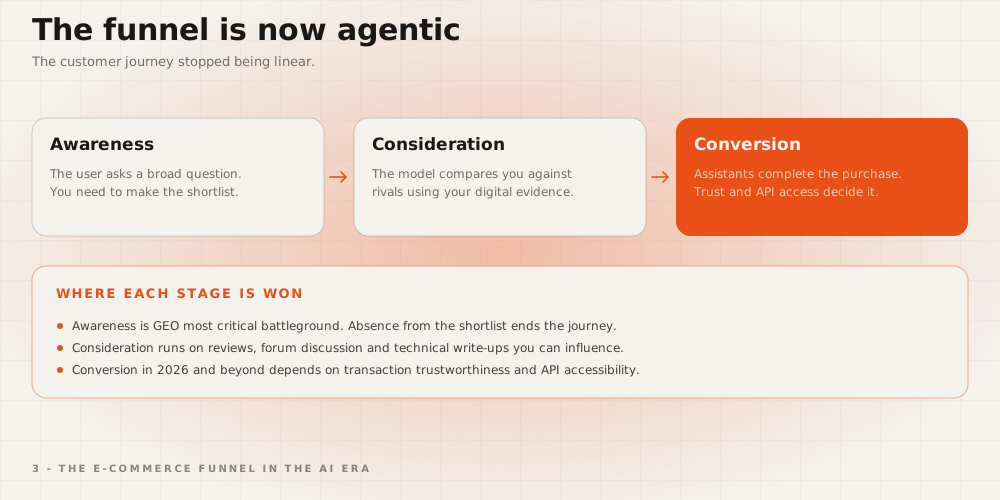
The customer journey is no longer linear; it is agentic. In this new ecosystem, the conversion funnel works like this:
- Awareness: The user asks the AI assistant a broad question. Your brand needs to appear on the shortlist of recommendations. (This is GEO's most critical battleground.)
- Consideration: The AI compares your product against competitors. This is where the reviews, forum discussions and technical write-ups in your digital footprint come into play. Webtures optimizes this digital evidence to tilt the AI's decision mechanism in your favor.
- Conversion: As of 2026 AI assistants complete purchases on the user's behalf: purchases inside ChatGPT and the agentic commerce protocols (ACP, UCP) are live. At that point, transaction trustworthiness and API accessibility become the most important GEO criteria for your e-commerce infrastructure.
The 2026 vision: growing revenue while search volume falls
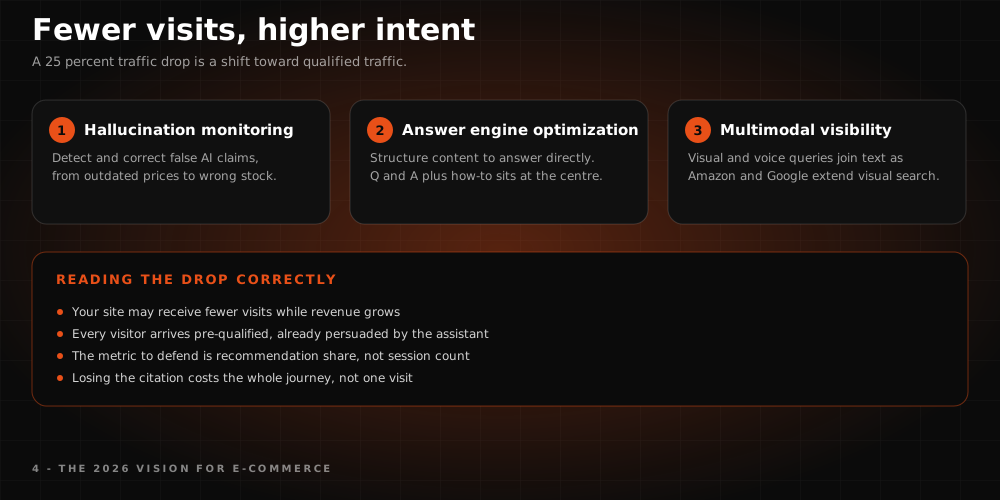
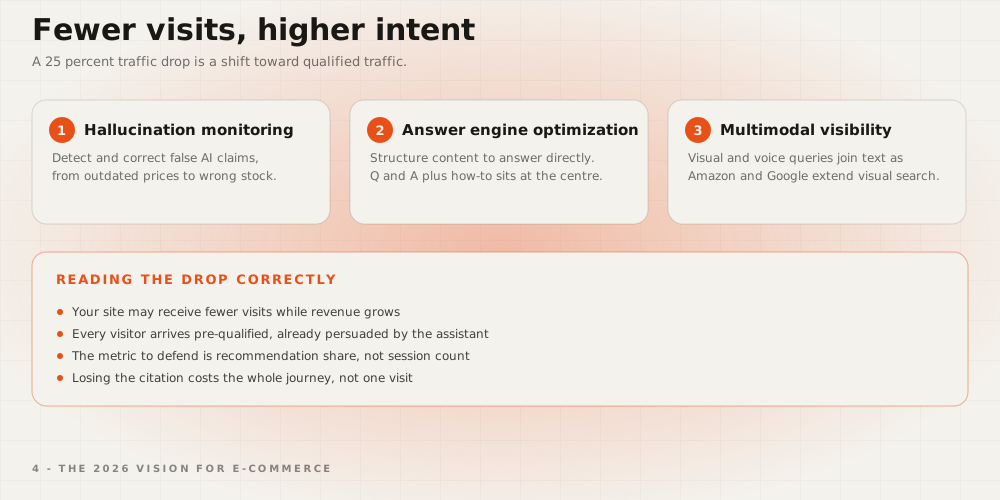
The projected 25 percent drop in traditional search traffic is not a crisis; it is a shift toward qualified traffic. Your site may receive fewer visits, but each visitor arrives with far higher purchase intent, because the AI assistant has already pre-qualified and persuaded them.
Preparing for the future with the Webtures GEO methodology:
- Real-time hallucination monitoring: We detect and correct false AI-generated claims about your brand, such as outdated prices or wrong stock information.
- Answer Engine Optimization (AEO): We structure your content to give direct, clear and authoritative answers to questions. Q&A formats and how-to guides sit at the center of this strategy.
- Multimodal visibility: The search of the future covers more than text; it includes visual and voice queries. As Amazon and Google advance their Visual Search capabilities, we make sure your product images are identifiable by AI.
E-commerce success is no longer about ranking first on Google; it is about being the one brand a user's personal AI assistant trusts. At Webtures, we are here to make your brand the winner of the AI era, not a hostage of the algorithms.
For the setup see our Agentic Commerce Readiness service; to measure how agents read your site, the AI Agent Readiness scan; for revenue attribution of the AI channel, Google Tag Manager in the agent era.