How Do UGC Content Assets Contribute to AI Search Visibility?
Learn how UGC content supports AI Search visibility through reviews, social proof, user experience, usage context, and trust signals.



UGC content contributes to AI Search visibility by providing real experience, social proof, and usage context. Users no longer rely only on brand claims. They also consider product reviews, forum answers, customer photos, social media content, community experiences, and independent evaluations. AI systems can compare a brand’s own messaging with user-generated content to produce more balanced and decision-oriented answers. For this reason, UGC is not only a community management or conversion optimisation topic. It is also a trust layer that can influence how a brand is represented in AI-generated answers. For SEO, content, product, and growth teams, the goal should not simply be to collect more user content. The real objective is to connect that content with the right product, use case, sentiment, and technical structure. When managed well, UGC helps the brand become more trustworthy, understandable, and recommendable through real user experience.
Why AI Search Gives More Weight to User Experience
In AI search experiences, visibility is shaped not only by what the brand says on its own website, but also by what users say about the brand or product. When users research a product, service, or brand, they want to understand how it works in real life, which expectations it meets, which issues it may create, and who it is most suitable for. UGC therefore acts as experience-based decision data for AI systems, not just as an additional source.
In traditional SEO, UGC was often evaluated through review count, ratings, rich results, or on-page engagement. In the age of AI Search, its value is broader. Repeated user phrases, commonly mentioned benefits, problem themes, comparison statements, and usage scenarios can influence how a product or brand is described in AI answers. Brands should therefore manage UGC not as an uncontrolled comment section, but as a live experience data layer that supports AI visibility.
How to Interpret User Intent Through UGC Content
User intent in UGC content often comes from the need to reduce uncertainty. Users want to know whether the features described by the brand are reflected in real experience. Questions such as “Does this product really work?”, “Who is this service suitable for?”, “Does it cause issues in long-term use?”, or “How is it different from similar products?” are where UGC becomes especially valuable. For this reason, user-generated content should not only be visible on the page. It should be classified and summarised in a way that supports the decision journey.
A user in the research stage may want to understand general experience and satisfaction. A user in the decision stage wants to see pros and cons, recurring issues, usage context, and experiences from similar users. When AI systems can extract these themes from UGC, they can represent the brand more accurately and more fairly in relevant questions. UGC strategy should therefore focus not only on generating more reviews, questions, or social content, but also on matching these assets with search intent.
How Trust Signals Are Created Through UGC
Trust signals in UGC are created when users, products, use cases, review dates, ratings, problems, solutions, and sentiment are interpreted together. AI systems can understand user-generated content not only through individual sentences, but through repeated experience patterns. If different users repeatedly mention the same product benefit or the same issue, this can become a strong context signal for the model.
However, UGC can only create trust when it is transparent, current, and meaningful. Verified user experiences, detailed explanations, customer photos, reviews that include use cases, Q&A sections, and balanced sentiment distribution strengthen this trust layer. In contrast, artificial-looking reviews, spam, highly repetitive wording, showing only positive feedback, or unclear moderation policies can weaken trust. In UGC management, the goal should not be to create a flawless brand image, but to present real and balanced user experience accurately.
How to Make UGC Areas Technically Accessible
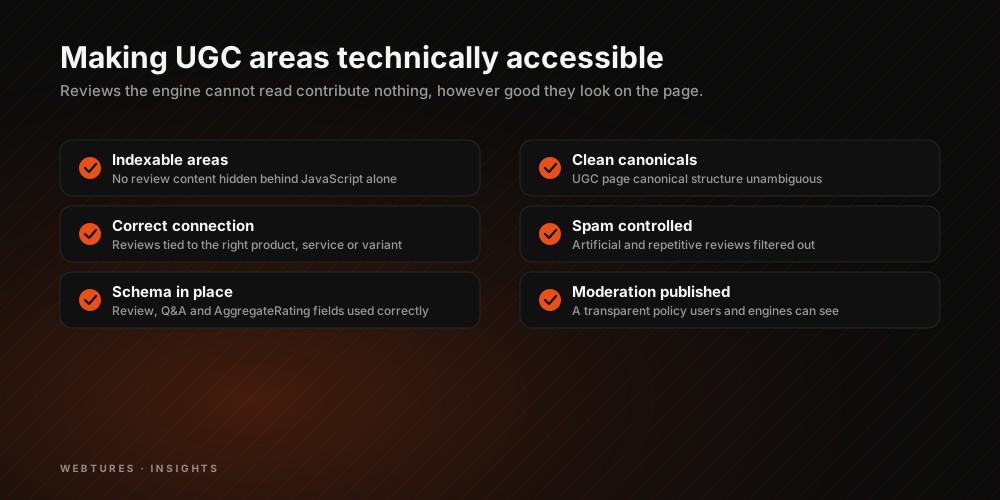
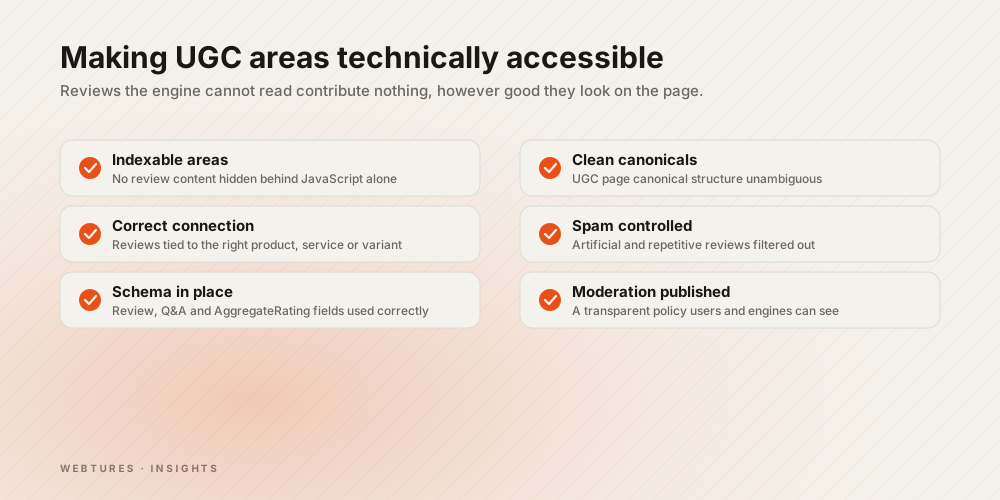
UGC areas should be indexable, free from spam, supported with schema, and managed with a clear moderation policy. Even if user reviews, Q&A sections, customer photos, or community content are visible on the page, their contribution to AI visibility may be limited if search systems cannot read them. Reviews loaded through JavaScript, closed review systems, non-indexable Q&A areas, or review structures not supported with schema can weaken their visibility impact.
In the technical setup, reviews should be connected to the correct product or service, Review and AggregateRating fields should be used correctly, canonical structures for UGC pages should be clear, and spam content should be controlled. A transparent moderation policy also helps both users and search systems approach this content with more trust. UGC areas should support user experience while also being structured as clean, machine-readable data assets connected to the right context.
Which UGC Formats Are More Valuable for AI Search?
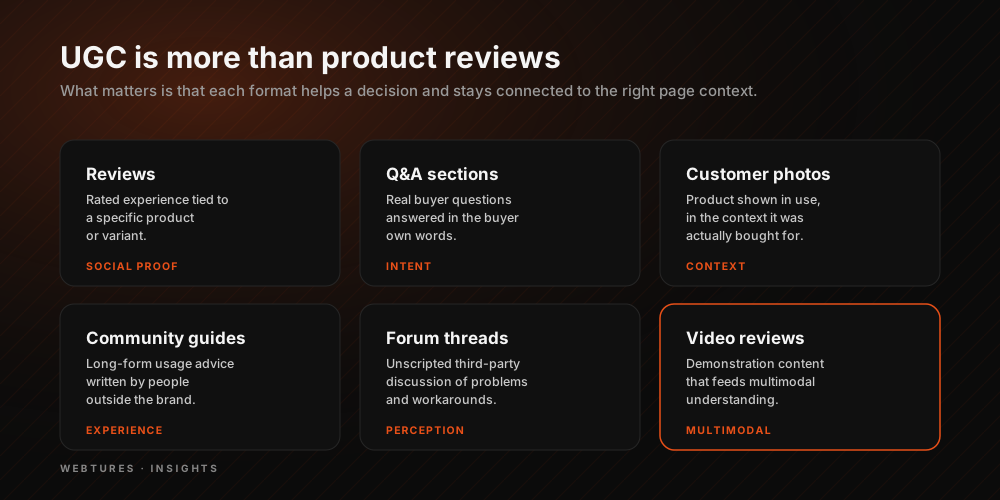
UGC is not limited to product reviews. Q&A sections, customer photos, community guides, usage examples, social media posts, forum experiences, and video reviews can also support AI Search visibility. What matters is that these content assets are organised in a way that helps users make decisions and connected to the right page context.
UGC formats that can create stronger signals for AI Search include:
- Detailed product reviews: Show which expectation the product meets and in which situation it is used.
- Q&A sections: Reveal real pre-purchase doubts and user questions.
- Customer photos: Show the product in real usage environments.
- Community guides: Share practical recommendations based on user experience.
- Social media content: Reflect natural and current brand perception.
- Forum and independent review content: Help identify third-party perception and recurring problem themes.
These formats turn UGC from an on-page support element into experience data that can be used in AI-generated answers.
UGC Signal Map for AI Search
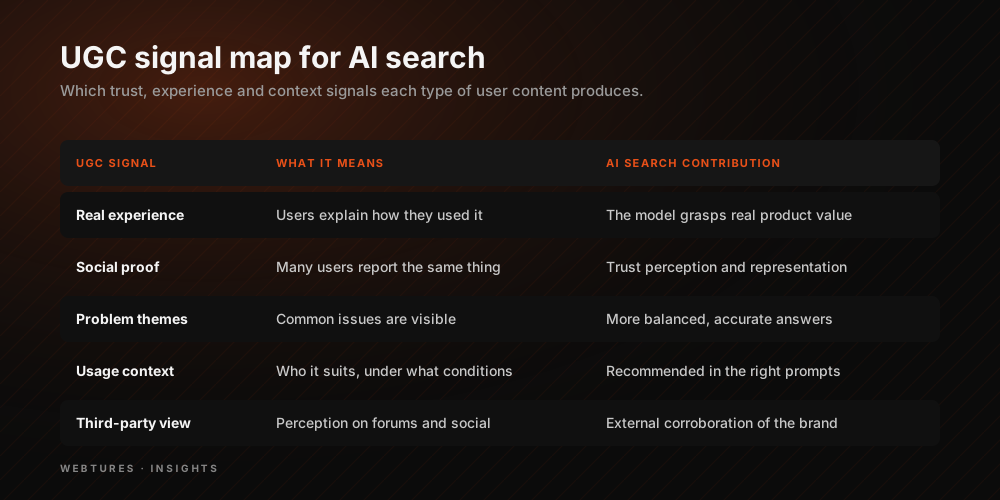
The signal map below can be used to evaluate how UGC contributes to AI Search visibility. The goal is not to create a standard task list, but to show which trust, experience, and context signals different types of UGC can produce. Teams can use this structure for product page optimisation, community management, review strategy, and AI visibility reporting.
How to Measure UGC Content Performance
UGC performance should not be measured only through review count, average rating, or social media engagement. For AI Search, the important question is how this content affects brand or product representation. Mention frequency, sentiment, answer accuracy, whether user themes appear in AI answers, competitor comparison patterns, and conversion impact should be evaluated together.
On the traditional side, teams can track review count, verified review rate, number of customer photos, Q&A engagement, social sharing volume, product page engagement, and conversion rate. On the AI visibility side, target prompt sets should be run regularly to analyse which user experience themes are associated with the brand, which external sources support the answer, how sentiment is balanced, and whether there is a risk of misrepresentation. This makes it possible to measure UGC not only as a community or conversion asset, but also as a contributor to AI visibility.
Risks and Quality Control Points in UGC Management
UGC can create a strong trust signal, but when left unmanaged, it can also create risks such as misinformation, spam, artificial reviews, outdated experiences, or negative perception. User perception on third-party platforms may also differ from the brand’s own website narrative. Because AI systems interpret these different sources together, brands should monitor not only their own UGC areas, but also user experiences on external platforms.
The following points should be reviewed regularly during quality control:
- Are UGC areas indexable and technically accessible?
- Are reviews connected to the correct product, service, or variant?
- Are spam, artificial, or repetitive reviews filtered?
- Are negative reviews addressed meaningfully instead of being hidden completely?
- Are Review, Q&A, or AggregateRating schema fields used correctly?
- Does user perception on external platforms conflict with brand messaging?
- Are user experiences represented accurately and fairly in AI answers?
These checks help UGC grow not only in volume, but also in quality as a trustworthy AI Search signal.
An Actionable Growth Plan for UGC Content
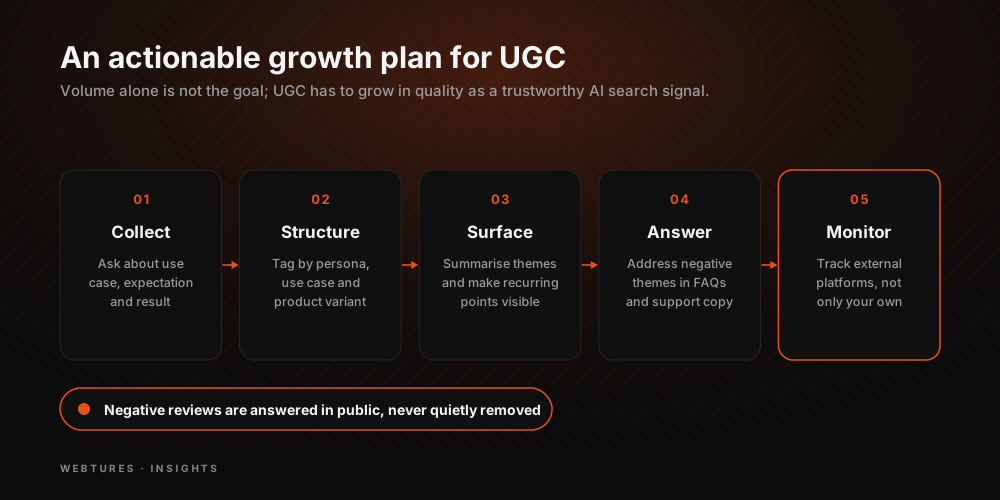
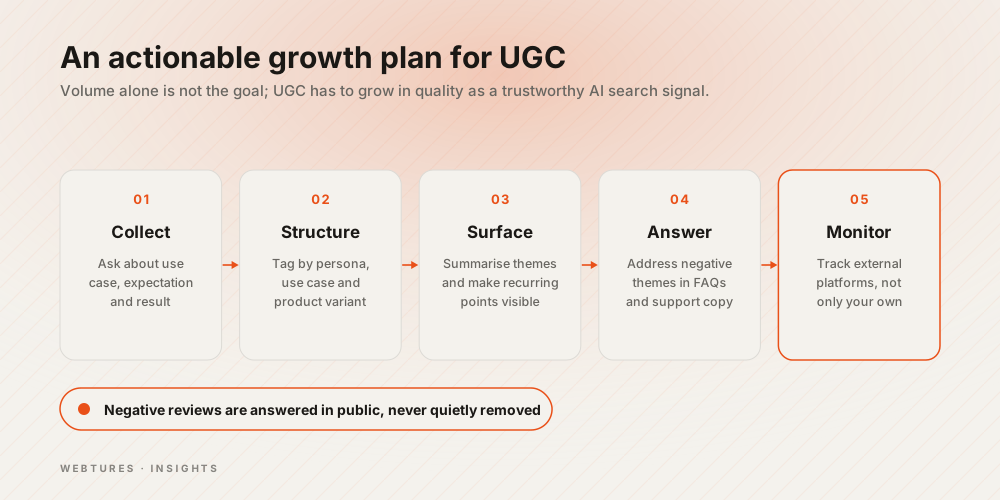
First, the existing UGC inventory should be mapped, and reviews, Q&A sections, customer photos, social content, forum mentions, and independent reviews should be classified separately. This analysis shows which products or services have strong social proof, where user experience signals are missing, and on which platforms brand perception differs.
In the second stage, UGC should be tagged by product, category, use case, sentiment, date, and variant. In the third stage, important user themes should be integrated into product descriptions, FAQ sections, comparison content, and buying guides. In the fourth stage, UGC areas should be checked technically, including schema, indexability, canonical structure, moderation, and spam filters. In the final stage, AI prompt monitoring should track which user experience themes the brand is represented through.
At this point, Brantial, as an AI visibility tool, can help brands understand which UGC signals appear in AI-generated answers, which user themes influence brand representation, and which external sources or platforms AI models rely on when forming responses. These insights make it easier to identify where user perception is strong, where trust signals are missing, and which UGC areas should be strengthened to improve AI Search visibility. This kind of growth plan turns UGC from a social proof layer into a sustainable source of AI Search visibility.