The Impact of Artificial Intelligence on Business
Explore how AI transforms business, from automation and HR to marketing and product development, with concrete examples, use cases, and ROI insights.


Artificial intelligence is fundamentally reshaping the dynamics of business, transforming both operational processes and strategic decision-making. From manufacturing to human resources, and from marketing to customer service, companies are becoming more efficient, faster, and more competitive thanks to the capabilities AI provides. This transformation affects not only large enterprises but also SMEs and startups. With AI-powered technologies, businesses can make data-driven decisions, understand customer expectations more clearly, and take stronger steps toward the future. In this article, we examine the impact of AI on business in detail, with concrete examples and real-world applications.
What is artificial intelligence and how does it work?
Artificial intelligence (AI) refers to systems that can mimic human intelligence and perform skills such as learning, reasoning, and problem-solving. By automating specific tasks through large datasets and advanced algorithms, these systems create tangible value for businesses.
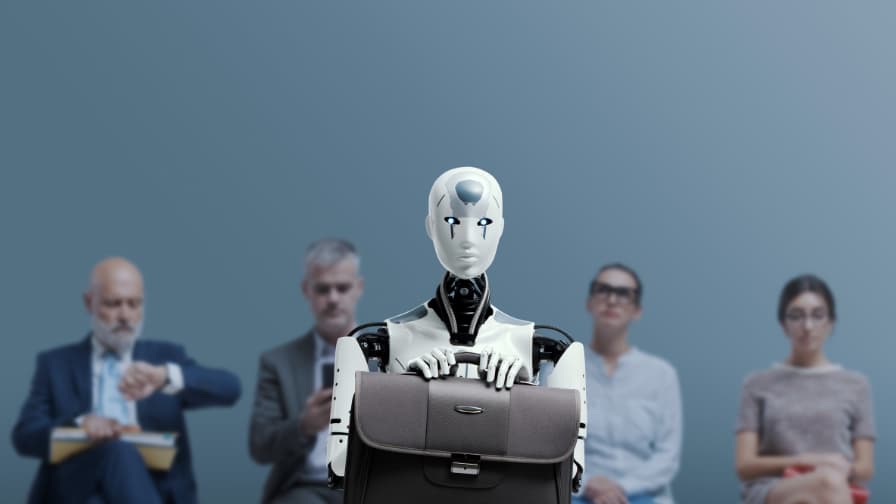
Subfields such as machine learning and deep learning are the core technologies driving AI forward. Their ability to extract meaning from data and make predictions reduces the need for human intervention in business processes to a minimum.
AI works by learning from historical data to make decisions about future situations. This allows companies to act more strategically and move faster.
The core role of AI in enterprise applications
In the corporate world, AI stands out as a strategic tool that delivers efficiency gains and cost optimization. Automation, decision-support systems, and analytics tools help businesses make more accurate decisions, faster.
Companies are also seeing significant gains in areas such as analyzing customer behavior and developing predictive sales strategies.
Integrating AI into business processes
AI automates repetitive tasks within business processes, freeing employees to focus on more strategic work. This reduces operational costs while increasing workforce productivity.

AI solutions are being integrated into everything from enterprise ERP systems to customer support platforms, and business processes are being restructured around them.
Through AI integration, data management becomes more effective while speed, accuracy, and consistency all improve markedly.
How automation drives operational efficiency
Automation systems eliminate manual steps and lower error rates. The efficiency gains are especially pronounced in areas such as accounting, inventory management, and responding to customer requests.
With this kind of automation, businesses save time and resources, freeing up capital to invest in more strategic areas.
Human resources and AI-assisted recruitment
HR departments use AI to optimize resume screening, candidate matching, and pre-interview processes. As a result, the best-fit candidates are identified in far less time.
AI can also provide meaningful feedback in employee satisfaction analysis and performance evaluations.
How AI is changing professions and skill sets
As AI spreads across the business world, some professions face the threat of automation while new lines of work emerge. Roles such as data analyst, AI ethics specialist, and prompt engineer are widely cited among the professions of the future.
This transformation makes it essential for employees to develop their technical and analytical skills. Competencies such as problem-solving, technology literacy, and adaptability now carry more weight than ever.
The most valuable employee profile for companies is becoming the individual who can work alongside AI and adapt quickly to change.
AI in marketing and sales
In marketing and sales, AI makes a difference at many points, from audience analysis to ad optimization. With AI, companies can reach potential customers with more effective and better-targeted messages.
AI-powered tools analyze user behavior to deliver personalized recommendations and campaigns, which drives a significant lift in conversion rates.
The insights AI provides guide everything from sales forecasting to cross-sell strategies.
Customer segmentation and personalized experiences
AI analyzes customer data to enable detailed segmentation. Building campaigns and content tailored to these segments increases customer loyalty.
Personalization improves the customer experience while also strengthening brand perception.
Chatbots, CRM, and AI-based customer support
AI-powered chatbots provide 24/7 customer service, reducing dependence on human labor. Instant responses raise customer satisfaction.
AI solutions integrated into CRM systems analyze past customer interactions to deliver more effective responses.
Products and services built with AI
AI is driving a revolution not only in business processes but also in product and service development. AI-powered systems can offer users capabilities that were previously impossible.
Recommendation engines, voice command systems, and automated data processing algorithms embedded in products play a major role in improving the user experience.
The service sector, meanwhile, uses AI as an efficiency driver in areas such as call centers, customer service, and healthcare.
Speed and cost advantages in product development
AI shortens product design and testing cycles, lowering costs. Simulation and modeling tools make it possible to develop products with far greater precision.
With AI, R&D teams can deliver solutions that answer market needs in a fraction of the time.
New service models and digital assistants
In sectors such as finance, healthcare, and education, digital assistants are simplifying everyday transactions for users. Operating through voice and text commands, these systems save time.
Innovative services of this kind lead to measurable improvements in customer loyalty and satisfaction.
Gaining a competitive edge with AI
Today, companies that use AI effectively are pulling ahead in their industries. Businesses that decide faster and forecast more accurately stand out in the market.
Companies that can embed AI into their business model reduce costs while differentiating themselves in the market with innovative products.
This applies not only to large corporations but to SMEs as well. Affordable AI solutions play a major role in the digital transformation of businesses of every size.
Innovation and rapid adaptation
AI helps companies adapt more quickly to changing market conditions. Tracking trends in real time and building strategies around them is now far easier.
This helps companies build agile structures and gain sustainable competitive strength.
The return on AI investments (ROI)
Well-planned AI investments can deliver high returns even in the short term. Investments in automation and analytics in particular translate into rapid efficiency gains.
Over the long term, they strengthen competitiveness and contribute directly to revenue growth and customer loyalty.

Let us make your brand visible in AI search.
Share your goals, we'll come back with a custom growth plan within one business day. A strategy lead will reach out personally.
Get in touch