How to Create Persona-Based Landing Pages for AI Search
Learn how to create persona-based landing pages for AI Search with user intent, pain points, decision criteria, and conversion-focused page structure.

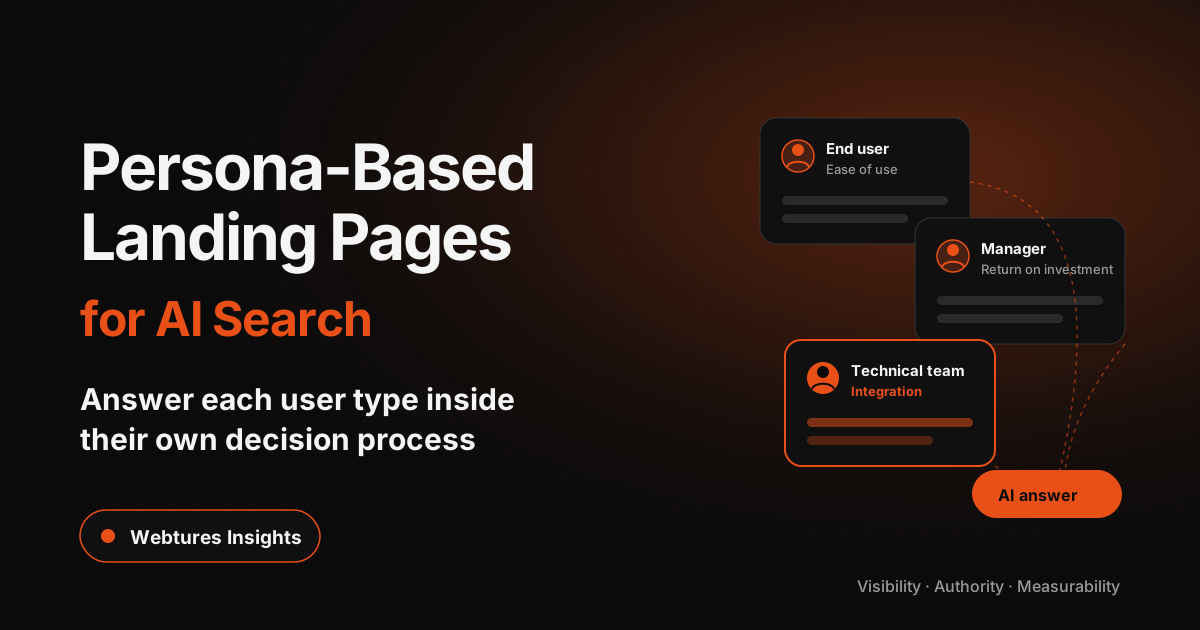
A persona-based landing page for AI Search is a page structure customised according to the intent, problem, expectations, and decision criteria of different user segments. As AI answer engines become better at interpreting user context, the same product or service can be recommended with different benefits in different persona-driven queries. For example, a solution may mean time savings for a marketing manager, cost control for a finance team, easier integration for a technical team, or strategic visibility for executives. For this reason, a persona-based landing page is not only a conversion-focused page. It is also a contextual page that can strengthen AI Search visibility. For SEO, content, product, and growth teams, the goal should not only be to create a general landing page. The real objective is to answer each persona’s question in a way that reflects their problem and supports their decision-making process. A strong structure should connect persona needs, product benefits, trust signals, comparison areas, objections, and conversion measurement.
Why Each Persona Expects a Different Answer in AI Search
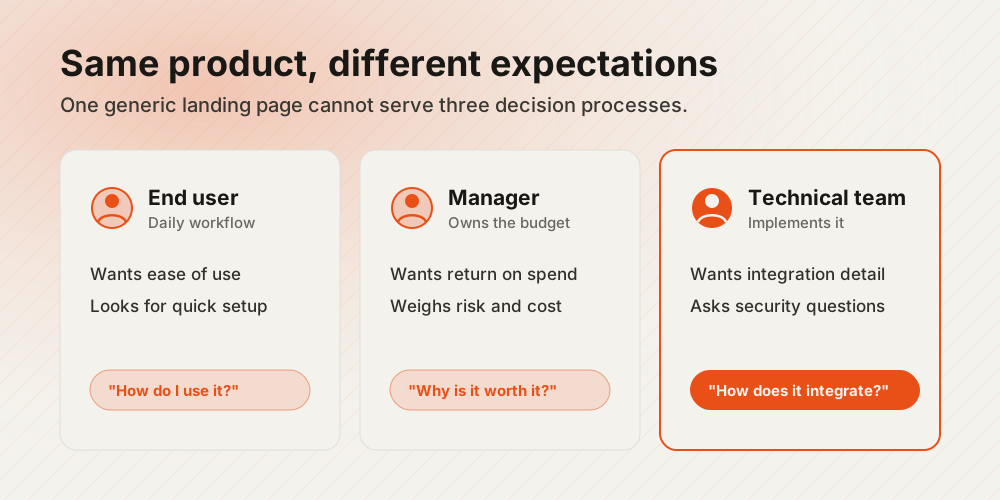
In AI search experiences, users no longer want only general product or service information. They expect answers that match their role, industry, budget, problem, and decision process. A single general landing page may therefore fail to meet the needs of different persona groups. One user may ask whether a solution is suitable for small businesses, while another may want to know whether it can scale across enterprise teams.
Persona-based landing pages help address these different questions more clearly. When AI systems can understand the relationship between persona, problem, solution, use case, and decision criteria on a page, they can recommend the brand in more relevant prompts. These pages should not be treated only as campaign landing pages. When structured well, they can become strong sources that explain why the brand is suitable for a specific user type in AI-generated answers.
How to Define Search Intent for Each Persona
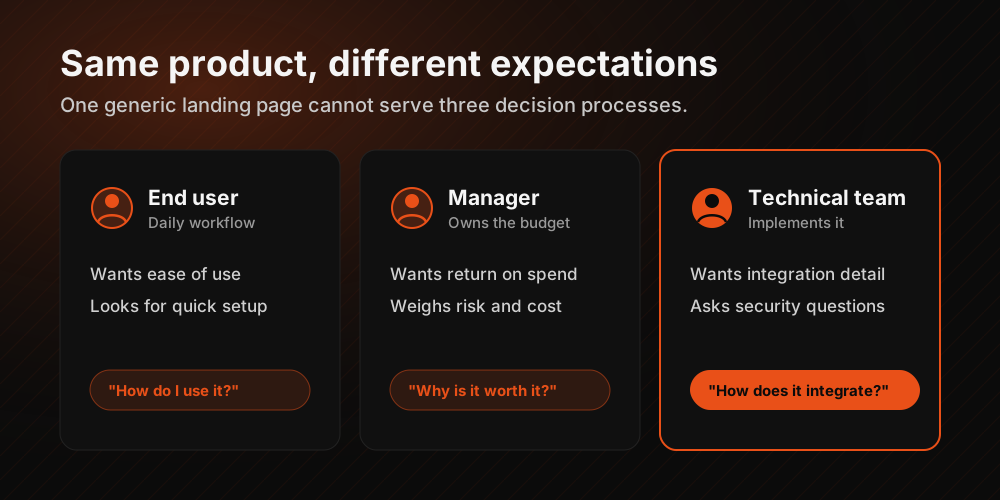
When preparing persona-based landing pages, search intent should not be interpreted only at keyword level. The user’s role, responsibility, budget, technical knowledge, influence in the buying process, and purchase motivation should be evaluated together. For example, an end user may care more about ease of use and practical benefits, while an executive team may want to see return on investment, scalability, and strategic contribution.
For each persona, a separate intent map should be created. This map can answer questions such as:
- What problem is this persona trying to solve?
- Which criteria do they use when making a decision?
- What objections or concerns do they have?
- What type of proof would convince them?
- What is the main benefit they expect from the product or service?
- Which natural-language questions might they use in AI Search?
This approach turns the landing page from a product promotion page into a structure that directly supports the user’s decision journey.
How to Connect Persona, Problem, and Product Benefit on the Same Page
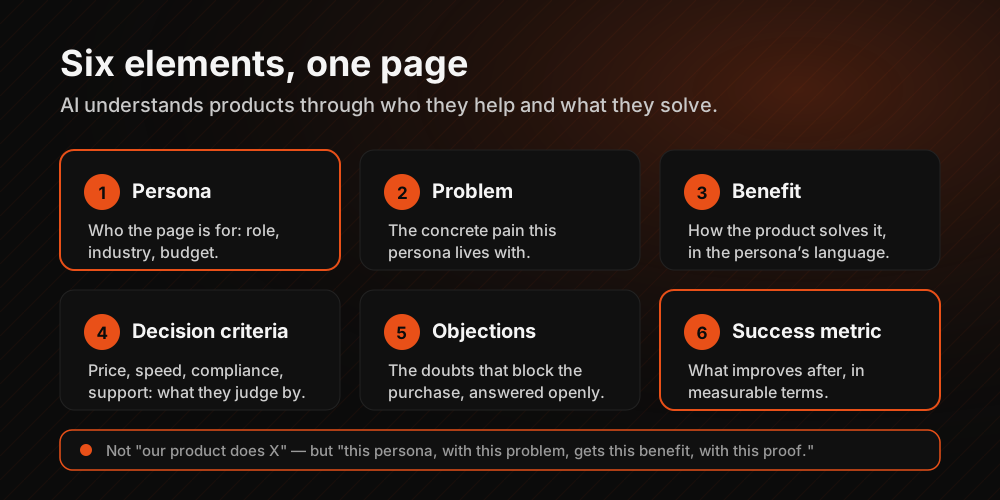
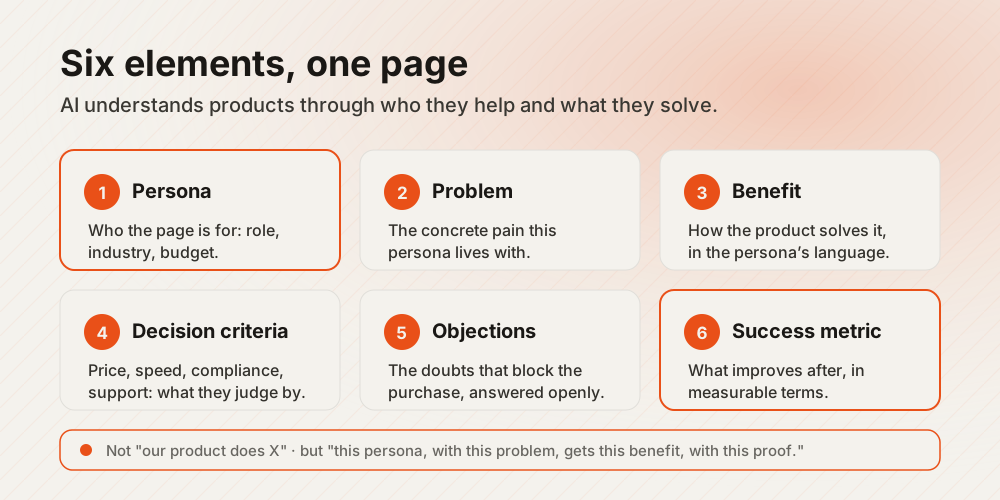
The most critical point in a persona-based landing page is to clarify the persona, problem, product benefit, decision criteria, objection, and success metric within the same page. AI systems can understand a brand not only through product descriptions, but also through which problem the product solves for which user. Instead of saying only “our product does this”, it is stronger to explain “this product solves this specific problem for this persona in this way.”
For example, on a B2B software page, process acceleration can be highlighted for operations teams, shorter quote cycles for sales teams, reporting visibility for executives, and integration security for technical teams. Each persona should have a clear connection between problem, solution, proof, and outcome. This helps AI systems interpret the brand not as a generic solution, but as a more specific option for defined user needs.
How to Set Up the Technical Structure of Persona Pages
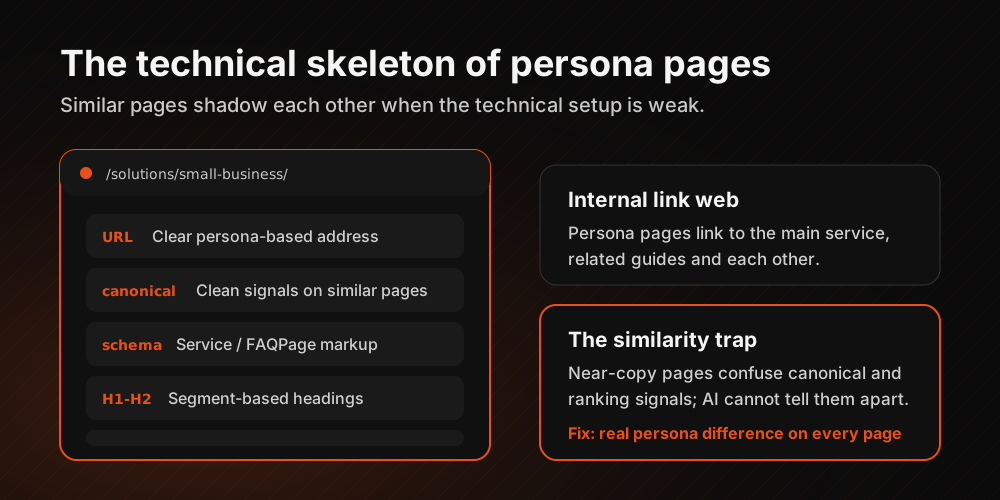
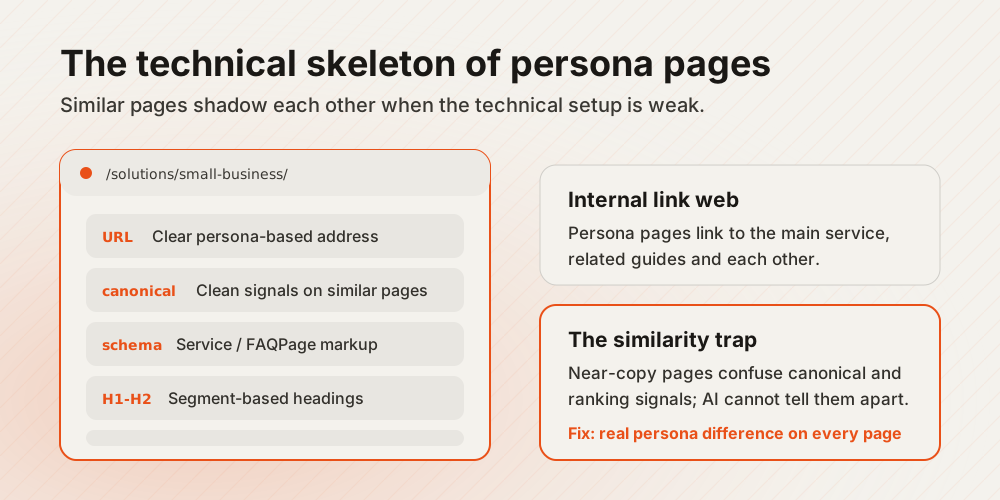
For persona-based landing pages, URL structure, canonical tags, internal links, schema, segment-based headings, and conversion tracking should be planned together. Technical infrastructure helps both search engines and AI systems understand these pages correctly. If different persona pages are too similar, canonical strategy and content differentiation need to be managed carefully.
Each persona page should have a clear purpose, heading structure, and conversion goal. From an internal linking perspective, these pages should be supported with relevant product pages, category pages, case studies, FAQs, and comparison content. For structured data, Organization, Product, Service, FAQPage, or Article schema can be used where relevant. Separate conversion events should also be defined for persona pages so teams can track which persona takes which action on which page.
What Blocks Should a Persona-Based Landing Page Include?
A persona-based landing page should not consist only of a general introduction and a form. The page should be structured with blocks that support the user’s decision process step by step. Each block should answer a specific question or objection from that persona. This improves user experience and helps AI systems understand the information relationships on the page more easily.
Core blocks for a persona-based landing page may include:
- Persona definition: Clarifies which user group the page is for.
- Pain point: Explains the key challenges the persona faces.
- Solution approach: Shows how the product or service solves the problem.
- Use cases: Explains how the solution works in real workflows.
- Decision criteria: Shows what the persona should consider when choosing.
- Objection handling: Responds to concerns around price, integration, trust, time, or performance.
- Proof section: Provides case studies, customer reviews, data, awards, or expert commentary.
- Conversion area: Includes a CTA, form, or demo path that matches the persona.
With these blocks, the landing page becomes more user-focused, more persuasive, and more meaningful for AI Search.
What Information Should Each Persona See on the Page?
The structure below shows which information should be highlighted on a persona-based landing page for different user types. The goal is not only to list content sections, but to identify the types of information that support each persona’s decision process. Teams can use this structure for page briefs, landing page design, content updates, or AI prompt tracking.
How to Measure Persona-Based Landing Page Performance
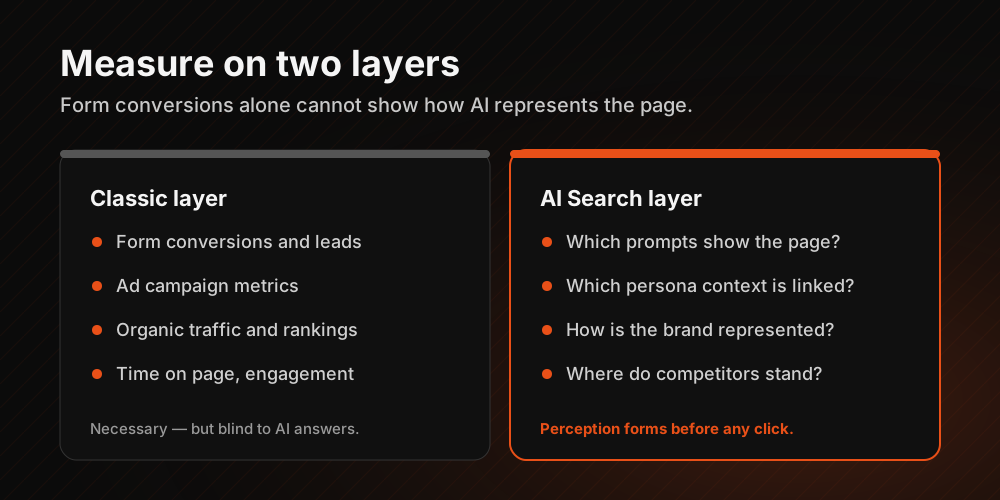
Persona-based landing page performance should not be measured only through form conversions or campaign metrics. For AI Search, teams should also track which prompts these pages appear in, which persona context they are associated with, and how the brand is represented in answers. Users may see the brand in an AI answer and shape their perception or decision without clicking through to the page.
On the traditional side, page sessions, CTA clicks, form submissions, demo requests, scroll depth, segment-based conversion rate, and source/medium performance can be measured. On the AI visibility side, target persona prompts should be run regularly to analyse which persona questions mention the brand, which sources support the answer, how the brand is compared with competitors, and whether the answers contain accurate information. The healthiest approach is to evaluate landing page conversion metrics together with AI visibility indicators.
Common Mistakes in Persona Pages
One of the most common mistakes in persona-based landing pages is presenting the same product explanation to different user groups with only small heading changes. This does not reflect real persona differences and can make pages too similar to each other. AI systems may also fail to evaluate these pages as strong sources for different user needs.
Common mistakes include:
- Changing the persona name while keeping the same problem and solution narrative
- Using the same CTA and proof section for every persona
- Treating technical teams, executives, and end users with the same decision criteria
- Not checking pages for canonical and content similarity issues
- Not defining persona-based conversion events
- Not providing proof specific to role, industry, or use case
- Not tracking persona-based visibility in AI prompts
Avoiding these mistakes helps persona pages become more meaningful for both users and AI Search.
A Growth Plan for Persona-Based Landing Pages in AI Search
First, target personas should be clarified, and each persona’s problem, motivation, decision criteria, objection, and success metric should be defined separately. This ensures the page is not only a general product promotion, but a structure that supports the decision process of a specific user group.
In the second stage, separate prompt sets and content briefs should be prepared for each persona. In the third stage, the landing page should be structured with blocks such as persona definition, pain point, solution approach, use case, proof, objection handling, and conversion area. In the fourth stage, the technical structure should be checked, including URL, canonical, internal linking, schema, and conversion tracking. In the final stage, persona-based AI visibility, answer accuracy, competitor comparison, sentiment, and conversion performance should be monitored regularly. This kind of growth plan turns persona-based landing pages from campaign pages into sustainable AI Search visibility assets.