In the Finance Sector AI-Powered Digital Marketing
Digitalization across banking, insurance, and investment is no longer just product-led; it deepens with AI in customer experience, content strategy, and ad targeting.
The Foundation of Digital Transformation in Financial Marketing: AI
The finance sector advances cautiously in digital marketing because it is built on trust. But AI enables data-driven decisions, creating a much more effective, scalable, and reliable structure for marketing financial services.
AI positions products such as credit, investment, and deposits according to user needs. It segments by past transaction behavior and delivers the right message to potential customers at the right time.
AI-Driven Personalization Based on Credit, Investment, and Insurance Preferences
AI can recommend campaigns, offers, or content based on individual users’ transaction habits and product preferences. For example, users who traded foreign currency in the last three months can be offered a “FX deposit rate campaign.”
This personalization not only increases conversion rates, it also delivers a value-first experience. That significantly strengthens loyalty in digital banking apps in particular.
Building Trust and Authority in SEO and Content Marketing
When producing content about financial products and services, the most important criterion is “trust.” AI analyzes the topics users search for most in line with their intent and creates content recommendations from that data.
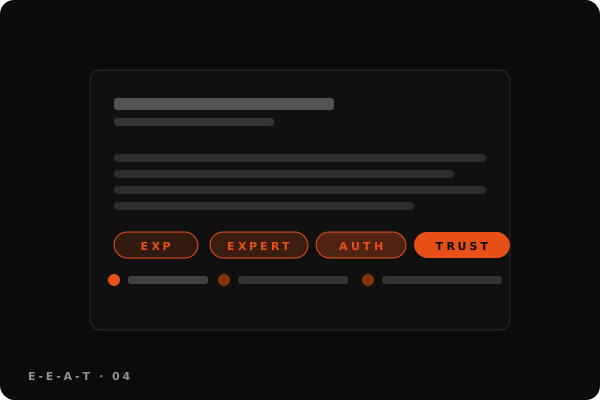
In SEO, content aligned with E-E-A-T (Experience, Expertise, Authoritativeness, Trustworthiness) is prioritized more by Google. AI can plan content that meets these criteria and elevate a brand’s digital authority.
E-E-A-T-Compliant Financial Blog and Page Structures
Including expert opinions, source links, and transparent explanations is critical for E-E-A-T compliance in financial content. AI systems can place these elements automatically or identify gaps and suggest improvements.
This helps content rank faster and builds the perception that “this institution knows what it’s doing.” It creates a strong competitive edge, especially for investment, credit, and insurance blogs.
AI-Powered Question-Based Search Analysis for Investment Instruments
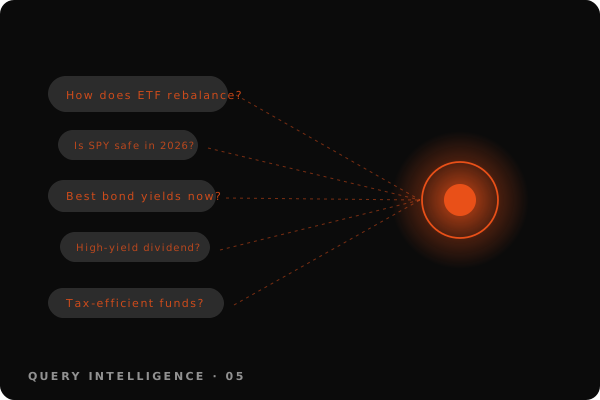
Search habits are increasingly question-based. Queries like “Is Fund X profitable?” or “Does Eurobond investing make sense?” can be analyzed quickly with AI.
These insights enable strategic content creation in content marketing. That means you can build content focused on user intent, not just keywords.
Targeting, Segmentation, and Risk Management in AI-Driven Advertising
Budget efficiency and targeting accuracy are more critical than ever in finance. AI analyzes user data to deliver the right offers to the right people, lowering costs while improving returns.
Segmentation is no longer limited to age and gender; it now includes behavior, past product usage, and risk scores. AI turns these signals into micro-targeted ad strategies.
In financial advertising, AI can also ensure compliance with legal constraints by automatically adjusting content to match institutional policies.
Behavioral Targeting for Credit and Insurance Products
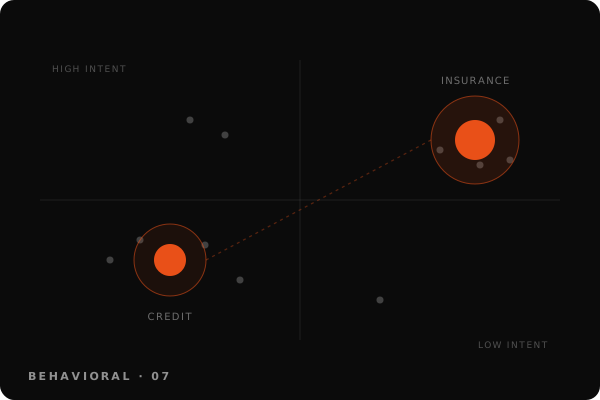
AI analyzes user behavior on websites and apps to determine which products they are most likely to choose. The ads shown are then tailored specifically to that user.
This significantly increases conversion rates for products like “personal loans” and “home insurance,” while reinforcing brand value by matching users with the right content.
AI-Based Marketing Success Stories in the Finance Sector
AI technologies have transformed digital marketing processes for many financial institutions worldwide. Segment-based campaigns, portfolio management promotions, and behavior-driven content have become more efficient with AI.
With the rise of digital banking, campaign management is no longer just about producing content. It now requires analyzing user data and adapting accordingly. AI makes this process manageable and effective.
Digital banks in Turkey are also achieving notable success with AI-powered credit evaluation, campaign creation, and offer distribution.
Personalized Messaging for Automated Portfolio Management
Some investment apps use AI to analyze risk appetite and deliver personalized portfolio messages. This helps investors identify with the system: “We recommend 60% bonds, 40% stocks for you.” These examples highlight the psychological impact of AI marketing.
Example from Turkey: AI-Based Pre-Approved Credit Campaigns in Digital Banks
Some Turkey-based digital banks present pre-approved credit offers crafted with AI in their mobile apps. The offer is shaped by the user’s score and updated over time. Because this model persuades users without an application step, it drives significant gains in conversion rates.
Some Reasons to Choose Us
With the perfect harmony of teamwork and AI, at Webtures.
Projects completed
Team members
Years of experience
Frequently asked,
carefully answered.
Everything you might wonder before starting a Finance project with us — from our approach to pricing, reporting, team structure, and contract terms. Written by the team that does the work.
01 What digital marketing services does Webtures offer for finance companies?
Webtures offers SEO, paid media (Google Ads & programmatic), content marketing, CRO, and analytics for finance brands. We focus on regulated environments, compliance-aware copy, and high-intent keyword strategies.
02 How does Webtures handle compliance in financial marketing?
Our team works with your legal and compliance departments to ensure all content, ads, and landing pages meet local and international regulations—including FCA, BDDK, and MASAK guidelines where applicable.
03 How long before we see results from SEO in the finance sector?
Finance is a highly competitive vertical. Typically clients see measurable organic growth within 4–6 months; significant ranking improvements usually follow at the 9–12-month mark depending on starting authority.
04 Can Webtures work with both B2B and B2C finance brands?
Yes. We have experience across retail banking, investment platforms, insurance, factoring, and B2B fintech SaaS—each with tailored messaging frameworks and channel mixes.
05 What does a typical engagement look like?
Most finance clients start with a 3-month audit and strategy phase, followed by a 12-month execution retainer. We provide monthly performance reports aligned to agreed KPIs (leads, CPL, organic traffic, conversion rate).