How Is AI Visibility Measured?
AI visibility is measured through prompt-based brand mentions, placement within AI responses, competitor comparisons, source usage, contextual relevance, and sentiment analysis.

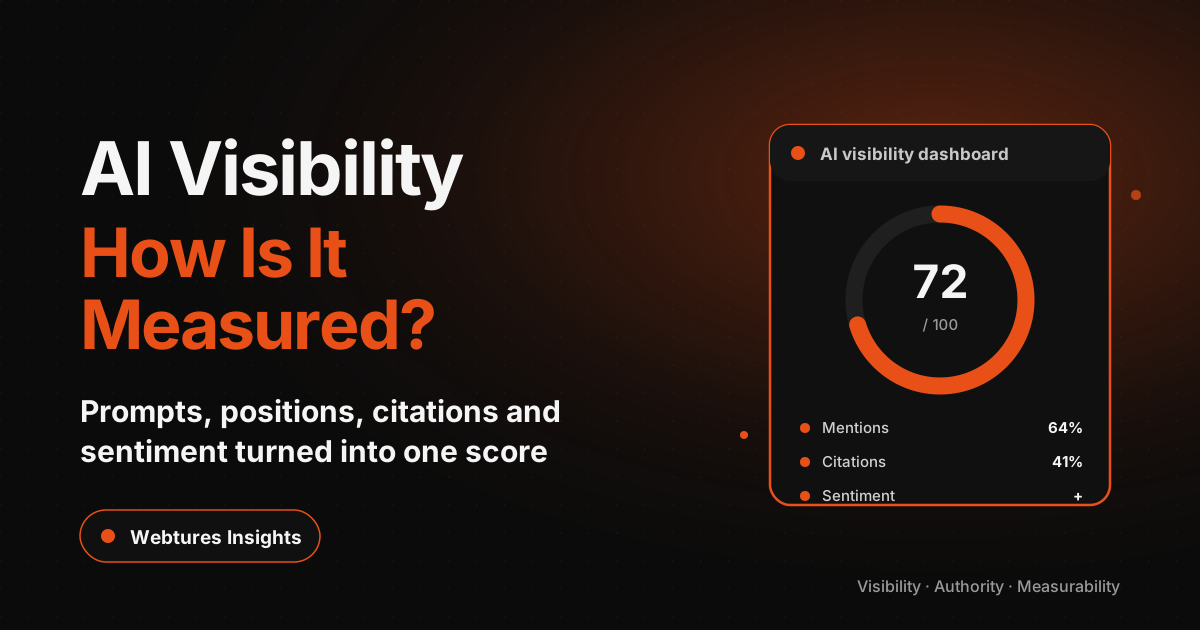
AI visibility is the process of measuring how often, in what context, and alongside which competitors a brand appears in AI-powered answer systems such as ChatGPT, Gemini, Perplexity, and Google AI Overviews. This visibility is not evaluated only by whether the brand name is mentioned. The brand’s association with the correct category, whether it is presented as a trustworthy option, whether it is cited as a source, and how it is positioned compared to competitors should all be analyzed together.
For this reason, AI visibility is measured through prompt-based tracking, brand mention frequency, position within the answer, competitor comparison, source analysis, context evaluation, and changes over time.
What Is AI Visibility?
AI visibility refers to how visible a brand is in AI-generated answers and how it is positioned. A brand may appear in an AI response, but that alone does not mean it has strong visibility. What matters is which question the brand appears in, where it appears in the answer, in what context it is presented, and which competitors it appears alongside.
AI visibility includes the following:
- The brand appearing in AI-generated answers
- Being associated with the correct category and topic
- Being presented alongside or ahead of competitors
- Being cited as a trustworthy source
- Becoming recommendable in the user’s decision-making process
For this reason, AI visibility requires evaluating not only how many times the brand is mentioned, but also the perception created within the answer and the brand’s position compared to competitors.
Why Are Traditional Metrics Not Enough?
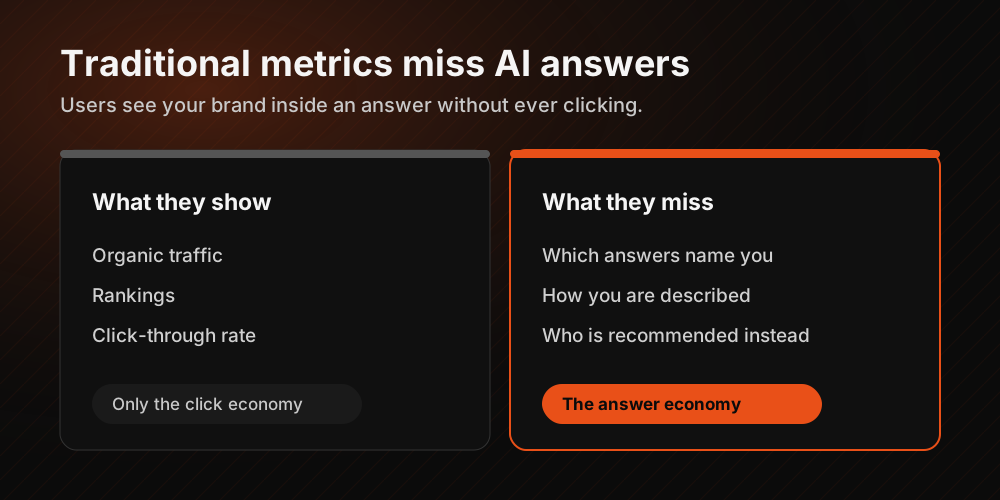
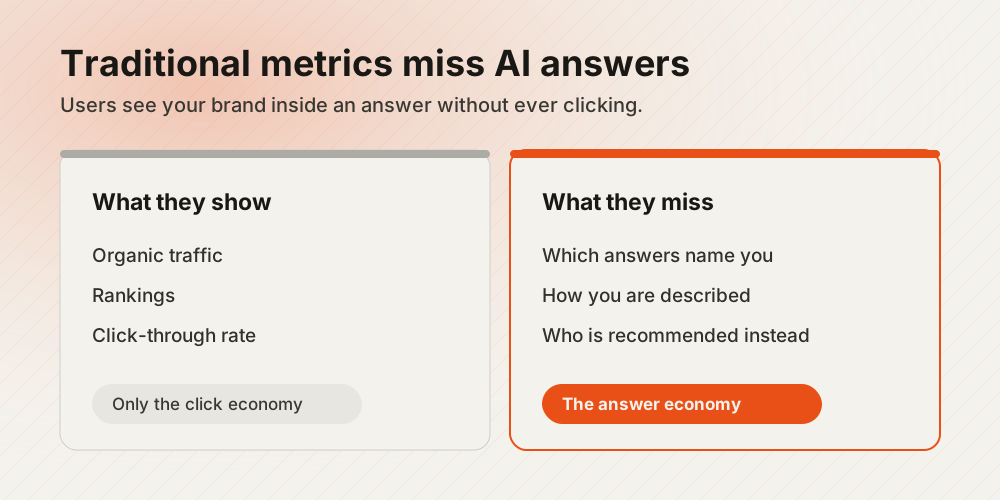
Traditional metrics such as organic traffic, rankings, and click-through rate are important for understanding digital performance, but they do not show visibility in AI-generated answers on their own. In systems such as ChatGPT or Perplexity, users do not always click through to a website. They may receive the answer directly within the AI interface.
Therefore, traditional metrics cannot answer questions such as:
- Does the brand appear in ChatGPT answers?
- Does Perplexity cite the brand as a source?
- Is the brand visible in Google AI Overviews?
- For which questions are competitors recommended more often?
- Is the brand described positively, neutrally, or incompletely?
- Is the brand associated with the right category in user questions?
To measure AI visibility, the answers themselves, sources, context, and competitors need to be analyzed together.
Prompt-Based Visibility Measurement
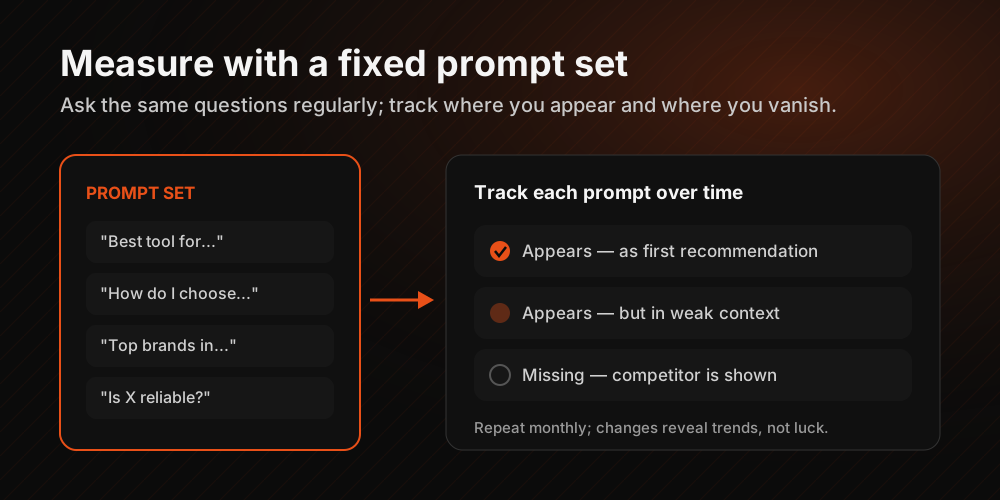
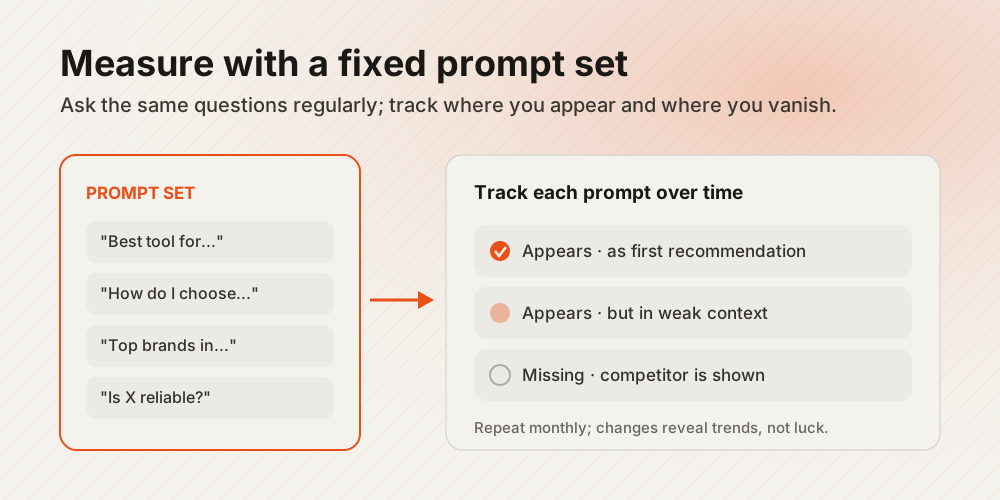
One of the main steps in measuring AI visibility is prompt-based analysis. A prompt is the question or command a user gives to an AI system. It is important to regularly track which prompts the brand appears in, which queries it does not appear in at all, and which types of intent it performs strongly for.
Different prompt groups can be created for measurement:
- Informational questions
- Comparison questions
- Purchase-intent questions
- Brand alternatives
- “Best” and recommendation-focused questions
- Problem-solution questions
- Industry- and category-based questions
For example, it can be measured whether the brand appears in queries such as “best CRM software,” “accounting software recommendations for SMEs,” or “how to choose B2B marketing automation.” This analysis reveals which user intents the brand is visible for.
How Is Brand Mention Frequency Tracked?
Brand mention frequency shows how many times the brand appears within a defined prompt set. However, this metric is not sufficient on its own. Even if a brand appears in many answers, visibility quality may be low if it is presented as a weak, incomplete, or merely alternative option.
When analyzing brand mention frequency, the following questions should be asked:
- In how many of the defined prompts does the brand appear?
- In which categories is it mentioned more often?
- In which question groups does it not appear at all?
- How many times do competitors appear in the same prompts?
- Are brand mentions increasing over time?
- Is the brand only mentioned by name, or is it actually recommended?
This measurement is one of the basic indicators of visibility level, but it should be evaluated together with the brand’s position and context within the answer.
How Is Position Within the Answer Analyzed?
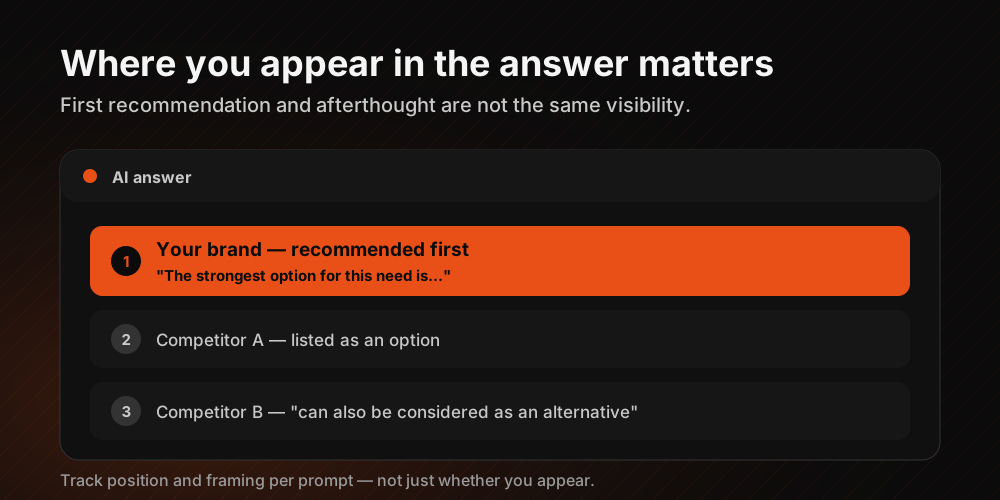
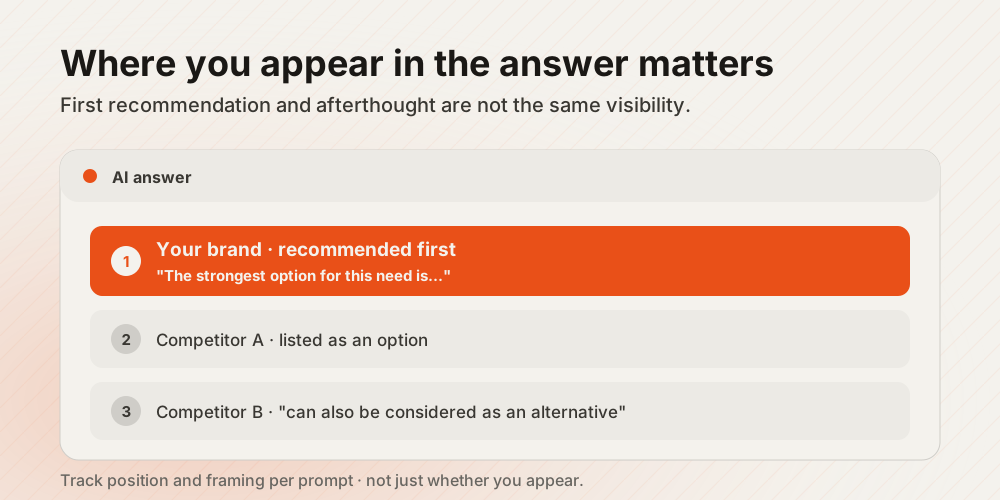
Where the brand is positioned within AI-generated answers also matters. If a brand appears among the first recommendations, it gains stronger visibility. If it appears at the end of a list or with a weaker phrase such as “can also be considered as an alternative,” its impact may be more limited.
Position within the answer can be analyzed as follows:
- Does the brand appear in first place?
- Is it included in the top three recommendations?
- Is it presented before or after competitors?
- Is it mentioned only as an alternative?
- Is it directly recommended?
- Is it described in detail within the answer?
This analysis shows not only whether the brand is visible, but also how strong its position is.
How Is Competitor Comparison Done?
AI visibility must be measured together with competitors. A brand being visible does not necessarily mean it is stronger than its competitors. It is necessary to compare how often competitors appear in the same prompts, in what context they are recommended, and which sources support them.
Competitor comparison evaluates the following points:
- Which competitors appear in the same prompts?
- On which topics are competitors stronger?
- Which competitors are recommended more often?
- Are competitors cited as sources?
- Which competitor content stands out?
- In which prompt clusters does the brand fall behind?
This analysis shows where the brand needs to strengthen its content, technical structure, and authority.
Source and Citation Analysis
Some AI systems can cite sources in their answers. Especially in platforms such as Perplexity and Google AI Overviews, it is important to understand which pages are used as sources. Being cited as a source can strengthen the brand’s trust perception.
When conducting source analysis, the following questions are considered:
- Which pages do AI-generated answers cite as sources?
- Is the brand’s own website used as a source?
- Do third-party sources support the brand?
- Are the cited pieces of content up to date?
- Which content appears more often as a source?
- Which competitor pages are cited as sources?
The process of tracking AI search results requires regularly monitoring which answers the brand appears in and which sources stand out.
Context and Sentiment Analysis
One of the most critical aspects of AI visibility is context. A brand may appear in an answer, but if it is presented in an incorrect, incomplete, or weak context, this visibility will not provide the expected value.
Context and sentiment analysis can be conducted through the following questions:
- Is the brand mentioned in a positive, neutral, or negative context?
- Is it presented as a trustworthy option?
- Are its weaknesses emphasized?
- Is the answer aligned with the brand’s positioning?
- Is there outdated or incorrect information?
- Is the brand associated with the right target audience?
This analysis reveals the qualitative side of visibility, not just the quantitative side. The goal is not only to appear in answers, but to appear with an accurate and strong perception.
Platform-Based Measurement
AI visibility may not be the same across every platform. A brand may be visible in ChatGPT but weak in Gemini, or it may be cited as a source in Perplexity while not appearing in Google AI Overviews. Therefore, platform-based measurement should be conducted.
The main platforms to track include:
- ChatGPT
- Gemini
- Perplexity
- Google AI Overviews
- Claude
- Copilot
Platform-based analysis helps understand how each answer engine perceives the brand and which sources it takes into account.
How Is AI Visibility Measured with Brantial?
Although it is possible to track AI visibility manually, the process becomes difficult when many prompts, competitors, platforms, and time periods are involved. At this point, Brantial is an AI visibility tool that can be used to measure how brands appear in AI answer engines.
Brantial helps analyze which prompts mention the brand across platforms such as ChatGPT, Gemini, and Perplexity, which competitors the brand is positioned alongside, and what kind of perception is created in the answers.
With Brantial, the following areas can be tracked:
- Prompt-based brand visibility
- Visibility compared with competitors
- Brand position within the answer
- Brand mention frequency
- Platform-based visibility differences
- Context and perception analysis
- Visibility changes over time
This makes it possible to answer not only “Is the brand mentioned?” but also “Which questions does it appear in, which competitors is it positioned alongside, and is it presented in a positive or incomplete context?”
How Is an AI Visibility Score Created?
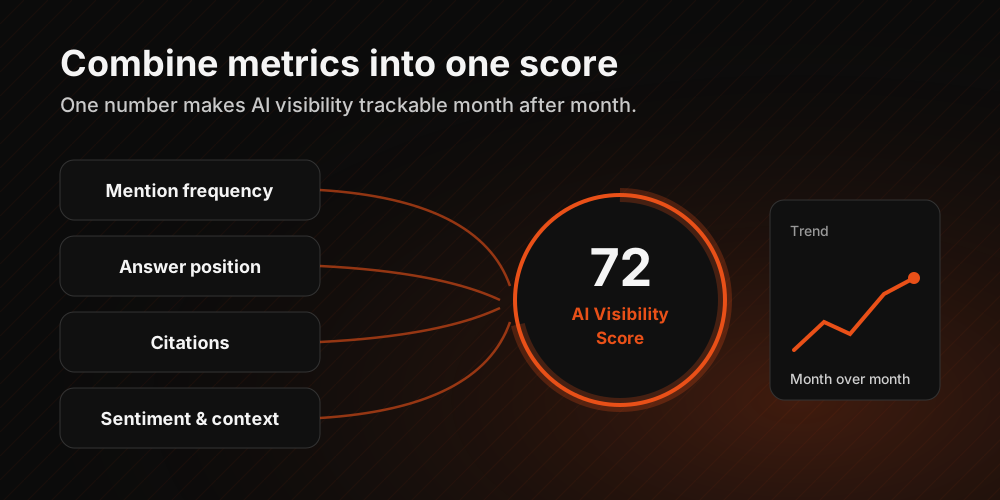
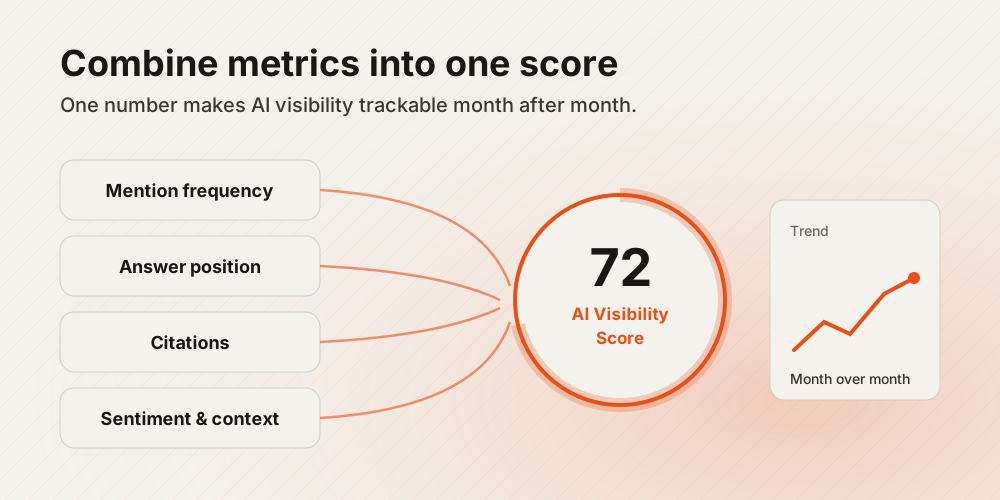
To make AI visibility easier to track, different metrics can be combined under a single score. An AI Visibility Score helps understand the brand’s overall visibility level in AI-generated answers.
The following criteria can be considered when creating this score:
- Brand mention frequency
- Position within the answer
- Share of visibility compared to competitors
- Citation rate as a source
- Context quality
- Sentiment score
- Platform-based visibility
- Change over time
This score should not be used as the final indicator of success on its own, but rather as a way to track areas for improvement.
How Are Measurement Results Turned into Action?
The main purpose of measuring AI visibility is not to create reports, but to take action. Measurement results should create a roadmap for content production, technical improvement, brand positioning, and external-source visibility.
Based on the measurement results, the following steps can be taken:
- Missing content topics are identified.
- Prompts where competitors are strong are analyzed.
- The brand narrative is clarified.
- Product and service pages are updated.
- Source-worthy content is produced.
- The technical structure is improved.
- Brand visibility in trusted external sources is increased.
- Measurement is made periodic.
At this point, GEO consulting covers work aimed at positioning the brand more accurately, visibly, and strongly in AI-generated answers based on measurement results.
In conclusion, AI visibility is not measured only by whether the brand name appears in answers. Accurate measurement requires analyzing which prompts the brand appears in, how it is positioned within the answer, how it compares to competitors, whether it is cited as a source, and in what context it is presented.
AI visibility tools such as Brantial make this process more systematic and help measure how brands are perceived in AI systems such as ChatGPT, Gemini, Perplexity, and similar platforms. When measurement results are regularly turned into action, the brand can become more visible, trustworthy, and preferable in AI-generated answers.