How to Become Visible in AI Search?
How to become visible in AI search: consistent brand data, question-led content, technical readiness, authority signals and a KPI table with data sources.

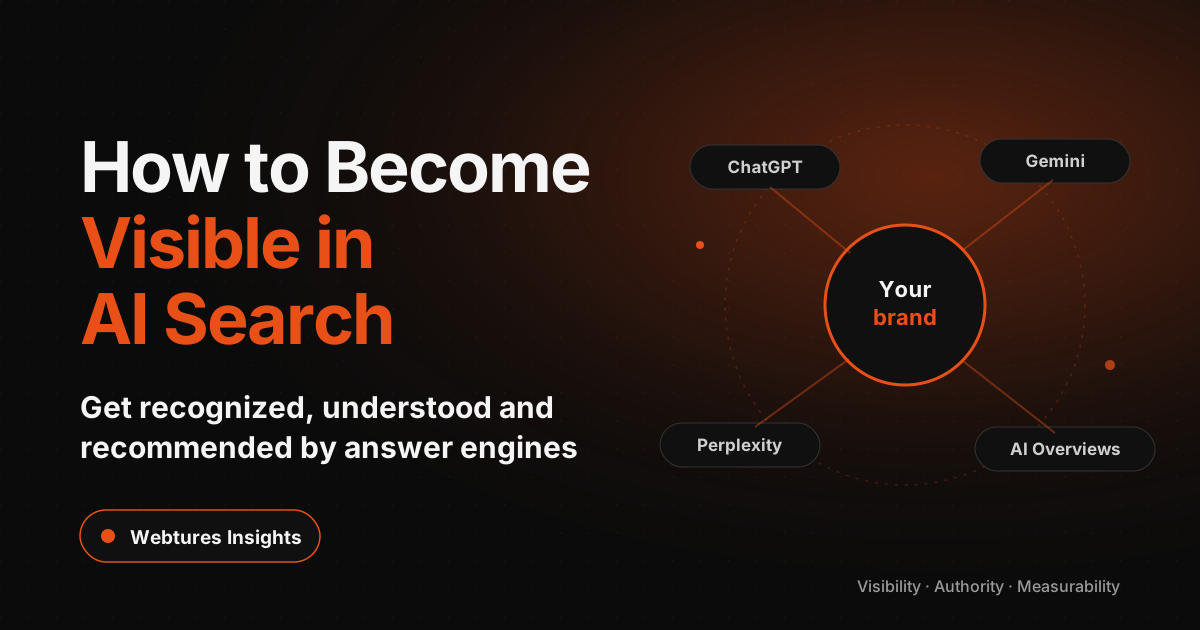
Being visible in AI means that a brand appears in the right context within responses generated by systems such as ChatGPT, Gemini, Perplexity, and Google AI Overviews. Users no longer only review search results; they now ask AI tools direct questions about products, services, brands, and comparisons.
For this reason, visibility for brands is no longer limited to driving traffic to a website. A brand needs to appear in AI-generated answers, be perceived as a reliable source, be positioned strongly compared to competitors, and be recommended in responses to the right questions.
What Does It Mean to Be Visible in AI?
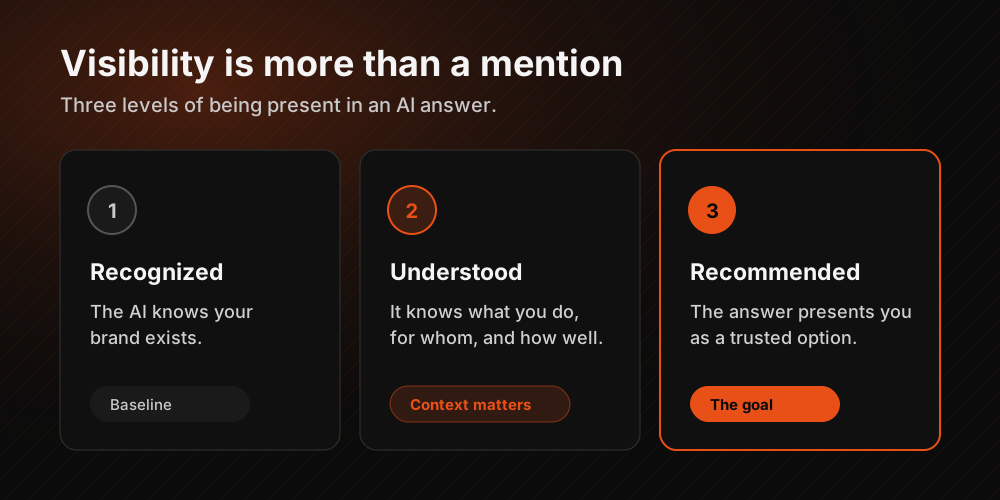
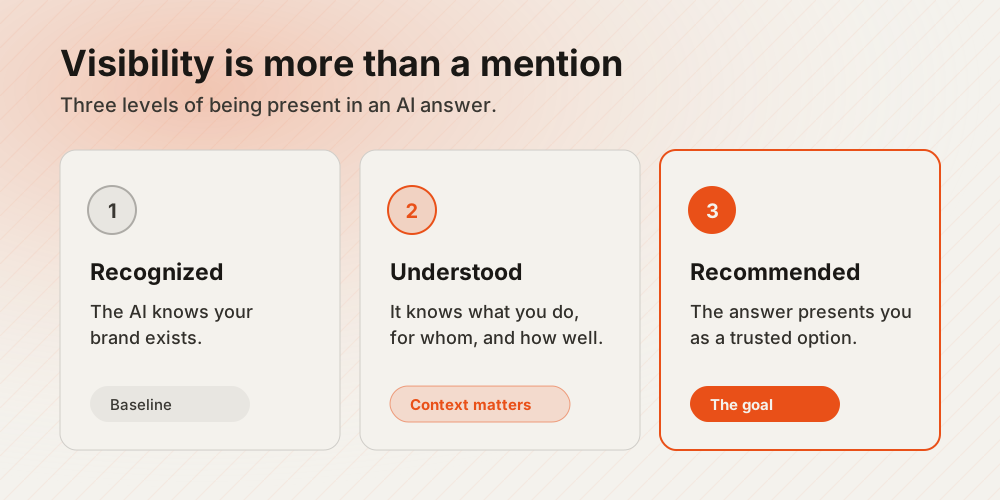
Being visible in AI means that a brand is recognized, understood, and included in answers by answer engines for relevant user questions. What matters here is not only whether the brand name is mentioned. The topic the brand is associated with, how it is described, and how it is recommended to the user are just as important as visibility itself.
For example, a brand may appear in an AI-generated response; however, if it is associated with the wrong category, presented incompletely, or shown as weaker than its competitors, this visibility is not enough. Therefore, AI visibility requires measuring both how often the brand appears and the context in which it appears within the answer.
Brand Information Should Be Clear and Consistent
AI systems evaluate information from a brand’s website, social media accounts, third-party platforms, and other digital sources to understand the brand. For this reason, what the brand does, who it serves, and which area it specializes in should be clearly stated.
Brand information should clearly answer the following questions:
- What problem does the brand solve?
- Which products or services does it offer?
- Which industry is it positioned in?
- Who is its target audience?
- How does it differ from its competitors?
- Which areas of expertise does it want to be associated with?
If this information appears inconsistently across different platforms, AI systems may struggle to position the brand correctly. That is why the same brand narrative should be maintained across the website, social media profiles, press content, directories, and reference pages.
Content Should Directly Answer User Questions
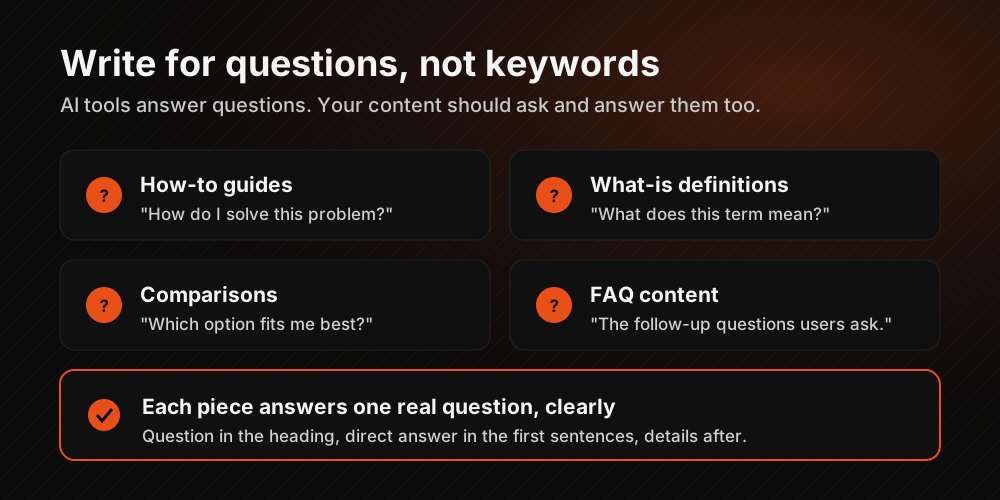
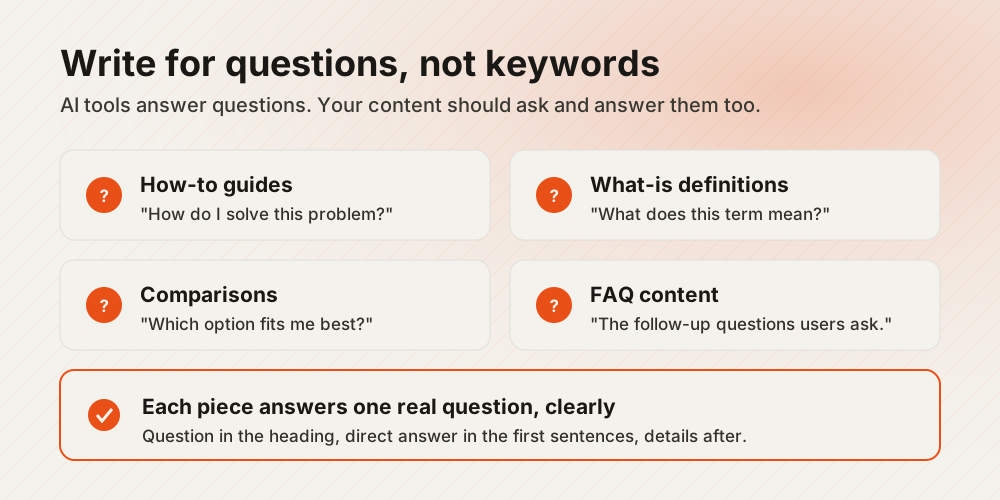
AI tools mostly generate responses to questions asked by users. Therefore, content strategy should be built not only around keywords, but also around real user questions.
Brands that want to be visible in AI should focus on the following content types:
- “How-to” content
- Comparison articles
- Problem-solution guides
- Frequently asked questions
- Product and service descriptions
- Content that supports purchase decisions
- Industry analyses
- Expert opinions
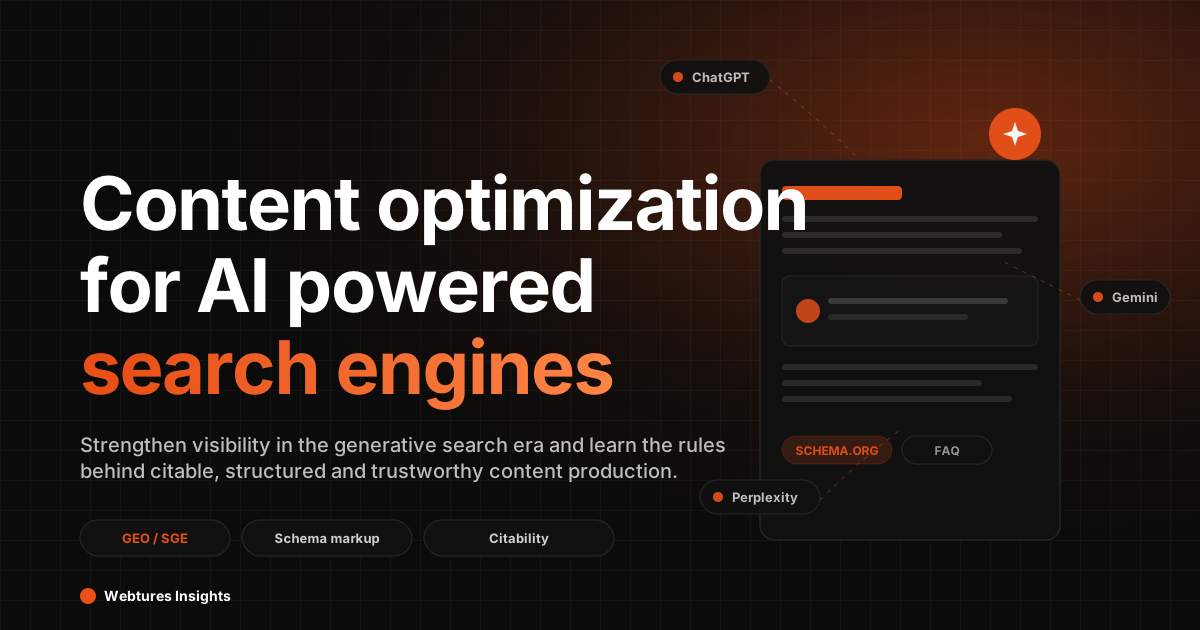
These pieces of content should include short, clear, and source-worthy answers. GEO consulting focuses on making brands’ content structure and digital positioning more suitable for AI-generated responses.
Content Should Be Formatted for AI Responses
AI systems process well-structured and easy-to-understand content more effectively. Therefore, heading structure, paragraph organization, and information flow are important.
For content suitable for AI responses, attention should be paid to the following points:
- Headings should be clear and question-focused
- The first paragraphs should provide direct answers
- Long and scattered explanations should be avoided
- Scannable formats such as lists and tables should be used
- Definition sentences should be clear
- A frequently asked questions section should be added
- Content should include up-to-date and verifiable information
The goal is to help AI systems understand the content easily and use it when generating answers to user questions.
The Technical Infrastructure Should Be Strong
Visibility in AI is not achieved through content alone. The technical infrastructure of a website also directly affects how understandable the brand is. If pages are not crawlable, the content structure is confusing, or brand information is not presented clearly, AI systems may not be able to interpret the site well enough.
On the technical side, the following points should be considered:
- Pages should be crawlable
- Site architecture should be easy to understand
- Internal links should be structured correctly
- Structured data should be used
- Page speed should be improved
- Mobile experience should be strong
- Brand, product, and service pages should be clearly separated
- Duplicate or conflicting information should be reduced
The AI Agent Readiness approach provides an important control area for evaluating how readable and understandable a brand is for AI systems.
Brand Authority Should Be Strengthened
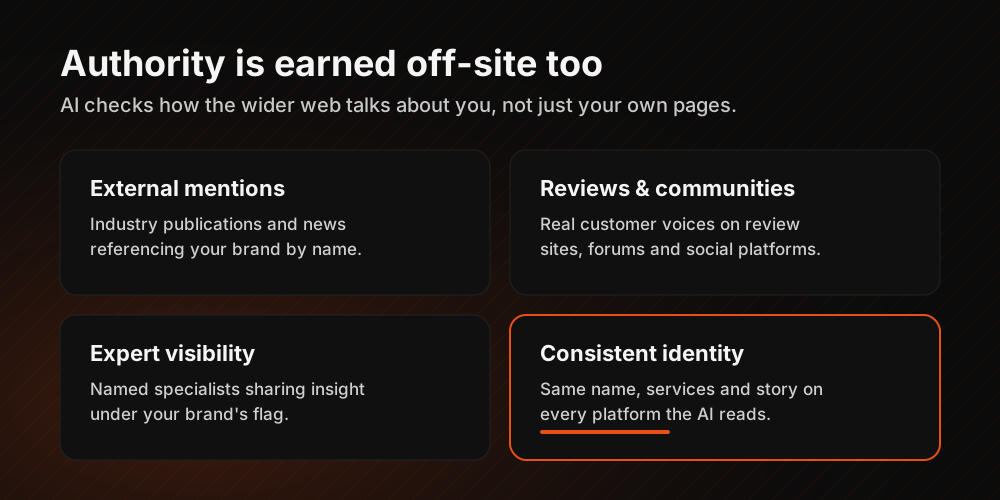
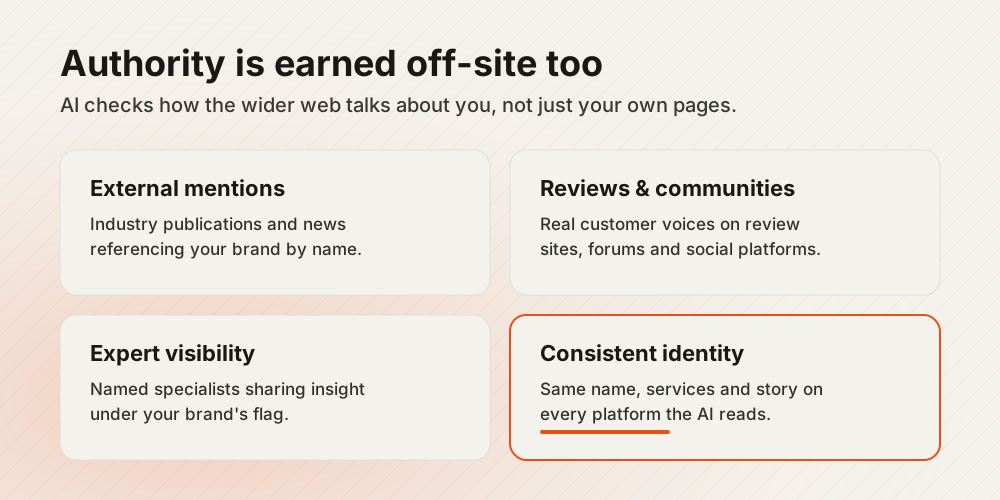
When AI systems evaluate brands, they do not look only at the brand’s own website. How the brand appears in external sources, which platforms mention it, how trustworthy it seems, and how it is positioned within the industry also matter.
To strengthen brand authority, the following areas should be supported:
- References
- Success stories
- Expert content
- User reviews
- Press coverage
- Industry publications
- Comparison and review platforms
- Social media presence
- Third-party brand mentions
The more consistently a brand appears in trustworthy sources, the more likely it is to appear in the right context within AI-generated answers.
A Clear Answer Structure Should Be Built for Google AI Overviews
Google AI Overviews, Google’s AI-powered search experience, allows users to see summarized answers directly in search results. Brands that want to be visible in this area should prepare their content in a way that answers user questions quickly and clearly.
For AI Overviews, the following structure should be preferred:
- A direct answer in the introduction
- Detailed explanations under subheadings
- Information supported by evidence and examples
- Question-and-answer formats
- Use of up-to-date and reliable data
- Clear definitions
- Topic depth instead of unnecessary repetition
This structure improves the user experience and helps AI systems summarize the content more easily.
Visibility Should Be Built Across Different Digital Surfaces
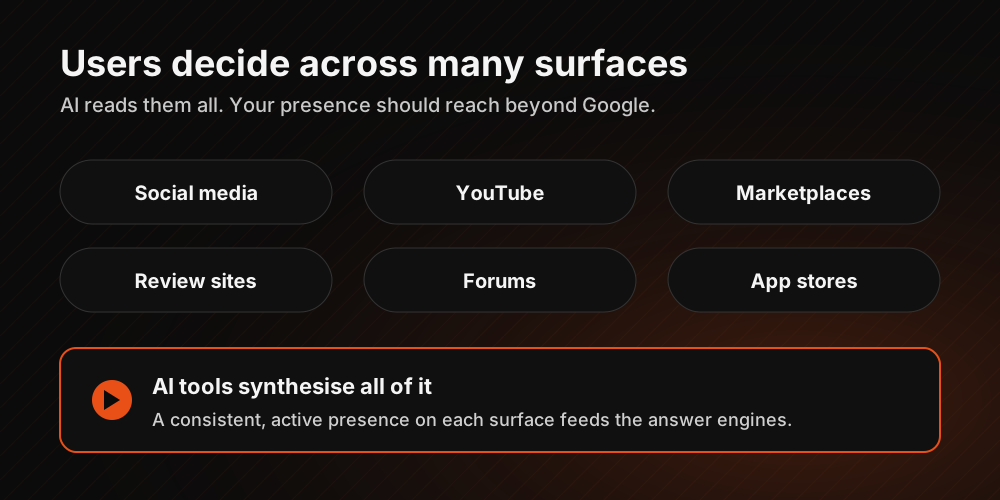
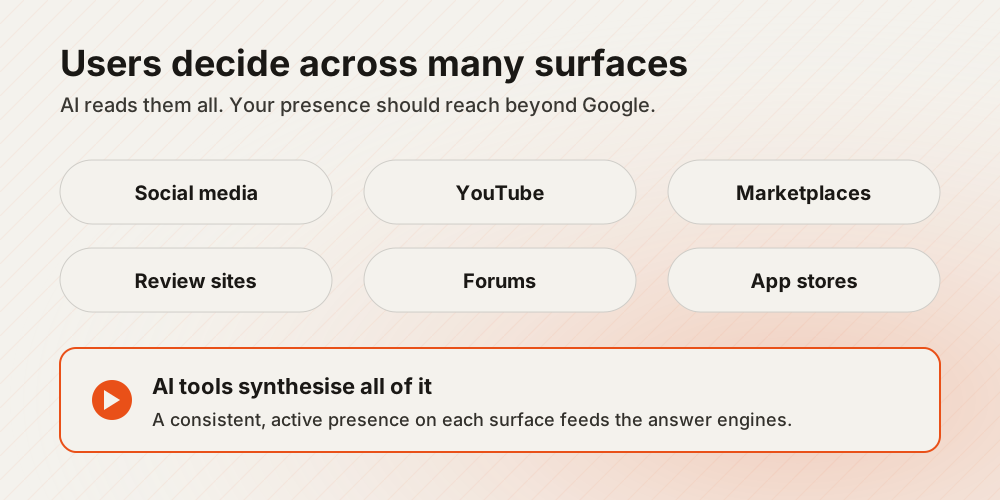
Users do not search for brands only on Google. Social media, YouTube, marketplaces, review sites, forums, app stores, and AI tools have also become part of the decision-making process. Therefore, brands that want to be visible in AI should expand their digital presence across different platforms.
The Search Everywhere Optimization approach aims to position the brand consistently and strongly across the different surfaces where users search for information.
The main areas where visibility should be strengthened include:
- Website
- Blog content
- Social media accounts
- Video platforms
- Industry publications
- Product review sites
- Comparison platforms
- Local and global directories
- Press and PR content
This multi-channel structure allows AI systems to gather richer and more consistent signals about the brand.
AI Visibility Should Be Measured Regularly
Visibility in AI is not a one-time effort. Responses may change over time; competitors may publish new content, platforms may prioritize different sources, and user questions may become more diverse. For this reason, visibility should be measured regularly.
AI visibility tools such as Brantial help brands track which prompts they appear in across answer engines, which competitors they are mentioned alongside, and the context in which they are positioned.
The measurement process should answer the following questions:
- Which questions does the brand appear for?
- Which questions does it not appear for at all?
- In which areas are competitors stronger?
- Is the brand positioned positively, neutrally, or incompletely in answers?
- Which content is being used as a source?
- Which topics require new content?
- Is visibility increasing over time?
This data helps create a more accurate content and technical improvement plan.
From question to KPI
| Question | KPI | Data source |
|---|---|---|
| Which questions does the brand appear for? | Share of Answer | Brantial, per-engine query set |
| Which content is being used as a source? | Citation rate | Brantial; Search Console generative AI report for Google |
| Is the brand positioned positively or incompletely? | Accuracy and sentiment share | Monthly sample of answers |
| In which areas are competitors stronger? | Co-mention rate | Brantial |
| Is visibility turning into demand? | AI Assistant session share, AI-sourced conversions | GA4 AI Assistant channel, server-side measurement |
Checklist for Becoming Visible in AI
Brands that want to become visible in AI should follow these steps:
- Make brand information consistent across all platforms.
- Create content that directly answers user questions.
- Structure content with clear headings and concise paragraphs.
- Make the technical infrastructure crawlable and understandable.
- Strengthen the use of structured data.
- Build external visibility that increases brand authority.
- Prepare content that can be easily summarized for AI Overviews and answer engines.
- Strengthen brand presence across different digital platforms.
- Track competitors’ AI visibility.
- Measure AI visibility regularly and update the content plan accordingly.
In conclusion, becoming visible in AI cannot be achieved only by producing content or making a few technical changes to a website. Brand information must be consistent, content must clearly answer user questions, technical infrastructure must be strong, trustworthy source signals must be increased, and visibility must be measured regularly.
For brands, the main goal is not merely to be mentioned in AI-generated answers, but to be recommended as a reliable option in the right topic and the right context. Therefore, AI visibility should be handled together with content strategy, technical structure, brand authority, and measurement processes.